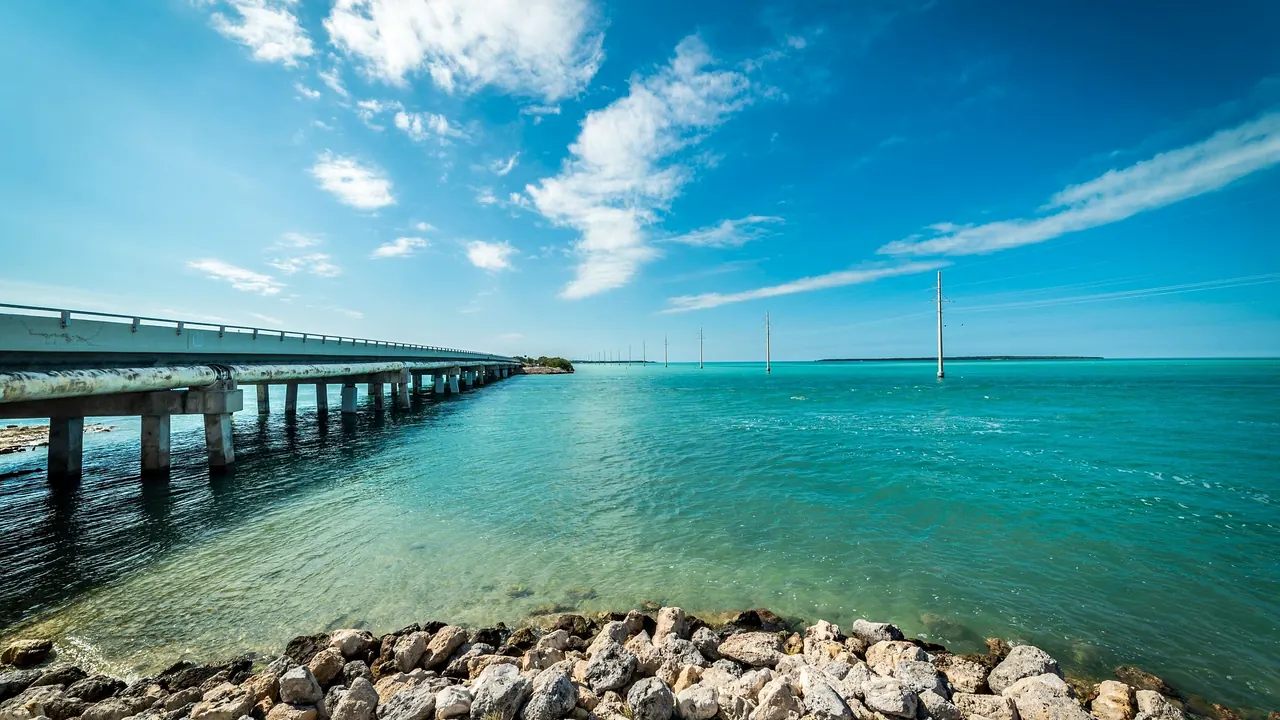
Photos: Florida Keys by Dominik Gryzbon, Pexels License.
Florida Keys or Siesta Key?
Our verdict in twelve categories, each scored against the same fixed benchmark cities, and the climate month by month, so you can choose for your trip.
Choose Florida Keys for
- nightlife
- nature and the outdoors
- food and drink
The Florida Keys suit travellers who want to spend their days on the water rather than beside it. That means snorkelling or diving the reef off Key Largo and Looe Key, fishing the Islamorada backcountry or taking the boat out to Fort Jefferson, then a loud evening on Duval Street. Key West adds conch-house streets, Cuban coffee and a sightseeing round of the Hemingway house and the old fort, so the trip has more texture and much more going on after dark. The cost is a higher bill and a long drive down a single road.
Choose Siesta Key for
- beaches
- live music and the arts
- families
If what you want is a beach vacation in the plain sense, choose Siesta Key. The sand is finer, the water calmer and shallower, and the lifeguarded main beach makes things easy with small children. Evenings are quiet, but Sarasota across the bridge has opera, ballet and the Ringling, and the Gulf coast up to St Petersburg and Tampa offers more day trips than the Keys' one highway. It is also less expensive, though neither place is cheap.
Scoreboard
Twelve categories on one fixed scale from 0 to 100. The shaded stretch is the gap between the two.
Your match
Pick a travel style or drag the sliders, and both match scores follow your weighting.
Too close to call, 2 points apart
Wins on nightlife and nature and the outdoors with your weighting.
Wins on beaches and live music and the arts with your weighting.
What matters to you?
Category by category
What the scores mean for a trip.
Beaches & swimming
This is Siesta Key's strongest card. Siesta Beach is a wide stretch of soft white quartz sand that stays cool underfoot and slopes into calm, shallow water. Crescent Beach and Turtle Beach add quieter sand, snorkelling at Point of Rocks and hunting for shark teeth.
The Keys have warmer water, especially in winter, but the reef stops the waves that build sand, so most of the shore is mangrove, rock or shallow flats with seaweed. Bahia Honda, Sombrero Beach in Marathon and Smathers Beach in Key West are the exceptions worth planning around.
Food & drink
The Keys give you more to seek out. Yellowtail snapper and hogfish come straight off the boat, conch fritters and spiny lobster are local staples, and Key West's Cuban heritage brings strong café con leche and Cuban sandwiches. You can also often have your own catch cooked for you.
Siesta Key eats in a simpler beach style, mostly grouper sandwiches, shrimp baskets and fish tacos on open-air decks around the village. For a proper dinner you drive to downtown Sarasota or St Armands Circle, which have the wider choice.
Culture & sights
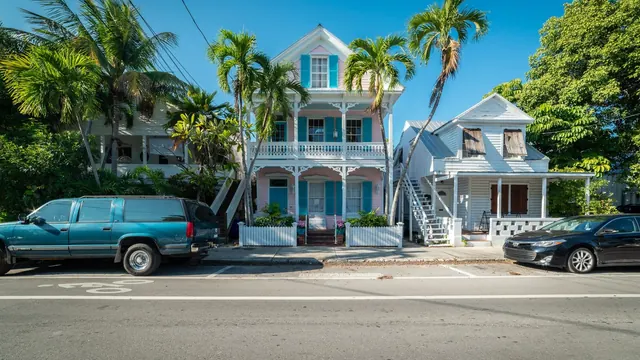
Neither place is a culture destination, but the Keys have their heritage on the spot. In Key West you stay among wooden conch houses and Victorian porches, with the Hemingway Home, the Truman Little White House and the brick forts, and Fort Jefferson is out in the Dry Tortugas.
Siesta Key itself has no museums or landmarks, so you go to Sarasota for culture. There the Ringling's Rubens canvases, the Ca' d'Zan mansion and the circus museum make a fine single day, alongside the Selby gardens and mid-century modern houses.
Nightlife
Duval Street puts the Keys far ahead. The night starts with the sunset crowd at Mallory Square and runs through open-sided bars, rooftop decks and old saloons until very late. There is also a long-established gay scene with drag cabaret at the lower end.
On Siesta Key you get a few blocks of village bars with cover bands and frozen cocktails, livelier at spring break and quiet well before the small hours. Sarasota's cocktail bars make for a calmer, more grown-up evening.
Nature & outdoors
The Keys win because so much happens under and on the water. You can snorkel and dive the reef at John Pennekamp and Looe Key, explore wrecks off Key Largo, fish the bay-side flats for tarpon and permit, and see tiny Key deer in the Lower Keys. Bear in mind that much of the coral is patchy and heat-stressed.
Siesta's nature is gentler: dolphins seen from the beach, manatees in the cooler months, nesting turtles, and kayaking through the mangrove tunnels on Lido Key. Myakka River State Park adds alligators and a canopy walkway, but there is no reef to match the Keys'.
Day trips
Siesta Key has the wider choice. St Petersburg's Dalí Museum is about an hour away over the Sunshine Skyway, and Tampa's Ybor City, the sponge docks of Tarpon Springs, Anna Maria Island and Venice give real variety in both directions along the Gulf.
From the Keys there are really two outings: Miami, if you stay in the Upper Keys, and the boat to the Dry Tortugas from Key West. Driving the Overseas Highway is lovely, but one island town looks much like the next.
Good for families
Siesta Key is the easier place with young children. The main beach is shallow enough for toddlers to paddle far out and has lifeguards, a playground and showers, and a rented condo with a pool makes long stays simple. Mote Marine Aquarium is the main outing away from the sand.
In the Keys it works best to stay in Marathon or Islamorada, where children get the sea turtle hospital, the dolphin centres and glass-bottom boats at Pennekamp. Key West's drinking streets and the long drive down the chain make it harder work.
Getting around
Both need a car once you want more than one place, but the difference lies in what you drive. In the Keys it is a single highway of about 180km over more than forty bridges, so any hold-up stops everything. Key West's flat Old Town is the place to leave the car and walk or cycle.
Siesta Key is only about 13km long, and a free trolley runs its length, so a beach-only stay works without a car. Going further means crossing two bridges that clog in winter, but Tampa and Sarasota airports are both an easy drive.
Shopping & style
In the Keys, shopping is a stroll around Key West and not much more. Duval Street sells T-shirts, hand-rolled cigars, hot sauce and Key lime products. The side streets of Old Town are better for local painting, handmade sandals and sea-glass jewellery. Further up the chain you will find little beyond dive shops and roadside shell stalls.
Siesta Key gives you more to browse within reach. Its village sells swimwear and sandals, and the more upmarket shops are about twenty minutes away at St Armands Circle, a ring of boutiques, jewellers and resort-wear shops. Sarasota's Main Street adds galleries, bookshops and independent stores. That fills a rainy afternoon nicely, but nobody plans a trip around it.
Affordability
Both are expensive, but the Keys more so. Everything comes down one road, and winter rates in Key West and Islamorada are among the steepest anywhere, with charters and dive trips adding up fast. Marathon and the Lower Keys soften the bill a little.
On Siesta Key the beach and the trolley are free, and renting a condo with a kitchen lets you control what you spend on food. Summer is cheaper in both places, but you pay for that in heat and storms.
Live music & performing arts
Thanks to Sarasota, Siesta Key comes out well ahead. The city has a resident opera company in its restored 1920s opera house, the Asolo Rep at the Ringling, a ballet company, a symphony and touring shows at the Van Wezel hall, mostly from autumn to spring.
Key West has the Tennessee Williams Theatre and a short symphony season. Most of its live music is acoustic sets, cover bands and drag cabaret in the Duval Street bars.
Wellness & relaxation
Neither has a spa culture, and both help you relax mostly through their slow pace. In the Keys the quiet choice is a cottage on the water in the Middle or Lower Keys, or a resort spa on a private island near Islamorada. Siesta Key's version is beach yoga, morning walks and the especially quiet south end around Crescent and Turtle beaches.
When should you go?
Pick your month. The climate figures are measured averages, not a forecast.
Florida Keys in July
Siesta Key in July
Daytime high, °C
Rainfall in the month, mm
Where the figures come from
Florida Keys's temperatures are measured 69 km from the centre, at Key West Airport.
Florida Keys has no rain gauge within 25 km of the centre, so its rainfall comes from a gridded climate dataset read at the destination rather than from a gauge further away.
Siesta Key has no rain gauge within 25 km of the centre, so its rainfall comes from a gridded climate dataset read at the destination rather than from a gauge further away.
Siesta Key's sunshine is measured 78 km from the centre, at Tampa International Airport.
Temperature and rainfall are climate normals, averaged over the years shown. Florida Keys: 1991-2020 (sunshine 1981-2010) normals, Key West Airport (68.8 km from centre). Siesta Key: 2006-2020 (sunshine 1991-2020, rainfall 1991-2020) normals, Sarasota / Ballentine Manor (14.3 km from centre).
Winter is where the two differ most. Around Key West and the lower chain the sea stays near 23°C in January, the days are warm and sunnier, and the weather is good for swimming from December to April. On Siesta Key the Gulf drops to about 19°C in midwinter and the days are a little cooler. That suits beach walks and sunsets more than long swims. Siesta's swimming season really starts in April and lasts until October.
In summer both are hot, with highs around 32°C, and humid enough that walking the streets of Key West or cycling round Siesta is best done early in the day. Siesta's rainy season is much heavier, with afternoon storms piling up to about 230mm in August, but it dries out again in October. The Keys get less rain in high summer, but their wet spell lasts through October. For the Keys, aim for November to May. For Siesta Key, April, May and October give warm water with less rain.
Which traveller are you?
On a beach and sun trip, Siesta Key is the clear choice. Its fine white quartz sand slopes gently into calm water, and you can swim straight from the shore. In much of the Keys the shore is mangrove, rock or seagrass flats, and people mostly swim from boats and docks.
For an outdoors trip, the Florida Keys are the better choice. A coral reef runs the length of the chain for snorkelling and diving, Islamorada's backcountry is famous for bonefish and tarpon, and the Dry Tortugas are a day out by boat. Siesta has dolphins, manatees and Myakka's alligators, but nothing on that scale.
For a food and nightlife trip, Key West wins easily. You get fish caught that morning, Cuban bakeries and Key lime pie, then a long bar crawl on Duval Street with live bands until very late. On Siesta Key the evening is a few village bars, and most of them are quiet before the small hours.
Before you go
| Measure | Florida Keys | Siesta Key |
|---|---|---|
| Currency | US Dollar (USD) | US Dollar (USD) |
| Sockets | AB120 V, 60 Hz | AB120 V, 60 Hz |
| Driving side | Right | Right |
| Time zone | UTC-5, UTC-4 in summer | UTC-5, UTC-4 in summer |
| Emergency number | 911 | 911 |
| Main airport | Key West International Airport (EYW)24 non-stop destinations | Sarasota Bradenton International Airport (SRQ)70 non-stop destinations |
| Public holidays this year | 11 days | 11 days |
By the numbers
| Measure | Florida Keys | Siesta Key |
|---|---|---|
| Population | - | 5,454 |
| People per km² | - | 606 |
| Swim season, months above 21 °C | 12 months | 8 months |
Where else could you go?
Every comparison below shares a destination with this one, so you can follow Florida Keys or Siesta Key somewhere new.
- Sanibelvs Siesta Key
- Sanibelvs Florida Keys
- Marathonvs Siesta Key
- Key Largovs Siesta Key
- Islamoradavs Siesta Key
- Destinvs Siesta Key