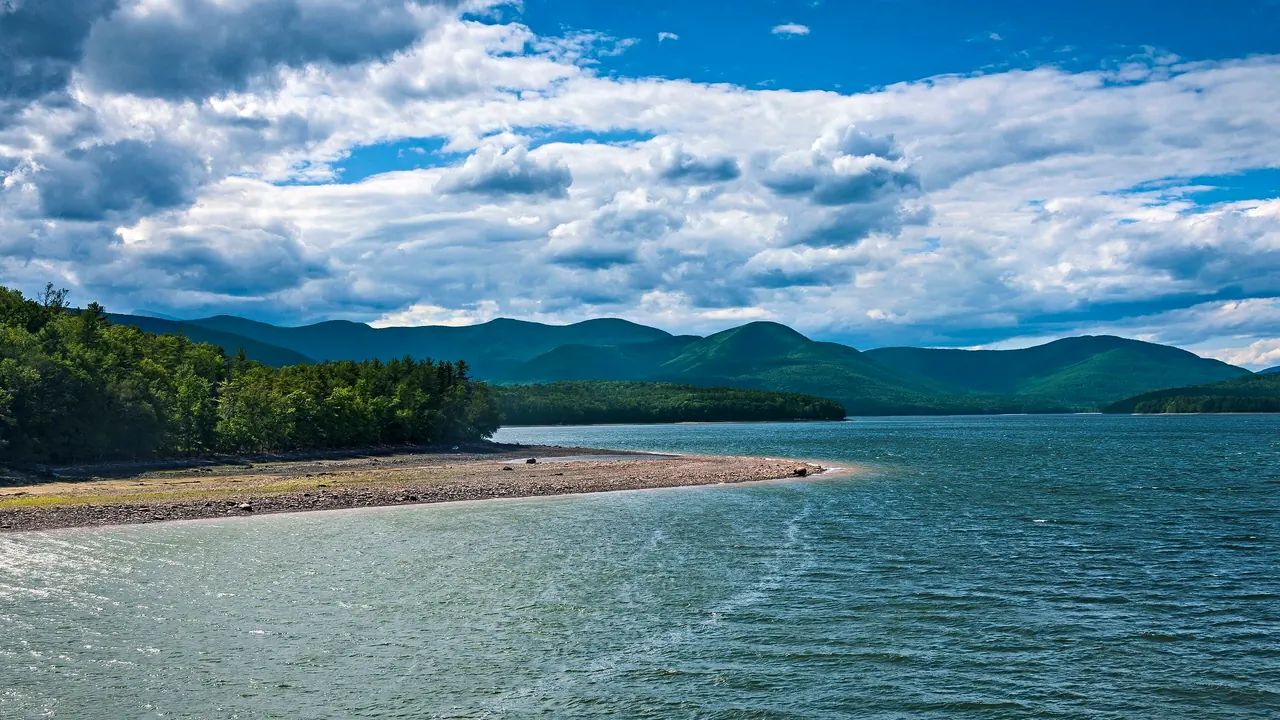
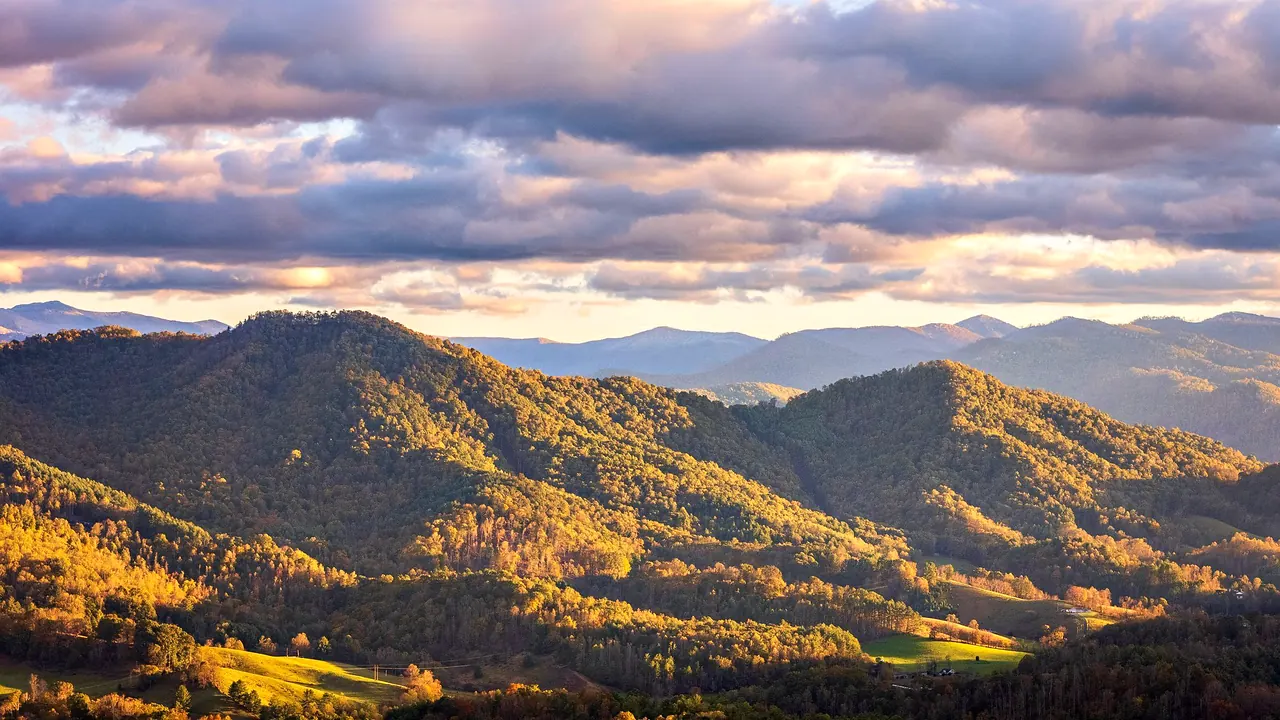
Photos: Catskills by Daniel Case, CC BY-SA 3.0, cropped; Great Smoky Mountains by Mark Stebnicki, Pexels License.
Catskills or Great Smoky Mountains?
Our verdict in twelve categories, each scored against the same fixed benchmark cities, and the climate month by month, so you can choose for your trip.
Choose Catskills for
- beaches
- wellness
- getting around
The Catskills suit adults who want a slow country weekend more than a packed itinerary. You get a cabin or farmhouse by a creek, a Zen monastery or a quiet inn, farm stands and cider, and a ridge hike before dinner in Woodstock or Phoenicia. The Hudson Valley gives it better outings, the food is more interesting and the lakes are better for a summer swim. Coaches from New York City even reach a few of the towns.
Choose Great Smoky Mountains for
- families
- nature and the outdoors
- prices
Families, and anyone whose first aim is big forest scenery, will do better in the Great Smoky Mountains. Dollywood, the attractions along the Parkway and cabins with games rooms keep children busy in a way the Catskills cannot match. The national park itself is wilder and higher, with elk, bears and old-growth forest. It also costs a little less, as long as you can live with traffic on the strips and with mountain entertainment made for tourists.
Scoreboard
Twelve categories on one fixed scale from 0 to 100. The shaded stretch is the gap between the two.
Your match
Pick a travel style or drag the sliders, and both match scores follow your weighting.
Too close to call, 1 point apart
Wins on beaches and wellness with your weighting.
Wins on families and nature and the outdoors with your weighting.
What matters to you?
Category by category
What the scores mean for a trip.
Beaches & swimming
Neither destination has a coast, but the Catskills offer far better swimming. North-South Lake has a real sandy beach ringed by forest, Pleasant Pond gives children calm water, and the Esopus and Peekamoose valley are full of clear swimming holes, although they are cold.
In the Smokies, river water stays chilly even in July. Most people tube on the Little River or around Deep Creek rather than swim, and the reservoirs are used mainly for boating. Families there tend to rely on the cabin pool.
Food & drink
The Catskills eat better. This is dairy and orchard country, so you find farm-to-table kitchens, cheeses, maple syrup, cideries and small distilleries, with Kingston offering the widest choice and Woodstock, Phoenicia and Livingston Manor a few good tables each. The catch is that many kitchens shorten their hours out of season.
The Smokies serve hearty Southern plates: pancake houses, barbecue, biscuits and gravy, country ham and cobbler, plus moonshine tastings in Gatlinburg. It is filling and fun, but the strips are dominated by chains. For the craft beer and serious cooking the Catskills offer locally, you would have to drive to Knoxville.
Culture & sights
Both are modest and come out roughly level, but their stories are very different. The Catskills tell an art history. There is Thomas Cole's house, the falls and ledges the Hudson River School painted, Woodstock's Byrdcliffe colony, the 1969 festival field at Bethel, and Kingston's old stone Stockade district.
The Smokies' heritage is about the people who lived there: the log cabins and churches of Cades Cove, Mingus Mill and the Mountain Farm Museum. Their strongest visit is in Cherokee, where the Eastern Band's museum and the Oconaluftee Indian Village tell a Native story the Catskills have no equivalent for.
Nightlife
Neither is a place to go out, and both have one casino, near Monticello and in Cherokee, that stays open late. In the Catskills, a night out means a brewery taproom, a country tavern or a cocktail bar in Kingston or Woodstock. The Smokies' evenings centre on Gatlinburg's main street, where moonshine tastings and attractions draw a family crowd until well before midnight.
Nature & outdoors
The Catskills are fine hiking country. They have dozens of summits over a thousand metres, the punishing Devil's Path, fire-tower views across wooded ridges, trout rivers such as the Beaverkill, and modest winter skiing at Hunter and Windham.
The Smokies work on another scale. Kuwohi rises past 2,000m above old-growth forest, and more than 1,000km of trails include a long stretch of the Appalachian Trail. The wildlife is easy to see, with bears in Cades Cove and elk at Cataloochee. Spring wildflowers and the Elkmont fireflies give the seasons a range the Catskills cannot match.
Day trips
The Catskills have the richer list of outings, thanks to the Hudson Valley along their eastern edge. Olana and the antique dealers of Hudson are just across the river. Further south lie the Roosevelt home at Hyde Park, the Vanderbilt mansion, Beacon's contemporary art museum and Storm King's sculpture park. Cooperstown is within reach to the west.
From the Smokies, the standout is Asheville and the Biltmore Estate, with Knoxville as a second city. After those come small towns like Bryson City and its gorge railway, and scenic drives along the Blue Ridge Parkway.
Good for families
The Smokies are made for family vacations. Dollywood, its water park, go-karts, mini golf, a large aquarium and the treetop walk mean there is always a fallback, and junior ranger programmes and easy waterfall trails cover the outdoor side.
The Catskills offer a simpler, quieter version. Children get lake beaches, tubing on the Esopus, apple picking, campgrounds and beginner slopes, and the towns are calmer. But apart from a few small water parks, little is built for children, and a wet day there can drag.
Getting around
You need a car in both. The Catskills are somewhat easier: coaches from New York City reach Kingston, Woodstock and Phoenicia, and the roads are quiet on weekdays. Expect slow, winding drives between towns that look close on the map.
The Smokies are harder going. The park has no public transport, the Parkway through Pigeon Forge jams in peak periods, Newfound Gap can close in winter, and the Cades Cove loop stops dead whenever a bear appears. Gatlinburg's trolleys only help in the centre.
Shopping & style
The Smokies have a little more to buy. The craft studios on the loop road outside Gatlinburg sell pottery, quilts and brooms made on the spot, the Cherokee cooperative sells baskets and carvings, and there are outlet malls along the Parkway.
The Catskills offer browsing instead: antique barns along Route 28, Woodstock's potters and jewellers, general stores and Kingston's booksellers. Neither has fashion or luxury shopping.
Affordability
The Smokies are the cheaper trip. The national park charges no entrance fee, only parking, and motels and cabins in Pigeon Forge and Sevierville are modestly priced, especially when a big group shares a cabin. Dollywood and other paid attractions are what push the bill up.
The Catskills price themselves as a weekend escape from New York City, so inns and cabins around Woodstock and Hunter are expensive in summer and autumn. Your money goes further on weekdays, in state campgrounds or on the Delaware County side.
Live music & performing arts
These two are level on live entertainment but offer very different kinds. The Catskills have folk and roots concerts in Woodstock barns, the Maverick chamber series in its wooden hall in the woods, and big touring acts at the Bethel amphitheatre, though almost all of it happens in summer.
The Smokies are about polished country, bluegrass and gospel: Pigeon Forge's dinner shows and Opry-style revues, Dollywood's stages, and Cherokee's long-running outdoor drama Unto These Hills.
Wellness & relaxation
The Catskills are the better place to unwind. Beyond the porch-and-wood-stove pace, there are resort spas with saunas and outdoor tubs around Woodstock, the Zen monastery at Mount Tremper, a Tibetan Buddhist centre and yoga retreats that take guests.
In the Smokies, rest mostly means a hot tub on a ridge-top cabin deck in Townsend or Wears Valley, away from the busy strips. A few resort spas and upscale foothill retreats offer more polish, but there is little else.
When should you go?
Pick your month. The climate figures are measured averages, not a forecast.
Catskills in July
Great Smoky Mountains in July
Daytime high, °C
Rainfall in the month, mm
Where the figures come from
Catskills's temperatures are measured 50 km from the centre, at Poughkeepsie / New Hackensack.
Catskills has no rain gauge within 25 km of the centre, so its rainfall comes from a gridded climate dataset read at the destination rather than from a gauge further away.
Great Smoky Mountains's temperatures are measured 43 km from the centre, at McGhee Tyson Airport.
Great Smoky Mountains's station stands 151 m below the place it is measured for, so that place is likely a little cooler than the figures say.
Great Smoky Mountains has no rain gauge within 25 km of the centre, so its rainfall comes from a gridded climate dataset read at the destination rather than from a gauge further away.
Temperature and rainfall are climate normals, averaged over the years shown. Catskills: 1991-2020 normals, Poughkeepsie / New Hackensack (50 km from centre). Great Smoky Mountains: 1991-2020 (sunshine 1981-2010) normals, McGhee Tyson Airport (42.9 km from centre).
The Catskills have a short warm season and a long cold one. July reaches about 30°C, and the lakes are only pleasant for swimming from late June to early September. Late spring and autumn are the best times for hiking, with the foliage at its peak from late September to mid October. January and February sit close to freezing, as low as 2°C in January, which is weather for skiing and snowshoes rather than strolling a main street. December and March are cold too, though less harsh. Rain falls fairly evenly through the year, with no real wet season.
Around the Smokies' main towns it is noticeably milder. Even January reaches about 9°C, so winter walks are possible, and spring warms up weeks earlier than in the Catskills. Summer is hot at lower levels, and July is the wettest month at around 148mm, although winter and early spring are nearly as wet. Sunshine peaks from May to July. October is the driest month at around 72mm and still warm, which makes it the most comfortable time for long days on the trails.
Which traveller are you?
On a family trip with children, the Catskills suit families happy with lake beaches, tubing and woods. The Great Smoky Mountains are the easier choice, with a paid attraction for every rainy day, though those attractions are what raise the bill there.
For a relaxing and wellness trip, the Catskills give more. Quiet is normal here, not something you have to drive to find, and the monasteries and retreats give the stay some shape. In the Smokies, calm depends on choosing a cabin well away from the strips.
On an outdoors trip, the Catskills make a good long weekend of hard ridge walks and river fishing within easy reach of New York City. The Smokies repay a longer stay. The forest is wilder, the wildlife easier to see, and a week only scratches the surface.
Before you go
| Measure | Catskills | Great Smoky Mountains |
|---|---|---|
| Currency | US Dollar (USD) | US Dollar (USD) |
| Sockets | AB120 V, 60 Hz | AB120 V, 60 Hz |
| Driving side | Right | Right |
| Time zone | UTC-5, UTC-4 in summer | UTC-5, UTC-4 in summer |
| Emergency number | 911 | 911 |
| Main airport | Albany International Airport (ALB)26 non-stop destinations | McGhee Tyson Airport (TYS)34 non-stop destinations |
| Public holidays this year | 13 days | 13 days |
Where else could you go?
Every comparison below shares a destination with this one, so you can follow Catskills or Great Smoky Mountains somewhere new.
- Poconosvs Catskills
- The Hamptonsvs Catskills
- Adirondacksvs Catskills
- Martha's Vineyardvs Catskills
- Cape Codvs Catskills
- Nantucketvs Catskills