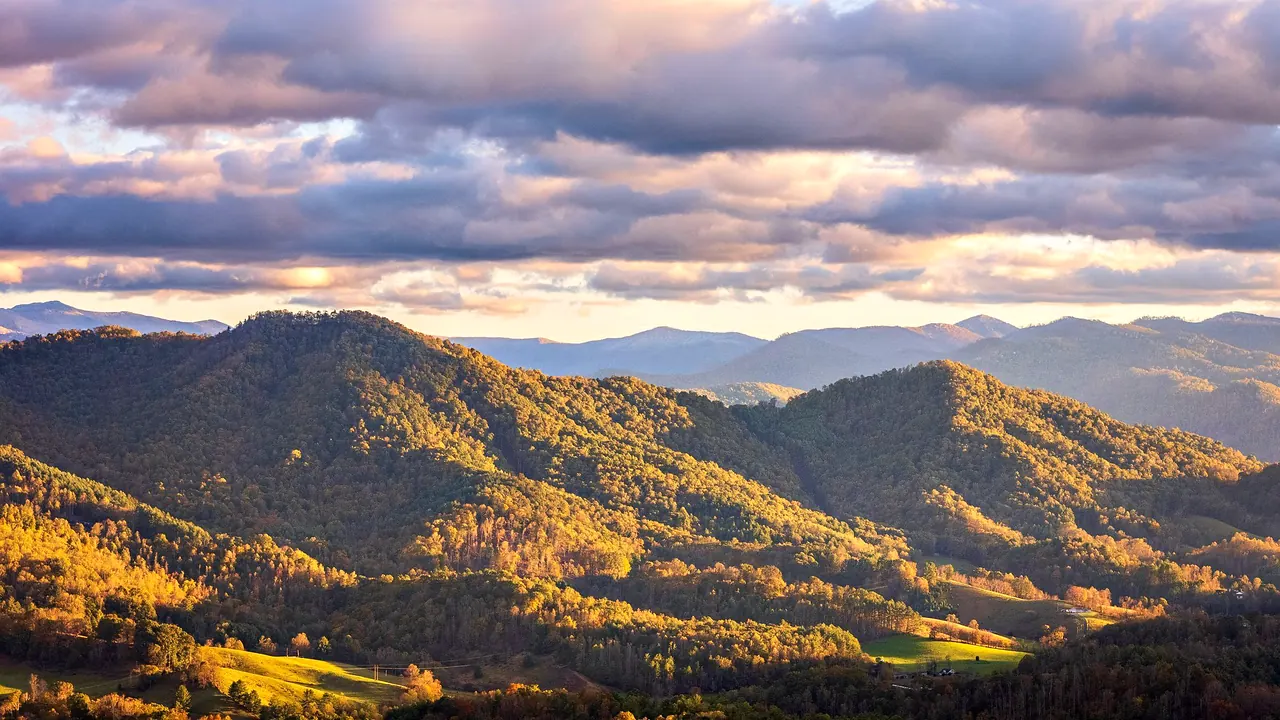
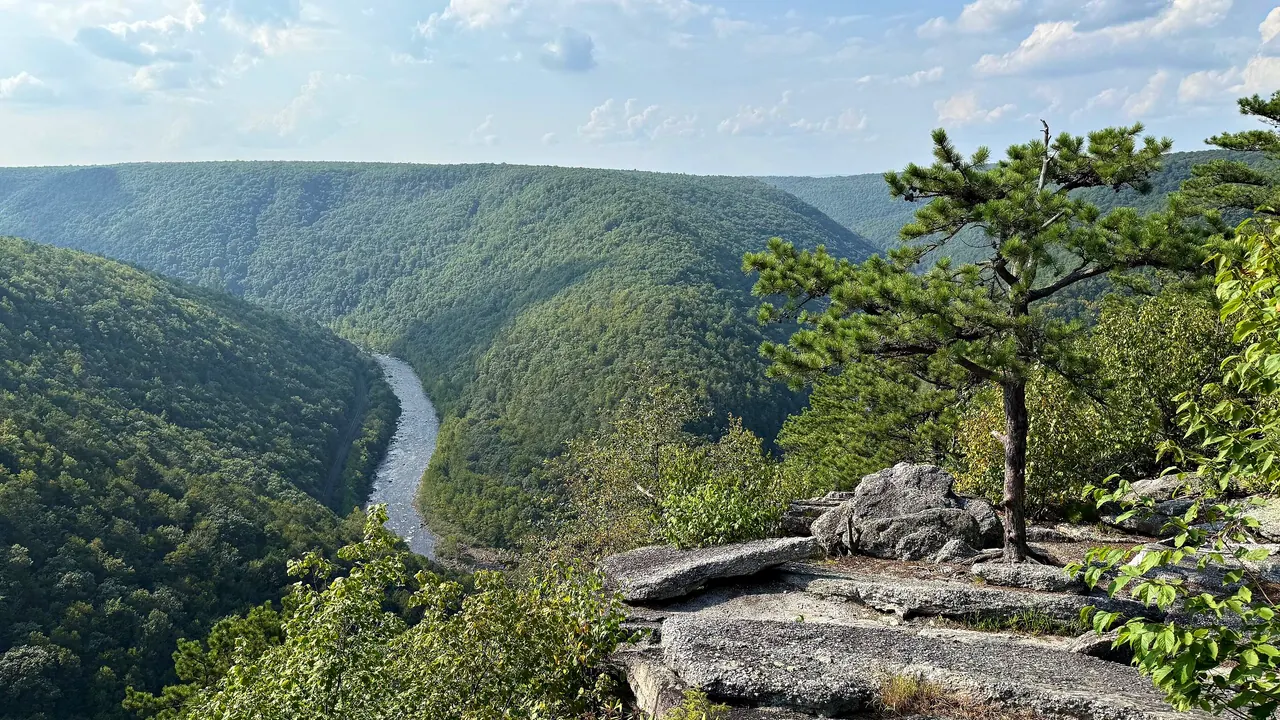
Photos: Great Smoky Mountains by Mark Stebnicki, Pexels License; Poconos by Famartin, CC BY-SA 4.0, cropped.
Great Smoky Mountains or Poconos?
Our verdict in twelve categories, each scored against the same fixed benchmark cities, and the climate month by month, so you can choose for your trip.
Choose Great Smoky Mountains for
- nature and the outdoors
- families
- live music and the arts
Choose the Great Smoky Mountains for a bigger landscape and a fuller family programme. The national park's old-growth forests, the bears of Cades Cove and the long ridge trails go well beyond anything in the Poconos. Dollywood, the Pigeon Forge strip and the country and gospel shows give children and evenings more to do. The cost is long drives on slow, often jammed roads.
Choose Poconos for
- beaches
- getting around
- wellness
The Poconos make more sense as a quieter retreat within easy reach of New York and Philadelphia. Distances inside the region are short, the state-park lakes give proper summer swimming, and the couples' resorts and lakeside spas offer more pampering. The scenery is gentler, a forested plateau rather than high ridges, so come here for rest more than adventure.
Scoreboard
Twelve categories on one fixed scale from 0 to 100. The shaded stretch is the gap between the two.
Your match
Pick a travel style or drag the sliders, and both match scores follow your weighting.
Too close to call, level with your weighting
Wins on nature and the outdoors and families with your weighting.
Wins on beaches and getting around with your weighting.
What matters to you?
Category by category
What the scores mean for a trip.
Beaches & swimming
Neither is a swimming destination, and the Smokies are the weaker of the two. There the water means cold mountain rivers: tubing on the Little River near Townsend or at Deep Creek, and shallow swimming holes. Fontana and Douglas lakes are mainly for boating, so most proper swims happen in the cabin pool.
The Poconos have real lake beaches. They are small and grassy, but they are guarded state-park beaches at Promised Land, Beltzville and Hickory Run, with sandy strips on Lake Wallenpaupack. The season is short, from June to early September, and tubing on the Delaware adds another way into the water.
Food & drink
Both serve hearty food for people who have been outdoors all day, but the Smokies have more of a regional table. You get barbecue, country ham, biscuits and gravy, mountain trout and fruit cobblers, along with moonshine tastings in Gatlinburg. Bryson City and Waynesville are calmer places to eat, and Knoxville is close for serious restaurants.
The Poconos are plainer, mostly diners, pizza and resort dining rooms, with shoofly and whoopie pies as the Pennsylvania Dutch touch. The better meals are on Stroudsburg's Main Street and in Jim Thorpe and Milford. Breweries and small wineries along the back roads make an easy afternoon.
Culture & sights
The Smokies tell the story of mountain farmers and the Cherokee, while the Poconos tell one of coal, railways and the fortunes they made. In the Smokies most of that history sits inside the park, in the log cabins, churches and cemeteries along the Cades Cove loop and at the Mountain Farm Museum and Mingus Mill near Oconaluftee. Cherokee's history museum and the Oconaluftee Indian Village give the Smokies a slight edge, because neither region has a visit with as much depth.
In the Poconos the history is mostly in Jim Thorpe, where Victorian brick streets and the Asa Packer Mansion show the railway money and the Old Jail Museum shows its harder side. Eckley Miners' Village keeps the miners' houses, and Grey Towers in Milford adds Gifford Pinchot's château-style home. In both regions these are half-day visits between days outdoors rather than a trip in themselves.
Nightlife
Both go quiet early and neither suits a night out. In the Smokies the evening at least has a street to it: Gatlinburg's main street stays busy after dark with moonshine rooms, a few breweries and crowds among the attractions, and the Cherokee casino runs late.
Poconos evenings stay mostly indoors, in resorts and rental cabins. The Mount Pocono casino has the late lounges, ski areas run après-ski bars on winter weekends, and Stroudsburg and Jim Thorpe have a handful of pubs.
Nature & outdoors
This is where the two differ most. The Smokies are true mountains, rising past 2,000m at Kuwohi and covered in old-growth cove forest and spruce-fir woods. They have well over 1,000km of trails, from Laurel Falls to Mount LeConte, plus bears in Cades Cove, elk at Cataloochee, spring wildflowers and the Elkmont fireflies.
The Poconos are a forested plateau with gentler scenery. The Delaware Water Gap, waterfalls such as Bushkill and Dingmans, and rafting and cycling in the Lehigh Gorge make good days out. Winter adds short but reliable ski slopes at Camelback and Blue Mountain, and autumn colour is the high point of the year.
Day trips
Each has one standout city about an hour away, but the outings differ. From the Smokies it is Asheville, with its Art Deco streets and the Biltmore Estate, closest from the North Carolina side. Otherwise the days out are scenic ones: the heritage railway through the Nantahala gorge from Bryson City, or a drive along the Blue Ridge Parkway.
From the Poconos, Bethlehem pairs 1740s Moravian stone buildings with old steelworks blast furnaces, and Scranton has railway and coal-mine museums. New York and Philadelphia are each about two hours away, which makes a long day possible, though weekend traffic makes it tiring.
Good for families
Both are built for family vacations, but the Smokies have more to fill a longer stay. Dollywood and its water park, the coasters, go-karts, aquarium and treetop walk along the Parkway, bear-spotting in Cades Cove and junior ranger programmes give children something different every day.
The Poconos suit shorter stays. The indoor waterpark resorts around Mount Pocono rescue a rainy day, Camelback has a summer waterpark and gentle ski slopes for learners, and short drives spare families the traffic jams of the Smokies' strips.
Getting around
You need a car in both, but the Smokies are much harder work. Only Gatlinburg's compact centre and its trolleys work without one. The park has no public transport, the crossing over Newfound Gap is slow and can close in winter, and the Pigeon Forge Parkway jams in summer and October.
The Poconos are simpler to get around. Most drives inside the region take twenty minutes to an hour, coaches reach Stroudsburg and Mount Pocono from New York, and the centres of Jim Thorpe, Stroudsburg and Milford are pleasant on foot. The main thing to avoid is the interstate on Friday evenings and Sunday afternoons.
Shopping & style
The Smokies give you the better reason to shop. On the craft loop outside Gatlinburg, potters, broom-makers and quilters sell straight from their workshops. The Cherokee artists' cooperative sells baskets, carvings and beadwork, and outlet malls line the Parkway as well.
The Poconos have the premium outlet centre at Tannersville, plus antique and gift shops in Jim Thorpe and Milford and maple syrup from farm stands. That is pleasant enough for a rainy day, but there is no craft shopping on the Smokies' scale.
Affordability
Overall costs come out much the same, and in both the outdoors is the cheap part. In the Smokies the national park charges no entry, only a parking tag. Shared cabins in Pigeon Forge and Sevierville keep groups cheap until Dollywood tickets start to add up.
In the Poconos the saving comes from timing. Midweek cabins and older motels are good value, while weekends, ski season and autumn cost more, and waterpark resorts and lift tickets charge full prices.
Live music & performing arts
The Smokies have the bigger stage scene, built on country, bluegrass and gospel. Pigeon Forge's row of theatres runs Opry-style revues and dinner shows nightly in season, Dollywood's stages carry music all day, and Cherokee's outdoor drama Unto These Hills has played every summer since 1950.
The Poconos are smaller and more mixed. Delaware Water Gap has a jazz tradition and its late-summer festival, the Mauch Chunk Opera House in Jim Thorpe hosts folk and roots acts, and summer-stock playhouses carry on the old resort theatre.
Wellness & relaxation
Neither has a bathing tradition. In the Smokies, rest mostly means a hot tub on a cabin deck in Townsend or Wears Valley, with only a few hotel spas and some foothill retreats for treatments.
The Poconos built their reputation on this kind of stay. There are secluded couples' resorts with fireplaces and in-room hot tubs, large destination spa resorts with treatment programmes around Lake Wallenpaupack and Hawley, and old mountain lodges with spas of their own.
When should you go?
Pick your month. The climate figures are measured averages, not a forecast.
Great Smoky Mountains in July
Poconos in July
Daytime high, °C
Rainfall in the month, mm
Where the figures come from
Great Smoky Mountains's temperatures are measured 43 km from the centre, at McGhee Tyson Airport.
Great Smoky Mountains's station stands 151 m below the place it is measured for, so that place is likely a little cooler than the figures say.
Great Smoky Mountains has no rain gauge within 25 km of the centre, so its rainfall comes from a gridded climate dataset read at the destination rather than from a gauge further away.
Poconos's temperatures are measured 40 km from the centre, at Wilkes-Barre/Scranton International.
Poconos's station stands 162 m above the place it is measured for, so that place is likely a little warmer than the figures say.
Poconos has no rain gauge within 25 km of the centre, so its rainfall comes from a gridded climate dataset read at the destination rather than from a gauge further away.
Temperature and rainfall are climate normals, averaged over the years shown. Great Smoky Mountains: 1991-2020 (sunshine 1981-2010) normals, McGhee Tyson Airport (42.9 km from centre). Poconos: 1991-2020 (sunshine 1981-2010) normals, Wilkes-Barre/Scranton International (40 km from centre).
Measured around the main resort towns, the Smokies are the warmer of the two all year. Summer days reach 31°C in July and August, and July is also the wettest month at 148mm. Those hot, humid afternoons suit rivers and high trails better than walking round town. Spring and autumn are the best seasons, and October is the driest month at 72mm. Winter stays mild in the valleys, though snow can close the high roads.
The Poconos run several degrees cooler. January highs sit around 1°C, which suits skiing and cabin fires rather than walking. Summer peaks at 29°C in July, warm enough for lake swimming from June to early September. Rain falls fairly evenly through the year. Both get plenty of summer sunshine, a little more in the Smokies.
Which traveller are you?
On an outdoors trip, the Great Smoky Mountains are the clear pick. Higher ridges, old-growth forest, well over 1,000km of trails, bears and elk give far more to explore than the Poconos' gentler plateau, if you accept long drives between trailheads.
On a family trip with children, the Smokies lead again. Dollywood, the Pigeon Forge attractions and easy waterfall walks can fill a whole week. The Poconos' indoor waterpark resorts and short distances suit a long weekend better than a longer stay.
For a relaxing and wellness trip, choose the Poconos. Its couples' resorts with fireplaces and in-room hot tubs, and the spa resorts around Lake Wallenpaupack, offer real pampering. In the Smokies, rest mostly means a cabin deck with a view.
Before you go
| Measure | Great Smoky Mountains | Poconos |
|---|---|---|
| Currency | US Dollar (USD) | US Dollar (USD) |
| Sockets | AB120 V, 60 Hz | AB120 V, 60 Hz |
| Driving side | Right | Right |
| Time zone | UTC-5, UTC-4 in summer | UTC-5, UTC-4 in summer |
| Emergency number | 911 | 911 |
| Main airport | McGhee Tyson Airport (TYS)34 non-stop destinations | Lehigh Valley International Airport (ABE)14 non-stop destinations |
| Public holidays this year | 13 days | 12 days |
Where else could you go?
Every comparison below shares a destination with this one, so you can follow Great Smoky Mountains or Poconos somewhere new.
- Catskillsvs Poconos
- The Hamptonsvs Poconos
- Adirondacksvs Poconos
- Shenandoahvs Poconos
- Martha's Vineyardvs Poconos
- Cape Codvs Poconos