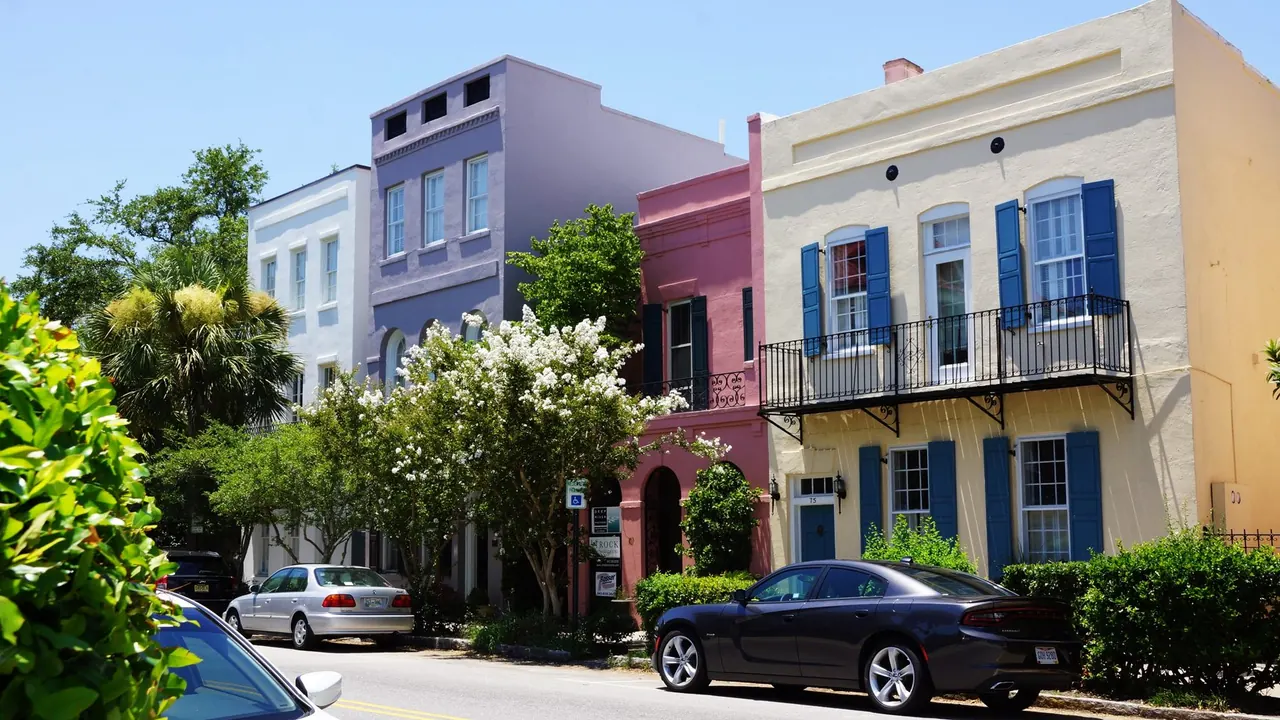
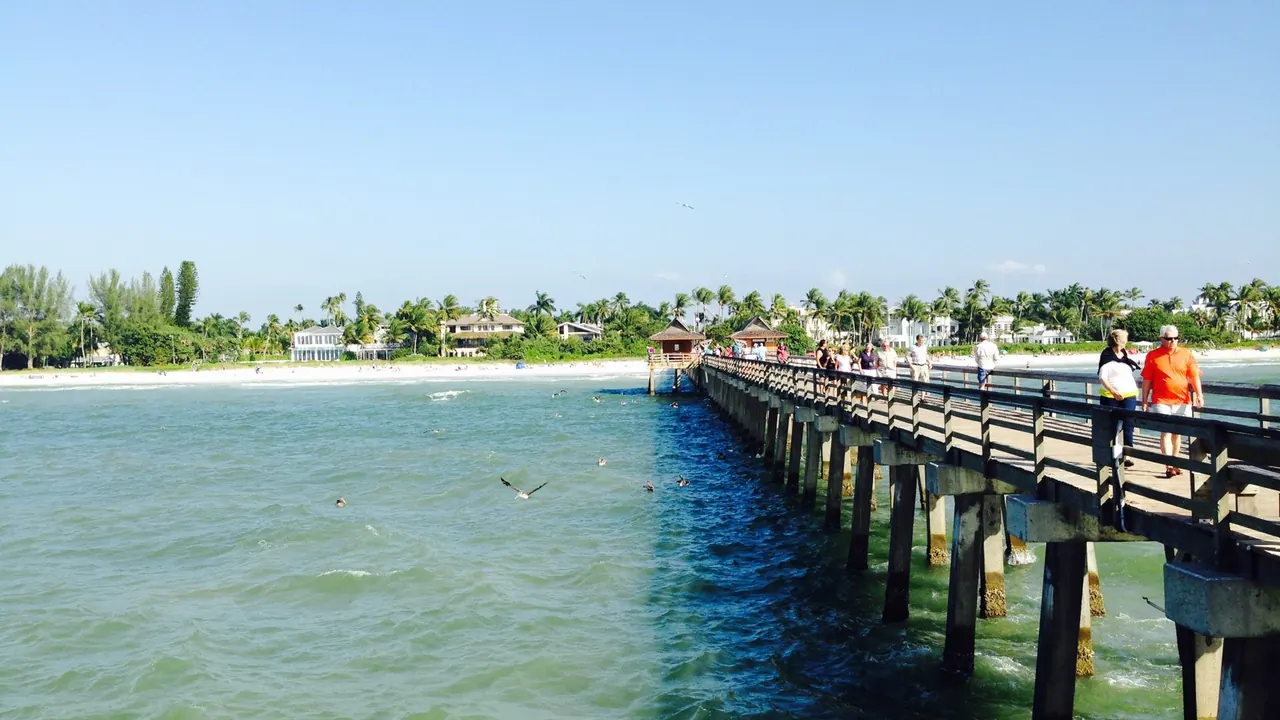
Photos: Charleston by NealVickers, CC BY-SA 4.0, cropped; Naples, Florida by William “Patrick” Ma…, CC BY-SA 3.0, cropped.
Charleston or Naples, Florida?
Our verdict in twelve categories, each scored against the same fixed benchmark cities, and the climate month by month, so you can choose for your trip.
Choose Charleston for
- culture and sights
- food and drink
- nightlife
Charleston suits travellers who want a city to explore as well as a beach. Its historic peninsula of Georgian and antebellum streets, its Lowcountry cooking and the history told at Fort Sumter and the old plantations give a few days real substance. The barrier islands are close enough to add sand and sea, the old town can be seen on foot, and it costs a little less.
Choose Naples, Florida for
- beaches
- nature and the outdoors
- wellness
When the beach is the whole point, Naples is the better choice. The Gulf sand is finer and the water calmer and clearer. Winter stays warm enough to wade in, and the Everglades and mangrove channels offer wilder outdoor days. Expect quiet evenings, few sights and a car for almost everything beyond Old Naples.
Scoreboard
Twelve categories on one fixed scale from 0 to 100. The shaded stretch is the gap between the two.
Your match
Pick a travel style or drag the sliders, and both match scores follow your weighting.
Wins on culture and sights and food and drink with your weighting.
Wins on beaches and nature and the outdoors with your weighting.
What matters to you?
Category by category
What the scores mean for a trip.
Beaches & swimming
Both cities have real beaches, but in Naples they are better and right on the doorstep. Fine, pale sand runs the length of the city, with paths down to it from the ends of Old Naples streets. The Gulf is usually calm, shallow and clear, and in the evening people gather to watch the sun set over the water. Further north, Clam Pass and the dunes of Barefoot Beach feel wilder.
Charleston's beaches are on barrier islands about half an hour out, and each has its own character: surfy Folly Beach, quiet Sullivan's Island with its old forts, and the wider, more resort-like Isle of Palms. The Atlantic there is greener and churned by tides, with rip currents on some days, and in winter it is too cool to swim.
Food & drink
Charleston is the stronger place to eat by some distance. Its Lowcountry cooking includes shrimp and grits, she-crab soup, Carolina Gold rice and winter oyster roasts, and it has deep Gullah Geechee and West African roots. You can eat it in dining rooms in restored townhouses or at barbecue joints that smoke whole hogs, and biscuit breakfasts and craft breweries add to it.
Naples eats comfortably rather than memorably. Steak, Italian and modern American cooking fill Fifth Avenue South, and the local highlight is Gulf grouper and stone crab at the dockside fish houses around Tin City. Neither city has much street food or cheap international cooking.
Culture & sights
Charleston has far more to see. The historic peninsula is the main sight, with Rainbow Row, the Battery and the single houses south of Broad Street. Its house museums, Fort Sumter and the International African American Museum deal openly with a hard history, and two or three days covers it well.
Naples is a young resort city with a day's sightseeing at most. There is modern and American art at the Baker Museum, historic racing cars at the Revs Institute for enthusiasts, and Palm Cottage for a glimpse of early Naples. Most visitors spend their time outdoors instead.
Nightlife
Neither city is worth choosing for its nightlife, but Charleston at least has a bar scene. Upper King Street fills with rooftop bars, cocktail rooms and oyster bars, loud with students and weekend groups, and the French Quarter has quieter wine bars and old taverns.
Naples winds down after dinner and a sunset drink. Fifth Avenue South has piano lounges and wine bars that are busy in winter, but the crowd is older and the town is mostly quiet before midnight. For a real night out, people drive to Fort Myers Beach.
Nature & outdoors
Charleston's outdoors is gentle marsh country, while Naples has a true wilderness within reach. Around Charleston, the Lowcountry is spartina marsh, tidal creeks and maritime forest of live oaks hung with Spanish moss. It is best seen from a kayak, often with dolphins alongside, and the Francis Marion National Forest and the ACE Basin add quiet trails and alligators. Spring and autumn are the seasons for it.
From Naples, Big Cypress, the western Everglades, the Corkscrew Swamp boardwalk and the orchids of the Fakahatchee Strand are all within an hour, with wading birds, alligators and, with luck, manatees. Paddling the mangrove channels of the Ten Thousand Islands and Rookery Bay is the outstanding day out, best in the dry winter before summer storms and mosquitoes arrive.
Day trips
Charleston has the better outings. Middleton Place, Magnolia and Drayton Hall are about half an hour away and pair formal gardens with the history of the enslaved people who worked them. Savannah's squares make a full day two hours south, and Beaufort offers Gullah culture on the sea islands.
The trips from Naples are pleasant but thinner. There are the Edison and Ford Winter Estates in Fort Myers and shelling on Sanibel and Captiva, while the Ringling museums in Sarasota and the city of Miami are each about two hours away. You need a car for all of these from either city.
Good for families
Both are calm, easy places to take children, and the difference is in the kind of day. Naples is built around the shallow, warm Gulf, where children can collect shells and watch dolphins from the shore. Naples Zoo has a boat ride past primate islands, and the Golisano Children's Museum is aimed at the under-tens.
Charleston mixes beach days with history children can climb on, such as the aircraft carrier at Patriots Point, plus the boat out to Fort Sumter and the South Carolina Aquarium on the waterfront. Neither city has a theme park, and summer afternoons are draining in both.
Getting around
Once you leave the centre, both are car towns, but in Charleston the centre holds much more of what you came for. Most sights on the flat historic peninsula are within about 3km, and pedicabs and a free shuttle bus fill the gaps, so you can spend days there without driving.
In Naples, the walkable part is the small grid of Old Naples around Fifth Avenue South and the pier. To reach anything else, from the northern beaches to the Everglades, you face long, wide roads, a thin bus network and winter traffic.
Shopping & style
Charleston edges ahead for browsing. King Street changes along its length, from antiques dealers on lower King to independent boutiques and design shops further up. In the City Market, Gullah artisans weave sweetgrass baskets, a local craft Naples has nothing to match.
Shopping in Naples is more polished but narrower. Fifth Avenue South and Third Street South have resort wear, jewellers and galleries, and an open-air mall gathers international designer names, a luxury tier Charleston lacks. There are also outlet malls half an hour north.
Affordability
Neither city is cheap, but Naples costs more. Its beachfront resorts charge premium rates from roughly January to April, its restaurants are priced for a wealthy crowd, and you almost always need a rental car. Summer there is much cheaper, though hot and stormy.
Charleston's inns on the peninsula and its well-known restaurants are pricey too, especially on spring and autumn weekends, but you can see the old town on foot without paying for a car. In both cities the beaches are free, and staying in Mount Pleasant or out in Fort Myers saves money but means driving in every day.
Live music & performing arts
The two are close, and the difference is mostly in timing. Charleston's high point is Spoleto Festival USA in late spring, more than two weeks of opera, chamber music, dance, theatre and jazz. The Dock Street Theatre and the Gaillard Center keep going the rest of the year, and Gullah storytelling and song add a local strand.
Naples has no single big festival. Instead it has a steady season from late autumn to spring, led by the Naples Philharmonic in its own hall, with touring Broadway shows and two theatre companies. In summer it falls almost silent.
Wellness & relaxation
Charleston unwinds in town. Its calm comes from shaded walled gardens, quiet church courtyards, porches and long evenings by the water at White Point Garden, and for a proper treatment day you drive out to the resort spas on Kiawah Island.
Naples puts its spas beside the sand. The large beachfront resorts open their pools, treatment rooms and fitness classes to non-guests, and the rest of the slow pace is golf and sunset walks along the Gulf. Thermal springs or a bathing culture are missing from both.
When should you go?
Pick your month. The climate figures are measured averages, not a forecast.
Charleston in July
Naples, Florida in July
Daytime high, °C
Rainfall in the month, mm
Where the figures come from
Naples, Florida has no rain gauge within 25 km of the centre, so its rainfall comes from a gridded climate dataset read at the city rather than from a gauge further away.
Temperature and rainfall are climate normals, averaged over the years shown. Charleston: 1991-2020 normals, Charleston Airport (16.1 km from centre). Naples, Florida: 2002-2020 (rainfall 1991-2020) normals, Naples / East Naples (2.3 km from centre).
Charleston has four distinct seasons. Winter is cool, with January highs around 16°C, which is fine for walking but not for the beach. April and May are the best months for the streets and the marshes, warm and fairly dry. The Atlantic is warm enough to swim from late May into October and reaches about 28°C in high summer. From June to September it is hot, humid and at its wettest, with heavy afternoon rain.
Naples is warmer all year. Winter days are around 23°C and there is little rain from November to April, so that half of the year suits both the beach and Everglades outings. From June to September it turns hot and stormy, with about 235mm of rain in June, although the Gulf is then at its warmest, close to 30°C. For winter sun Naples wins easily. For walking city streets in spring or autumn, Charleston is more comfortable.
Which traveller are you?
On a beach and sun trip, Naples is the pick. Pale Gulf sand runs along the whole city, the water is calm and clear and winters stay warm. Charleston's Atlantic beaches are greener and tidal, and you have to drive out to them from the old town.
For a culture and arts trip, Charleston is far richer. The historic peninsula, house museums such as the Aiken-Rhett, Fort Sumter and the International African American Museum fill several days, and late spring brings Spoleto. Naples offers the Baker Museum and little more.
On a food and nightlife trip, Charleston wins clearly. It has Lowcountry cooking, from shrimp and grits to roasted oysters, and the rooftop and cocktail bars of upper King Street make for real evenings out. Naples dines well but is mostly quiet before midnight.
Before you go
| Measure | Charleston | Naples, Florida |
|---|---|---|
| Currency | US Dollar (USD) | US Dollar (USD) |
| Sockets | AB120 V, 60 Hz | AB120 V, 60 Hz |
| Driving side | Right | Right |
| Time zone | UTC-5, UTC-4 in summer | UTC-5, UTC-4 in summer |
| Emergency number | 911 | 911 |
| Elevation | 6 m | -2 m |
| Main airport | Charleston International Airport (CHS)16 km from centre56 non-stop destinations | Southwest Florida International Airport (RSW)43 km from centre79 non-stop destinations |
| Public holidays this year | 12 days | 11 days |
By the numbers
| Measure | Charleston | Naples, Florida |
|---|---|---|
| City population | 150,227 | 19,115 |
| People per km² | 532 | 450 |
| Museums within 10 km | 19 | 4 |
| UNESCO World Heritage sites within 50 km | 0 | 0 |
| Swim season, months above 21 °C | 6 months | 10 months |
Where else could you go?
Every comparison below shares a destination with this one, so you can follow Charleston or Naples, Florida somewhere new.