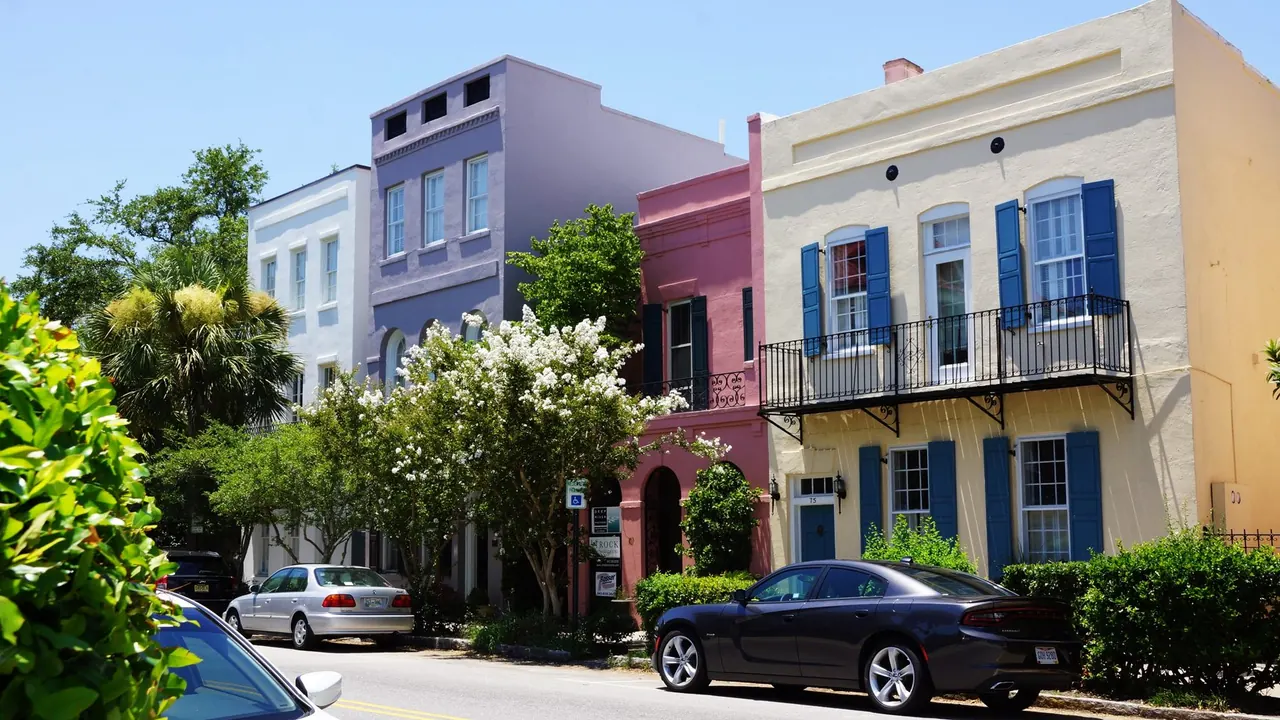
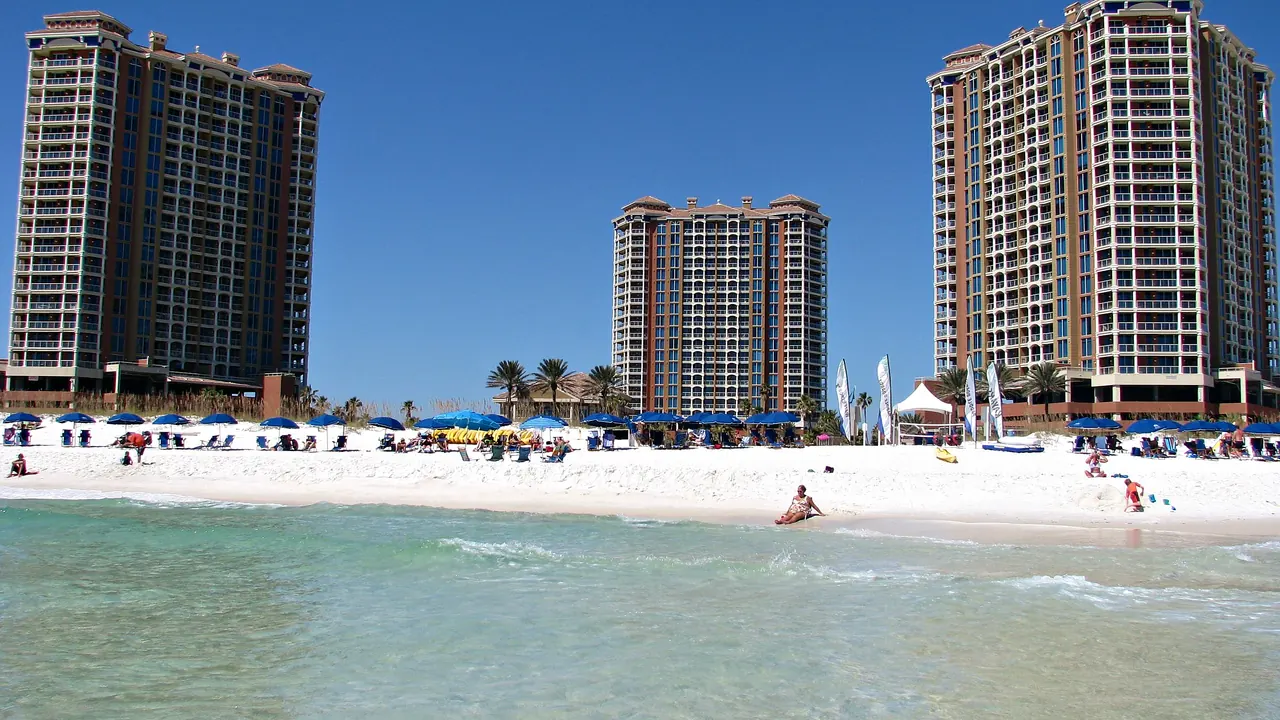
Photos: Charleston by NealVickers, CC BY-SA 4.0, cropped; Pensacola by Jason Meredith, CC BY 2.0, cropped.
Charleston or Pensacola?
Our verdict in twelve categories, each scored against the same fixed benchmark cities, and the climate month by month, so you can choose for your trip.
Choose Charleston for
- getting around
- food and drink
- shopping
Charleston suits travellers who want the city itself to be the trip. Its old peninsula of steeples, walled gardens and antebellum houses is good to walk, its Lowcountry cooking is the best reason to book in either place, and the plantations and Savannah are close enough for day trips. The beach is there for an afternoon or two, but you pay more for all of this, and the trip centres on streets and tables rather than sand.
Choose Pensacola for
- prices
- beaches
- nature and the outdoors
Pensacola is the better choice when the beach comes first. Santa Rosa Island has whiter sand, clearer and warmer water and calmer surf than Charleston's islands, and the national seashore keeps long stretches of it undeveloped. It costs less, especially if you stay inland or come out of season. In return you get a thinner choice of food, culture and shopping, and you will need a car for almost everything.
Scoreboard
Twelve categories on one fixed scale from 0 to 100. The shaded stretch is the gap between the two.
Your match
Pick a travel style or drag the sliders, and both match scores follow your weighting.
Wins on getting around and food and drink with your weighting.
Wins on prices and beaches with your weighting.
What matters to you?
Category by category
What the scores mean for a trip.
Beaches & swimming
Pensacola has the better beaches. Pensacola Beach and the Gulf Islands National Seashore have miles of very white sand, low dunes and clear green water with usually mild surf, and they are only about twenty minutes from downtown. The calm, shallow sound side adds a gentler option that Charleston has no match for.
Charleston's three barrier islands make up for it with variety: surfy Folly with its pier, quieter Sullivan's backed by old forts, broad resort-style Isle of Palms. The water there is greenish and stirred up by the tides rather than clear, though, so it works better as a break from the old town than as the main reason to come.
Food & drink
Charleston is far ahead at the table. Lowcountry cooking, shaped by Gullah Geechee and West African traditions, gives it dishes you will not find elsewhere: she-crab soup, Frogmore stew, Carolina Gold rice. They are served everywhere from townhouse dining rooms to whole-hog barbecue pits, and the best tables need booking well ahead.
Pensacola eats simply and well. Royal red shrimp, grouper sandwiches and chargrilled oysters are best eaten at casual places on the bay, and Palafox Street adds some modern Southern restaurants. The beach strip leans on chains, though, and neither city offers much international food.
Culture & sights
Charleston has much more to see. The whole peninsula south of Broad Street works as an open-air museum, and houses such as Aiken-Rhett show the enslaved people's quarters alongside the grand rooms. The Old Slave Mart and the International African American Museum confront the city's past directly.
Pensacola's history is more layered but thinner on the ground: the Five Flags story told through restored houses around Plaza Ferdinand, the brick bulk of Fort Pickens, and the vast naval aviation collection. That museum sits on an active base, so visits come with ID checks.
Nightlife
Evenings out are much alike in both cities: bars rather than clubs, and nothing worth travelling for. Charleston's centre is upper King Street, with rooftops and cocktail rooms filled by students and weekend groups, plus quieter old taverns in the French Quarter.
Pensacola splits its evenings between Palafox Street and the Seville Quarter, with locals and young Navy crews, and the sand-floored beach bars on the island. The roadhouse on the Alabama line is famous and rowdy, but outside summer the town goes quiet early.
Nature & outdoors
Both coasts are flat, watery country, and Pensacola has a little more to get out into. The national seashore's bike path and boardwalks pass ospreys and nesting shorebirds, the sunken carrier offshore is a serious dive site, and the Blackwater River offers canoeing and tubing on clear, sand-bottomed water.
Charleston's version is the marsh. Kayaks go through spartina creeks among dolphins, and the ACE Basin and Francis Marion forest have alligators and live oaks hung with Spanish moss.
Day trips
Charleston has the better list of day trips. The Ashley River plantations, Middleton Place, Magnolia and Drayton Hall, are only about half an hour out, and McLeod puts the history of enslaved people first. Savannah's squares and Beaufort's Gullah sea islands each make a full day.
From Pensacola, Mobile is the one strong outing, with its antebellum streets and battleship. Fairhope and Fort Morgan are pleasant extras, and the resort towns to the east are mostly more beach. Both cities need a car for these trips.
Good for families
Both work well with children, in different ways. Charleston mixes city and sand: an aquarium and children's museum on the waterfront, a carrier to clamber through at Patriots Point, then wide beaches. Its house tours will bore small children, though.
Pensacola is the easier beach base. Shallow sound-side water suits toddlers, and condos come with kitchens and pools. Planes at the aviation museum, the zoo and the lighthouse climb fill the other days. Neither has a theme park, and summer heat wears children down in both.
Getting around
Charleston is much easier without a car, at least within the old town. The flat peninsula has most sights within easy walking distance, with pedicabs and a free shuttle to fill the gaps, although the beaches and plantations still mean driving or ride-hailing.
In Pensacola a car is close to essential. Only the small downtown is walkable, and the beach, the naval air station, Perdido Key and the shops are spread out along highways and bridges. The seasonal beach trolley helps little beyond the island.
Shopping & style
Charleston is the better place to browse. King Street changes along its length from antiques and galleries to brand-name fashion to independent design shops, and the City Market is where Gullah weavers sell sweetgrass baskets.
Pensacola has a few boutiques and gift shops on Palafox Street, its Saturday market, an ordinary regional mall and beachwear stalls. That is fine for picking up essentials, but not for an afternoon out.
Affordability
Pensacola is the cheaper of the two. Rooms in town and inland cost noticeably less than on the beach, and prices on the island fall sharply out of season. The casual seafood is fairly priced and the biggest museum is free. Car hire is the cost people forget.
Charleston's historic inns and best-known restaurants charge as much as far larger cities, and paid house and plantation tours add up. Walking the old streets, the Battery and the beaches is free, but staying cheaply means a daily drive in from Mount Pleasant.
Live music & performing arts
The gap is small for most of the year. Charleston pulls ahead in late spring, when Spoleto Festival USA and Piccolo Spoleto fill the city with opera, dance, jazz and theatre for over two weeks, and Gullah song and storytelling give it a local strand of its own.
Pensacola's restored 1925 Saenger Theatre covers a surprising range for a small city, with symphony, opera and ballet under one roof. Outside festival season, the historic Dock Street Theatre and the Gaillard Center keep Charleston only slightly ahead.
Wellness & relaxation
Neither has a bathing tradition, but Charleston is the more restful place. Its slow old town of shaded gardens, church courtyards and evenings at White Point Garden does much of the work, and the resorts on Kiawah add proper spas. Pensacola offers hotel day spas and massage studios. Its calm is found on the empty winter sands of Perdido Key rather than in town.
When should you go?
Pick your month. The climate figures are measured averages, not a forecast.
Charleston in July
Pensacola in July
Daytime high, °C
Rainfall in the month, mm
Temperature and rainfall are climate normals, averaged over the years shown. Charleston: 1991-2020 normals, Charleston Airport (16.1 km from centre). Pensacola: 1991-2020 normals, Pensacola / Pleasant Grove (12.3 km from centre).
The two follow nearly the same temperature curve, with Pensacola a degree or so warmer most months. Both are hot from June to August, with highs around 33°C, which makes midday sightseeing hard work. Summer is also the wet season in both, with short heavy storms. Pensacola is the wetter of the two all year, and its winters stay damp, while Charleston dries out noticeably from November to May. For walking Charleston's old streets, April and May or October and November are the best months.
The swimming season runs from May to October in both places. The Gulf at Pensacola warms sooner and stays warmer for longer, holding about 29°C from June to September, and it is still pleasant into early November. The Atlantic off Charleston peaks a little lower in July and August. From December to March neither sea is warm enough for most swimmers, and both beaches are better for walks.
Which traveller are you?
On a beach and sun trip, Pensacola is the clear pick. The white quartz sand and clear green Gulf water of Santa Rosa Island beat Charleston's tidal Atlantic beaches, the surf is usually gentler, and the sea is swimmable for longer each year.
For a culture and arts trip, Charleston has much more to offer. Its historic peninsula, house museums and slavery-history museums are richer than anything in Historic Pensacola, Spoleto fills its theatres every late spring, and King Street's galleries and Gullah sweetgrass baskets add to it.
On a trip on a tight budget, Pensacola stretches money further. Rooms inland and out of season are much cheaper, the casual seafood is reasonably priced and the aviation museum is free. Charleston's peninsula hotels and well-known restaurants charge big-city prices.
Before you go
| Measure | Charleston | Pensacola |
|---|---|---|
| Currency | US Dollar (USD) | US Dollar (USD) |
| Sockets | AB120 V, 60 Hz | AB120 V, 60 Hz |
| Driving side | Right | Right |
| Time zone | UTC-5, UTC-4 in summer | UTC-6, UTC-5 in summer |
| Emergency number | 911 | 911 |
| Elevation | 6 m | 31 m |
| Main airport | Charleston International Airport (CHS)16 km from centre56 non-stop destinations | Pensacola International Airport (PNS)6 km from centre27 non-stop destinations |
| Public holidays this year | 12 days | 11 days |
By the numbers
| Measure | Charleston | Pensacola |
|---|---|---|
| City population | 150,227 | 54,312 |
| People per km² | 532 | 515 |
| Museums within 10 km | 19 | 5 |
| UNESCO World Heritage sites within 50 km | 0 | 0 |
| Swim season, months above 21 °C | 6 months | 7 months |
Where else could you go?
Every comparison below shares a destination with this one, so you can follow Charleston or Pensacola somewhere new.