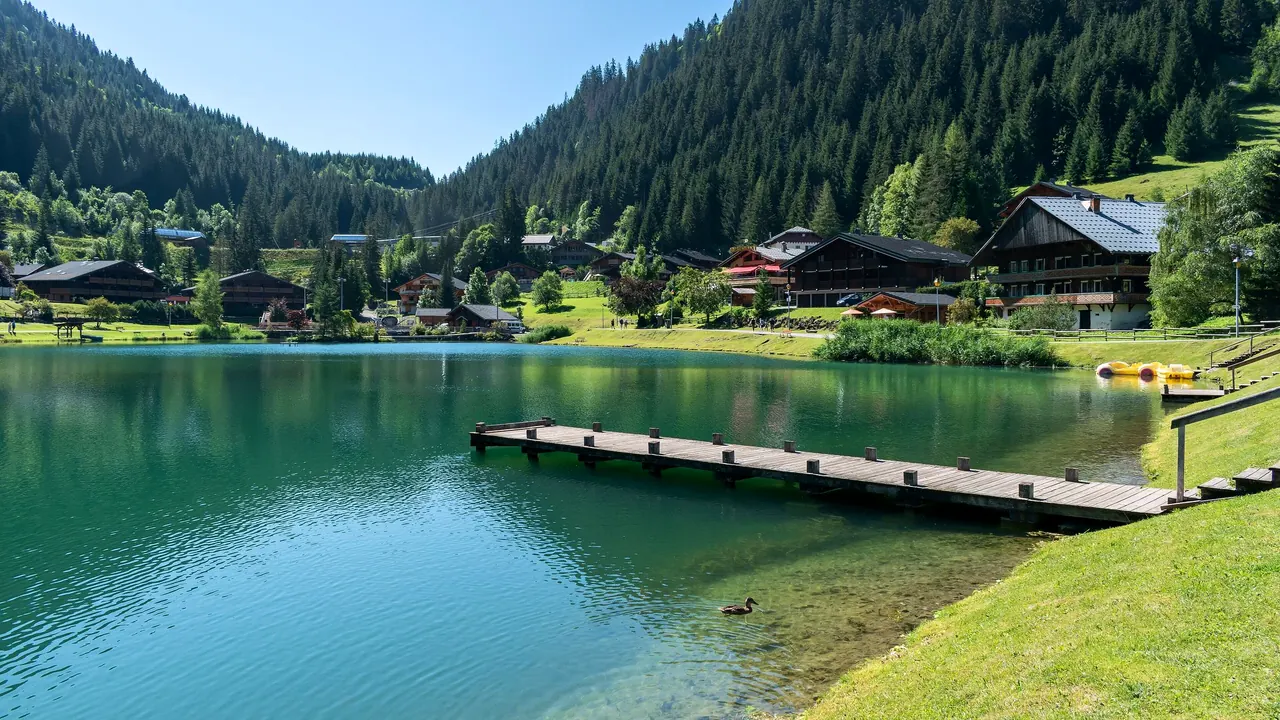
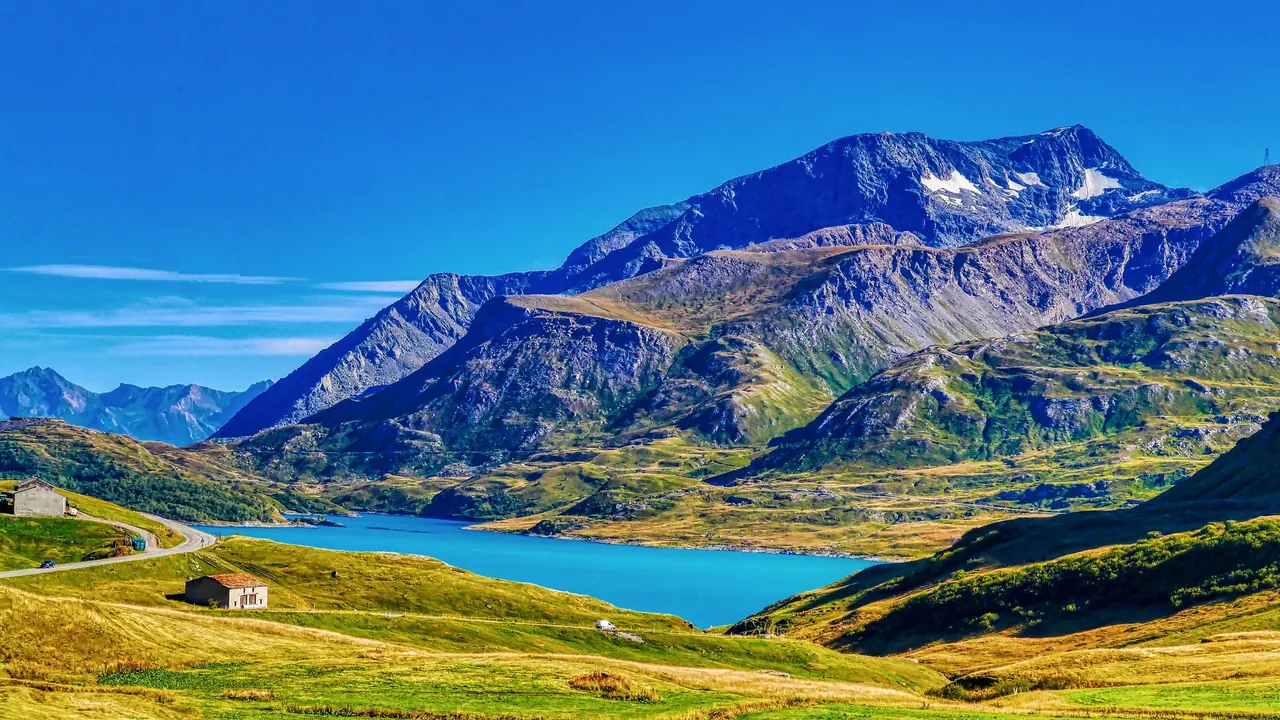
Photos: Châtel by Krzysztof Golik, CC BY-SA 4.0, cropped; Val Cenis by Zairon, CC BY-SA 4.0, cropped.
Châtel or Val Cenis?
Our verdict in twelve categories, each scored against the same fixed benchmark cities, and the climate month by month, so you can choose for your trip.
Choose Châtel for
- wellness
- beaches
- nightlife
Châtel is the better pick for families and mixed groups who want plenty laid on. It is a gateway to the Portes du Soleil, so ski days can cross into Switzerland, and in summer it becomes one of Europe's best-known downhill biking bases. Lake Geneva is close enough for a swim, a spa afternoon at Évian or a ferry to Lausanne, and evenings have a bit more life after the lifts close.
Choose Val Cenis for
- culture and sights
- prices
Val Cenis rewards travellers who come for the mountains themselves and want them quiet. It borders the Vanoise National Park, with ibex and marmots on the hut-to-hut trails, the great road climbs of the Mont Cenis and the Iseran, and high, snow-sure skiing on long gentle runs. Its villages keep frescoed chapels and baroque churches, Italy is just over the pass in summer, and it costs a little less to stay.
Scoreboard
Twelve categories on one fixed scale from 0 to 100. The shaded stretch is the gap between the two.
Your match
Pick a travel style or drag the sliders, and both match scores follow your weighting.
Wins on wellness and beaches with your weighting.
Wins on culture and sights and prices with your weighting.
What matters to you?
Category by category
What the scores mean for a trip.
Beaches & swimming
Neither is a swimming destination, but Châtel at least has a lake within reach. About 50 minutes down the Abondance valley, Lake Geneva warms up in high summer and has pebbly lidos and grassy shores at Évian and Thonon, and the village's own aquatic centre has outdoor pools.
Val Cenis has nothing comparable. The Mont Cenis lake is a cold reservoir near 2,000m, better for walking around than for getting into, so a hotel or village pool is the only realistic swim.
Food & drink
Both serve the same Savoyard repertoire of fondue, raclette and tartiflette, and each has its own cheese, but Châtel eats a little better. It is the home of Abondance, sold direct from farms and dairies, and it has a few more ambitious kitchens alongside the crêperies.
Val Cenis has the rarer cheese in Bleu de Termignon, made in small amounts on summer alpine farms. Otherwise its menus are more uniform and more seasonal, which is why so many visitors self-cater.
Culture & sights
Neither village is a reason to come for sightseeing, but Val Cenis has the more rewarding heritage. Its stone houses with lauze roofs, baroque churches and above all the early sixteenth-century fresco cycle in the chapel of Saint-Sébastien at Lanslevillard give it real substance, with Bessans and the Esseillon forts nearby.
Châtel's offering is lighter. It has old wooden farmhouses and La Vieille Douane, whose smuggling stories of salt and cheese carried over the passes fill an hour well.
Nightlife
Châtel has the livelier evenings of the two, though only by family-resort standards. Après-ski bars near the lift bases fill as the slopes close, and a few pubs and a late spot or two keep going in winter.
In Val Cenis a handful of bars in Lanslebourg and Lanslevillard are about the extent of it, and outside the seasons there is almost nothing open after dinner.
Nature & outdoors
Both are outstanding, in different ways. Châtel's strength is scale and lift-served sport: the Portes du Soleil links a dozen resorts across two countries, and in summer the same lifts carry mountain bikers to one of Europe's best-known downhill and enduro networks, with paragliding beneath the Cornettes de Bise.
Val Cenis is wilder and higher. It borders the Vanoise, France's oldest national park, with glaciers, larch forests and ibex and chamois on hut-to-hut routes, skiing up to about 2,800m, and road-cycling climbs over the Mont Cenis and the Iseran. Its summer season is shorter, though.
Day trips
Châtel offers the wider and easier spread of outings, as long as you have a car. The medieval cloister of Abondance Abbey is a short drive down the valley, Évian, Thonon and the flower-decked village of Yvoire line the shore of Lake Geneva below, and from Évian the ferry crosses to Lausanne in about 35 minutes. Over the pass on the Swiss side, Montreux and the Château de Chillon make a fuller day.
Val Cenis looks to Italy instead. In summer the Mont Cenis pass leads down to Susa's Roman arch and the mountaintop Sacra di San Michele, while Turin's palaces and museums are about an hour and a half away through the Fréjus tunnel, which stays open all year. Nearer home are the stone village of Bonneval-sur-Arc, the painted chapels of Bessans and the Esseillon forts. When snow closes the pass you lose the Susa and Sacra outings, but Turin and the cathedral at Saint-Jean-de-Maurienne remain within reach.
Good for families
Both are safe, small and built around ski schools, but Châtel does more to keep children busy. It has the valley zip line, an aquatic centre with indoor and outdoor pools, pony rides and easy marked bike trails, and its lifts suit families skiing at different levels.
Val Cenis is gentler and more low-key. Its very long easy run lets beginners come down from high on the mountain, and marmot spotting on lake walks is a summer highlight. It has fewer rainy-day options, though, and its colder altitude needs more planning with toddlers.
Getting around
Both are strung out along a valley road and both run seasonal shuttles to the lifts, but Châtel is a little easier to manage. Its compact centre is walkable, the free buses also serve the summer season, and transfers and valley buses link it to Geneva airport and Thonon.
Val Cenis has a railway within reach at Modane, about half an hour away, with trains from France and Italy. Beyond winter, though, buses are thin and the trailheads and passes really need a car.
Shopping & style
Shopping is basic in both, with a slight edge to Châtel, whose main street adds a few chalet-style clothing boutiques to the hire shops and souvenirs. In both places the best things to take home are edible: Abondance cheese and Savoyard sausages in Châtel, Bleu de Termignon, honey and charcuterie in Val Cenis, which has little beyond sports shops and grocers.
Affordability
Costs are broadly similar, and both are village resorts where self-catering apartments keep a stay sensible by Alpine standards. Val Cenis runs slightly cheaper, with lift passes and lodging below the big resorts of neighbouring valleys and free hiking in the national park.
Châtel's costs swing more with the calendar. School-vacation ski weeks are its dearest, while summer activity passes that bundle lifts and attractions make the warm months good value.
Live music & performing arts
There is effectively no stage culture in either, so the difference is only in flavour. Châtel has après-ski bands and alpine folk festivities when the cows come down from the pastures, with Montreux within reach for more. Val Cenis offers village festivals and the occasional summer concert inside its baroque churches.
Wellness & relaxation
Châtel is the better place to unwind after a mountain day. Several chalet hotels have saunas and hot tubs, the aquatic centre has its own wellness area, and the historic thermal baths of Évian and Thonon are under an hour's drive away.
Val Cenis has a few hotel spas and pools, with massage in season. Its real offer is stillness: small villages, little traffic and very quiet evenings.
When should you go?
Pick your month. The climate figures are measured averages, not a forecast.
Châtel in July
Val Cenis in July
Daytime high, °C
Rainfall in the month, mm
Where the figures come from
Châtel's temperatures are measured 72 km from the centre, at Bourg-St-Maurice.
Châtel's station stands 188 m below the city centre, so the centre is likely a little cooler than the figures say.
Châtel has no rain gauge within 25 km of the centre, so its rainfall comes from a gridded climate dataset read at the destination rather than from a gauge further away.
Val Cenis has no weather station within reach, so its figures come from a gridded climate model rather than a measured record, and read a broad area rather than one spot.
Temperature and rainfall are climate normals, averaged over the years shown. Châtel: 1999-2020 (rainfall 1991-2020) normals, Bourg-St-Maurice (72.3 km from centre). Val Cenis: 2001-2020 normals, NASA POWER reanalysis grid, no weather station within 90 km.
The two valleys feel like different climates. Châtel has warm summers, with afternoons reaching around 27°C in July, warm enough for lake swimming down at Évian and Thonon and sometimes a touch hot for hard climbs on the bike. It is wet all year, with no truly dry month and the heaviest rain and snow in December, at about 167mm. June to September is the easy window for walking and biking, and from December to March the cold brings the snow.
Val Cenis sits much higher and stays far colder. Daytime highs stay below freezing from December to March, dropping to about -4°C in January, which keeps the snow reliable but makes winter days bitter. Summer peaks at only around 18°C, so July and August are ideal for long hikes without any heat, though it is never swimming weather. It is noticeably drier than Châtel, with May the wettest month, and the walking season is short, roughly June to September.
Which traveller are you?
On a family trip with children, Châtel is the stronger choice. It has ski schools with beginner areas and lifts that let mixed abilities ski together, and in summer the zip line, the aquatic centre, pony rides and paddleboarding at Lac de Vonnes give children more to do.
For a relaxing and wellness trip, Châtel again comes out ahead. Chalet hotel spas and the aquatic centre's wellness area cover the end of the day, and the old thermal baths of Évian and Thonon are under an hour away. Val Cenis offers calm but little spa culture.
On a culture and arts trip, Val Cenis has a little more to offer, though neither place is a cultural destination. The sixteenth-century frescoes at Saint-Sébastien, Termignon's carved altarpiece and the painted chapels of Bessans beat Châtel's single border museum.
Before you go
| Measure | Châtel | Val Cenis |
|---|---|---|
| Official language | French | French |
| Currency | Euro (EUR) | Euro (EUR) |
| Sockets | CE230 V, 50 Hz | CE230 V, 50 Hz |
| Driving side | Right | Right |
| Time zone | UTC+1, UTC+2 in summer | UTC+1, UTC+2 in summer |
| Emergency number | 112 | 112 |
| Elevation | 1,053 m | 1,752 m |
| Main airport | Geneva International Airport (GVA)56 km from centre150 non-stop destinations | Turin Airport (TRN)59 km from centre65 non-stop destinations |
| Public holidays this year | 11 days | 11 days |
By the numbers
| Measure | Châtel | Val Cenis |
|---|---|---|
| Population | 1,174 | - |
| People per km² | 36 | - |
| Museums within 10 km | 0 | 0 |
| UNESCO World Heritage sites within 50 km | 3 | 1 |
Where else could you go?
Every comparison below shares a destination with this one, so you can follow Châtel or Val Cenis somewhere new.
- Avoriazvs Châtel
- Morzinevs Châtel
- Les Getsvs Châtel
- Val d'Isèrevs Val Cenis
- Tignesvs Val Cenis
- Samoënsvs Châtel