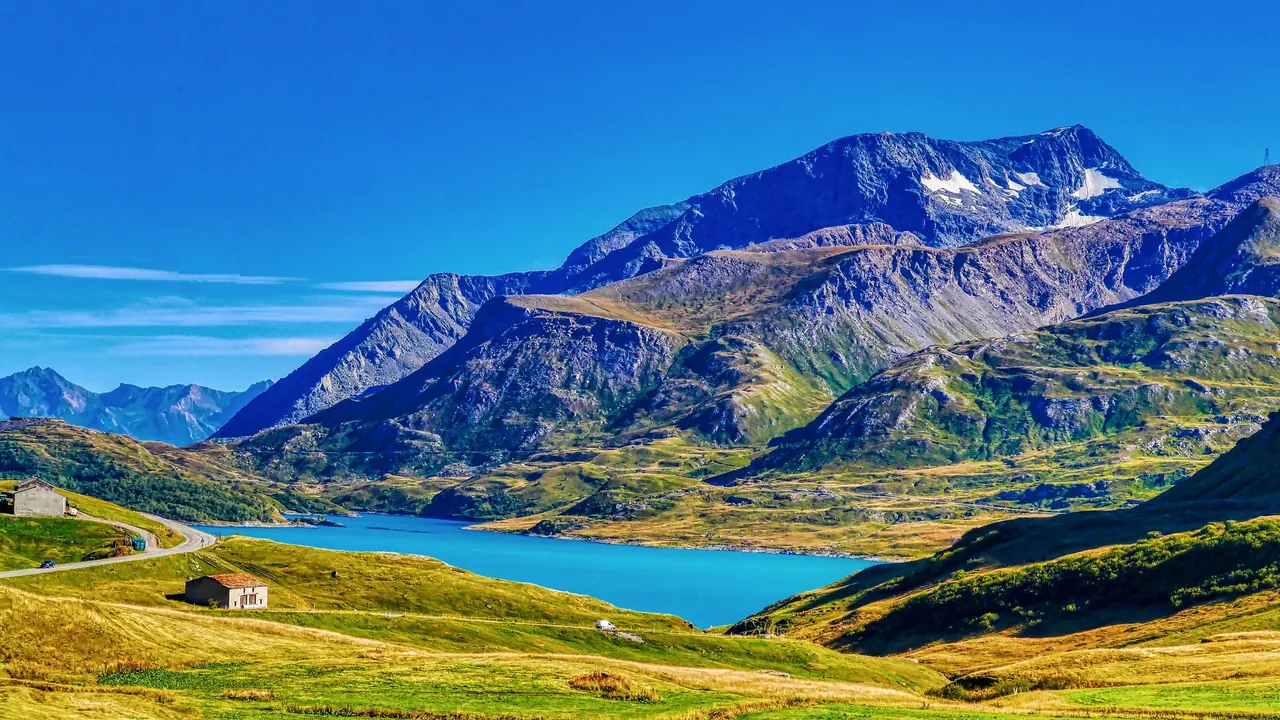
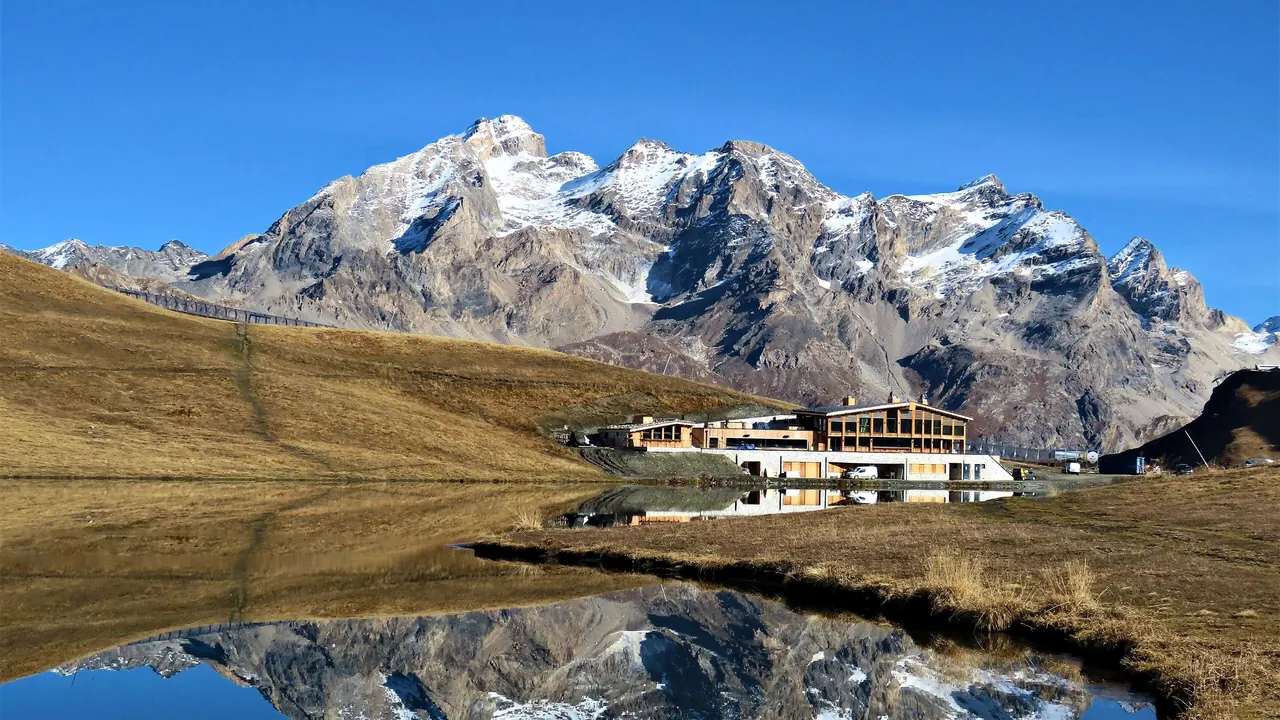
Photos: Val Cenis by Zairon, CC BY-SA 4.0, cropped; Val d'Isère by Rémih, CC BY-SA 4.0, cropped.
Val Cenis or Val d'Isère?
Our verdict in twelve categories, each scored against the same fixed benchmark cities, and the climate month by month, so you can choose for your trip.
Choose Val Cenis for
- prices
- day trips
- culture and sights
Val Cenis suits families, beginners and anyone watching the budget. Its long gentle runs, small quiet villages and self-catering apartments make for a calmer and cheaper week. In summer the Mont Cenis pass brings Susa, the Sacra di San Michele and Turin within reach, and there are frescoed chapels closer to home.
Choose Val d'Isère for
- nightlife
- getting around
- food and drink
Strong skiers with money to spend should head for Val d'Isère. Linked with Tignes, it has high, snow-sure terrain, steep pistes and big off-piste. The evenings match the skiing, with lively après-ski, celebrated restaurants, hotel spas and free shuttles that make a stay without a car easy. The trade-off is the cost and a valley that leads almost nowhere for outings in winter.
Scoreboard
Twelve categories on one fixed scale from 0 to 100. The shaded stretch is the gap between the two.
Your match
Pick a travel style or drag the sliders, and both match scores follow your weighting.
Wins on prices and day trips with your weighting.
Wins on nightlife and getting around with your weighting.
What matters to you?
Category by category
What the scores mean for a trip.
Beaches & swimming
Neither place is for swimming. At Val Cenis the Mont Cenis lake is a cold reservoir at nearly 2,000m, better for walking round than for a dip, so a hotel or village pool is the realistic choice in summer. Val d'Isère offers the hardy a little more. In midsummer some people swim in Lac de Tignes over the ridge, though the snowmelt rarely reaches 15°C, and the village sports centre has a reliable indoor pool.
Food & drink
Both valleys cook the same Savoyard repertoire of fondue, raclette and tartiflette, but Val Cenis keeps it simple. Menus are much alike, many places close between seasons and self-catering is common. Its own treasure is Bleu de Termignon, a rare blue cheese from summer alpine farms that is worth buying at farm sales.
Val d'Isère goes much further. The slopes are full of mountain restaurants, from self-service huts to terraces built for long lunches. In the evening the village has a handful of the most celebrated kitchens in the French Alps and wine bars serving Savoie whites. Beaufort cheese turns up in almost every dish.
Culture & sights
Neither valley is a sightseeing trip, but Val Cenis has more to look at. The chapel of Saint-Sébastien in Lanslevillard holds a cycle of early sixteenth-century frescoes. Termignon's church has a richly carved baroque altarpiece, and the villages keep their stone houses under lauze roofs.
Val d'Isère's list is shorter. There is the gilded altarpiece in Saint-Bernard-de-Menthon, a few lanes of the old village and the larch-wood hamlets of Le Fornet and Le Joseray. Ski fans may want to see the Bellevarde face, where the 1992 Olympic downhill was held, but an hour covers the lot.
Nightlife
Val Cenis is a family resort where evenings end after dinner. In winter a few bars in Lanslebourg and Lanslevillard fill up for an après-ski drink, and that is about it.
Val d'Isère is a different world in winter. From mid-afternoon people dance on tables in ski boots at the party restaurants up on the slopes. The crowd then moves down to packed village bars and a couple of basement clubs that stay open into the early hours, busiest at Christmas, New Year and the February break. In summer only a few terrace bars stay open.
Nature & outdoors
Both border the Vanoise National Park, with ibex, chamois and marmots, and the Iseran climb for cyclists. What differs is the skiing. Val Cenis is gentler, rising to about 2,800m with a very long easy run, plenty of reds, cross-country trails and snowshoeing. In summer the walks around the Mont Cenis lake and the Mont Cenis climb add to the Vanoise hiking.
Val d'Isère is built for strong skiers. Linked with Tignes, it is one of the world's great ski areas, with steep runs such as the Olympic Face de Bellevarde, big off-piste descents and ski touring. Glaciers keep the top snowy late in the season, and summer adds paragliding.
Day trips
Val Cenis has much the better choice of outings, because the Mont Cenis pass drops into Italy in summer. Susa's Roman arch is under an hour away and the Sacra di San Michele a little further. Turin's palaces and museums are about an hour and a half away through the Fréjus tunnel. Closer to home are Bessans, Bonneval-sur-Arc and the Esseillon forts.
Val d'Isère is at the end of the road in winter, when the passes close and the usual trip is down to Bourg-Saint-Maurice and the Tarentaise villages. In summer the Iseran opens a route to Bonneval-sur-Arc and the Little St Bernard to Aosta, about two hours away.
Good for families
Val Cenis has the edge for families with beginners. Its very long gentle run lets children ski down from high on the mountain, and the villages are small, safe and uncrowded. Summer adds marmot spotting, luge-style rides and outdoor pools, all at lower cost.
Val d'Isère is stronger on organised help. It has ski schools in several languages from preschool age, fenced snow gardens, childcare included in many chalet stays, and a sports centre with a climbing wall and an ice rink. Its terrain leans towards keen skiers, though, and parents who don't ski can find a week long.
Getting around
Val Cenis is closer to the railway. Modane is about half an hour down the valley, with trains from France and Italy. But the villages are strung out from Bramans to Lanslevillard, and outside winter, when lifts and shuttles link the resort villages, buses are thin and most visitors drive.
Val d'Isère is easier once you arrive. Free shuttles run the length of the village from La Daille to Le Fornet, and lifts start from several points, so most visitors ski from the door and walk to dinner. The catch is the hour up a winding road from Bourg-Saint-Maurice.
Shopping & style
Nobody comes to either valley for the shops. Val Cenis has ski hire, sports shops, small grocers and a few outlets for local cheese, honey and charcuterie. Val d'Isère has a bit more: a main street lined with outdoor shops and boot-fitters, a few upmarket mountain-wear boutiques and delicatessens selling Beaufort and Savoie wine.
Affordability
Val Cenis is noticeably easier on the wallet. Self-catering apartments are the usual way to stay, and lift passes and lodging cost less than in the big high-altitude resorts nearby. Ski school, equipment hire and eating out still add up in season.
Val d'Isère is among the most expensive places in the Alps for a winter week. Chalets, hotels, mountain lunches and village drinks are all priced for a well-off international crowd, and Christmas, New Year and February cost the most. January, late season and summer are cheaper, but still not cheap.
Live music & performing arts
The little live entertainment on offer takes opposite forms in the two valleys. In Val Cenis it is quiet and occasional: summer concerts in the village churches and local festivals, pleasant after a day's walking.
Val d'Isère's music is loud and tied to the ski season, with cover bands and DJs in the après-ski bars and the odd open-air event in the village. Anyone wanting a theatre or a concert programme has to travel a long way down either valley.
Wellness & relaxation
Val Cenis offers calm more than pampering, while Val d'Isère has far more spa facilities. In Val Cenis there are a few hotel spas with a sauna and hot tub, a pool or two and massage in season. The real draw is the quiet of small villages with little traffic.
In Val d'Isère many upmarket hotels and catered chalets have their own pools, saunas, hammams and massage rooms, and the sports centre has a public spa area. A winter week there is busy and social, though, so for real rest choose early summer or September.
When should you go?
Pick your month. The climate figures are measured averages, not a forecast.
Val Cenis in July
Val d'Isère in July
Daytime high, °C
Rainfall in the month, mm
Where the figures come from
Val Cenis has no weather station within reach, so its figures come from a gridded climate model rather than a measured record, and read a broad area rather than one spot.
Val d'Isère has no weather station within reach, so its figures come from a gridded climate model rather than a measured record, and read a broad area rather than one spot.
Temperature and rainfall are climate normals, averaged over the years shown. Val Cenis: 2001-2020 normals, NASA POWER reanalysis grid, no weather station within 90 km. Val d'Isère: 2001-2020 normals, NASA POWER reanalysis grid, no weather station within 90 km.
The two valleys share the same measured climate, so the choice comes down to season rather than weather. Winter is properly cold, with daytime highs below freezing from December to February and around -4°C in January. That is ski weather, not weather for wandering round villages. Spring thaws slowly, and May is the wettest month at about 103mm. Rain or snow falls steadily all year rather than in one wet season.
Summer is short and mild. It peaks near 18°C in July, which is good for hiking and cycling but never warm enough to make swimming a reason to come. By November highs are back close to freezing. The real difference is late in the ski season. The Pissaillas glacier and the Grande Motte keep the top of Val d'Isère wintry into early May, which makes it the surer choice for spring skiing. In July and August either valley works for walking.
Which traveller are you?
On a trip on a tight budget, Val Cenis makes the money go much further. You give up the huge linked ski area, but beginners and intermediates rarely miss it, and a summer walking week costs little beyond somewhere to sleep.
For a food and nightlife trip, Val d'Isère wins easily, though only in the ski season. Expect long lunches and late nights to take a large share of the budget. In Val Cenis the same evenings mean cooking in the apartment and an early night.
On a family trip with children learning to ski, Val Cenis comes out ahead. Parents get quieter slopes and a smaller bill, and the valley suits summer too. Val d'Isère makes more sense when the parents ski hard and want childcare arranged for them.
Before you go
| Measure | Val Cenis | Val d'Isère |
|---|---|---|
| Official language | French | French |
| Currency | Euro (EUR) | Euro (EUR) |
| Sockets | CE230 V, 50 Hz | CE230 V, 50 Hz |
| Driving side | Right | Right |
| Time zone | UTC+1, UTC+2 in summer | UTC+1, UTC+2 in summer |
| Emergency number | 112 | 112 |
| Elevation | 1,752 m | 1,785 m |
| Main airport | Turin Airport (TRN)59 km from centre65 non-stop destinations | Geneva International Airport (GVA)111 km from centre150 non-stop destinations |
| Public holidays this year | 11 days | 11 days |
By the numbers
| Measure | Val Cenis | Val d'Isère |
|---|---|---|
| Population | - | 1,567 |
| People per km² | - | 17 |
| Museums within 10 km | 0 | 0 |
| UNESCO World Heritage sites within 50 km | 1 | 0 |
Where else could you go?
Every comparison below shares a destination with this one, so you can follow Val Cenis or Val d'Isère somewhere new.
- Tignesvs Val d'Isère
- Les Arcsvs Val d'Isère
- Tignesvs Val Cenis
- La Rosièrevs Val d'Isère
- La Plagnevs Val d'Isère
- Val Thorensvs Val Cenis