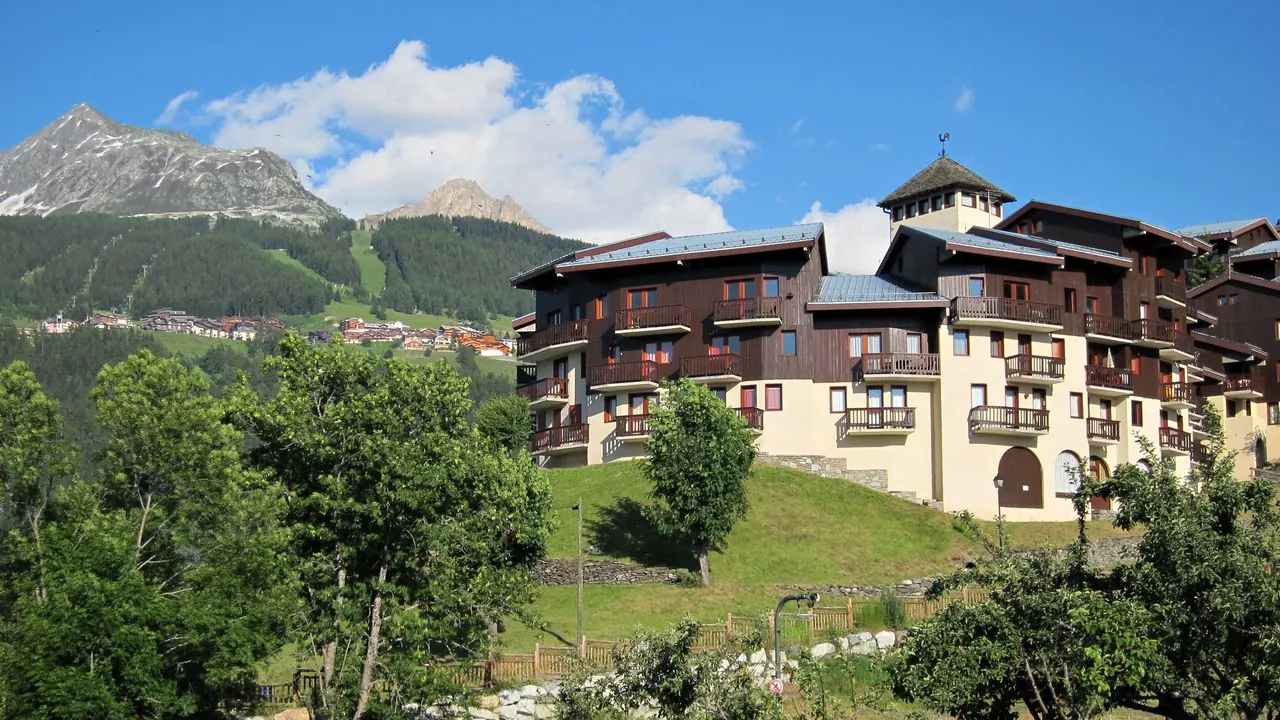
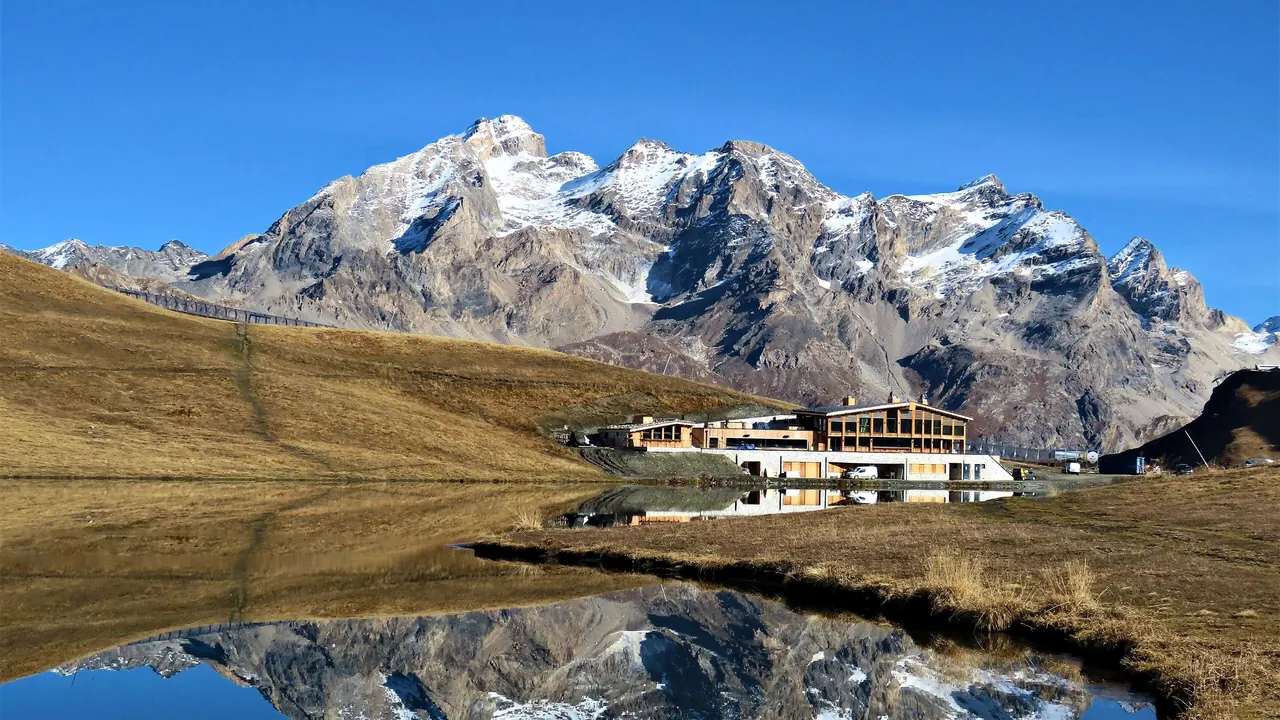
Photos: La Plagne by Henk Monster, CC BY 3.0, cropped; Val d'Isère by Rémih, CC BY-SA 4.0, cropped.
La Plagne or Val d'Isère?
Our verdict in twelve categories, each scored against the same fixed benchmark cities, and the climate month by month, so you can choose for your trip.
Choose La Plagne for
- families
- day trips
- prices
La Plagne suits families and anyone who wants a big ski area without the highest bills. Its car-free villages such as Belle Plagne sit right on the snow, the wide easy runs are kind to beginners, and a self-catering apartment keeps the week within reach. It is also the better base for getting down off the mountain, with Aime, Conflans and Chambéry close enough for a day out.
Choose Val d'Isère for
- nightlife
- getting around
- food and drink
Val d'Isère is for confident skiers and groups who want a night out after the lifts close. The steep, snow-sure terrain with Tignes and the big off-piste are its draw. So are the après-ski on the slopes, the packed village bars and a few of the most celebrated kitchens in the Alps. You pay heavily for all of it, and children who don't ski get less out of a week here.
Scoreboard
Twelve categories on one fixed scale from 0 to 100. The shaded stretch is the gap between the two.
Your match
Pick a travel style or drag the sliders, and both match scores follow your weighting.
Too close to call, 1 point apart
Wins on families and day trips with your weighting.
Wins on nightlife and getting around with your weighting.
What matters to you?
Category by category
What the scores mean for a trip.
Beaches & swimming
Neither resort is a place to swim outdoors. The mountain lakes in both are fed by snowmelt and better suited to a picnic. The small difference is in the pools. La Plagne's leisure centres include heated outdoor pools, so you can swim in the open air with the peaks around you. In Val d'Isère the swimming is indoors at the village sports centre, though in midsummer the braver visitors try Lac de Tignes over the ridge.
Food & drink
Both resorts serve the same Savoyard food: fondue, tartiflette, croziflette and Beaufort in almost everything. In La Plagne the best meals are the sunny terrace lunches at the slope-side chalet restaurants. Evenings in the villages lean on pizzerias, crêperies and the apartment kitchen.
Val d'Isère eats noticeably better after dark. Alongside the mountain huts it has a handful of ambitious kitchens that rank among the most celebrated in the French Alps, plus wine bars pouring Savoie whites. Variety is still narrow in both, and both largely close between seasons.
Culture & sights
Neither resort is worth a trip for sightseeing, and what little each has is of a different kind. La Plagne was built from nothing for skiing, so its interest lies in mid-century resort planning: the stepped concrete mass of Aime 2000, like a liner run aground on the slope, and the towers of Plagne Centre. For old stone churches you have to go down into the valley.
Val d'Isère keeps traces of the valley as it was before skiing, with the gilded Baroque altarpiece in the church of Saint-Bernard-de-Menthon and the stone and larch-wood hamlets of Le Fornet and Le Joseray. Both resorts shared the 1992 Winter Olympics, the bobsleigh at La Plagne and the downhill on the Face de Bellevarde at Val d'Isère.
Nightlife
Val d'Isère is the clear choice for going out. Après-ski starts mid-afternoon with dancing on tables at the mountain restaurants. It then moves to crowded village bars and a couple of basement clubs that stay open into the early hours, and the seasonal workers and British and Scandinavian groups keep it going.
La Plagne is a family resort first. Its evenings are a drink at the foot of the slopes as the lifts close and a few pubs in Plagne Centre and Belle Plagne, and most guests are in bed early for first lifts. In summer both go quiet, La Plagne more so.
Nature & outdoors
Both are among the great ski areas of the world, but the skiing feels different. La Plagne is part of Paradiski, linked to Les Arcs by the Vanoise Express. It suits wide, sunny intermediate cruising, with tree-lined runs down to Montchavin and Champagny when the light is flat.
Val d'Isère and Tignes are higher, steeper and more snow-sure, with serious off-piste, ski touring and the Olympic Face de Bellevarde. Both open onto the Vanoise National Park in summer, where you can see ibex and marmots. Val d'Isère also has the climb over the Col de l'Iseran for cyclists.
Day trips
La Plagne is the better base for leaving the mountain. Aime's Romanesque basilica is at the bottom of the road, the walled village of Conflans is within an hour, and Chambéry and Annecy make full days out by car.
Val d'Isère sits at the dead end of its valley. In winter the passes are closed, and the outings rarely go beyond Bourg-Saint-Maurice and the Tarentaise villages. Summer helps, with Bonneval-sur-Arc over the Iseran and the road to Aosta in Italy. Even then, Annecy and Chambéry are mostly too far for a comfortable day.
Good for families
La Plagne was designed around families, and it shows. Car-free villages such as Belle Plagne let children walk out of the door onto nursery slopes, the ski school programmes and kids' clubs are large, and the runs are wide and forgiving. The bob-raft ride on the Olympic track is a treat for older children.
Val d'Isère works for a family that already skis well, with multilingual ski schools and childcare in many chalets. Beyond the pistes there is less for children: the sports centre's pool, rink and climbing wall, sledging and sleigh rides. Very young children and parents who don't ski may find the week long.
Getting around
Val d'Isère is the simpler place to move around once you arrive. It is one village strung along the valley floor from La Daille to Le Fornet, with free shuttles running its length and lifts starting from several points along the way.
La Plagne's ten villages are spread up and across the mountainside. Free shuttles and a small cable car between Plagne Centre and Aime 2000 link them, but hopping between villages takes more planning. Getting there is a winding bus climb from a valley station for both, and in both a car helps for anything beyond the resort.
Shopping & style
Both are kit towns, lined with ski hire, boot-fitting and outdoor shops. Val d'Isère has a bit more to browse, with a few upmarket mountain-wear boutiques for the chalet crowd and delicatessens selling Savoie wine along with the cheese.
La Plagne keeps to the practical. The best things to take home are Beaufort, cured sausages, génépi and local honey from its cheese and produce counters.
Affordability
Neither is cheap, but La Plagne costs noticeably less. You still pay for lift passes, hire and lessons. Its many self-catering apartments let families cook their own fondue instead of paying resort prices every night.
Val d'Isère is among the most expensive places in the Alps for a winter week. Its chalets, hotels, mountain lunches and village drinks are all priced for a well-off international crowd. January and late-season weeks soften the bill in both resorts, and summer is cheaper in each.
Live music & performing arts
Neither resort offers theatre or concerts. Live music in both means cover bands and DJs at après-ski, plus a few open-air concerts in season. La Plagne also has torchlight descents to watch. If you want a proper stage, Chambéry is a more realistic trip from La Plagne than the long run down the valley from Val d'Isère.
Wellness & relaxation
In both resorts, wellness mostly means a spa in your hotel or residence and a soak after skiing. Val d'Isère leans a little further into it, with hammams and massage rooms in its upmarket hotels and catered chalets, and a public spa area at the village sports centre.
For proper thermal bathing, La Plagne is the closer base. The old spa towns of Brides-les-Bains and La Léchère, where mineral springs have been used since the nineteenth century, are about an hour away, and from Val d'Isère they are a much longer drive down the Tarentaise. In either resort the calmest time to rest is outside the ski season, when the trails are empty in early summer and September.
When should you go?
Pick your month. The climate figures are measured averages, not a forecast.
La Plagne in July
Val d'Isère in July
Daytime high, °C
Rainfall in the month, mm
Where the figures come from
La Plagne has no weather station within reach, so its figures come from a gridded climate model rather than a measured record, and read a broad area rather than one spot.
Val d'Isère has no weather station within reach, so its figures come from a gridded climate model rather than a measured record, and read a broad area rather than one spot.
Temperature and rainfall are climate normals, averaged over the years shown. La Plagne: 2001-2020 normals, NASA POWER reanalysis grid, no weather station within 90 km. Val d'Isère: 2001-2020 normals, NASA POWER reanalysis grid, no weather station within 90 km.
The two resorts share the same climate, so pick your season, not your resort. From December to February daytime highs stay below freezing, around -4°C in January, which is proper ski weather. March and April bring softer spring snow as the days warm towards freezing and just above. In Val d'Isère the glaciers keep the top runs wintry into early May.
May is the dullest month, with snowmelt and the heaviest rain of the year at about 103mm, and in both places most things are shut between seasons. July and August are the walking months, with highs around 18°C. That's fresh rather than hot, and good for high trails. Summer rain is steady at about 80mm a month, so pack a waterproof. By November the cold is back and the resorts get ready for the winter.
Which traveller are you?
On a family trip with young children, La Plagne is the easier choice. Villages like Belle Plagne let children walk straight onto gentle slopes, the ski schools and snow gardens are big, and a padded bob-raft run on the Olympic track thrills older children.
For a food and nightlife trip, go to Val d'Isère. Après-ski begins with table-dancing at the slope-side restaurants and carries on in packed bars and basement clubs. The village also has some of the most celebrated dining rooms in the French Alps.
On a tight budget, La Plagne stretches the money further. Neither resort is cheap, but La Plagne's large stock of self-catering apartments and quieter weeks keep costs manageable. Val d'Isère's chalets, hotels and village drinks are priced for a well-off international crowd.
Before you go
| Measure | La Plagne | Val d'Isère |
|---|---|---|
| Official language | French | French |
| Currency | Euro (EUR) | Euro (EUR) |
| Sockets | CE230 V, 50 Hz | CE230 V, 50 Hz |
| Driving side | Right | Right |
| Time zone | UTC+1, UTC+2 in summer | UTC+1, UTC+2 in summer |
| Emergency number | 112 | 112 |
| Elevation | 1,974 m | 1,785 m |
| Main airport | Geneva International Airport (GVA)92 km from centre150 non-stop destinations | Geneva International Airport (GVA)111 km from centre150 non-stop destinations |
| Public holidays this year | 11 days | 11 days |
By the numbers
| Measure | La Plagne | Val d'Isère |
|---|---|---|
| Population | - | 1,567 |
| People per km² | - | 17 |
| Museums within 10 km | 2 | 0 |
| UNESCO World Heritage sites within 50 km | 0 | 0 |
Where else could you go?
Every comparison below shares a destination with this one, so you can follow La Plagne or Val d'Isère somewhere new.
- Tignesvs Val d'Isère
- Courchevelvs La Plagne
- Les Arcsvs La Plagne
- Méribelvs La Plagne
- Tignesvs La Plagne
- La Rosièrevs La Plagne