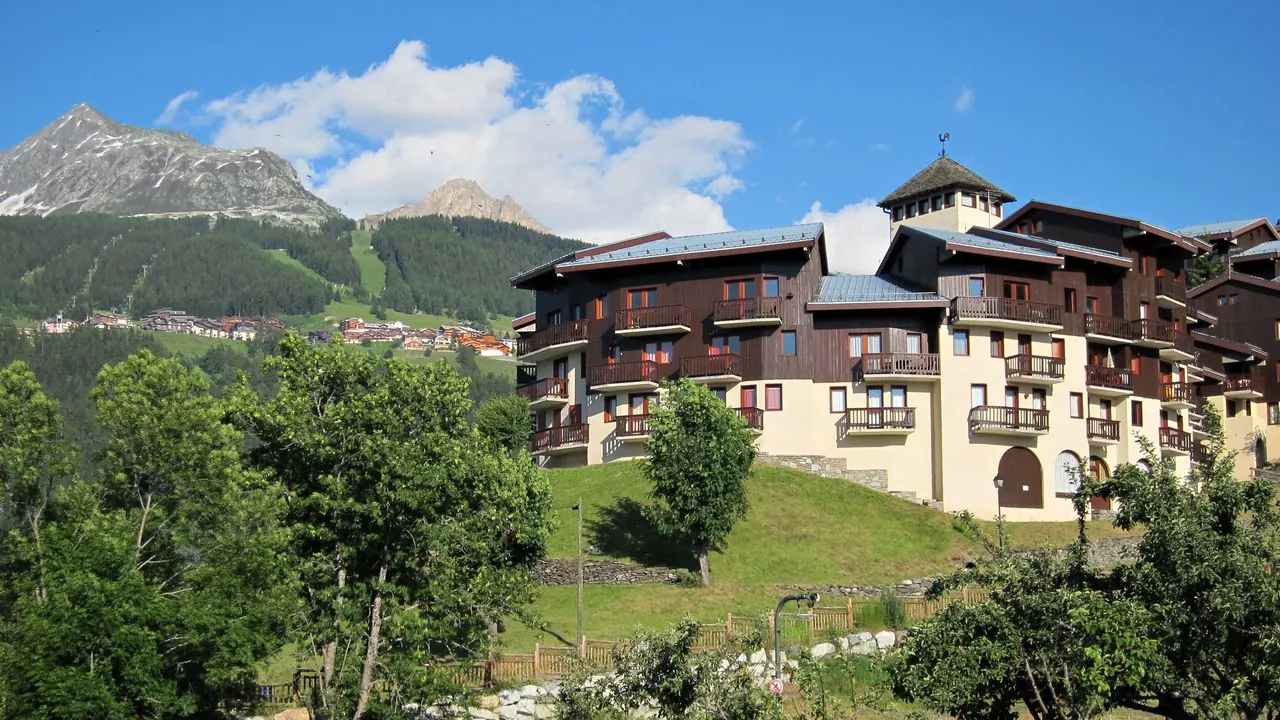
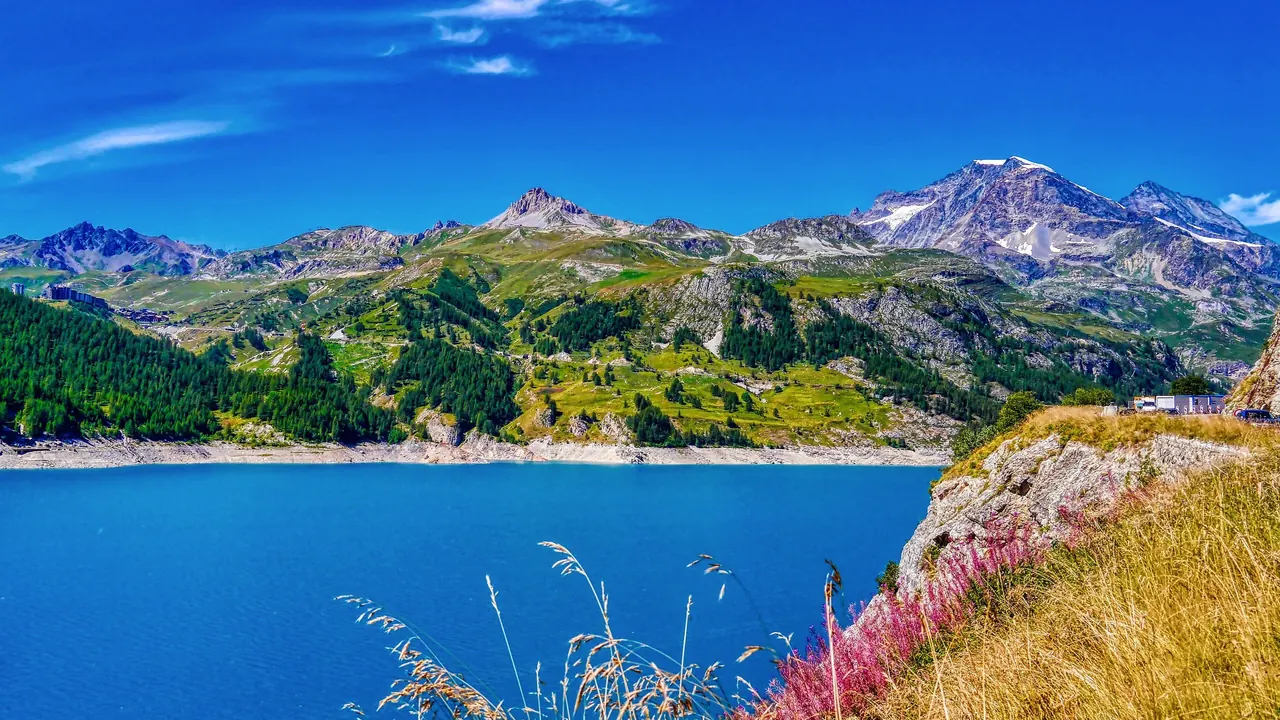
Photos: La Plagne by Henk Monster, CC BY 3.0, cropped; Tignes by Zairon, CC BY-SA 4.0, cropped.
La Plagne or Tignes?
Our verdict in twelve categories, each scored against the same fixed benchmark cities, and the climate month by month, so you can choose for your trip.
Choose La Plagne for
- families
- day trips
- prices
La Plagne suits families and skiers who want broad, sunny, forgiving runs. Car-free villages such as Belle Plagne sit right on the snow, the ski schools are built around small children, and the huge self-catering stock keeps a week more manageable on cost. Its lower position in the valley also makes it the better base for anyone with a car who wants a day off the slopes in Conflans, Chambéry or Annecy.
Choose Tignes for
- nightlife
- beaches
- getting around
Groups of keen skiers and young friends who want loud evenings should look at Tignes. The bars of Val Claret and Tignes Le Lac keep going well after the lifts close. On the mountain, the glacier, the link with Val d'Isère and the high, snow-sure base give you a longer season and more serious off-piste. In summer the lake has a bathing shore, which La Plagne cannot offer.
Scoreboard
Twelve categories on one fixed scale from 0 to 100. The shaded stretch is the gap between the two.
Your match
Pick a travel style or drag the sliders, and both match scores follow your weighting.
Too close to call, 1 point apart
Wins on families and day trips with your weighting.
Wins on nightlife and beaches with your weighting.
What matters to you?
Category by category
What the scores mean for a trip.
Beaches & swimming
Neither resort is a swimming destination, but Tignes at least has an outdoor swim. In July and August a supervised bathing area with a small sandy shore opens on the Lac de Tignes below Le Lac. The snowmelt water rarely gets much above 16°C, so it is a quick, cold dip rather than a lazy afternoon. The lagoon pool and slides at the aquatic centre next door are the dependable option.
La Plagne's mountain lakes are better for a picnic than a swim, so swimming there means the heated pools at its leisure centres.
Food & drink
The two resorts eat almost the same way: fondue, raclette and tartiflette built on Beaufort and Reblochon, with long terrace lunches between runs. In both, the choice narrows sharply outside the seasons. In La Plagne the best meals are those lunches at the wooden chalets on the slopes, and many visitors cook in their apartments with cheese bought at the resort counters.
Tignes adds a handful of kitchens doing a more modern Alpine menu, and delicatessens selling Savoie wines alongside the charcuterie. The trade-off is that its village menus repeat a good deal.
Culture & sights
Both resorts were built from scratch for skiing in the postwar decades, so neither has old stone to show. What is worth a look is what each one built. La Plagne has period pieces of French mountain planning: the stepped block of Aime 2000, which looks like a liner run aground, the high-rise Plagne Centre, and the bobsleigh track built for the 1992 Olympics.
Tignes has a story more than buildings. The old village in the valley was drowned when the Chevril dam was built, and the giant mural on the dam wall remembers it. Apart from that, there are a few small chapels in Les Brévières and Les Boisses.
Nightlife
Tignes is the clear choice for evenings out. Après-ski starts on the mountain terraces with music, then moves to Val Claret and Tignes Le Lac. There, seasonal workers and groups of young British, Scandinavian and French skiers fill the bars and small clubs until well after midnight, drinking beer and shots and dancing in ski boots.
La Plagne has its après bars at the foot of the slopes and a few pubs and late bars in Plagne Centre and Belle Plagne. As a family resort, though, most of it is asleep early for first lifts. Outside winter, both go very quiet.
Nature & outdoors
These are two of the great ski areas of the Alps, and they differ in character rather than quality. La Plagne is part of Paradiski, linked to Les Arcs by the double-decker Vanoise Express. Its ten villages spread over wide, sunny intermediate slopes, from the low wooded villages up to the Bellecôte glacier, and tree-lined runs down to Montchavin and Champagny give you somewhere to ski in flat light.
Tignes starts much higher, at about 2,100m around its lake, with the Grande Motte glacier rising to nearly 3,500m. Linked with Val d'Isère, it offers snow-sure pistes and big off-piste terrain. In summer both lead into the Vanoise National Park, La Plagne through Champagny-le-Haut and with rafting on the Isère, Tignes with a little early-season glacier skiing and trails to alpine lakes.
Day trips
La Plagne is the easier base for getting off the mountain. Aime and its Romanesque basilica are just below, and Conflans is under an hour away. Chambéry and Annecy make full days out by car, and in summer the Beaufortain cheese villages are close.
Tignes sits at the head of a long valley, so the drive down takes longer. Val d'Isère's older centre is a short bus ride away and Bourg-Saint-Maurice is a working market town, but Conflans, Beaufort and, in summer, Roman Aosta all mean a long drive.
Good for families
La Plagne was designed for families, and it does this better. Belle Plagne and several other villages are largely car-free, so children walk straight out onto gentle slopes. Snow gardens, kids' clubs and large ski-school programmes take care of the mornings, and the bob-raft on the Olympic track gives older children a highlight.
Tignes works well too, with beginner areas beside Le Lac and Val Claret, and an aquatic centre with slides for white-out days. But the higher altitude tires very young children more, the après noise is close by, and families often stay down in Les Brévières or Les Boisses to get away from it.
Getting around
Once you arrive, both are easy: ski-in, ski-out apartments, free shuttle buses between villages, and lifts that double as transport. La Plagne also has a small cable car between Plagne Centre and Aime 2000. In Tignes the villages are strung along the valley, and the paths between them can be icy and uphill.
The approaches differ more. La Plagne's buses climb from the railway station at Aime, often on a road that needs snow chains. Tignes is about forty minutes from the station at Bourg-Saint-Maurice. Beyond the resort, both are far easier with a car.
Shopping & style
The things worth carrying home from either resort are edible: Beaufort, cured sausages and mountain honey. La Plagne's cheese and produce counters add génépi to that list. Tignes has delicatessens that also sell Savoie wines, and a few sportswear boutiques among its rows of ski hire and outdoor gear shops. Beyond that, both offer the practical basics and supermarkets for self-caterers, and no fashion or design shopping.
Affordability
Both are expensive in winter once lift passes, hire, lessons and mountain lunches are added up, but La Plagne is the gentler of the two. Its very large stock of apartments is how many families keep a week affordable, and groceries are cheaper if you can shop down in the valley.
Tignes charges high prices for rooms and apartments in the peak school-vacation weeks, and meals out stay at resort prices even in summer. Its summer is easier on the wallet, though, with cheaper lodging and free lake activities.
Live music & performing arts
Neither has a stage of any kind, so anyone wanting theatre or classical music has to drive down to Chambéry or further. What live entertainment there is fits each resort's character. La Plagne has torchlight descents and a few open-air concerts in season. Tignes has DJs on mountain terraces, bands in the après bars and occasional free outdoor concerts during resort events.
Wellness & relaxation
Relaxing in either means a sauna, a hot tub and a pool after skiing. For real thermal water, both send you about an hour down to Brides-les-Bains. La Plagne's spas are mostly small ones in hotels and apartment residences, plus its aquatic centres, and La Léchère is a second valley spa town within reach.
Tignes puts more in one place: the aquatic centre by the lake has a hammam and massage. Its late winter nights make a ski week there even less restful. In both resorts, summer is the calmer time.
When should you go?
Pick your month. The climate figures are measured averages, not a forecast.
La Plagne in July
Tignes in July
Daytime high, °C
Rainfall in the month, mm
Where the figures come from
La Plagne has no weather station within reach, so its figures come from a gridded climate model rather than a measured record, and read a broad area rather than one spot.
Tignes has no weather station within reach, so its figures come from a gridded climate model rather than a measured record, and read a broad area rather than one spot.
Temperature and rainfall are climate normals, averaged over the years shown. La Plagne: 2001-2020 normals, NASA POWER reanalysis grid, no weather station within 90 km. Tignes: 2001-2020 normals, NASA POWER reanalysis grid, no weather station within 90 km.
Both resorts sit high in the Tarentaise and have the same climate. From December to February daytime highs stay below freezing, around -4°C in January, which is the core of the ski season. By April highs are back above zero. May is the wettest month at 103mm, and it falls in the quiet gap between seasons when much of each resort closes.
Summer is mild rather than warm, peaking at 18°C in July. That is good walking and biking weather but never beach heat, and the mountain lakes stay cold. September, at around 13°C, is a pleasant, drier end to the summer before November turns cold and wet again. The only real difference over the year comes from the terrain, not the weather: the Grande Motte glacier lets Tignes start skiing in autumn and keep a little going into early summer.
Which traveller are you?
On a family trip with young children, La Plagne is the safer choice. Belle Plagne and other villages are largely car-free and sit on the snow, ski schools run large children's programmes, and the padded bob-raft on the Olympic track thrills older children.
For a food and nightlife trip, choose Tignes. The menus in both resorts are much the same Savoyard cheese dishes, but Tignes goes out much harder, with après-ski on mountain terraces and then bars and small clubs in Val Claret that stay open long after midnight.
On a tight budget, La Plagne stretches the money further. Neither resort is cheap in winter, but La Plagne's large stock of apartments and its quieter weeks keep costs lower, while Tignes charges high prices in peak weeks and resort prices for meals all year.
Before you go
| Measure | La Plagne | Tignes |
|---|---|---|
| Official language | French | French |
| Currency | Euro (EUR) | Euro (EUR) |
| Sockets | CE230 V, 50 Hz | CE230 V, 50 Hz |
| Driving side | Right | Right |
| Time zone | UTC+1, UTC+2 in summer | UTC+1, UTC+2 in summer |
| Emergency number | 112 | 112 |
| Elevation | 1,974 m | 1,440 m |
| Main airport | Geneva International Airport (GVA)92 km from centre150 non-stop destinations | Geneva International Airport (GVA)105 km from centre150 non-stop destinations |
| Public holidays this year | 11 days | 11 days |
By the numbers
| Measure | La Plagne | Tignes |
|---|---|---|
| Population | - | 1,919 |
| People per km² | - | 24 |
| Museums within 10 km | 2 | 0 |
| UNESCO World Heritage sites within 50 km | 0 | 0 |
Where else could you go?
Every comparison below shares a destination with this one, so you can follow La Plagne or Tignes somewhere new.
- Val d'Isèrevs Tignes
- Courchevelvs La Plagne
- Les Arcsvs La Plagne
- Les Arcsvs Tignes
- Méribelvs La Plagne
- La Rosièrevs Tignes