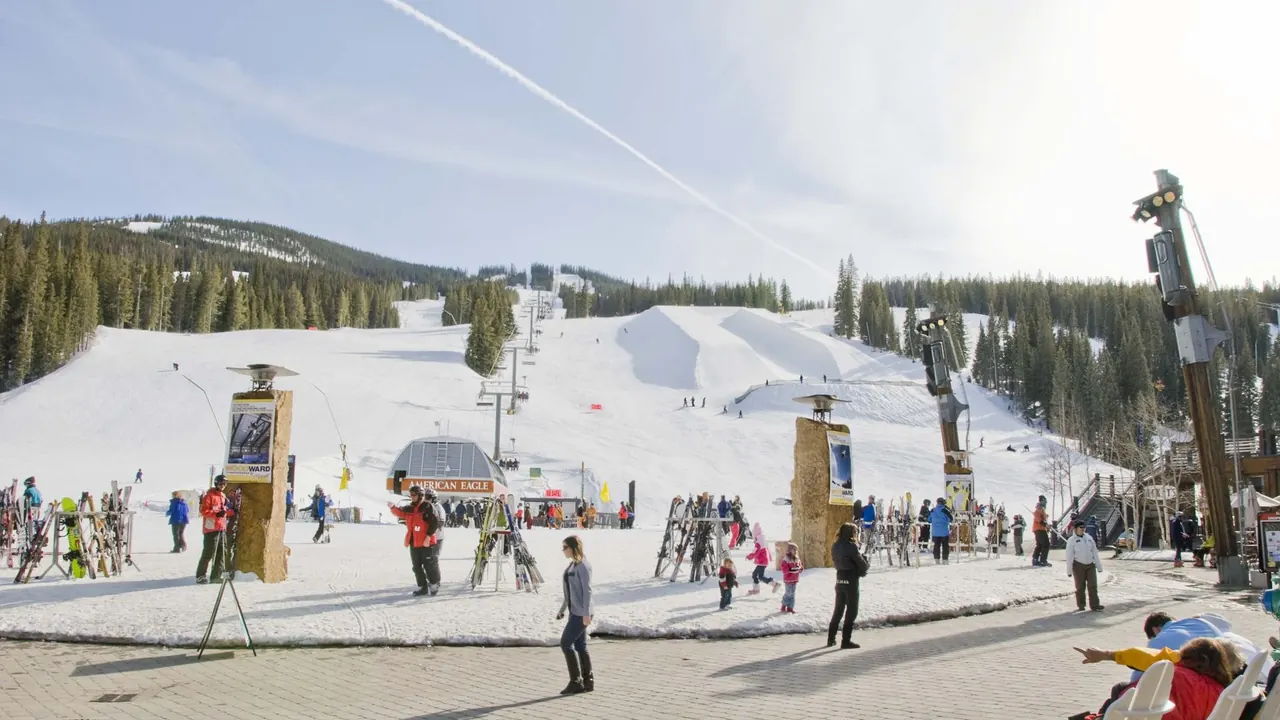

Photos: Copper Mountain by SparkFunElectronics, CC BY 2.0, cropped; Phoenix by Visitor7, CC BY-SA 3.0, cropped.
Copper Mountain or Phoenix?
Our verdict in twelve categories, each scored against the same fixed benchmark cities, and the climate month by month, so you can choose for your trip.
Choose Copper Mountain for
- getting around
- nature and the outdoors
- day trips
Copper Mountain is for people who come for the mountain itself. In winter that means a big ski area where the runs are easy to sort by ability, other Summit County resorts and Vail are a short drive away, and children's ski school is a central part of the place. In summer the same slopes become high trails and bike paths. Food, sights, shopping and evenings are thin, so it suits travellers who are happy to ski or hike all day, eat in the condo and be in bed early.
Choose Phoenix for
- shopping
- culture and sights
- live music and the arts
Phoenix makes more sense if you want a mix. Desert hiking comes with serious museums, Sonoran Mexican cooking, proper nightlife districts and some of America's best-known resort spas. It is also gentler on the budget than a Colorado ski resort. The catch is that everything is spread out and you will need a car, and the city only really works from autumn to spring, when the heat eases.
Scoreboard
Twelve categories on one fixed scale from 0 to 100. The shaded stretch is the gap between the two.
Your match
Pick a travel style or drag the sliders, and both match scores follow your weighting.
Wins on getting around and nature and the outdoors with your weighting.
Wins on shopping and culture and sights with your weighting.
What matters to you?
Category by category
What the scores mean for a trip.
Beaches & swimming
Neither place has a beach, and you swim differently in each. At Copper Mountain the Summit County lakes are fed by snowmelt and stay cold in midsummer, so swimming means a heated lodge pool or a hot tub after a day outside.
Phoenix gives you a bit more water to play in. Saguaro Lake and Canyon Lake have small beaches below bare desert cliffs, and tubing on the lower Salt River is a summer outing. Most visitors, though, spend the hot months in resort pools with slides and lazy rivers.
Food & drink
At Copper Mountain you eat to refuel: burgers and chilli in the mid-mountain lodges, pizza and pub food in the village, or whatever you cook in the condo kitchen. For a more interesting meal you drive to Frisco or Breckenridge.
Phoenix has a cuisine of its own, built on the Sonoran borderlands. Expect carne asada, paper-thin flour tortillas, bacon-wrapped hot dogs from evening carts and family Mexican kitchens in the south and west of the city, plus a strong name for wood-fired pizza. Eating well usually means driving, but there is far more worth driving to.
Culture & sights
Copper Mountain is a village of condos and lodges around the lifts, with no museums or landmarks. The area's Victorian mining heritage lives in the neighbouring towns.
Phoenix has no old centre to wander either, but its museums are strong. The Heard Museum's Native American collection is among the finest anywhere, the Musical Instrument Museum can fill half a day, and Frank Lloyd Wright's Taliesin West draws architecture lovers. Pueblo Grande's Hohokam remains add older history, though each sight means a separate drive.
Nightlife
Evenings at Copper Mountain are mostly après-ski. Base-area bars fill with skiers on winter afternoons, and the plaza gets some music on busy weekends. By late evening most people are back in their condos, and outside the ski season the village is very quiet.
Phoenix has a real night out, split across separate districts. Old Town Scottsdale has the clubs and rooftop bars, Tempe's Mill Avenue runs on students, and Roosevelt Row is for craft beer and cocktails. Pick one district and take a ride home, as they are far apart.
Nature & outdoors
Copper Mountain has the more complete outdoor offering. Its ski terrain runs up to treeless bowls above 3,600m, and Vail and several other big resorts are close enough to vary the week. In summer the Colorado Trail, the paved path over Vail Pass and peaks such as Mount Elbert take over. Bear in mind that the village sits at about 2,960m.
Phoenix's desert scenery is striking: the scrambles up Camelback and Piestewa Peak, the saguaro forest of the McDowell Sonoran Preserve, and Sedona's red rock two hours north. Its season is shorter, though, because summer heat makes midday hiking dangerous.
Day trips
Both have a good handful of outings, but they are different kinds of trip. From Copper Mountain they are short drives through the old mining country: Breckenridge's Victorian main street, Leadville's silver-boom district, Georgetown's narrow-gauge railway, Vail's Alpine-style village, and Denver for a proper city, if the I-70 traffic allows.
Phoenix's are longer drives into desert history. You can visit hillside Jerome, Montezuma Castle's cliff dwelling, Sedona, or Tucson with its adobe barrios and the white Mission San Xavier del Bac.
Good for families
Both work for families, with different catches. Copper Mountain's car-free core, children's ski school, snow tubing and mountain coaster keep everything in one place. Altitude headaches and poor sleep in the first days are the worry with small children, and there is little else on offer once the activities are done.
Phoenix has more variety: a zoo, an aquarium, a science centre, water parks and spring training baseball in March. In exchange you spend long stretches in the car, and children cannot safely play outside in the summer heat.
Getting around
Once you arrive, Copper Mountain is the easier of the two. Walkways, lifts and a free shuttle link the villages, and free county buses reach Frisco, Breckenridge and Keystone, so a car can stay parked for days. Getting there is harder: there is no train, Denver's airport is about two hours away, and winter driving on I-70 can be slow.
Phoenix depends on cars at every step. A single light rail line serves the airport, downtown and Tempe, but the hiking areas and Scottsdale sit far apart across a flat grid. Most visitors hire a car.
Shopping & style
Copper Mountain's shops sell ski rental, outdoor gear and resort-branded clothing. The Silverthorne outlets and Breckenridge's galleries are the nearest real shopping.
Phoenix has much more to browse. Scottsdale's big malls carry the international brands, and Old Town has Western wear and art galleries. The purchase that is specific to the region is Native American work, such as Navajo and Zuni silver and turquoise or Hopi katsina carvings, best bought from museum shops and reputable galleries.
Affordability
Copper Mountain is the costlier trip, particularly in winter. Lift access, slope-side beds, equipment rental and resort meals all add up. Condo kitchens, lodging in Frisco or Silverthorne, and a summer visit all bring the bill down.
Phoenix is cheaper overall. Freeway chain hotels are fair value all year, resort rates drop sharply in summer, Sonoran food is cheap and good, and most hiking is free. The rental car is the one cost you can rarely avoid.
Live music & performing arts
At Copper Mountain live entertainment means bands on the plaza on summer concert weekends and acoustic sets at après-ski. For a classical season or a small theatre you drive to Breckenridge.
Phoenix has the institutions of a big city: the Phoenix Symphony, Arizona Opera, Ballet Arizona and touring Broadway shows in Frank Lloyd Wright's round ASU Gammage in Tempe. The Musical Instrument Museum's intimate hall adds variety, though most seasons go quiet in summer.
Wellness & relaxation
Phoenix is the better place to rest. The desert resorts along Camelback Mountain and through north Scottsdale have full spas, several pools and treatments using clay, sage and agave, and the dry winter warmth makes a week by the pool easy.
Copper Mountain's version is an outdoor hot tub facing the slopes, plus pools and massage at the athletic club. The air is clean and evenings are calm, but altitude can spoil the first nights' sleep. Neither place has hot springs or a bathing tradition close at hand.
When should you go?
Pick your month. The climate figures are measured averages, not a forecast.
Copper Mountain in July
Phoenix in July
Daytime high, °C
Rainfall in the month, mm
Where the figures come from
Copper Mountain's temperatures are measured 35 km from the centre, at Leadville / Stringtown.
Copper Mountain has no rain gauge within 25 km of the centre, so its rainfall comes from a gridded climate dataset read at the city rather than from a gauge further away.
Temperature and rainfall are climate normals, averaged over the years shown. Copper Mountain: 2006-2020 (rainfall 1991-2020) normals, Leadville / Stringtown (35.2 km from centre). Phoenix: 1991-2020 normals, Phoenix Sky Harbor Airport (2.8 km from centre).
The two places are at their best in opposite seasons. At Copper Mountain, daytime highs sit around -2°C from December to February, and the snow usually lasts from November into spring. Summer is the time for hiking and biking, with highs near 21°C from June to August. Afternoon thunderstorms are routine in July and August, so walks are best started early. Rain and snow fall in modest amounts every month, and May, October and early November sit awkwardly between the two seasons.
Phoenix works the other way round. From October to April the days are mild to warm, with midwinter highs around 19°C, so hiking, walking around town and lying by the pool are all comfortable. By June the heat reaches about 41°C and stays near that until September, and after mid-morning there is little to do outside except swim. Rain is light all year. Winter and late summer get a little more than the rest of the year, and April to June is almost completely dry. For a winter trip the choice is between snow and desert warmth. In summer, Copper Mountain is the one where you can comfortably spend the day outdoors.
Which traveller are you?
For an outdoors trip, Copper Mountain is the stronger pick. It offers skiing from November into spring across several nearby resorts, then the Colorado Trail, the Vail Pass path and fourteen-thousand-foot peaks in summer. Phoenix's desert trails are excellent but limited to the cooler months.
On a culture and arts trip, choose Phoenix. The Heard Museum, the Musical Instrument Museum and Taliesin West give it real depth, and there is a symphony, opera and ballet on top. Copper Mountain has no sights of its own and no stage.
For a relaxing and wellness trip, Phoenix is far better suited. Its large desert resorts below Camelback Mountain have full spas, several pools and treatments using sage and agave. Copper Mountain's version is a condo hot tub, and the altitude can disturb your sleep.
Before you go
| Measure | Copper Mountain | Phoenix |
|---|---|---|
| Currency | US Dollar (USD) | US Dollar (USD) |
| Sockets | AB120 V, 60 Hz | AB120 V, 60 Hz |
| Driving side | Right | Right |
| Time zone | UTC-7, UTC-6 in summer | UTC-7 |
| Emergency number | 911 | 911 |
| Elevation | 2,955 m | 331 m |
| Main airport | Denver International Airport (DEN)132 km from centre231 non-stop destinations | Phoenix Sky Harbor International Airport (PHX)6 km from centre149 non-stop destinations |
| Public holidays this year | 12 days | 12 days |
By the numbers
| Measure | Copper Mountain | Phoenix |
|---|---|---|
| City population | 650 | 1,608,139 |
| People per km² | 8 | 1,199 |
| Museums within 10 km | 0 | 10 |
| UNESCO World Heritage sites within 50 km | 0 | 1 |
Where else could you go?
Every comparison below shares a destination with this one, so you can follow Copper Mountain or Phoenix somewhere new.