Cornwall or Scottish Highlands?
Our verdict in twelve categories, each scored against the same fixed benchmark cities, and the climate month by month, so you can choose for your trip.
Choose Cornwall for
- beaches
- families
- nightlife
Cornwall is the better pick for a seaside summer. It has surf beaches on the north coast, sheltered coves around Falmouth and Fowey and white sand in the far west. Seafood comes in fresh at the harbour towns, and the beaches with rock pools and lifeguards make it a classic family trip. It is also more compact: the sights, towns and beaches sit close together, and branch lines let you stay in St Ives or Falmouth without a car.
Choose Scottish Highlands for
- nature and the outdoors
- prices
The Scottish Highlands win when the landscape is the whole reason for going. Glencoe, the Cuillin on Skye, Torridon and the Cairngorms offer real mountain walking, with golden and sea eagles overhead and red deer on the hillsides. Cornwall's cliffs have nothing on that scale of wild country. In return you get long drives on single-track roads, colder water, quiet evenings and little choice of food or shops between the glens, so it suits travellers who want space more than comfort.
Scoreboard
Twelve categories on one fixed scale from 0 to 100. The shaded stretch is the gap between the two.
Your match
Pick a travel style or drag the sliders, and both match scores follow your weighting.
Wins on beaches and families with your weighting.
Wins on nature and the outdoors and prices with your weighting.
What matters to you?
Category by category
What the scores mean for a trip.
Beaches & swimming
This is Cornwall's clearest advantage. Surfers get the long Atlantic beaches at Fistral, Watergate Bay and Gwithian. In the far west the sand is white, at Porthcurno and Porthminster, and the coves near Falmouth and Fowey are sheltered enough for calmer swimming. The water is still cold, but it is warm enough for proper beach days through summer.
The Highlands have beaches just as beautiful, at Morar, Achmelvich and remote Sandwood Bay, but the sea is a good few degrees colder. That makes them places to walk and picnic, with only a brief, hardy swim.
Food & drink
Cornwall eats better and more easily. Fish from Newlyn supplies everything from fish-and-chip counters on the harbour to serious seafood restaurants in Padstow, St Ives and Porthleven. Pasties, cream teas, cider and Camel Valley sparkling wine fill the gaps in between.
The Highlands have outstanding ingredients, with west-coast langoustines and scallops, venison and smoked salmon, plus distillery tours that Cornwall cannot match. The good tables are scattered, though, and once you leave Oban, Ullapool or Skye, dinner often means a hotel bar with an early kitchen.
Culture & sights
In both places the sights are single places spread across the map, but Cornwall has more of them and they are easier to combine. Tate St Ives and the Hepworth sculpture garden give it an art scene. St Michael's Mount, Tintagel and the mining engine houses at Botallack add history, and the Eden Project offers something quite different.
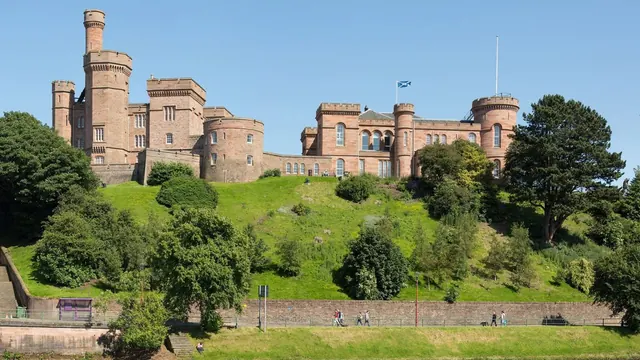
Highland culture is mostly history out in the landscape: the battlefield at Culloden, Urquhart and Eilean Donan castles, the memorial at Glencoe and townships left empty after the Clearances. It is moving, but you drive a long way between sites, and Inverness has no old centre to explore for days.
Nightlife
Neither is a place for late nights, but Cornwall has somewhere to go if you want one. In summer Newquay's bars and clubs fill with surfers and groups on stag and hen weekends, and Falmouth's students keep a smaller scene going. Highland evenings centre on a pub near the river in Inverness or a dram and maybe a folk session in a village hotel bar. Clubs hardly exist there.
Nature & outdoors
The Highlands have the bigger, wilder country. Ben Nevis, Glencoe's rock walls, the Torridon peaks and the high Cairngorm plateau offer mountain days, scrambling and even modest skiing. You might also see golden and sea eagles, red deer, otters and whales off the west coast.
Cornwall's outdoors is all about the coast. The finest stretches of the coast path run around Penwith and across the Lizard. Cornwall is also where Britain surfs, with reliable swell at Newquay, Bude and Sennen. It is gentler, with moorland on Bodmin rather than true mountains.
Day trips
Cornwall's outings are shorter and easier to fit together. You can hop between St Ives, Mousehole, Port Isaac and Fowey, take the ferry from Falmouth to St Mawes, or make a longer day of it to the Isles of Scilly or across to Plymouth. The towns differ in mood more than in kind.
The Highlands have outings with more character: ferries from Oban to Mull and Iona, and the steam train from Fort William over the Glenfinnan Viaduct. Slow roads make each one a long day, though, and the places at the end are small.
Good for families
Cornwall is the easier choice with children. Sheltered beaches such as Gyllyngvase and Porthminster suit young children, and there is rock pooling and bodyboarding. Rainy days are covered by the Eden Project, the seal sanctuary at Gweek and Newquay's zoo, and cottages and caravan parks make the stay simple.
The Highlands reward outdoorsy families based around Aviemore, with its wildlife park and reindeer herd. Elsewhere, long drives, wet days and midges in summer make the trip harder work for small children.
Getting around
Cornwall is the more manageable of the two. Its lanes are narrow and parking in the harbour towns is tight. Still, branch lines reach St Ives, Falmouth, Newquay and Looe, so you can stay in one of those towns and leave the car at home.
In the Highlands a car is close to essential. Trains and buses link the main towns but not the trailheads, beaches and glens people come to see. Single-track roads with passing places make every distance take longer than the map suggests.
Shopping & style
Cornwall has more worth browsing. St Ives has a dense cluster of galleries, potteries and studios, and Falmouth, Fowey and Penzance's Chapel Street add independent shops and antiques. The Highlands offer good tweed, knitwear, tartan and whisky bought at the distillery, plus craft studios on Skye, but you won't find much beyond Inverness's Victorian market and the outdoor-gear shops.
Affordability
Neither is cheap in summer, and both are noticeably kinder to the budget in spring and autumn. The costs come from different places. In Cornwall, it is coastal cottages during the school break, parking charges and tickets to attractions. In the Highlands, it is scarce rooms on Skye and around Glencoe, plus fuel, car hire and remote shops. The Highlands make up for it with hostels, campsites, bothies and hills that cost nothing to enjoy.
Live music & performing arts
Both lean on tradition rather than concert halls. Cornwall has one unforgettable stage, the Minack Theatre cut into the cliffs above Porthcurno. It also has male voice choirs, Padstow's May Day celebration and a summer surf-and-music festival near Newquay.
Highland music is livelier day to day: fiddle and pipe sessions in pubs, ceilidhs where you learn the reels, Gaelic song in the west and Highland games with pipe bands in summer.
Wellness & relaxation
Both suit a slow stay rather than a spa break, and the difference is in the setting. Cornwall has spa hotels above beaches such as Watergate Bay and Carbis Bay, and wood-fired saunas on the sand to pair with a cold swim. The Highlands offer deeper quiet: a cottage at the end of a single-track road, an open fire and a dip in a loch, with just a handful of country house hotels for pampering.
When should you go?
Pick your month. The climate figures are measured averages, not a forecast.
Cornwall in July
Scottish Highlands in July
Daytime high, °C
Rainfall in the month, mm
Where the figures come from
Cornwall has no rain gauge within 25 km of the centre, so its rainfall comes from a gridded climate dataset read at the destination rather than from a gauge further away.
Cornwall's sunshine is measured 28 km from the centre, at Camborne.
Scottish Highlands has no rain gauge within 25 km of the centre, so its rainfall comes from a gridded climate dataset read at the destination rather than from a gauge further away.
Scottish Highlands's sunshine is measured 44 km from the centre, at Kinloss.
Temperature and rainfall are climate normals, averaged over the years shown. Cornwall: 1991-2020 normals, Saint Mawgan (5.7 km from centre). Scottish Highlands: 2005-2020 (sunshine 1991-2020, rainfall 1991-2020) normals, Inverness / Dalcross (12.1 km from centre).
Both destinations peak in July and August, when daytime highs reach about 19°C in each. In the water they differ. Off Cornwall the Atlantic warms to around 17°C by August, enough for short swims from June to September. Highland seas stay near 14°C, so a dip there is a bracing one even in midsummer. Cornwall is also the sunnier of the two, especially in May and June, while Highland summers turn greyer and bring midges.
For the Highlands, May, June and September are the kindest months: long light, fewer midges and fairly dry weather. Both places get wet from October, and Cornwall is at its rainiest in November at about 120mm. Winter is mild on the Cornish coast but colder in the north, with Highland days barely reaching 6°C in December and January, which shortens the walking season.
Which traveller are you?
On a beach and sun trip, choose Cornwall. Its north-coast surf beaches, the turquoise coves near Porthcurno and the calmer bays around Falmouth have warmer water and more sun than the Highlands. Highland beaches are lovely for walking but too cold for long swims.
On an outdoors trip, choose the Scottish Highlands. They have real mountains, the West Highland Way, scrambling on the Cuillin, sea kayaking among the islands and eagles overhead. Cornwall's coast path and surf are excellent, but there are no high hills to climb.
On a family trip with children, Cornwall is easier, with a beach, an aquarium and the Camel Trail cycle all a short hop apart. The Highlands have the Glenfinnan steam train and castles to climb, but each outing fills most of a day.
Before you go
| Measure | Cornwall | Scottish Highlands |
|---|---|---|
| Official language | English | English |
| Currency | Pound Sterling (GBP) | Pound Sterling (GBP) |
| Sockets | G230 V, 50 Hz | G230 V, 50 Hz |
| Driving side | Left | Left |
| Time zone | UTC, UTC+1 in summer | UTC, UTC+1 in summer |
| Emergency number | 112 or 999 | 112 or 999 |
| Main airport | Cornwall Airport Newquay (NQY)14 non-stop destinations | Inverness Airport (INV)15 non-stop destinations |
| Public holidays this year | 8 days | 10 days |
By the numbers
| Measure | Cornwall | Scottish Highlands |
|---|---|---|
| Population | 575,525 | - |
| People per km² | 162 | - |
| Swim season, months above 21 °C | None | None |
Where else could you go?
Every comparison below shares a destination with this one, so you can follow Cornwall or Scottish Highlands somewhere new.
- Devonvs Cornwall
- Cotswoldsvs Cornwall
- Normandyvs Cornwall
- Brittanyvs Cornwall
- Lake Districtvs Scottish Highlands
- Peak Districtvs Cornwall