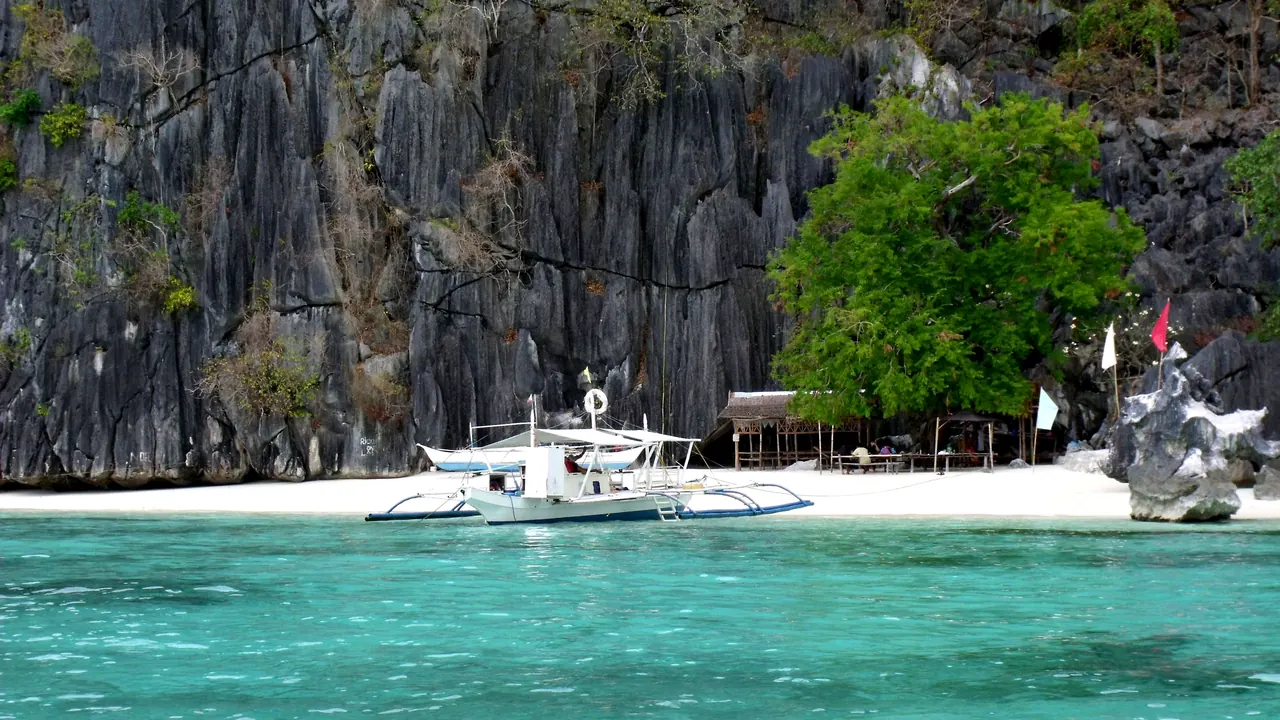
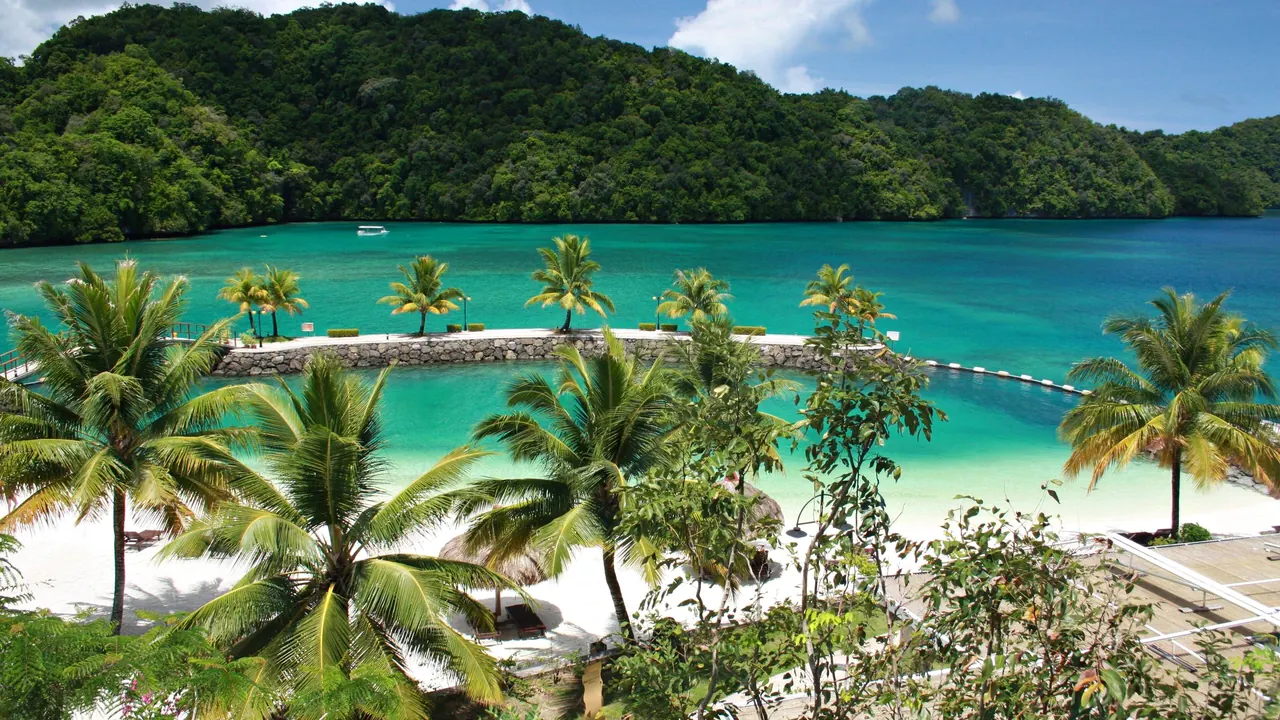
Photos: Coron by André Héroux, CC BY 3.0, cropped; Koror by ito1117, CC BY-SA 3.0, cropped.
Coron or Koror?
Our verdict in twelve categories, each scored against the same fixed benchmark cities, and the climate month by month, so you can choose for your trip.
Choose Coron for
- prices
- beaches
- wellness
Coron is the better pick if you want island-hopping on a modest budget. Shared boat tours run out to white sandbars, Kayangan Lake and the Twin Lagoon, and the Japanese wrecks in the bays make it one of the classic wreck-diving trips. Guesthouses and local food cost little, the dry months are reliably dry, and the Maquinit hot spring is a good way to end a day on the boats.
Choose Koror for
- day trips
- families
- shopping
Choose Koror if you can spend more and want Palau's bigger underwater spectacle: sharks and manta rays on the walls of Blue Corner and German Channel, and kayaking among the Rock Islands. It also has more on land, with the Belau National Museum and a full day on the Peleliu battlefield, and it suits a family with older children who swim well.
Scoreboard
Twelve categories on one fixed scale from 0 to 100. The shaded stretch is the gap between the two.
Your match
Pick a travel style or drag the sliders, and both match scores follow your weighting.
Too close to call, 2 points apart
Wins on prices and beaches with your weighting.
Wins on day trips and families with your weighting.
What matters to you?
Category by category
What the scores mean for a trip.
Beaches & swimming
Neither town has a beach you can walk to, so every swim starts with a boat. Coron has more variety close to hand. Its morning tours visit several white sandbars and islets in a day, and you can also swim in Kayangan Lake, the Twin Lagoon and the warm and cool layers of Barracuda Lake, all within an hour of the pier.
Koror's beaches are small crescents of sand under the Rock Islands cliffs. You usually get only a short stop at them during a snorkelling or kayak tour. On the main islands, most of the sand belongs to resorts on Arakabesang and Malakal.
Food & drink
Neither town is somewhere to travel for the food, but they taste different. Coron serves Filipino island cooking: grilled fish, adobo, sinigang and vinegar-cured kinilaw. The meal most people remember is the grilled-fish lunch served on the sand during a boat tour.
Koror's menus reflect Palau's history. Japanese sashimi and bento sit next to Filipino, Korean and American-style diners, with taro, coconut crab and, for the curious, fruit bat soup. Because so much produce is imported, the choice feels narrower.
Culture & sights
Koror has more to see on land, though it still fits into a morning. The Belau National Museum traces the Spanish, German, Japanese and American periods, a traditional bai with painted storyboards stands in its grounds, and the Etpison Museum adds shell money and carvings.
Coron has a viewpoint on Mount Tapyas, a plain parish church and the harbour. Its history is underwater, in the supply ships sunk in 1944, and on Coron Island, the ancestral land of the Tagbanua people.
Nightlife
Both towns go to bed early because the dive boats leave at dawn. In Coron, evenings mean a beer on the main road, perhaps with an acoustic set or reggae playing, while divers compare wrecks. Koror's evenings centre on resort bars by the water and the karaoke rooms that locals and expatriates fill at weekends.
Nature & outdoors
Both are among the great tropical sea destinations, but they offer different things underwater. Coron is about wrecks. Around a dozen Japanese ships lie at depths recreational divers can reach, and some are shallow enough to snorkel. Above water, the black limestone of Coron Island hides lakes and lagoons, and a long drive north reaches the giraffes and zebras of Calauit.
Koror is about big marine life. The walls and channels of Blue Corner and German Channel bring sharks, manta rays and turtles, though the strong currents suit experienced divers. Kayaking through the jungle-topped Rock Islands, Jellyfish Lake and the chalky Milky Way lagoon fill the days out of the water.
Day trips
Koror has the better outings away from the water. Peleliu, an hour away by speedboat, still has tanks, bunkers and memorials in its jungle from one of the Pacific War's fiercest battles. Across the bridge, a day with a driver on Babeldaob covers the Badrulchau monoliths, the bai houses at Airai and the domed capitol at Melekeok.
From Coron, the one real outing to another town is Culion, the former leper colony with its fort church and museum. El Nido is a long ferry ride away, so treat it as your next stop rather than a day out.
Good for families
Koror is somewhat easier with children. It is quiet and safe, the lagoons are calm for spotting turtles, and the aquarium at the coral reef research centre is a good introduction to the reef before the first boat trip.
Coron suits school-age children who swim confidently and enjoy shallow sandbars. Younger children will find it harder: the steps up to Kayangan Lake are steep and slippery, the town has traffic and few pavements, and serious medical care means a flight to Manila. Neither town has playgrounds or parks.
Getting around
In both places, getting around mostly means getting onto a boat, and tour operators handle that. On land they differ. Coron's small town is just about walkable, and motorised tricycles cover the rest. Koror has no public transport and stretches along one road joined by causeways, so taxis or a hire car do the work, especially for a day on Babeldaob.
Shopping & style
Neither town is a place to go shopping, and both sell the same T-shirts and shell jewellery. In Coron the souvenir most worth taking home is something to eat: a bag of Busuanga cashews, perhaps with a woven bag or some pearls from the stalls. Koror has the edge because of one real local craft, the Palauan storyboard. These hand-carved panels show island legends and make a more lasting keepsake than anything Coron sells.
Affordability
Coron costs far less. Basic rooms, local meals, tricycle rides and shared island-hopping tours are all cheap. Costs rise with private boats, wreck dives, the fees charged at each lake and lagoon, and the domestic flight to get there.
Koror is expensive from the start. Palau has few hotels and imports nearly everything, every visitor pays an environmental fee on arrival, and the boat tours, dives and Rock Islands permits that fill most days quickly add up. Local diners and taxis are the only real savings.
Live music & performing arts
Neither town has a theatre, concert hall or real stage. Coron's live music goes no further than a guitarist in a bar or a show at a resort. Koror at least has Palauan chant and dance at cultural festivals and community events, so it is worth asking whether anything is on during your stay.
Wellness & relaxation
Coron has the edge thanks to the Maquinit hot spring. Its warm saltwater pools sit at the mangrove edge, a short tricycle ride away, and are best in the evening. Simple massages are offered all over town, but the town itself is noisy, so people who want real rest stay at a resort on an outlying island.
Koror has no bathing tradition. Unwinding there means the slow island pace, early nights and a few resort spas offering coconut and plant-based treatments.
When should you go?
Pick your month. The climate figures are measured averages, not a forecast.
Coron in July
Koror in July
Daytime high, °C
Rainfall in the month, mm
Where the figures come from
Coron has no weather station within reach, so its figures come from a gridded climate model rather than a measured record, and read a broad area rather than one spot.
Temperature and rainfall are climate normals, averaged over the years shown. Coron: 2001-2020 normals, NASA POWER reanalysis grid, no weather station within 90 km. Koror: 1991-2020 normals, Babelthuap Island, Babelthuap/Koror Airport (6.4 km from centre).
Coron has a proper dry season. From January to April rainfall drops below 40mm a month, the seas are at their calmest and island-hopping trips run reliably. April is the hottest month, but afternoons stay close to 29°C for most of the year, so heat is rarely the problem. The rain sets in during May and peaks in July at over 500mm, and wet-season boat trips can be cancelled when the water is rough. November and December are the shoulder months, still damp but improving.
Koror has no dry season to speak of. Even its driest month, March, brings around 190mm, and heavy bursts of rain come all year. March is also the sunniest month and the best time to go, while June to August are the wettest and greyest. Daytime highs barely move from 31°C, which makes walking the town hard work in any month. Both cities have sea temperatures of about 28°C or warmer all year, so the difference between them is rain, not water temperature.
Which traveller are you?
For a beach and sun trip, Coron is the better choice. Its boat tours reach white sandbars such as Malcapuya and Bulog Dos, plus Kayangan Lake and the Twin Lagoon. From January to April it barely rains and trips run reliably, while Koror gets heavy downpours in every month.
On a tight budget, Coron is far easier. It has simple guesthouses, cheap local food and shared island-hopping tours with lunch included. Koror's few hotels, imported goods, Rock Islands permits and arrival fee make even a basic stay expensive.
On a culture and arts trip, Coron offers little beyond the wartime wrecks in its bays. Koror gives you more: the Belau National Museum and its storyboard-painted bai cover Palau's colonial past, the Peleliu battlefield is an hour away, and Babeldaob has stone monoliths.
Before you go
| Measure | Coron | Koror |
|---|---|---|
| Official language | English, Filipino, Taglish | English, Japanese, Palauan |
| Currency | Philippine Peso (PHP) | US Dollar (USD) |
| Sockets | ABC220 V, 60 Hz | AB120 V, 60 Hz |
| Driving side | Right | Right |
| Time zone | UTC+8 | UTC+9 |
| Emergency number | 911 | 911 |
| Elevation | 8 m | 22 m |
| Main airport | Francisco B. Reyes (Busuanga) Airport (USU)18 km from centre3 non-stop destinations | Roman Tmetuchl International Airport (ROR)7 km from centre7 non-stop destinations |
| Public holidays this year | 18 days | 11 days |
By the numbers
| Measure | Coron | Koror |
|---|---|---|
| Population | 69,439 | 8,744 |
| People per km² | 101 | - |
| Museums within 10 km | 0 | 2 |
| UNESCO World Heritage sites within 50 km | 0 | 1 |
| Swim season, months above 21 °C | 12 months | 12 months |
Where else could you go?
Every comparison below shares a destination with this one, so you can follow Coron or Koror somewhere new.