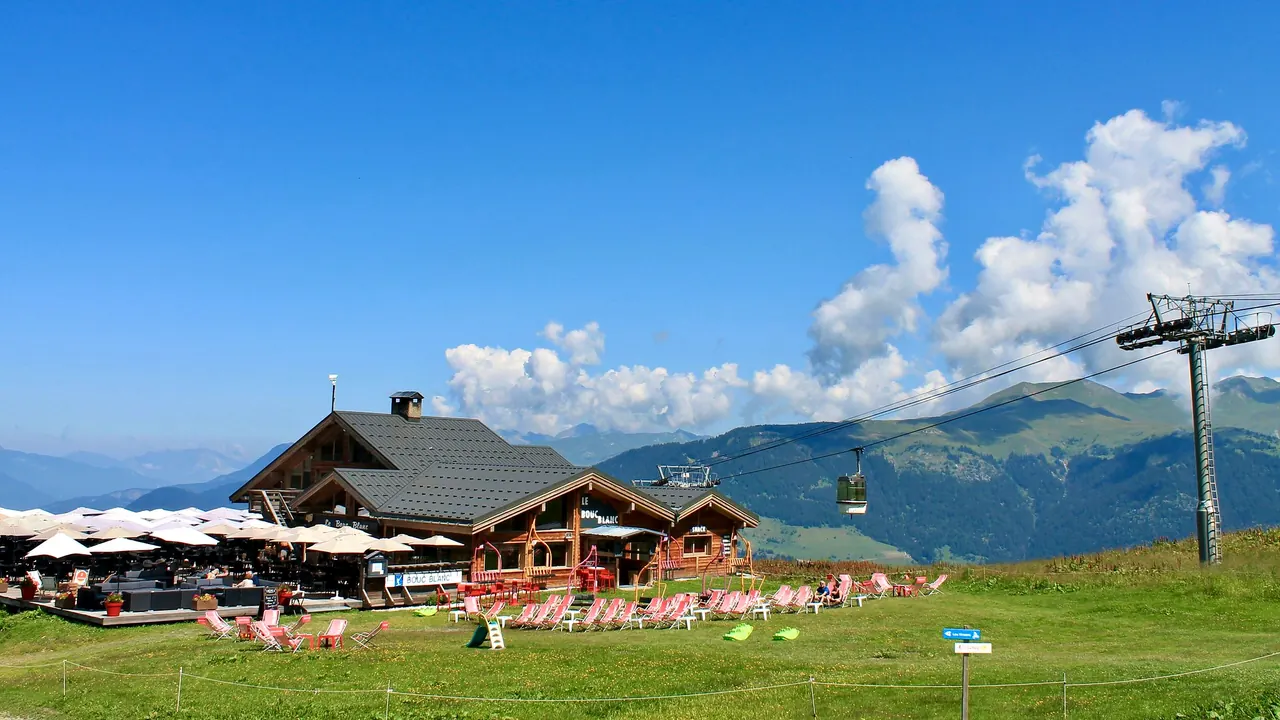
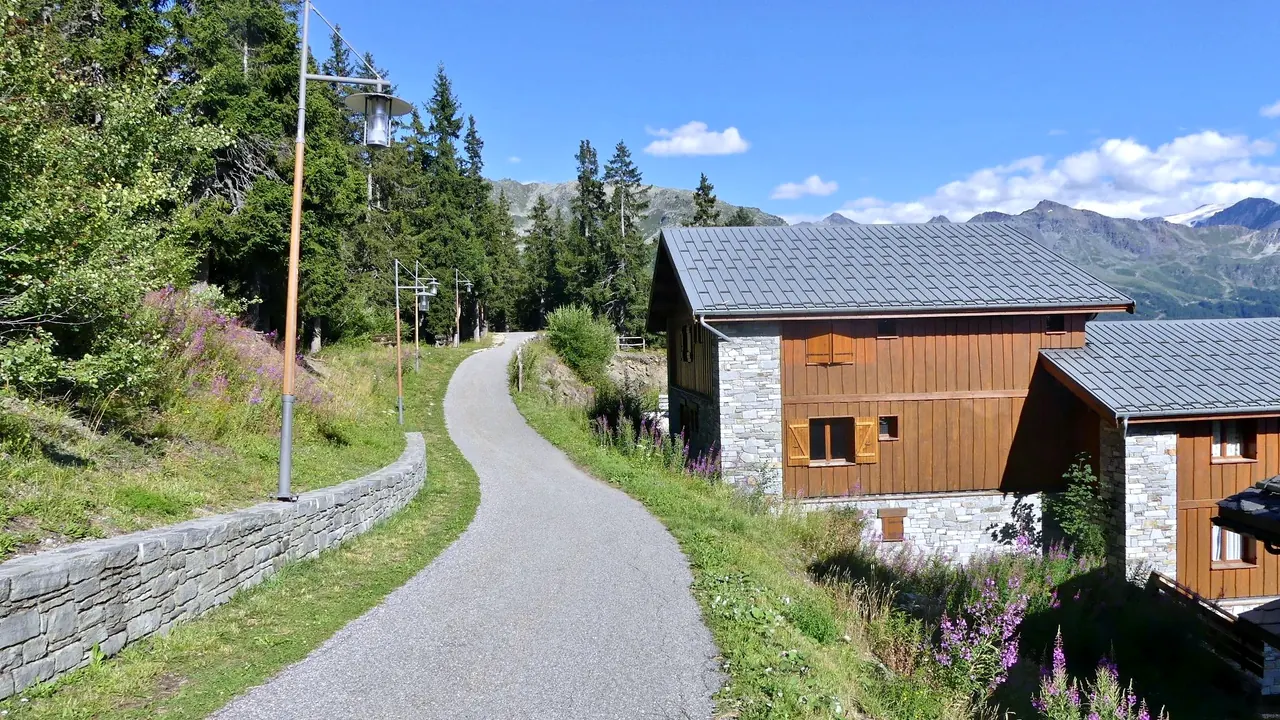
Photos: Courchevel by B. Brassoud, CC BY-SA 4.0, cropped; La Rosière by Florian Pépellin, CC BY-SA 4.0, cropped.
Courchevel or La Rosière?
Our verdict in twelve categories, each scored against the same fixed benchmark cities, and the climate month by month, so you can choose for your trip.
Choose Courchevel for
- food and drink
- shopping
- nightlife
Courchevel suits the skier who wants the mountain and the evening to be equally memorable. It eats far better, with starred kitchens in the palace hotels of 1850 and long terrace lunches on the slopes, and it has the lavish spas, the luxury boutiques and the champagne-fuelled late nights that La Rosière simply lacks. The ski school set-up and the gondola linking the villages also make it smoother for families. The price of all this is steep, and it rises for anyone who stays up in 1850.
Choose La Rosière for
- prices
- day trips
La Rosière is for families and groups who want sunny, uncrowded skiing at a less punishing cost, and who are happy to eat fondue and be in bed early. Its own particular draw is the frontier: one ski area runs across the Little St Bernard Pass to La Thuile, so Italian lunches come with the lift pass, and in summer the road over the pass leads down into the Aosta valley. Anyone hoping for a night out or a choice of restaurants will be disappointed.
Scoreboard
Twelve categories on one fixed scale from 0 to 100. The shaded stretch is the gap between the two.
Your match
Pick a travel style or drag the sliders, and both match scores follow your weighting.
Wins on food and drink and shopping with your weighting.
Wins on prices and day trips with your weighting.
What matters to you?
Category by category
What the scores mean for a trip.
Beaches & swimming
Neither has anything resembling a beach, and the sea is hours away from both. Courchevel at least has a summer spot for sunbathing on the grass beside the small Lac de la Rosière above Moriond, plus a public aquatic centre with indoor pools. La Rosière offers hotel pools and cold lakes further down the valley. Don't let the shared name confuse you: the lake belongs to Courchevel, not to La Rosière.
Food & drink
Courchevel is one of the great places to eat in the French mountains. Its palace hotels in 1850 hold a cluster of starred kitchens, and lunch on the slopes means grilled meats, seafood and proper wine between runs. Savoyard dishes fill in the gaps, though cheap casual meals are hard to find.
La Rosière offers fondue, raclette and tartiflette in chalets and mountain huts, and after a few nights the menus start to repeat. Its best trick is skiing over to the Italian side for pasta, polenta and an espresso at lunch.
Culture & sights
Both are purpose-built ski stations with almost no sights, so culture won't decide this. Courchevel has the 1992 Olympic ski jumps at Le Praz and some modernist chalets at 1850. La Rosière's best piece of history lies up on the Little St Bernard Pass in summer: an Iron Age stone circle and the old hospice. Both have baroque Tarentaise churches in the valleys below.
Nightlife
Courchevel 1850 is known for its winter nights: terrace après-ski as the lifts close, hotel bars, then a handful of expensive clubs open into the early hours. The choice is short and it is built around big spending, but it is a real night out.
La Rosière is a family resort that winds down after dinner. A few bars fill up for après-ski and one or two stay open later in peak weeks. Anyone who wants to dance should look elsewhere.
Nature & outdoors
Both are first-rate mountain bases, and the difference is in the kind of skiing. Courchevel sits in Les 3 Vallées, with some 600km of linked pistes reaching Méribel and Val Thorens. Its own runs are known for their grooming, from tree-lined runs down to Le Praz to the steep couloirs off the Saulire.
La Rosière looks out from a sunny, south-facing balcony towards the Vanoise glaciers. It skis across the frontier to La Thuile and offers heli-skiing on the Italian side. In summer both open up for hiking, mountain biking and spotting ibex, and La Rosière adds the Mont Blanc massif just over the border.
Day trips
From either resort, outings take effort, but they lead in different directions. From Courchevel you drive down to Moûtiers and then on to medieval Conflans, the cheese town of Beaufort, Chambéry's castle or Annecy. That works in any season, though most skiers never leave the slopes.
La Rosière comes into its own in summer, when the pass opens onto Italy's Aosta valley: Roman Aosta, castles along the valley floor and Courmayeur. In winter that road is closed, and outings usually mean visiting other ski resorts.
Good for families
Both are sound choices for a family ski week, and Courchevel is the slightly better equipped. Moriond and Courchevel Village have gentle, sunny nursery slopes, large children's ski programmes and free beginner lifts. The public aquatic centre with slides is a good answer to a bad-weather afternoon. Just steer clear of 1850, which is built around adult luxury.
La Rosière's strengths are a small, quiet village where older children can roam safely, nursery areas in the centre, and afternoons of sledging and dog-sled rides. When the weather turns, though, there is little to do but the pool.
Getting around
Once you have arrived, Courchevel is the easier resort to get around. A gondola links Le Praz and Courchevel Village with 1850, a free shuttle runs between the villages, and many chalets and hotels are ski-in, ski-out, so a car can stay parked all week. Getting there is the hard part: from the station at Moûtiers it is about 25km of hairpin bends, and in winter you need snow chains.
La Rosière strings its quarters along a single hillside road, joined by pistes, lifts and a free shuttle, though walking between them means uphill stretches that are sometimes icy. Its station at Bourg-Saint-Maurice is about half an hour below by bus. For anything beyond the slopes, whether valley towns or Italy in summer, a car makes things much easier.
Shopping & style
Courchevel 1850 has a short but grand street of fashion houses, jewellers and watchmakers that open for the winter, alongside excellent ski shops and Savoyard cheese and woodcraft. La Rosière's shopping is purely practical: ski hire, small supermarkets and a little local cheese and charcuterie. For anything more you head down to Bourg-Saint-Maurice.
Affordability
Neither is cheap in winter, but La Rosière is clearly the gentler on the wallet. Its self-catering chalets make a real difference, and in summer lifts and hotels are priced for walkers.
Courchevel is among the most expensive places to stay anywhere. A pass for the full 3 Vallées adds a lot, and even the lower villages of Le Praz and La Tania only soften the bill rather than making it modest.
Live music & performing arts
Neither resort has a theatre, a concert hall or a regular programme. Courchevel's occasional concerts and live bands at après-ski give it a little more than La Rosière, where live music means the odd evening in a bar and a few seasonal events.
Wellness & relaxation
For a pampering stay, Courchevel is the stronger choice. Its palace hotel spas are among the most lavish in the mountains, with pools under timber roofs and hammams, and many accept non-residents. The aquatic centre in Courchevel Village has saunas and steam rooms with mountain views, at a more accessible level.
La Rosière offers rest rather than luxury: small hotel spas, a quiet village among the larches and early nights. In summer you can cross the pass to the historic thermal baths at Pré-Saint-Didier.
When should you go?
Pick your month. The climate figures are measured averages, not a forecast.
Courchevel in July
La Rosière in July
Daytime high, °C
Rainfall in the month, mm
Where the figures come from
Courchevel has no weather station within reach, so its figures come from a gridded climate model rather than a measured record, and read a broad area rather than one spot.
La Rosière has no weather station within reach, so its figures come from a gridded climate model rather than a measured record, and read a broad area rather than one spot.
Temperature and rainfall are climate normals, averaged over the years shown. Courchevel: 2001-2020 normals, NASA POWER reanalysis grid, no weather station within 90 km. La Rosière: 2001-2020 normals, NASA POWER reanalysis grid, no weather station within 90 km.
The two resorts share the same high-mountain climate, so the calendar works the same way in both. December to March is the snow season, with daytime highs around -4°C in January and only reaching freezing by March. That is ideal for skiing but cold for wandering between chalets once the sun goes. April brings softer spring snow as the days warm.
May is the wettest month, at about 103mm, and falls between the two seasons. June to August is the walking season, with highs of 16°C to 18°C, and July and August are the safest months for hiking and lake picnics. September is cooler, at around 13°C, but still fine for walks. Neither resort is ever warm enough for a beach trip, and November turns grey and damp. The one seasonal difference is the road. Courchevel's summer stays within its own valleys and the Vanoise. La Rosière's border road over the pass opens only in summer, which makes those months its most varied.
Which traveller are you?
For a food and nightlife trip, Courchevel wins outright. Michelin-starred dining in 1850, serious wine lists on the slope terraces and glamorous late clubs give it an evening life that La Rosière, with its few après-ski bars, does not attempt.
On a trip on a tight budget, La Rosière is the realistic choice. Neither is cheap in winter, but La Rosière costs noticeably less than its glamorous neighbours, self-catering chalets keep the bills down and summer is far cheaper, while Courchevel is among the costliest resorts anywhere.
For a relaxing and wellness trip, Courchevel has more to offer. Its palace hotel spas, with timber-roofed pools and hammams, are among the most lavish in the Alps, and many take outside guests. La Rosière is quieter, but its spas are small hotel affairs.
Before you go
| Measure | Courchevel | La Rosière |
|---|---|---|
| Official language | French | French |
| Currency | Euro (EUR) | Euro (EUR) |
| Sockets | CE230 V, 50 Hz | CE230 V, 50 Hz |
| Driving side | Right | Right |
| Time zone | UTC+1, UTC+2 in summer | UTC+1, UTC+2 in summer |
| Emergency number | 112 | 112 |
| Elevation | 1,757 m | 1,844 m |
| Main airport | Geneva International Airport (GVA)100 km from centre150 non-stop destinations | Geneva International Airport (GVA)89 km from centre150 non-stop destinations |
| Public holidays this year | 11 days | 11 days |
By the numbers
| Measure | Courchevel | La Rosière |
|---|---|---|
| Museums within 10 km | 0 | 0 |
| UNESCO World Heritage sites within 50 km | 0 | 0 |
Where else could you go?
Every comparison below shares a destination with this one, so you can follow Courchevel or La Rosière somewhere new.
- Méribelvs Courchevel
- Les Arcsvs La Rosière
- La Plagnevs Courchevel
- Les Menuiresvs Courchevel
- Val Thorensvs Courchevel
- Tignesvs La Rosière