Cozumel or Roatán?
Our verdict in twelve categories, each scored against the same fixed benchmark cities, and the climate month by month, so you can choose for your trip.
Choose Cozumel for
- day trips
- shopping
- families
Cozumel suits travellers who want a sea-centred island with the mainland close by. The ferry to Playa del Carmen opens up Tulum, Coba and the cenote coast. Families get Chankanaab and a small, easy town. Confident divers get the famous current-swept walls, and San Miguel has more to browse than anything on Roatán.
Choose Roatán for
- nightlife
- nature and the outdoors
- beaches
Pick Roatán for the classic sandy beach and fuller days outdoors. West Bay's pale curve of sand is better for lying on the beach than Cozumel's rocky shore, and the reef is a favourite place to learn to dive. The green hills and mangroves give you things to do out of the water, and West End's bars offer more of an evening, though the island is much harder to leave for the day.
Scoreboard
Twelve categories on one fixed scale from 0 to 100. The shaded stretch is the gap between the two.
Your match
Pick a travel style or drag the sliders, and both match scores follow your weighting.
Too close to call, 1 point apart
Wins on day trips and shopping with your weighting.
Wins on nightlife and nature and the outdoors with your weighting.
What matters to you?
Category by category
What the scores mean for a trip.
Beaches & swimming
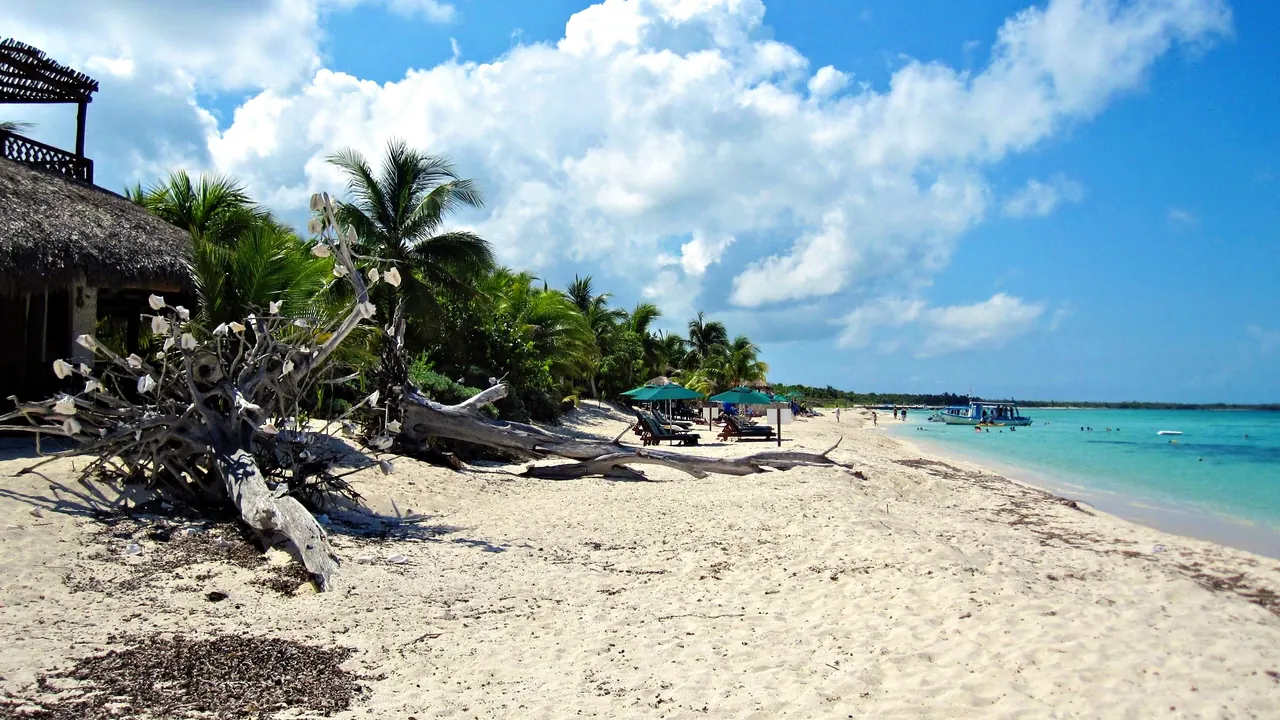
Both islands have warm, clear, calm water with reef a few strokes from shore, so the real difference is what you stand on. Cozumel's swimmable west coast is mostly low limestone rock. Its sand is concentrated south of San Miguel in beach clubs with loungers and ladders into the sea, and the beautiful east coast is too rough for most swimming.
Roatán has the classic picture: the long, pale curve of West Bay, the smaller and more sheltered Half Moon Bay in West End, and cays in the east reached by boat. The downsides are sand flies at dawn and dusk and a crowded beach when ships are in.
Food & drink
Neither island is a food destination, and on both the best meals are away from the tourist strip. Cozumel's cooking is Yucatecan: cochinita pibil and panuchos in family places a few streets back in San Miguel, tacos around the main square at night and a cheap breakfast at the market.
Roatán eats Caribbean and Garifuna instead, with dishes built on coconut and fish, tapado on the north coast and baleadas from roadside stalls in the morning. Its restaurants are spread between West End and West Bay rather than gathered in one town.
Culture & sights
Culture is thin on both islands, and anyone after great Maya cities or colonial towns has to go to the mainland. Cozumel has a little more to visit: the low, scattered ruins of San Gervasio, once a stop on a pilgrimage to Ixchel, the island museum on the waterfront and the lighthouse at Punta Sur.
On Roatán, the heritage is in the people rather than the buildings. The island has English-speaking Bay Islanders and the Garifuna village of Punta Gorda, and the stilt houses along the waterway at Oak Ridge are its prettiest sight.
Nightlife
Evenings on Cozumel revolve around San Miguel, the island's only real town. A drink on a rooftop terrace or a cover band on the waterfront makes a pleasant start, but the night is short. Its nicest moment may be Sunday, when islanders bring their families to the square. Anyone set on dancing until late has to cross to the mainland.
Roatán has the livelier evenings, and they depend on where you stay. West End feels sociable and barefoot, with drinks on the docks among people who live and work on the island. West Bay is the quiet alternative, with resort bars and a few tables on the sand. Neither island has a proper club, and because the dive boats leave early, most people are in bed well before city hours.
Nature & outdoors
Both are diving islands first, each with a marine park of coral walls, turtles and rays. Roatán has more to offer outdoors overall. It sits on the Mesoamerican Barrier Reef, its dive sites are minutes from West End and it is a classic place to learn. Above water, its green hills and eastern mangroves offer forest walks and paddling.
Cozumel's walls at Palancar, Santa Rosa and Columbia are swept by a steady current, a style of drift diving that suits confident divers. On land the island is flat scrub, and the main outings are the crocodile lagoons at Punta Sur and a ride along the wild east coast.
Day trips
Cozumel's position gives it a clear advantage. The ferry to Playa del Carmen takes under an hour, and from there the cliff-top ruins of Tulum, the cenote coast and the jungle city of Coba each fit into a long day. Organised tours make the connections easier.
Roatán's outings are mostly by boat. Neighbouring Utila and the protected Cayos Cochinos are both worth the trip, but La Ceiba on the mainland is mostly a place to pass through, and Copán is far beyond a day's reach.
Good for families
Cozumel is the easier island with children. Chankanaab park combines a reef lagoon, a botanical garden and sea lions, and semi-submarine boats show the reef to non-swimmers. San Miguel is small enough to manage, with playgrounds in the square in the evening. The drawbacks are the sharp ironshore and the crowds on cruise days.
Roatán works as a simple beach stay in West Bay, with shallow water, plus zip-lines and animal parks for a change of scene. Medical care is basic, though, sand flies bother small children and the roads are unlit at night, so it suits older children and strong swimmers better.
Getting around
On both islands you get around by taxi or a hired car or scooter, but the islands are a different shape. Cozumel has one flat paved road that runs from San Miguel round the southern tip to the empty east coast, an easy day's circuit, and its taxis charge fixed zone fares.
Roatán is a hilly ridge with a winding, sometimes potholed road. Shared minibuses link the main settlements and water taxis run between West End and West Bay, but taxi fares are agreed before you get in.
Shopping & style
Neither island is worth a trip for the shopping, but Cozumel has more choice because it is a large cruise port with Mexico behind it. San Miguel's waterfront has jewellers and silver counters, Mexican crafts and tequila, and a few galleries on the side streets sell better-made pieces. Expect a hard sell when ships are in.
Roatán's offer is smaller and plainer. It is mostly souvenir stalls in West End and by the piers, with carved mahogany and a handful of galleries showing local paintings and Garifuna crafts. With almost no fashion or design, it is a place to pick up a keepsake or two rather than spend an afternoon shopping.
Affordability
Costs are similar, and on both islands the total depends mostly on where you stay. On Cozumel, the cheaper option is San Miguel, with its dive hotels, market and taco stands, while resorts and daily boat dives make the island expensive for Mexico.
Roatán is expensive for Honduras because almost everything is shipped in, and West Bay resorts charge wider Caribbean prices. West End's hostels, food stalls and shared minibuses help on a budget, and the island's dive courses are among the cheapest in the region.
Live music & performing arts
Neither island has a theatre or concert hall, and live music usually means a band in a bar. Each has one tradition worth seeing. Cozumel's carnival before Lent, among the oldest in Mexico, fills San Miguel with parades and comparsa dance troupes. Roatán has Garifuna drumming and the fast punta dance, best seen at village celebrations around Punta Gorda.
Wellness & relaxation
Both islands offer rest through their slow pace rather than any bathing tradition, and on both the spas are mostly inside resorts. Roatán adds yoga classes, small retreats and hammocks over the eastern mangroves. Cozumel's own extra is the temazcal, the Maya sweat lodge, and its adults-only resorts and empty east coast suit a quiet stay.
When should you go?
Pick your month. The climate figures are measured averages, not a forecast.
Cozumel in July
Roatán in July
Daytime high, °C
Rainfall in the month, mm
Where the figures come from
Cozumel has no weather station within reach, so its figures come from a gridded climate model rather than a measured record, and read a broad area rather than one spot.
Roatán's temperatures are measured 69 km from the centre, at La Ceiba Airport.
Roatán has no rain gauge within 25 km of the centre, so its rainfall comes from a gridded climate dataset read at the destination rather than from a gauge further away.
Temperature and rainfall are climate normals, averaged over the years shown. Cozumel: 2001-2020 normals, NASA POWER reanalysis grid, no weather station within 90 km. Roatán: 1991-2020 normals, La Ceiba Airport (69 km from centre).
Both islands are warm enough for the beach all year, with the sea at around 27°C to 29°C on each, so the choice of month comes down mostly to rain. Cozumel is driest from February to April and stays pleasant for walking around San Miguel through the winter. Showers build from May and peak in autumn, when October is wettest at about 224mm and storms are possible.
Roatán is hotter, with highs of around 32°C from May to September that make midday walking heavy going. Its wet season comes later and is far heavier, running from October to January with about 400mm in each of October and November. April is the driest and sunniest month there, with March and May close behind. In December and January, Cozumel is the safer bet.
Which traveller are you?
On a family trip with young children, Cozumel is the easier island. Chankanaab's reef lagoon and sea lions, semi-submarine boats for non-swimmers and a compact, relaxed San Miguel give children more to do, and evenings and medical care are less of a worry.
For an outdoors trip, Roatán offers more variety. Its reef is a few minutes by boat from West End and it is a classic place to learn to dive. Above water, the green hills and eastern mangroves add forest walks, kayaking and paddleboarding, which flat Cozumel lacks.
On a food and nightlife trip, Roatán is slightly ahead because of its evenings. West End's row of beach and dock bars stays lively late on party nights, and Garifuna coconut stews add interest. Cozumel's waterfront bars empty once the cruise passengers return to their ships.
Before you go
| Measure | Cozumel | Roatán |
|---|---|---|
| Official language | Spanish, Nahuatl, Yucatec Maya | Spanish |
| Currency | Mexican Peso (MXN) | Lempira (HNL) |
| Sockets | AB127 V, 60 Hz | AB110 V, 60 Hz |
| Driving side | Right | Right |
| Time zone | UTC-5 | UTC-6 |
| Emergency number | 911 | Police 199, ambulance 199, fire 198 |
| Main airport | Cozumel International Airport (CZM)13 non-stop destinations | Juan Manuel Gálvez International Airport (RTB)16 non-stop destinations |
| Public holidays this year | 9 days | 11 days |
By the numbers
| Measure | Cozumel | Roatán |
|---|---|---|
| Population | 88,626 | 41,831 |
| People per km² | 164 | 327 |
| Swim season, months above 21 °C | 12 months | 12 months |
Where else could you go?
Every comparison below shares a destination with this one, so you can follow Cozumel or Roatán somewhere new.
- Playa del Carmenvs Cozumel
- Riviera Mayavs Cozumel
- Tulumvs Cozumel
- Cancunvs Cozumel
- Isla Mujeresvs Cozumel
- Holboxvs Cozumel