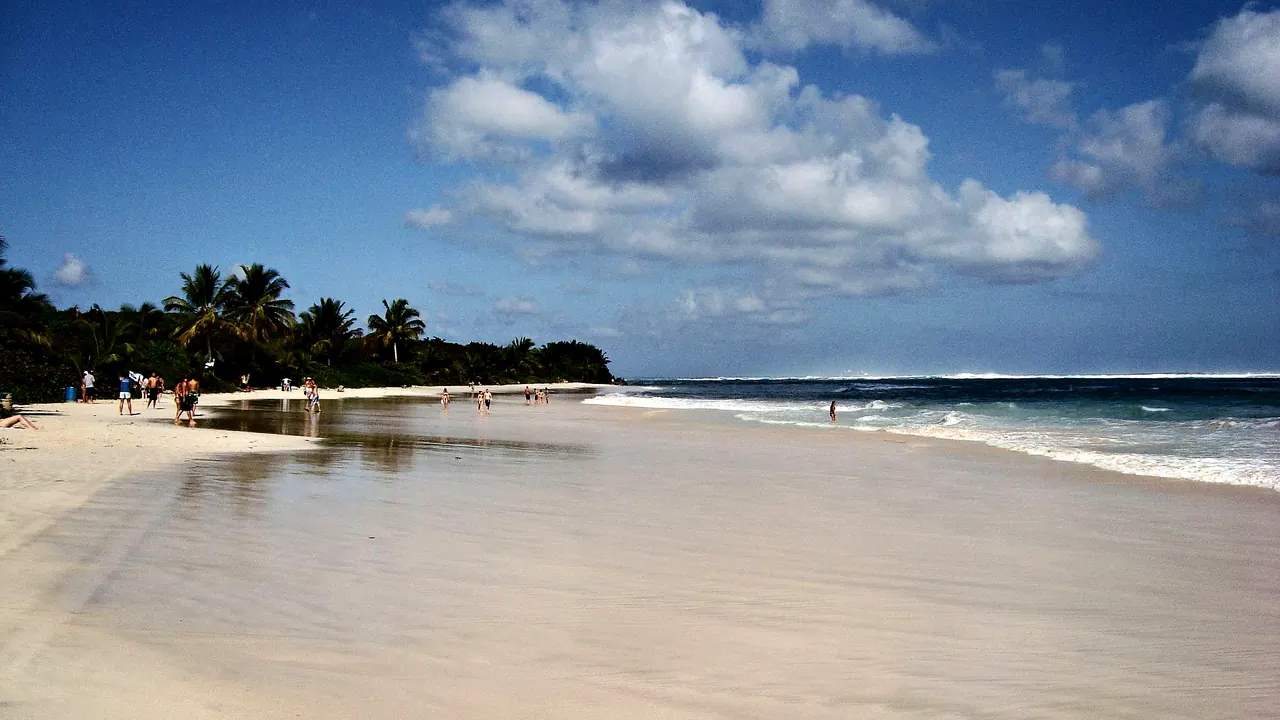
Photos: Culebra by Jose L. Dominguez, CC BY-SA 3.0, cropped.
Culebra or St Barts?
Our verdict in twelve categories, each scored against the same fixed benchmark cities, and the climate month by month, so you can choose for your trip.
Choose Culebra for
- prices
- nature and the outdoors
- beaches
Culebra is the better choice for travellers who want the sea and very little else. Flamenco's sheltered white horseshoe, reefs a few strokes from shore at Tamarindo and Melones, and turtles grazing off Culebrita fill the days, and the evening ends with a fish dinner in Dewey. It is not cheap, but rent somewhere with a kitchen and it costs far less than its rival, and the snorkelling in the reserves is better.
Choose St Barts for
- shopping
- food and drink
- nightlife
St Barts is for a trip where the beach is only part of the plan. Long French lunches on the sand at St Jean, dinners above the Gustavia harbour, duty-free boutiques, hotel spas and a party scene in high season give you much more to do once you are out of the water. The lagoons at Grand Cul-de-Sac are calm enough for young children too. The catch is the cost, and there is no cheap way round it.
Scoreboard
Twelve categories on one fixed scale from 0 to 100. The shaded stretch is the gap between the two.
Your match
Pick a travel style or drag the sliders, and both match scores follow your weighting.
Wins on prices and nature and the outdoors with your weighting.
Wins on shopping and food and drink with your weighting.
What matters to you?
Category by category
What the scores mean for a trip.
Beaches & swimming
Both islands are first-rate beach destinations, but the beaches differ in kind. Culebra's centrepiece is Flamenco, one long, sheltered sweep of fine sand with the old naval tanks at its western end. Around it are reef-fringed beaches such as Tamarindo and Melones, and Tortuga Beach on Culebrita is reached by water taxi.
St Barts has a string of smaller coves, each with a different character. Saline and Gouverneur are wild and can have surf, Grand Cul-de-Sac is a calm lagoon, Colombier can only be reached on foot or by boat, and St Jean is the social beach, with planes landing just overhead. Facilities on Culebra are a few kiosks, so bring shade and water. On St Barts lunch is served on the sand.
Food & drink
St Barts eats far better. It has fresh croissants and baguettes each morning, supermarkets stocked with French cheese and wine, long lunches at tables on the beach and refined French cooking on hillside terraces. The catch is that nearly every place aims at the same expensive register.
Culebra's food is simple and limited. Dewey has a few seafood places, open-air grills and food trucks serving mofongo and empanadillas. Supplies arrive on the ferry, so menus are short, and many visitors live out of a cooler.
Culture & sights
Neither island is worth visiting for its sights, but St Barts has a little more to show. Its century of Swedish rule left the clock tower, the Wall House museum and the forts above Gustavia, and Corossol and Lorient show the older island. On Culebra there is the canal-side fishing town of Dewey, a small museum in a former navy powder magazine telling the story of the bombing years, and the ruined lighthouse on Culebrita.
Nightlife
This is one of the clearest gaps between the two. From Christmas into spring, St Barts has long afternoon parties at St Jean, harbour bars and late clubs in Gustavia, and a famously loud New Year week when the superyachts arrive. It is a glamorous scene but a seasonal one, and much of it closes by late summer.
Culebra has a few waterside bars in Dewey that fill at sunset, with an occasional weekend band. There are no clubs, and the island is asleep soon after dinner.
Nature & outdoors
Culebra has the richer natural life, nearly all of it underwater or on the outer cays. Much of the island lies in a national wildlife refuge, and the Luis Pena reserve and Carlos Rosario offer snorkelling with green turtles and rays. Seabirds nest in large colonies, and in spring and summer leatherbacks and hawksbills come ashore on remote beaches to lay their eggs.
St Barts has a marine reserve with turtles too, but its strengths lie elsewhere. The wind in the Grand Cul-de-Sac lagoon is good for kitesurfing and windsurfing, and the cliff path from Flamands to Colombier is a fine short walk. On land, both islands are dry, scrubby and quickly explored.
Day trips
St Barts at least has one proper day out: the ferry across to St Martin, where Marigot, Grand Case and Philipsburg offer a busier, more commercial contrast. From Culebra, the usual outings are boat trips to Culebrita and the uninhabited cays. Vieques and the main island are close but awkward to reach and back in a day, so most visitors stay put on either island.
Good for families
For families the two are close, but they suit different ages. The sheltered lagoons at Grand Cul-de-Sac and Petit Cul-de-Sac, Shell Beach and villas with pools make St Barts easier with toddlers. Culebra is better for school-age children who love the sea, because the snorkelling at Tamarindo starts in waist-deep water with turtles close by.
Neither has attractions for children. Culebra also has limited medical care, and the ferry or small plane makes the journey harder.
Getting around
Both islands take effort to reach, and St Barts is slightly easier once you are there. You arrive by small plane, usually from St Martin, or by ferry, and then rent a car for short drives on steep roads full of hairpin bends. Gustavia and St Jean are walkable.
Culebra's ferry from Ceiba is often full at weekends and does not always run on time, so the small planes from San Juan or Ceiba are the surer option. On the island, Dewey is walkable and shared vans run to Flamenco. A golf cart or jeep covers the other beaches, and the cays need a water taxi.
Shopping & style
St Barts is the only one of the two worth shopping on. As a duty-free territory it has a dense cluster of luxury fashion, watch and jewellery boutiques around the Gustavia harbour, plus resort wear in St Jean and straw work from Corossol. Culebra has a few souvenir and beachwear shops and some local artists in Dewey, so buy what you need before the crossing.
Affordability
Culebra is clearly the cheaper island, though prices are still at US levels and the ferry freight shows on restaurant bills. Guesthouses and rentals with kitchens, free beaches and snorkelling straight from the shore keep the daily budget under control.
St Barts is among the most expensive places in the world to take a vacation. Villas, beach lunches, the small-plane flight and the obligatory rental car all cost a great deal. Cooking in a villa helps a little, but there is no cheaper version of the island.
Live music & performing arts
Neither island has a theatre or concert hall, but St Barts has more to offer. A long-established festival each January brings classical musicians, opera singers and dancers to the churches and open-air spaces of Gustavia, and carnival before Lent adds steel bands and parades. Culebra has the occasional weekend band in a Dewey bar and its annual patron saint festival.
Wellness & relaxation
St Barts is better for pampering. The luxury hotels have spas of a high standard, and massage therapists and yoga teachers will come to your villa. Spring is especially calm, though the New Year week is the opposite.
Culebra offers little beyond guesthouse yoga and a few independent therapists. Its restfulness comes from simplicity instead: no resorts, almost no traffic and long, empty afternoons.
When should you go?
Pick your month. The climate figures are measured averages, not a forecast.
Culebra in July
St Barts in July
Daytime high, °C
Rainfall in the month, mm
Where the figures come from
Culebra's temperatures are measured 34 km from the centre, at C. Amalie / St. Thomas Airport.
Culebra has no rain gauge within 25 km of the centre, so its rainfall comes from a gridded climate dataset read at the destination rather than from a gauge further away.
Culebra's sunshine is measured 75 km from the centre, at San Juan / Int., Puerto Rico.
Temperature and rainfall are climate normals, averaged over the years shown. Culebra: 1991-2020 normals, C. Amalie / St. Thomas Airport (33.7 km from centre). St Barts: 1991-2020 (sunshine 1961-1990) normals, Gustavia, Saint Barthelemy (0.5 km from centre).
Both islands are beach-warm all year. The sea stays between about 26°C and 29°C, and daytime highs rarely drop below the high twenties. February and March are the driest and most settled months in both places. From June to September the afternoons reach 32°C, which is fine for swimming but heavy for walking up Culebra's hill roads or around Gustavia at midday.
The wet season builds earlier on Culebra and also lasts longer. Rain climbs through late summer to about 143mm in September and stays high into November, when the island also gets noticeably fewer hours of sun. On St Barts the rain peaks later, around 146mm in October, and the sunshine holds up more evenly through the year, so it is the steadier choice in late autumn and early winter.
Which traveller are you?
On a trip on a tight budget, Culebra is the only realistic option. It is still priced at US levels, but guesthouses, vacation rentals with kitchens and free beaches keep costs manageable. St Barts has no budget side at all.
For a food and nightlife trip, St Barts wins easily. It has French boulangeries, rosé-fuelled beach lunches at St Jean and Saline, polished harbour dinners, then bars, a couple of late clubs and yacht decks in winter. Culebra offers food trucks and a sunset drink.
On an outdoors trip built around the water, Culebra comes out ahead. The Luis Pena reserve and the wildlife refuge protect some of the healthiest reefs around Puerto Rico, with turtles, rays and seabird colonies. St Barts adds kitesurfing and a cliff walk, but its reefs are less rich.
Before you go
| Measure | Culebra | St Barts |
|---|---|---|
| Official language | Spanish, English | French |
| Currency | US Dollar (USD) | Euro (EUR) |
| Sockets | AB120 V, 60 Hz | - |
| Driving side | Right | Right |
| Time zone | UTC-4 | UTC-4 |
| Emergency number | 911 | - |
| Main airport | Luis Munoz Marin International Airport (SJU)59 non-stop destinations | Princess Juliana International Airport (SXM)44 non-stop destinations |
| Public holidays this year | 21 days | 12 days |
By the numbers
| Measure | Culebra | St Barts |
|---|---|---|
| Population | - | 10,124 |
| People per km² | - | 405 |
| Swim season, months above 21 °C | 12 months | 12 months |
Where else could you go?
Every comparison below shares a destination with this one, so you can follow Culebra or St Barts somewhere new.
- Viequesvs Culebra
- Sint Maartenvs St Barts
- Saint-Martinvs St Barts
- St Thomasvs Culebra
- US Virgin Islandsvs Culebra
- Anguillavs St Barts