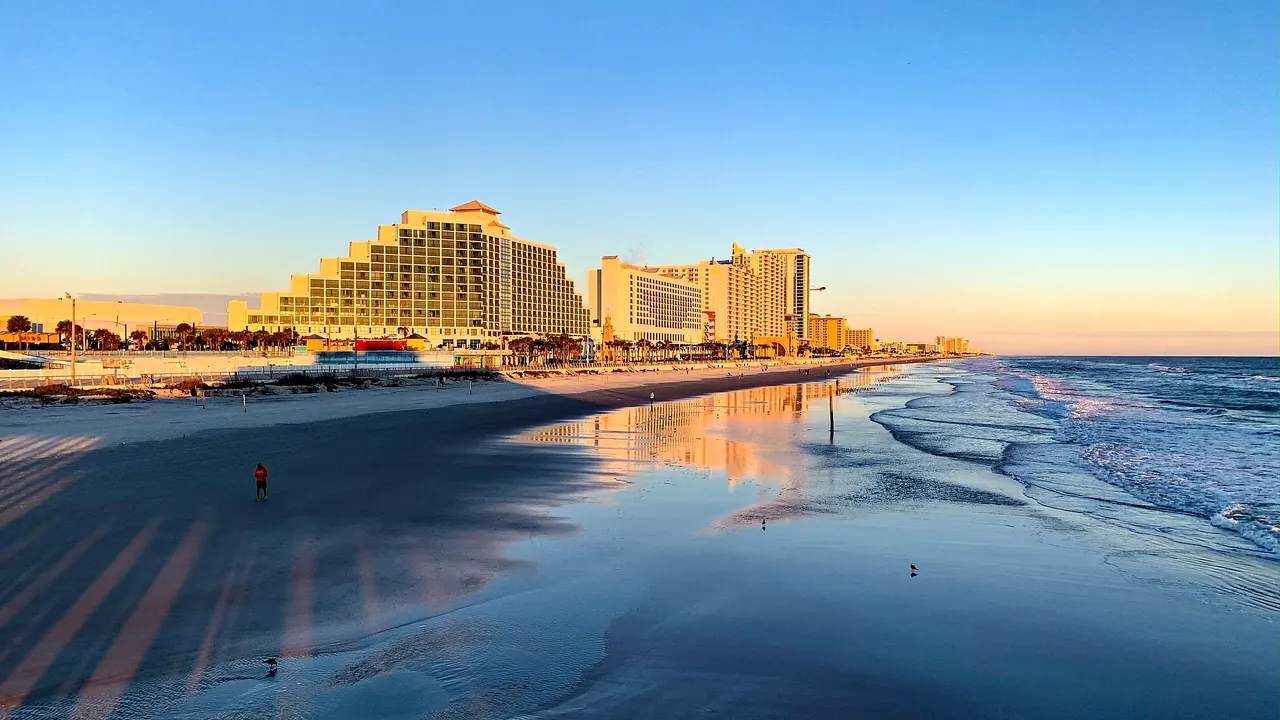
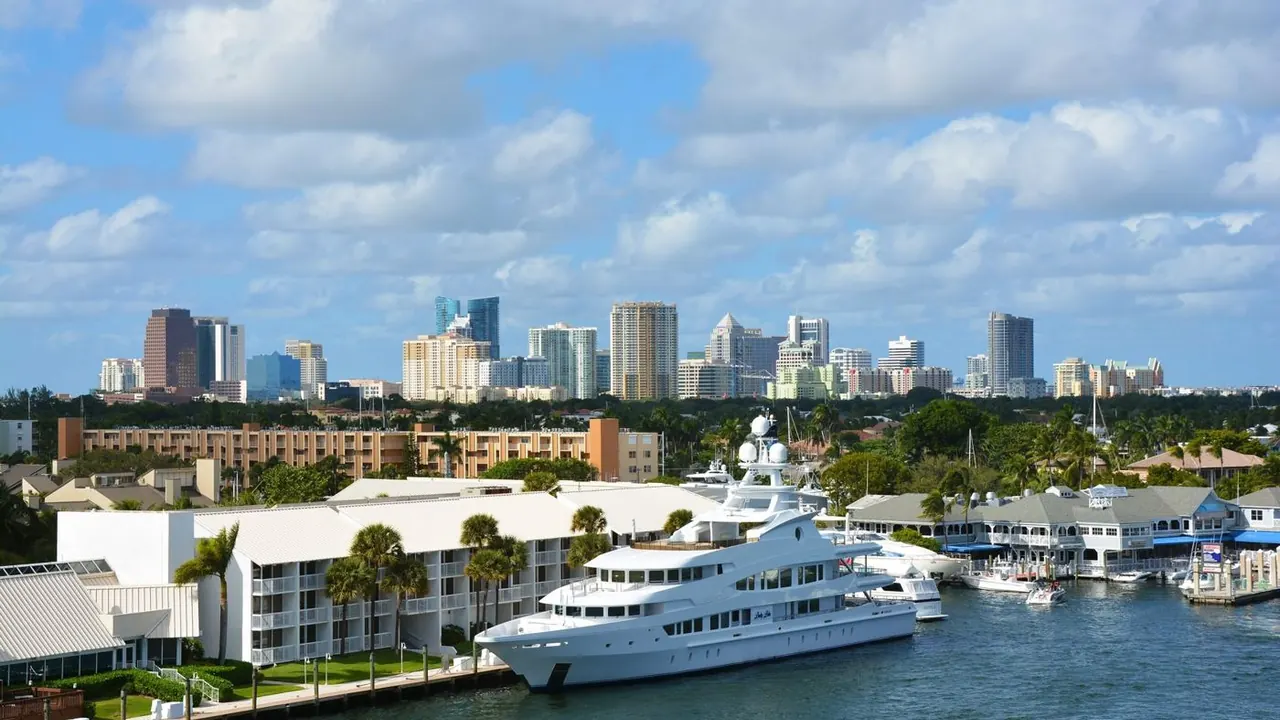
Photos: Daytona Beach by Han Zheng, CC BY-SA 2.0, cropped; Fort Lauderdale by KeanoManu, CC BY-SA 4.0, cropped.
Daytona Beach or Fort Lauderdale?
Our verdict in twelve categories, each scored against the same fixed benchmark cities, and the climate month by month, so you can choose for your trip.
Choose Daytona Beach for
- prices
- day trips
- culture and sights
Daytona Beach suits a driving vacation on a moderate budget, especially from late spring to autumn when its sea is warm. The hard, wide sand, the cheaper motels and condos, and a position within reach of St Augustine, Kennedy Space Center and the Orlando parks make it a good base for families and road-trippers who want to mix beach days with outings. Racing and motorcycle fans also have the Speedway and Bike Week.
Choose Fort Lauderdale for
- shopping
- getting around
- nightlife
Fort Lauderdale is the better pick for a winter escape, or for travellers who want more going on around the beach. The sea stays warm all year and is often clear, the reefs and wrecks offshore draw snorkellers and divers, and Las Olas, Wilton Manors and the Broward Center give your evenings more range. It costs more, but Miami is close by for anything the city itself lacks.
Scoreboard
Twelve categories on one fixed scale from 0 to 100. The shaded stretch is the gap between the two.
Your match
Pick a travel style or drag the sliders, and both match scores follow your weighting.
Wins on prices and day trips with your weighting.
Wins on shopping and getting around with your weighting.
What matters to you?
Category by category
What the scores mean for a trip.
Beaches & swimming
Both cities are built along a long barrier-island beach, but the water is different. Daytona's hard-packed sand is wide enough to drive on in places and great for walking and cycling. The sea, though, is greenish, often choppy and prone to rip currents, and too cool for most swimmers in winter.
Fort Lauderdale has the better swimming. Its pale sand sits behind a palm-lined promenade, the water is warmer all year and often clear to the bottom, and at Lauderdale-by-the-Sea you can snorkel a reef straight from the beach. Mats of seaweed in summer are the main nuisance.
Food & drink
In both places the best meal is seafood eaten on a deck over the water, at Daytona's fish camps on the Halifax River or at Fort Lauderdale's dockside shacks on the Intracoastal. Beyond that, Daytona has little to offer except Southern breakfasts, beachfront grills and chain restaurants.
Fort Lauderdale goes further. Las Olas Boulevard has a long run of sit-down restaurants, stone crab is in season in winter, brunch is a local habit, and the inland suburbs have Jamaican, Haitian and Cuban cooking. Neither city is a food destination, but Fort Lauderdale rewards a little searching.
Culture & sights
Neither city is a sightseeing destination, and you can see each in a day or two, but the sights differ in kind. Daytona's are about speed and the coast: tours of Daytona International Speedway, the story of the land-speed records set on the beach, the climb up Florida's tallest lighthouse at Ponce Inlet, and a museum with a notable Cuban art collection and a planetarium.
Fort Lauderdale's sights are quieter and more domestic. There is the Bonnet House, an eccentric artists' estate in subtropical gardens, the pioneer Stranahan House on the New River, and modern art at the NSU Art Museum on Las Olas.
Nightlife
Nights out in Daytona depend on the calendar. During Bike Week, Biketoberfest and race weeks the Main Street saloons overflow, but for most of the year going out means tiki bars, sports bars and hotel lounges.
Fort Lauderdale has more choice on an ordinary night. There are beach bars along A1A, late bars on Himmarshee Street, wine bars on Las Olas, and the bars and drag shows of Wilton Manors, one of the country's best-known gay neighbourhoods. Neither city has much of a club scene, and people after a big night out in Fort Lauderdale often go to Miami.
Nature & outdoors
Daytona's outdoors is wild coast under protection. South of town, Canaveral National Seashore keeps undeveloped dunes and the Mosquito Lagoon, where you can kayak or fish among dolphins and wading birds, and Merritt Island beyond is prime birding country. Inland, manatees gather at Blue Spring in winter, and Tomoka State Park has canoe routes under live oaks.
Fort Lauderdale's best outdoors lies offshore, which gives it the edge. A chain of reefs and deliberately sunk wrecks offers good diving close to shore, and sport fishing for sailfish and mahi is a serious pursuit. Back on land, the canals suit paddling, and the sawgrass and alligators of the Everglades are less than an hour west.
Day trips
Daytona is the better base for outings, with very different days out within reach by car. Spanish colonial St Augustine is an hour north, Kennedy Space Center lies to the south and the Orlando theme parks are inland. Small historic towns such as DeLand and New Smyrna Beach are close by.
Fort Lauderdale has a narrower range, but one trip is excellent. Miami's Art Deco district, Wynwood and Little Havana are under an hour away and can be reached by train, while Palm Beach and Key Largo complete the list. Beyond those, the region is mostly suburbs and wetland.
Good for families
Families do well in both, but Fort Lauderdale is easier with young children. The sea is gentler and warmer, with lifeguards along a broad beach and parks behind it. The Museum of Discovery and Science, the butterfly garden and an Everglades airboat ride fill plenty of half days.
Daytona's big advantage is how close it is to Orlando: the theme parks are an easy hour's drive, compared with three hours from Fort Lauderdale. Its boardwalk arcades and condo pools suit children too. However, rip currents mean you need to pick a beach spot near the lifeguards, and the noise of Bike Week and race weekends means you need to pick your dates with care.
Getting around
Daytona asks far more of anyone without a car. Its motels, river decks and sights are scattered across both the mainland and the barrier island, so even dinner at a fish camp or a tour of the Speedway usually means driving or calling a taxi, and the town buses are no real substitute. The sand is the one easy route, firm enough to walk or cycle a long way, and the area around the boardwalk is manageable on foot. In race weeks and Bike Week, though, every drive is slow.
In Fort Lauderdale you can get by without a car as long as you stay central. If you base yourself in the triangle of beach, Las Olas and the downtown riverfront, you can walk, take a free trolley or ride a water taxi along the canals, which works as a sightseeing trip too. Trains to Miami and the Palm Beaches cover the best outings, which no day trip from Daytona can offer. The Everglades and the Sunrise outlets still need a hire car or ride-hailing.
Shopping & style
Shopping in Daytona is purely practical. There is an outlet centre, a regional mall, beach shops selling swimwear and souvenirs, and the motorcycle gear of Main Street, along with a few independent shops on Beach Street.
In Fort Lauderdale, shopping can be a real part of the trip. Las Olas Boulevard is a pleasant street of boutiques and galleries, and the vast outlet mall in Sunrise draws bargain hunters from abroad. Neither city has much luxury shopping, but from Fort Lauderdale, Palm Beach and Miami are close.
Affordability
Daytona is the cheaper place to stay. Older oceanfront motels and condo rentals are plentiful, and casual seafood places and diners keep meals moderate by American standards. The exception is the Daytona 500 and Bike Week, when room rates jump.
Fort Lauderdale costs more for most of the year, especially in the winter high season, with pricier hotels, beach-bar cocktails and paid parking near the sand. Its hot, stormy summer is when rooms are cheaper. In both cities, a hire car and tipping add to the bill.
Live music & performing arts
Fort Lauderdale has the busier stage. The Broward Center on the New River hosts touring Broadway shows, ballet, comedy and concerts throughout the year. The Parker Playhouse and a few rock and indie venues downtown add to the programme.
Daytona's programme is thinner, but it has one highlight: a long-established winter series of concerts by visiting orchestras and soloists, which makes it a good choice for classical music in the cooler months. Otherwise the calendar is filled by the Peabody Auditorium, a community playhouse and free summer concerts at the oceanfront bandshell.
Wellness & relaxation
Neither city has a bathing tradition, so relaxing means resort spas and the slow pace of the beach. Fort Lauderdale offers a little more, with day spas on Las Olas, yoga on the sand at sunrise and warm, dry winters made for unhurried walks along the promenade.
Daytona's calm is real but fragile. Early walks on the hard sand and afternoons by a condo pool are restful, until race weeks and Bike Week bring engines and crowds.
When should you go?
Pick your month. The climate figures are measured averages, not a forecast.
Daytona Beach in July
Fort Lauderdale in July
Daytime high, °C
Rainfall in the month, mm
Temperature and rainfall are climate normals, averaged over the years shown. Daytona Beach: 1991-2020 normals, Daytona Beach / Mansfield Mobile Home Park (4.9 km from centre). Fort Lauderdale: 1991-2020 normals, Fort Lauderdale (7.1 km from centre).
Daytona Beach is a warm-season resort. From May to October the sea is comfortable for swimming, peaking at around 28°C in high summer. In winter, though, the water drops to about 19°C and afternoons of around 21°C suit beach walks better than swims. Summer is hot and stormy, with heavy afternoon rain from June to September, so late spring and October are the best times: warm enough to swim and easier for exploring.
Fort Lauderdale is far enough south that its sea never really cools. It stays at around 25°C even in January, and winter days are warm, dry and pleasant for walking. That makes November to April its best stretch, and this is the clearest difference from Daytona. The wet season runs from May to October, with June the wettest month at over 200mm, and the midsummer heat is much the same in both cities.
Which traveller are you?
On a trip on a tight budget, Daytona Beach is the easier choice. Older oceanfront motels and condos with kitchens keep rooms cheaper, casual seafood keeps meals reasonable and the beach costs nothing. You will still need a car, though, and should avoid the big event weeks.
For a shopping trip, Fort Lauderdale is well ahead. Las Olas Boulevard has boutiques, galleries and resort fashion for an unhurried afternoon, and the huge outlet mall in Sunrise is worth a serious bargain hunt. Daytona offers little beyond an outlet centre and biker gear.
On a food and nightlife trip, Fort Lauderdale gives you more to do. It has Jamaican, Haitian and Cuban cooking inland, terraces on Las Olas, late bars on Himmarshee Street and the drag shows of Wilton Manors. Daytona has its fish camps, tiki bars and biker saloons.
Before you go
| Measure | Daytona Beach | Fort Lauderdale |
|---|---|---|
| Currency | US Dollar (USD) | US Dollar (USD) |
| Sockets | AB120 V, 60 Hz | AB120 V, 60 Hz |
| Driving side | Right | Right |
| Time zone | UTC-5, UTC-4 in summer | UTC-5, UTC-4 in summer |
| Emergency number | 911 | 911 |
| Elevation | 4 m | 11 m |
| Main airport | Daytona Beach International Airport (DAB)5 km from centre8 non-stop destinations | Fort Lauderdale Hollywood International Airport (FLL)7 km from centre138 non-stop destinations |
| Public holidays this year | 11 days | 11 days |
By the numbers
| Measure | Daytona Beach | Fort Lauderdale |
|---|---|---|
| City population | 72,647 | 182,760 |
| People per km² | 440 | 1,829 |
| Museums within 10 km | 6 | 6 |
| UNESCO World Heritage sites within 50 km | 0 | 0 |
| Swim season, months above 21 °C | 9 months | 12 months |
Where else could you go?
Every comparison below shares a destination with this one, so you can follow Daytona Beach or Fort Lauderdale somewhere new.