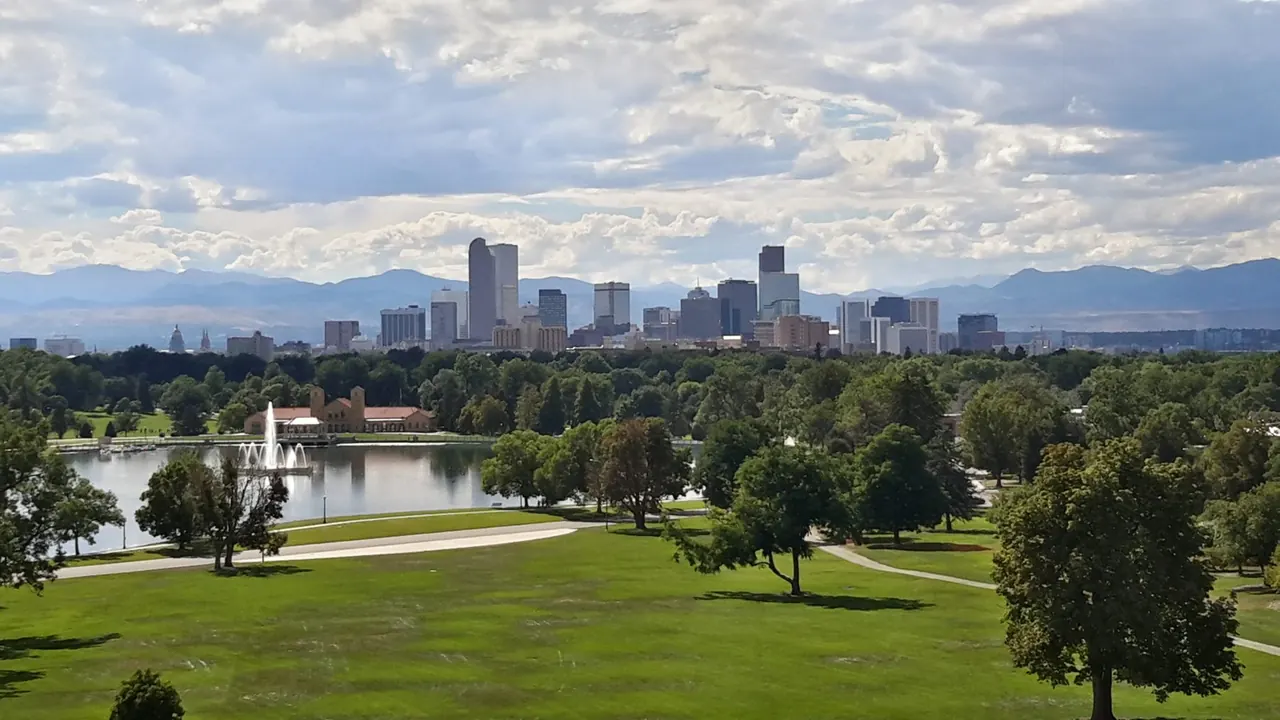
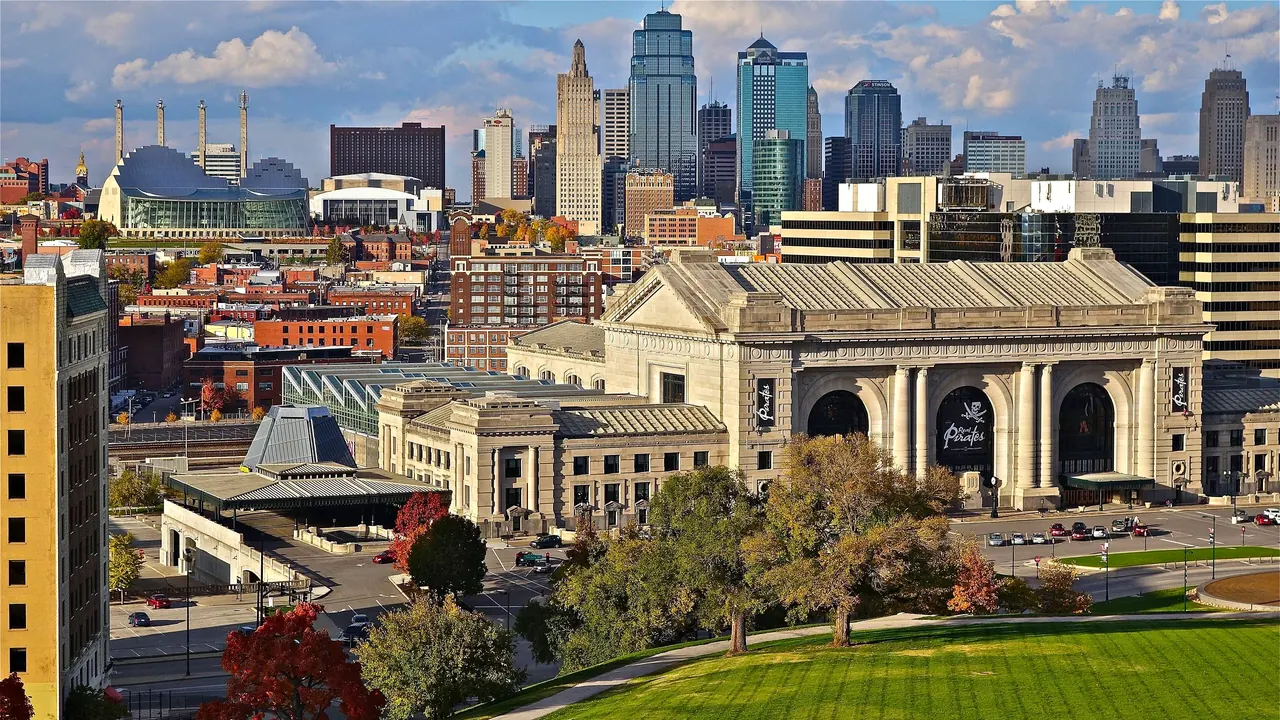
Photos: Denver by Zenhaus, CC BY-SA 4.0, cropped; Kansas City by Dean Hochman from Overland Park, Kansas, U.S., CC BY 2.0, cropped.
Denver or Kansas City?
Our verdict in twelve categories, each scored against the same fixed benchmark cities, and the climate month by month, so you can choose for your trip.
Choose Denver for
- nature and the outdoors
- day trips
- wellness
Denver is for travellers who want the Rockies at the end of the street. Hiking trails, ski resorts, the Red Rocks stage and old mining towns are all within a couple of hours' drive, and the dry, sunny climate means outdoor plans rarely get rained off. It also suits anyone who wants a hot-spring soak or a mountain railway on the itinerary, as long as they are happy to hire a car.
Choose Kansas City for
- culture and sights
- food and drink
- prices
Kansas City rewards a trip built around the city itself. Its barbecue is a real regional tradition rather than a novelty, the Nelson-Atkins and the National WWI Museum give it more to see, and jazz around 18th and Vine gives its evenings a character of their own. It is also a little easier on the budget. The countryside around it is gentle, though, so anyone who travels for landscape should head west.
Scoreboard
Twelve categories on one fixed scale from 0 to 100. The shaded stretch is the gap between the two.
Your match
Pick a travel style or drag the sliders, and both match scores follow your weighting.
Wins on nature and the outdoors and day trips with your weighting.
Wins on culture and sights and food and drink with your weighting.
What matters to you?
Category by category
What the scores mean for a trip.
Beaches & swimming
Neither city is a beach destination, and both are about as far from the sea as you can get in America. Denver's swimming means the sandy shores of the Cherry Creek and Chatfield reservoirs on the city's edge, plus mountain lakes too cold for most people even in July. Kansas City has similar lake beaches in county parks around the metro area. In both cities a visitor is more likely to cool off in a hotel or public pool.
Food & drink
Kansas City has the stronger reason to come and eat. Its barbecue, slow-smoked over hickory with a thick sweet sauce and burnt ends as the speciality, is a tradition you can only taste properly here, and touring the smokehouses near the old stockyards and 18th and Vine makes a trip in itself. The steakhouses keep the cattle-town past going.
Denver's appeal is drinking more than eating. The taprooms in RiNo and around Coors Field are the main event, and the food worth seeking out is green chile, breakfast burritos and the Vietnamese and Mexican cooking along Federal Boulevard. You'll eat well in either city, but neither has much fine dining.
Culture & sights
Kansas City has more to see. The Nelson-Atkins is a major encyclopaedic museum with outstanding Chinese art, the National WWI Museum under the Liberty Memorial is the country's main museum of that war, and the Negro Leagues Baseball Museum and American Jazz Museum at 18th and Vine have no equivalent anywhere.
Denver's sights cluster around Civic Center Park: the gold-domed State Capitol, the Denver Art Museum with its Native American collection, and the Clyfford Still Museum, given over to a single painter. It is a younger gold-rush city with less depth. Both cities have a grand Beaux-Arts Union Station, and both fill two or three days.
Nightlife
Nights out are much alike: bars and breweries, small club scenes and the biggest crowds on game nights. Denver's nightlife leans on beer, with taprooms in RiNo's warehouses, dive bars along East Colfax and quieter neighbourhood evenings in Highland. The altitude makes every drink count for more.
Kansas City's nightlife is split between districts, from the enclosed sports bars of Power and Light to the older student strip in Westport. You'll need a ride between them, and midweek the city goes quiet early.
Nature & outdoors
This is where the two cities differ most. From Denver, the red sandstone of Red Rocks and the trails above Golden are half an hour away, the Flatirons are about 40 minutes away, and summits over 4,000m and the alpine tundra of Rocky Mountain National Park are within about two hours. Bike paths along Cherry Creek and the South Platte run through the city itself.
Kansas City sits in rolling prairie and farmland along the Missouri and Kansas rivers. It is pleasant enough, with Swope Park, the Loose Park rose garden and reservoir walks, but it is never dramatic, and the nearest real hiking country in the Ozarks is several hours away.
Day trips
Denver has the better choice of outings. Boulder sits under the Flatirons, Georgetown and Idaho Springs are Victorian mining towns up the mountain corridor with a narrow-gauge railway, and Manitou Springs and Estes Park put spa towns and national park gateways within reach. Even a two-hour drive to Breckenridge makes a full day.
Kansas City's outings are pleasant half days rather than highlights: the college main street of Lawrence, the antebellum houses and vineyards of Weston, and the Pony Express museum in St Joseph. Both cities need a car for almost all of these.
Good for families
Both are easy cities for children, but the days look different. Denver's big draws are City Park, which holds the zoo and the nature and science museum with its dinosaurs and planetarium, and the cluster of children's museum, aquarium and amusement park by the South Platte. Older children get the mountains, with easy trails and scenic railways close by, though parents from sea level need to watch the altitude and the sun.
Kansas City offers more theme-park fun. Worlds of Fun has roller coasters and a water park, while Science City and the Legoland Discovery Centre at Crown Center make a good rainy-day plan. Baseball at Kauffman Stadium is a relaxed family evening.
Getting around
Denver is the easier of the two without a car, at least in the centre. Its flat downtown has a free shuttle along the 16th Street Mall, a train runs from the airport to Union Station, and light rail reaches the suburbs.
Kansas City relies on one streetcar line along Main Street, from the River Market down through Union Station towards Midtown. That allows a car-free day or two, but the buses are thin and the pavements give out quickly. Both cities need a hired car for the outlying sights, and in Denver that means the mountains.
Shopping & style
There is little between them, and neither is a shopping destination, but each has its own specialities. Denver is the place for outdoor gear and Western wear, with big flagship stores, boots and hats, along with Cherry Creek's mall and boutiques and the vintage shops of South Broadway.
Kansas City's Country Club Plaza is the more attractive place to walk, a 1920s Spanish-style district of tiled towers. The Crossroads galleries and the thrift and record shops of Westport cover the independent side, and souvenirs mostly mean bottles of barbecue sauce.
Affordability
Kansas City is somewhat cheaper. Downtown hotels cost noticeably less, parking is easy, a barbecue lunch goes a long way, and the Nelson-Atkins charges nothing for general entry. Family tickets to the theme park and the ball games still add up.
Denver's hotel bills climb during conventions and ski season. Both cities need a hired car and add tax and a tip to every meal. Denver's best savings are its free trails and mountain scenery, while Kansas City's are its cheaper rooms.
Live music & performing arts
Both cities are strong for their size, and each has one thing it is known for. Denver's is Red Rocks, a summer concert between two sandstone monoliths that fans travel across the country to see, backed by the many stages of the Denver Center for the Performing Arts and the jazz rooms of Five Points.
In Kansas City it is jazz itself, the style of Count Basie and Charlie Parker, still played late into the night in clubs around 18th and Vine. Its symphony, opera and ballet perform under the pleated shell of the Kauffman Center.
Wellness & relaxation
Denver does relaxation better, mainly because the mountains bring natural hot springs within reach. The historic mineral pools and steam caves of Idaho Springs are under an hour away, and larger hot-spring resorts make good overnight trips. The sunny, outdoor pace of the city helps too.
Kansas City has hotel and day spas and one old mineral-water resort at Excelsior Springs. Here, unwinding mostly means a slow morning in the Loose Park rose garden or the Nelson-Atkins sculpture park.
When should you go?
Pick your month. The climate figures are measured averages, not a forecast.
Denver in July
Kansas City in July
Daytime high, °C
Rainfall in the month, mm
Where the figures come from
Kansas City has no rain gauge within 25 km of the centre, so its rainfall comes from a gridded climate dataset read at the city rather than from a gauge further away.
Kansas City's sunshine is measured 30 km from the centre, at Kansas City International Airport.
Temperature and rainfall are climate normals, averaged over the years shown. Denver: 1991-2020 (sunshine 1981-2010) normals, Denver / Stapleton International, Co. (11.2 km from centre). Kansas City: 1991-2020 (sunshine 1981-2010) normals, Kansas City / Harlem (8.2 km from centre).
Both cities have hot summers and cold winters, with July highs of about 32°C in each, but they feel very different. Denver is dry and sunny all year, with hardly any rain in winter and bright days even in December, so a crisp winter city visit or a ski trip works well. For hiking and walking, the best stretch is May to September, when the high country opens up. June to August is warm enough for the reservoir beaches and outdoor pools, though midsummer afternoons in town can be hot.
Kansas City is much wetter and more humid. Rain peaks in late spring, at about 142mm in May, and the summer is sticky, so July and August are hard going on foot. The most comfortable months are April, and then late September into October, when the heat eases and the rain falls back. Winters are a touch colder than Denver's, around 5°C by day in January, and noticeably greyer.
Which traveller are you?
On an outdoors trip, Denver wins easily. Red Rocks and the Golden foothill trails are half an hour away, Rocky Mountain National Park and the I-70 ski resorts are about two hours away, and Kansas City's gentle prairie can't match that.
For a culture and arts trip, Kansas City is the better base. The Nelson-Atkins and the National WWI Museum are serious collections, 18th and Vine tells African American history you won't find elsewhere, and live jazz fills the evenings after the museums close.
On a food and nightlife trip, Kansas City pulls ahead because of its barbecue: burnt ends and decades-old smokehouses give it food you can only get here. Nights out in the two cities are much alike, with breweries and bars rather than clubs.
Before you go
| Measure | Denver | Kansas City |
|---|---|---|
| Currency | US Dollar (USD) | US Dollar (USD) |
| Sockets | AB120 V, 60 Hz | AB120 V, 60 Hz |
| Driving side | Right | Right |
| Time zone | UTC-7, UTC-6 in summer | UTC-6, UTC-5 in summer |
| Emergency number | 911 | 911 |
| Elevation | 1,609 m | 277 m |
| Main airport | Denver International Airport (DEN)30 km from centre231 non-stop destinations | Kansas City International Airport (MCI)30 km from centre57 non-stop destinations |
| Public holidays this year | 12 days | 14 days |
By the numbers
| Measure | Denver | Kansas City |
|---|---|---|
| City population | 715,522 | 508,090 |
| People per km² | 1,783 | 615 |
| Museums within 10 km | 26 | 12 |
| UNESCO World Heritage sites within 50 km | 0 | 0 |
Where else could you go?
Every comparison below shares a destination with this one, so you can follow Denver or Kansas City somewhere new.
- Bouldervs Denver
- Winter Park, Coloradovs Denver
- Estes Parkvs Denver
- Keystonevs Denver
- Breckenridgevs Denver
- Colorado Springsvs Denver