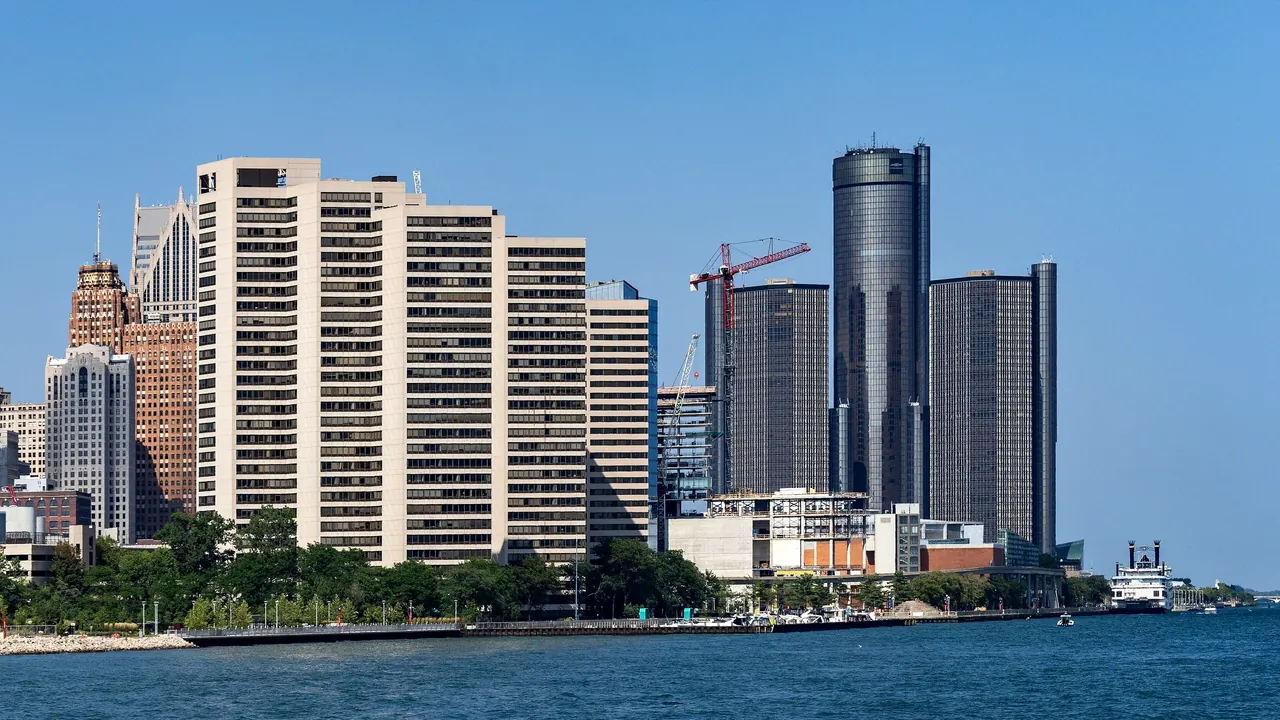
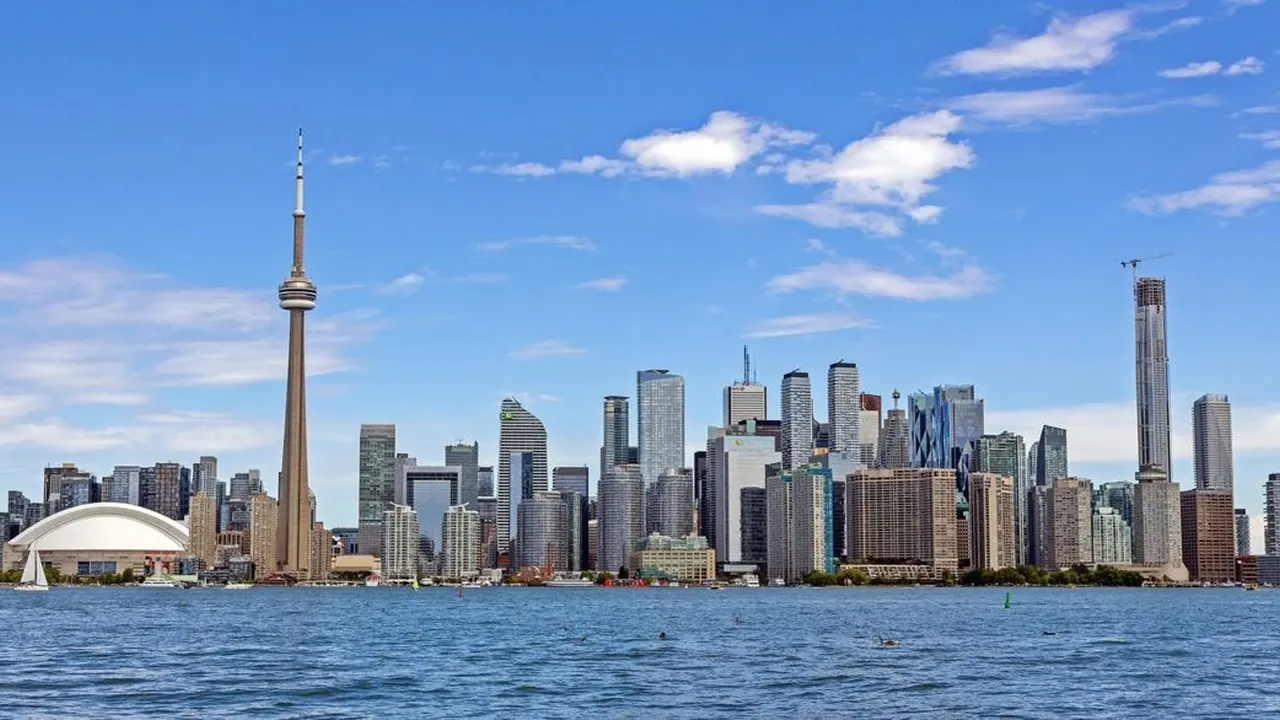
Photos: Detroit by Chris Woodrich, CC BY-SA 4.0, cropped; Toronto by Dillan Payne, CC BY-SA 4.0, cropped.
Detroit or Toronto?
Our verdict in twelve categories, each scored against the same fixed benchmark cities, and the climate month by month, so you can choose for your trip.
Choose Detroit for
- prices
- culture and sights
Detroit suits a traveller who comes for what the city already has rather than for convenience. That means the Detroit Institute of Arts and its Rivera murals, the Henry Ford and Greenfield Village, Motown and techno history, and a downtown of grand early skyscrapers. It is the cheaper of the two to stay in. Plan on a hire car, though, because many of the best meals and sights lie beyond the streetcar line.
Choose Toronto for
- getting around
- shopping
- families
Toronto is the easier and broader city break, especially with children or without a car. A walkable downtown grid, streetcars and the subway reach the food neighbourhoods, theatres and shopping streets, and the aquarium, the zoo and the Islands make family days simple. You pay more for your room, and there is less history to see.
Scoreboard
Twelve categories on one fixed scale from 0 to 100. The shaded stretch is the gap between the two.
Your match
Pick a travel style or drag the sliders, and both match scores follow your weighting.
Wins on prices and culture and sights with your weighting.
Wins on getting around and shopping with your weighting.
What matters to you?
Category by category
What the scores mean for a trip.
Beaches & swimming
Neither city is a beach destination, but in Toronto the lakeshore is easier to reach. The Toronto Islands beaches are a short ferry ride from downtown and look back at the skyline, and Woodbine Beach has a long sandy shore with a boardwalk inside the city.
In Detroit a swim is more of an outing: a small beach on Belle Isle, or the lawn-backed shore at Lake St. Clair Metropark, about forty minutes' drive away. That shallow lake does warm more reliably than Lake Ontario, which a change of wind can turn cold overnight.
Food & drink
Both cities eat best through their immigrant communities, but Toronto has more of them, closer together and reachable by transit. There is Chinatown on Spadina, Greek food on the Danforth, Portuguese bakeries on Dundas West, and suburban plazas serving Hakka, Sri Lankan and Persian cooking, along with more chef-driven restaurants.
Detroit's food scene is smaller but more its own: Coney dogs, square Detroit-style pizza, Saturdays at Eastern Market, and the Lebanese and Yemeni bakeries of Dearborn, which are worth the drive by themselves. There is less fine dining, and the best meals often mean getting in a car.
Culture & sights
Detroit has the stronger museums. The Detroit Institute of Arts, with Rivera's Detroit Industry murals filling a courtyard, has a grander collection than anything in Toronto. The Henry Ford and Greenfield Village, the Motown Museum and the Charles H. Wright Museum tell American stories you will not find across the border, and the Guardian and Fisher buildings are sights in themselves.
Toronto's Royal Ontario Museum and Art Gallery of Ontario are good, the Group of Seven paintings especially. But the city has little old architecture, and most visitors have seen what they want within two or three days.
Nightlife
Toronto's nights are easier to plan. Pick a strip such as Ossington, Queen West or Church Street and the bars are side by side, with patios in summer and dressier clubs on King West. Last call at 2am means nights rarely run late.
Detroit's draw is techno: warehouse parties and small, serious clubs where the music comes first. But the bars and clubs are spread across neighbourhoods, so you will be taking taxis between them, and weeknights are quiet.
Nature & outdoors
Toronto has more nature inside the city. Wooded ravines run along the Don and the Humber, and there are High Park, the Scarborough Bluffs and Rouge National Urban Park, with the Niagara Escarpment's waterfalls about an hour away.
Detroit's outdoors are flat and centred on water: Olmsted's Belle Isle, the RiverWalk for cycling, kayaking on Lake St. Clair, and a ring of metroparks with wetlands and good autumn colour. There is nothing like the escarpment within easy reach.
Day trips
Toronto has the one day trip most visitors want to make: Niagara Falls together with Niagara-on-the-Lake and its wineries, reachable by train as well as by car. Stratford's Shakespeare festival adds a second. Beyond those, the list runs short.
Detroit has more options, but none with the same pull. Ann Arbor's campus town, Bavarian-styled Frankenmuth, Toledo's art museum and the roller coasters of Cedar Point all make pleasant days, and Windsor is just across the river. Nearly all of them need a car.
Good for families
Toronto is the easier city with children. The aquarium and the CN Tower's glass floor are next to each other downtown, the Island ferry leads to Centreville's rides and petting farm, and the Royal Ontario Museum has dinosaurs. Canada's Wonderland is about forty minutes north, and most of the rest needs no car.
Detroit has good attractions too: the zoo in Royal Oak, Greenfield Village's steam trains and the Michigan Science Center. They are spread across the metro area, though, and almost every one means a drive.
Getting around
This is where the two cities differ most. Toronto's downtown is a flat, walkable grid, with the underground PATH for winter, a few subway lines, streetcars along Queen, King and College, and a train from the airport to Union Station. Trips to the suburbs are slow, but a visitor rarely needs a car.
In Detroit, the People Mover and the QLine serve downtown, Midtown and New Center well, but stop there. Dearborn, the zoo and everything further out mean a hire car or ride-hailing.
Shopping & style
Toronto can fill a proper shopping afternoon: luxury on Bloor Street through Yorkville, the glass-roofed Eaton Centre downtown, and Canadian designers and vintage along Queen West, Ossington and in Kensington Market.
Detroit has no shopping street like these. Its shopping is small-scale, with makers in Midtown and Corktown selling Detroit-made watches, leather goods and prints. For the big brands you drive to a suburban mall.
Affordability
Detroit is noticeably easier on the budget, above all for hotel rooms, which cost well below downtown Toronto rates, and for cheap Coney dogs, pizza and Middle Eastern food. The catch is the hire car and parking most visitors need.
Toronto costs more for your bed and for drinks in bars, and sit-down meals add up once tax and tip are on top. You can save some of that back in cheap suburban dumpling and roti spots, with the flat transit fare, and on free days in the ravines and on the Islands.
Live music & performing arts
Both are serious music cities, with Toronto slightly ahead and the difference mostly in kind. Toronto leads on theatre, with big downtown houses for musicals, drama in the Distillery District, and the Canadian Opera Company and National Ballet at the Four Seasons Centre. Massey Hall and the club gigs most nights add depth.
Detroit's strength is its musical heritage. Jazz clubs and soul, gospel and Motown-rooted bands play most nights, the Detroit Symphony performs in Orchestra Hall, the Fox Theatre hosts concerts and shows, and the free Detroit Jazz Festival fills downtown over Labor Day weekend. Its own theatre scene, beyond touring shows, is limited.
Wellness & relaxation
Neither city is a place people visit to unwind, and the everyday options are much the same in both: a hotel or day spa, and a quiet stretch of park or waterfront. In Detroit that is about as far as it goes. The city runs on work, sport and music, so rest comes in small doses, such as an evening stroll by the river or a lazy few hours on the island in the middle of it.
Toronto has more to offer. Korean-style bathhouses in the suburbs have saunas and hot pools, and a drive out to the countryside towns brings you to Nordic spas, where you move between outdoor hot pools, saunas and cold plunges among snowy trees. Neither city has a bathing culture of its own, but only Toronto lets you build a proper spa day into a winter trip.
When should you go?
Pick your month. The climate figures are measured averages, not a forecast.
Detroit in July
Toronto in July
Daytime high, °C
Rainfall in the month, mm
Temperature and rainfall are climate normals, averaged over the years shown. Detroit: 1991-2020 (sunshine 1981-2010) normals, Detroit / Hamtramck (9.2 km from centre). Toronto: 1991-2020 (sunshine 1961-1990) normals, Toronto City (1.1 km from centre).
Both cities have cold, grey winters, with daytime highs near freezing from December to February, so the useful season runs from late May to early October. Detroit has the warmer and sunnier summer, peaking around 29°C in July against Toronto's 27°C. It is also the wetter of the two in late spring and July, with about 100mm a month. Its lake water reaches 23°C in August, a little warmer than Lake Ontario at 21°C, but in both cities July and August are the only real swimming months.
For walking the streets, June and September are the best months in both cities: warm but not hot, with long, bright days. October is cooler and good for autumn colour. By November both cities are cold and short of sunshine.
Which traveller are you?
On a trip on a tight budget, Detroit goes further. Hotel rooms cost far less than in downtown Toronto, and Coney dogs, square pizza and Dearborn's Lebanese bakeries feed you well for little. Allow for a hire car, though, as public transport barely leaves the centre.
For a culture and arts trip built around museums and architecture, Detroit is the stronger choice, with the Detroit Institute of Arts, the Henry Ford, Motown and the Art Deco towers downtown. If you are going mainly for theatre and musicals, Toronto has the deeper stage scene.
On a family trip with children, Toronto is far easier. The aquarium, the CN Tower, the zoo, Centreville on the Islands and Canada's Wonderland are all close by, and walkable streets and transit spare you the long drives between Detroit's scattered attractions.
Before you go
| Measure | Detroit | Toronto |
|---|---|---|
| Official language | - | French, English |
| Currency | US Dollar (USD) | Canadian Dollar (CAD) |
| Sockets | AB120 V, 60 Hz | AB120 V, 60 Hz |
| Driving side | Right | Right |
| Time zone | UTC-5, UTC-4 in summer | UTC-5, UTC-4 in summer |
| Emergency number | 911 | 911 |
| Elevation | 183 m | 76 m |
| Main airport | Detroit Metropolitan Wayne County Airport (DTW)28 km from centre129 non-stop destinations | Toronto Pearson International Airport (YYZ)20 km from centre191 non-stop destinations |
| Public holidays this year | 13 days | 11 days |
By the numbers
| Measure | Detroit | Toronto |
|---|---|---|
| City population | 639,111 | 2,794,356 |
| People per km² | 1,727 | 4,434 |
| Museums within 10 km | 18 | 32 |
| UNESCO World Heritage sites within 50 km | 0 | 0 |
| Swim season, months above 21 °C | 2 months | 1 month |
Where else could you go?
Every comparison below shares a destination with this one, so you can follow Detroit or Toronto somewhere new.
- Niagara Fallsvs Toronto
- Pittsburghvs Detroit
- Niagara Fallsvs Detroit
- Ottawavs Toronto
- Pittsburghvs Toronto
- Chicagovs Detroit