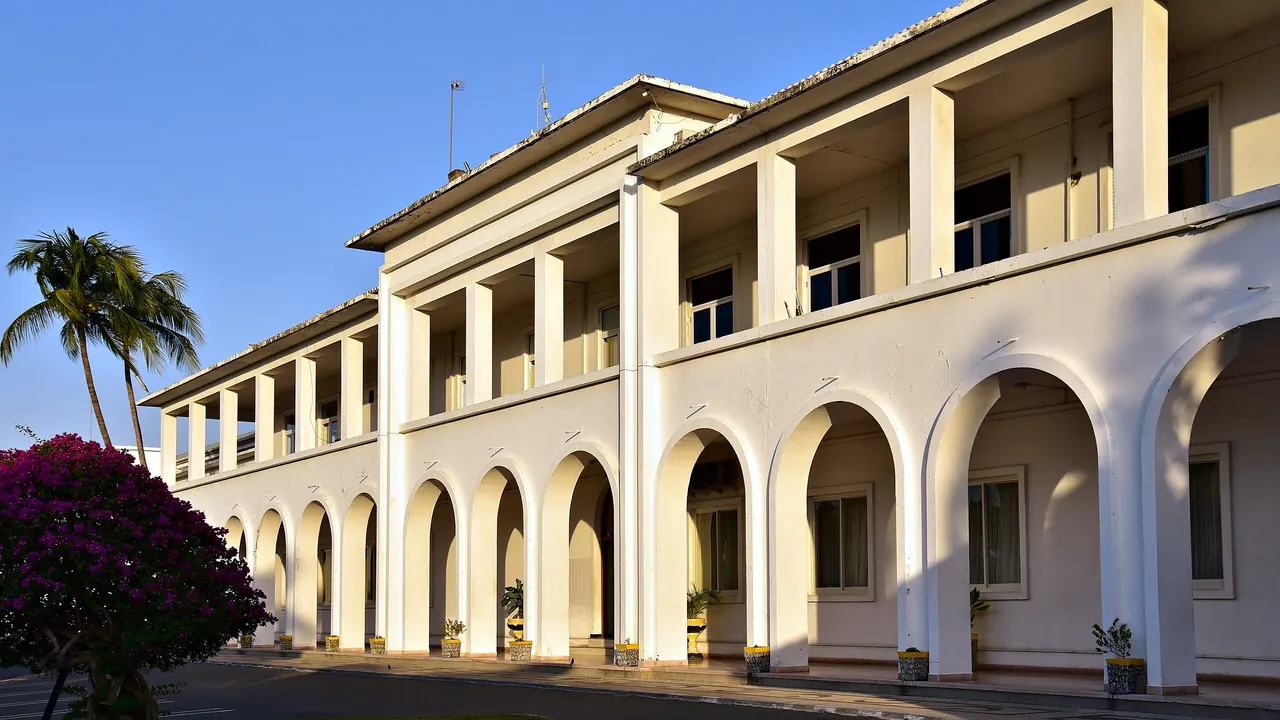

Photos: Dili by Bahnfrend, CC BY-SA 4.0, cropped; Lombok by Afifahdpl, CC BY-SA 4.0, cropped.
Dili or Lombok?
Our verdict in twelve categories, each scored against the same fixed benchmark cities, and the climate month by month, so you can choose for your trip.
Choose Dili for
- getting around
Dili suits a traveller who wants to understand a young nation rather than to lie on a beach. Its museums of the resistance and the Chega! exhibition at Balide tell a story you will not hear elsewhere in the region. Divers and whale-watchers also have reason to come for the reef walls off Atauro and the migrations through the Wetar Strait. Expect a working capital with few comforts, high hotel and restaurant costs, and quiet evenings.
Choose Lombok for
- prices
- nightlife
- wellness
Lombok is the easier and broader choice for almost any other trip. It has the Gili Islands' turtles and white sand, empty surf bays on the south coast, a volcano trek up Rinjani and a lively party island, all at low cost. What it gives up is a single base: you move between the Gilis, Kuta and the mountains by boat and slow road.
Scoreboard
Twelve categories on one fixed scale from 0 to 100. The shaded stretch is the gap between the two.
Your match
Pick a travel style or drag the sliders, and both match scores follow your weighting.
Wins on getting around with your weighting.
Wins on prices and nightlife with your weighting.
What matters to you?
Category by category
What the scores mean for a trip.
Beaches & swimming
Lombok is the far stronger beach destination. The Gilis give you pale sand with snorkelling straight off the shore, and the south coast around Kuta adds sheltered swimming bays such as Selong Belanak and Mawun next to surf breaks. You can pick a busy beachfront on Gili Trawangan or near-solitude on Gili Meno.
Dili's best water is the calm strait under Cristo Rei, at Areia Branca and the cove behind the statue. It is warm and quiet, but there are no loungers or lifeguards, and crocodiles mean you swim near others and stay away from river mouths. Its clearest water is a boat ride away, on Atauro.
Food & drink
Lombok gives you more reason to eat locally. Sasak cooking is fiery and distinctive: grilled ayam taliwang, plecing kangkung under sambal, and sate rembiga at the Mataram and Cakranegara night markets. In the Gilis and Kuta, though, most menus settle into a generic travellers' mix.
Dili's food is plainer, but it has two strengths of its own. Timorese highland arabica makes the coffee better than on Lombok, and the colonial legacy leaves Portuguese bread and custard tarts. Evening fish grills on the beach road are the most enjoyable meal in town.
Culture & sights
Neither is a culture destination, and each fills a day or so, but the experience is very different. Dili's sights deal with the occupation and independence, at the Resistance Archive, the former Balide prison and Santa Cruz Cemetery. These are moving, serious visits rather than pretty ones.
Lombok's heritage is older and more decorative. It includes the Mayura water palace and the Narmada gardens left by Balinese rulers, the shared temple at Lingsar, and thatched Sasak villages such as Sade. It is spread across the island, so seeing it needs a driver.
Nightlife
Lombok wins easily, thanks almost entirely to Gili Trawangan. Its east-side strip has beach bars, reggae shacks and rotating party nights that run late, and Kuta adds a smaller surfers' scene. Dili offers a sunset drink at Areia Branca or on a hotel terrace and a handful of expatriate bars, and it goes quiet before midnight.
Nature & outdoors
Lombok has more range on land and in the water. Rinjani's multi-day trek to the crater rim above Segara Anak lake is the island's great outdoor experience. Add the waterfalls near Senaru, the left-hander at Desert Point and surf bays for all levels around Gerupuk.
Dili's outdoors is almost all underwater and offshore. Its deep strait brings shore diving close to town, rich reef walls off Atauro and passing whales and dolphin pods late in the year. On land there is only the walk to Cristo Rei and cooler hill country around Dare.
Day trips
From Dili, the outings come down to one boat crossing and two slow roads. The best day out is Atauro, with its fishing villages and woodcarvers across the strait. Otherwise you can follow the coast road west to Liquica and the stone Dutch fort at Maubara, or go up to the coffee smallholdings and war memorial at Dare. Baucau and the rest of Timor-Leste are too far on winding roads and need an overnight stay.
A mainland base on Lombok can fill several quite different days. Any of the three Gilis makes an easy return trip by boat from Bangsal or Teluk Nare, and boats from Sekotong reach quieter islets such as Gili Nanggu and Gili Kedis. Inland, a single loop links Mataram's temples with a traditional Sasak village and the weaving and pottery villages of Sukarara and Banyumulek. Only Bali and Sumbawa are too far to go there and back in a day.
Good for families
Lombok is the better choice with children, provided you want a simple beach stay. On car-free Gili Air and Gili Meno, children can cycle the sandy lanes and see turtles in calm shallows, though many south-coast beaches are too rough for young swimmers.
Dili is hard going with a family. It has relentless heat, broken pavements, a real dengue risk and only basic medical care, and there is little to do beyond a paddle at Areia Branca. It suits adventurous parents with older children.
Getting around
Dili is slightly easier to manage, because it is one small city strung along a bay. Numbered microlets run the main roads, and a hired driver covers the rest, though anywhere beyond town means a 4x4 on rough roads.
Lombok has no public transport for visitors, so you rely on scooters, drivers and agency shuttles. The mountain roads to Rinjani are slow, and the boats to and between the Gilis can be disrupted by rough seas. Once you are on a Gili, everything is a walk or a bike ride.
Shopping & style
Both are places for handwoven cloth rather than shopping trips, but Lombok has more to choose from. You buy songket and ikat in the weaving villages of Sukarara and Pringgasela, terracotta at Banyumulek and cultured pearls in Mataram's Sekarbela district. Dili's real purchase is tais, with district patterns sold at its central market, plus a bag of highland coffee to take home.
Affordability
Lombok is much cheaper. Warung food, bungalows, scooter hire and drivers cost little, especially on the south coast and in the Rinjani villages. Only the Gilis, the resorts and alcohol push prices up.
Dili surprises many visitors with its costs. It imports most of its goods, and its hotels and seafront restaurants are priced for diplomats and aid workers, close to a mid-range European city. Street food and microlets are cheap, but diving and 4x4 hire add up fast.
Live music & performing arts
Neither has a theatre or concert life, though Lombok gives slightly better odds of seeing something. Gendang beleq drumming and peresean stick fights are sometimes staged in Sade or Mataram, and reggae and acoustic bands play in Gili and Kuta bars. In Dili, tebe-tebe dancing and church choirs at Sunday Mass are a matter of lucky timing.
Wellness & relaxation
Lombok is the place to unwind. On Gili Air and Gili Meno there are no engines, hammocks hang over the water, and yoga classes and simple massage parlours are easy to find. The larger south-coast and Senggigi resorts offer proper spa treatments.
Dili has a slow pace and fine sunsets over the bay, but beyond a few hotel spas there is little to help you rest. The heat and dust make it a place to travel through rather than recover in.
When should you go?
Pick your month. The climate figures are measured averages, not a forecast.
Dili in July
Lombok in July
Daytime high, °C
Rainfall in the month, mm
Where the figures come from
Dili has no weather station within reach, so its figures come from a gridded climate model rather than a measured record, and read a broad area rather than one spot.
Temperature and rainfall are climate normals, averaged over the years shown. Dili: 2001-2020 normals, NASA POWER reanalysis grid, no weather station within 90 km. Lombok: 1991-2020 normals, Ampenan / Selaparang (5.4 km from centre).
The two share the same tropical heat, with the sea warm enough for swimming all year, but their dry seasons differ. Dili's rains come from December to March, peaking around 243mm in January. From June to October the city is almost rainless, with August barely registering 4mm. The catch is heat: by October afternoons reach 33°C, which makes walking the seafront hard work until the evening. For calm seas, diving and the whale passage, late in the dry season is Dili's best time.
On Lombok, where most visitors stay, the dry window is shorter. June to September is the reliable stretch, with August at about 14mm and the longest sunny days. The rains return in October, a month earlier than in Dili, and November to March is wet, with December near 251mm. The Rinjani trails close from January to March, so trekkers should aim for the middle of the year.
Which traveller are you?
On a beach and sun trip, Lombok is the clear choice. The Gilis have pale sand, calm shallows and turtles just offshore, and the south coast has wide, quiet bays. Dili's coves are pleasant, but they have no facilities and you have to watch for crocodiles.
For a trip on a tight budget, Lombok stretches money much further. Warung meals, guesthouses, scooters and drivers all cost little. In Dili, comfortable rooms and Western meals are priced for diplomats, and only the street stalls and microlets are truly cheap.
For divers after remote, uncrowded reefs, Dili has the edge. Shore dives start a short drive from town, the walls off Atauro are among the most species-rich ever surveyed, and whales pass through from October to December. The Gilis are easier for learners.
Before you go
| Measure | Dili | Lombok |
|---|---|---|
| Official language | Portuguese, Tetum | Indonesian |
| Currency | US Dollar (USD) | Rupiah (IDR) |
| Sockets | CEFI220 V, 50 Hz | CF50 Hz |
| Driving side | Left | Left |
| Time zone | UTC+9 | UTC+8 |
| Emergency number | 112 | 112 |
| Elevation | 11 m | - |
| Main airport | Presidente Nicolau Lobato International Airport (DIL)6 km from centre9 non-stop destinations | Lombok International Airport (LOP)10 non-stop destinations |
By the numbers
| Measure | Dili | Lombok |
|---|---|---|
| Population | 222,323 | 3,352,988 |
| People per km² | 1,245 | - |
| Museums within 10 km | 1 | - |
| UNESCO World Heritage sites within 50 km | 0 | - |
| Swim season, months above 21 °C | 12 months | 12 months |
Where else could you go?
Every comparison below shares a destination with this one, so you can follow Dili or Lombok somewhere new.
- Gili Islandsvs Lombok
- Nusa Penidavs Lombok
- Nusa Lembonganvs Lombok
- Balivs Lombok
- Floresvs Lombok
- Floresvs Dili