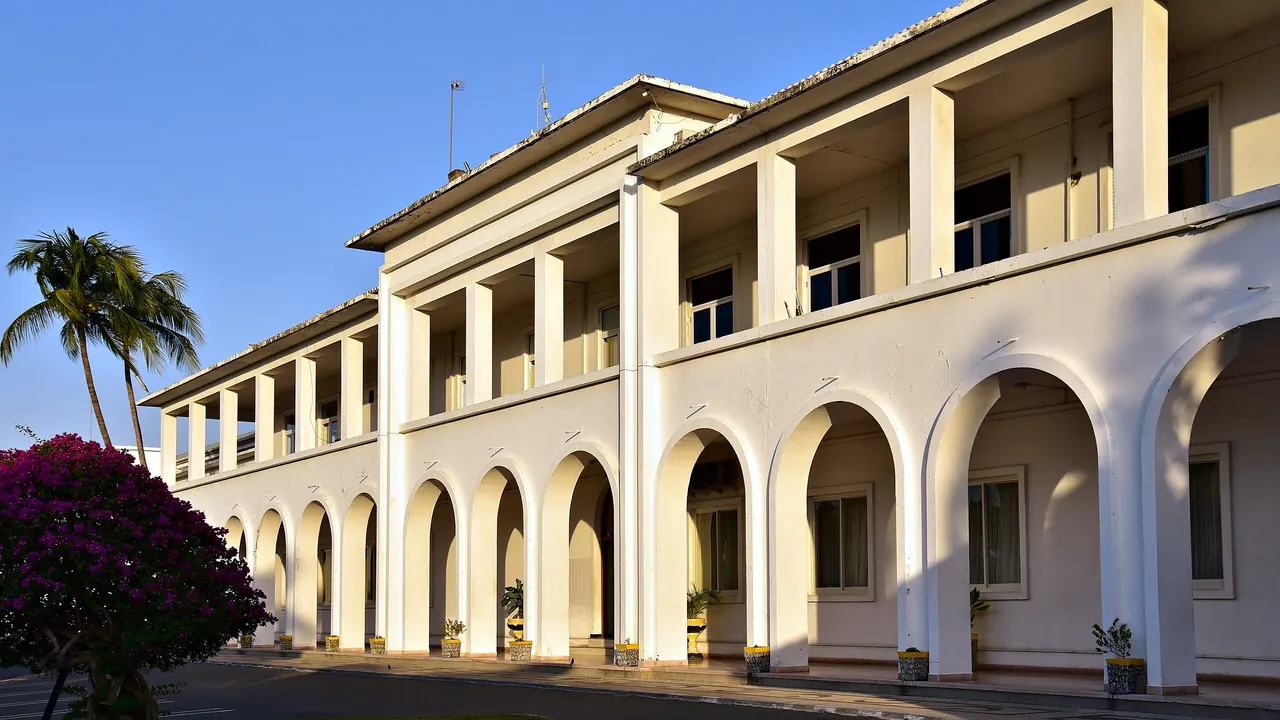
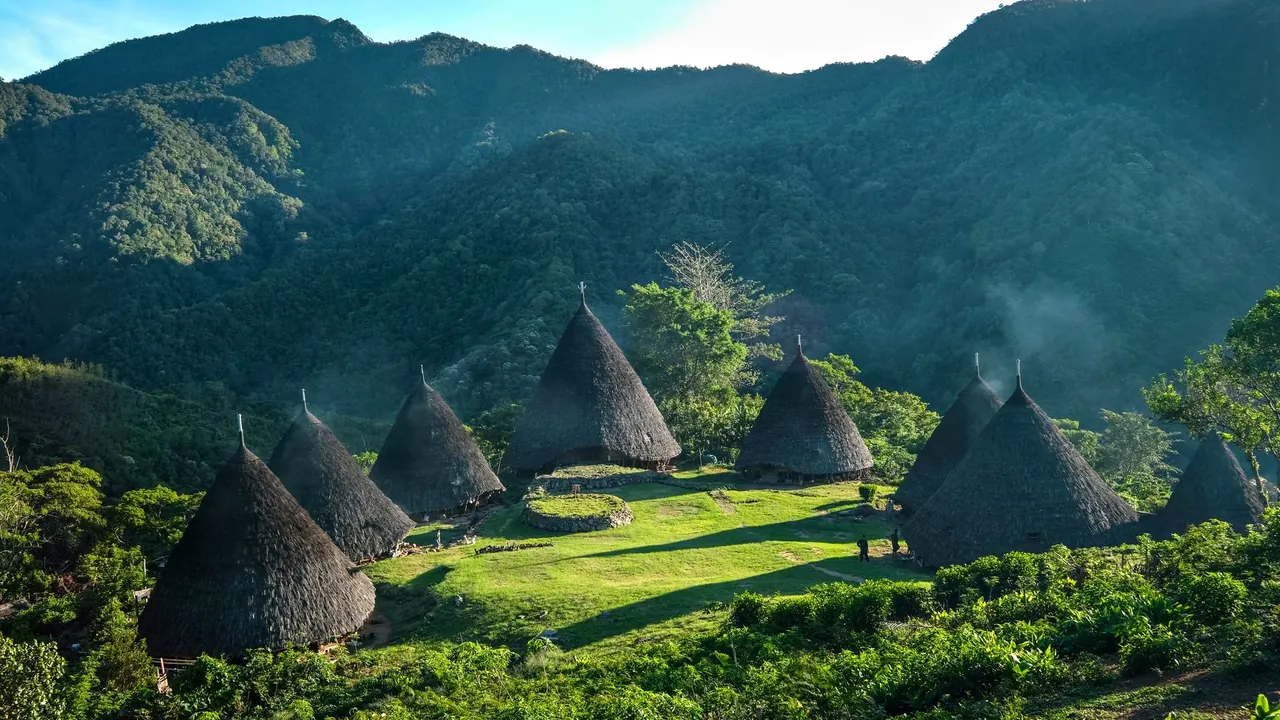
Photos: Dili by Bahnfrend, CC BY-SA 4.0, cropped; Flores by Wayan Yatika, CC BY-SA 4.0, cropped.
Dili or Flores?
Our verdict in twelve categories, each scored against the same fixed benchmark cities, and the climate month by month, so you can choose for your trip.
Choose Dili for
- getting around
- day trips
- food and drink
Dili suits a shorter, more contained trip. It is a small capital on a calm bay. In a few days you can follow Timor's resistance story at the archive and the Chega! exhibition, swim in the cove below Cristo Rei and cross to Atauro for reef walls and passing whales, all without long days on the road. Getting about is simpler too, but comfortable rooms and meals cost more than most people expect.
Choose Flores for
- prices
- nature and the outdoors
- culture and sights
Flores is for the traveller who wants a journey rather than a base. In the west, Komodo National Park has dragons, the ridges of Padar and some of the richest diving anywhere. Heading east overland, you reach the megalithic villages around Bajawa, the conical houses of Wae Rebo and the crater lakes of Kelimutu. It means long drives and early starts, but away from the Labuan Bajo boats it costs very little.
Scoreboard
Twelve categories on one fixed scale from 0 to 100. The shaded stretch is the gap between the two.
Your match
Pick a travel style or drag the sliders, and both match scores follow your weighting.
Wins on getting around and day trips with your weighting.
Wins on prices and nature and the outdoors with your weighting.
What matters to you?
Category by category
What the scores mean for a trip.
Beaches & swimming
The finest sand is on Flores, but you only reach it by boat. Pink Beach, the sandbars of Kanawa and Seraya, and tiny Kelor lie among the islands of Komodo National Park, with glassy water and coral right off the shore. Labuan Bajo itself is a working harbour, so every beach day there is a boat day.
Dili has plainer beaches but they are close to town. You can get to Areia Branca and the stairway cove behind Cristo Rei in minutes, and the coves further east are empty. The trade-offs are the lack of facilities and the crocodile caution along the shore. Atauro is Dili's answer to Komodo's islands, a boat ride away for clear water and snorkelling.
Food & drink
Neither place is somewhere to travel for the food, but the interest lies in different things. Dili mixes a few traditions in one town: Portuguese bread and custard tarts, Indonesian warungs, Timorese dishes such as ikan sabuko and batar daan at local eateries, and fish grilled at stalls along the beach road.
Flores eats more simply. Labuan Bajo's harbourfront night market and its cafés feed the boat crowd, and inland the choice narrows to rice, fish and sambal. Both grow fine highland arabica, but on Flores the best cup comes in a village around Bajawa or Ruteng, roasted over a wood fire.
Culture & sights
Flores has more to see, and it is living heritage rather than history in museums. You can see the stone megaliths and ancestral shrines of Bena under Inerie, spend the night in Wae Rebo's conical houses, visit the Liang Bua cave where Homo floresiensis was found, and see Larantuka's Catholic Holy Week. All of it is spread out, so it takes a week of travel to see.
Dili's sights are about the recent past and fit into a day or two: the Resistance Archive, the Chega! exhibition in the former Balide prison and Santa Cruz Cemetery. They are sobering and important, but there is little old architecture beyond a few colonial buildings on the waterfront.
Nightlife
Both are quiet after dark, and the difference is in who you drink with. In Dili it is sunset at Areia Branca or a hotel terrace, then a few bars where aid workers and expatriates gather. In Labuan Bajo the hillside and harbour bars fill with divers and backpackers, and a few keep the music going later, though most people are up before dawn for a boat.
Nature & outdoors
Flores has the wider range of nature. Komodo National Park alone offers dragons on the savannah of Rinca, the three bays seen from Padar, manta cleaning stations and multi-day liveaboards. The island's volcanic spine then adds Kelimutu's coloured lakes at sunrise, a climb up Inerie and the green terraces around Ruteng.
Dili's strength is almost all in the sea, and it is serious. Shore dives start a short drive along the coast road, the reef walls off Atauro are among the most species-rich ever surveyed, and from October to December whale and dolphin trips go out into the Wetar Strait. On land there is little beyond the Cristo Rei walk and the cooler hills at Dare.
Day trips
Dili gives you a few varied outings that all get you back to the same bed at night. A boat across the strait takes you to Atauro's fishing villages and woodcarvers. The coast road west leads to old Portuguese Liquica and the Dutch fort at Maubara, and Dare's coffee smallholdings and war memorial are in the hills just above town.
Flores is meant to be crossed rather than explored from one base. Apart from Labuan Bajo's boat trips and short outings around Bena and the Soa plain from Bajawa, each town is hours from the next.
Good for families
Older, adventurous children will get more out of Flores, although neither place suits toddlers. In Dili the calm water at Areia Branca is about all there is for them. The relentless heat, the risk of dengue and basic medical care, with serious cases flown abroad, all count against it.
On Flores, seeing Komodo dragons on a ranger walk and snorkelling off the park's islands are memories that last. A family trip there works best kept to Labuan Bajo, with a comfortable hotel and short boat days rather than the long drive across the island.
Getting around
Dili is much the easier of the two. The city stretches along one bay, numbered microlets run the main roads, and a driver for the day covers the rest. The heat and broken pavements are the main hardship, and rough roads only start once you leave town.
On Flores the distances shape the whole trip. The Trans-Flores Highway winds through the mountains, so the drive from Labuan Bajo to Kelimutu usually takes three or four days with a hired driver. Many travellers fly into one end and out of the other, and the national park can only be reached by boat.
Shopping & style
In both places the one real purchase is handwoven cloth, with highland coffee to take home as well. Flores has slightly more choice, because you can buy ikat from the women who weave it: Sikka indigo around Maumere, the earthy tones of Ende, bold Ngada motifs.
Dili's tais is just as regional in its patterns, but buying it is a single trip to the tais market in the centre or to a weavers' group. Beyond that the city has one mall and its produce markets.
Affordability
Flores is clearly cheaper for most trips. Guesthouses, warung meals and village homestays cost little, and the big expenses are things you can choose: liveaboard diving, park fees and Labuan Bajo's better hotels. A car and driver is a large cost, but easy to share.
Dili catches people out. Almost everything is imported, and comfortable hotels and restaurants are priced for diplomats, close to a mid-range European city. Street food, microlets and short taxi rides are very cheap, but diving and the Atauro boat soon raise the bill.
Live music & performing arts
In Dili, the performances you might come across are tebe-tebe dancing and drumming at national celebrations and the church choirs at Sunday Mass. Catching either is largely down to timing.
Flores gives you a better chance of seeing something. In Manggarai, around Ruteng and in villages near Labuan Bajo, caci whip duels to gongs and drums are often put on for visitors. In the Ngada highlands, the ja'i circle dance goes with ceremonies. Neither place has a theatre or concert hall.
Wellness & relaxation
Flores has more places to unwind, and some are natural. Malanage near Bajawa, where a warm stream meets a cold river, and the Soa springs make for a simple soak. Labuan Bajo has resort spas, and a few small offshore island resorts are genuinely quiet, even if the overland journey is tiring.
Dili has a few massage places and hotel spas, and its rest comes from slow afternoons and quiet early mornings on the seafront. The dust and heat make it a place to travel through more than a place to recover.
When should you go?
Pick your month. The climate figures are measured averages, not a forecast.
Dili in July
Flores in July
Daytime high, °C
Rainfall in the month, mm
Where the figures come from
Dili has no weather station within reach, so its figures come from a gridded climate model rather than a measured record, and read a broad area rather than one spot.
Flores has no weather station within reach, so its figures come from a gridded climate model rather than a measured record, and read a broad area rather than one spot.
Temperature and rainfall are climate normals, averaged over the years shown. Dili: 2001-2020 normals, NASA POWER reanalysis grid, no weather station within 90 km. Flores: 2001-2020 normals, NASA POWER reanalysis grid, no weather station within 90 km.
Dili has the longer and drier good season. From May to November there is little rain, and July to October is almost completely dry. The wet months are December to March, peaking at around 243mm in January. The sea stays near 28°C all year, so swimming is never the problem. Heat is. Every month is hot, and October reaches 33°C, so a midday walk along the waterfront late in the dry season is hard work. Go out early in the morning or in the evening.
Flores has a shorter dry season and much heavier rain. These figures are for the island as a whole, and conditions vary from the coast to the cooler highlands, but the pattern is clear. Wet weather runs from November to April and peaks at about 216mm in December, while May and October are unsettled. June to August is the reliable window for boat days, diving and the long drive across the island, and August is one of the driest months at around 19mm. Dili is also dry in those months, so a trip to both works best in the middle of the year. Of the two, only Dili stays dependable into October and November.
Which traveller are you?
For a short city break, Dili is the obvious pick. Its sights, seafront and beaches sit close together along one bay, and microlets and hired drivers make it easy to fit the history museums, Cristo Rei and a swim into a few days.
On an outdoors trip, choose Flores. It has Komodo dragons on Rinca, the walk up Padar, manta dives and liveaboards in the national park, plus volcano climbs and Kelimutu's crater lakes inland. Dili's diving and whale-watching are excellent but cover less ground.
On a tight budget, Flores goes much further. Guesthouses, warung meals and village homestays along the island cost little, and a shared driver spreads the main expense. In Dili, hotels and sit-down restaurants are priced for diplomats and aid workers.
Before you go
| Measure | Dili | Flores |
|---|---|---|
| Official language | Portuguese, Tetum | Indonesian |
| Currency | US Dollar (USD) | Rupiah (IDR) |
| Sockets | CEFI220 V, 50 Hz | CF50 Hz |
| Driving side | Left | Left |
| Time zone | UTC+9 | UTC+8 |
| Emergency number | 112 | 112 |
| Elevation | 11 m | - |
| Main airport | Presidente Nicolau Lobato International Airport (DIL)6 km from centre9 non-stop destinations | Komodo Airport (LBJ)8 non-stop destinations |
By the numbers
| Measure | Dili | Flores |
|---|---|---|
| Population | 222,323 | 1,831,000 |
| People per km² | 1,245 | 135 |
| Museums within 10 km | 1 | - |
| UNESCO World Heritage sites within 50 km | 0 | - |
| Swim season, months above 21 °C | 12 months | 12 months |
Where else could you go?
Every comparison below shares a destination with this one, so you can follow Dili or Flores somewhere new.
- Lombokvs Flores
- Gili Islandsvs Flores
- Nusa Penidavs Flores
- Nusa Lembonganvs Flores
- Balivs Flores
- Lombokvs Dili