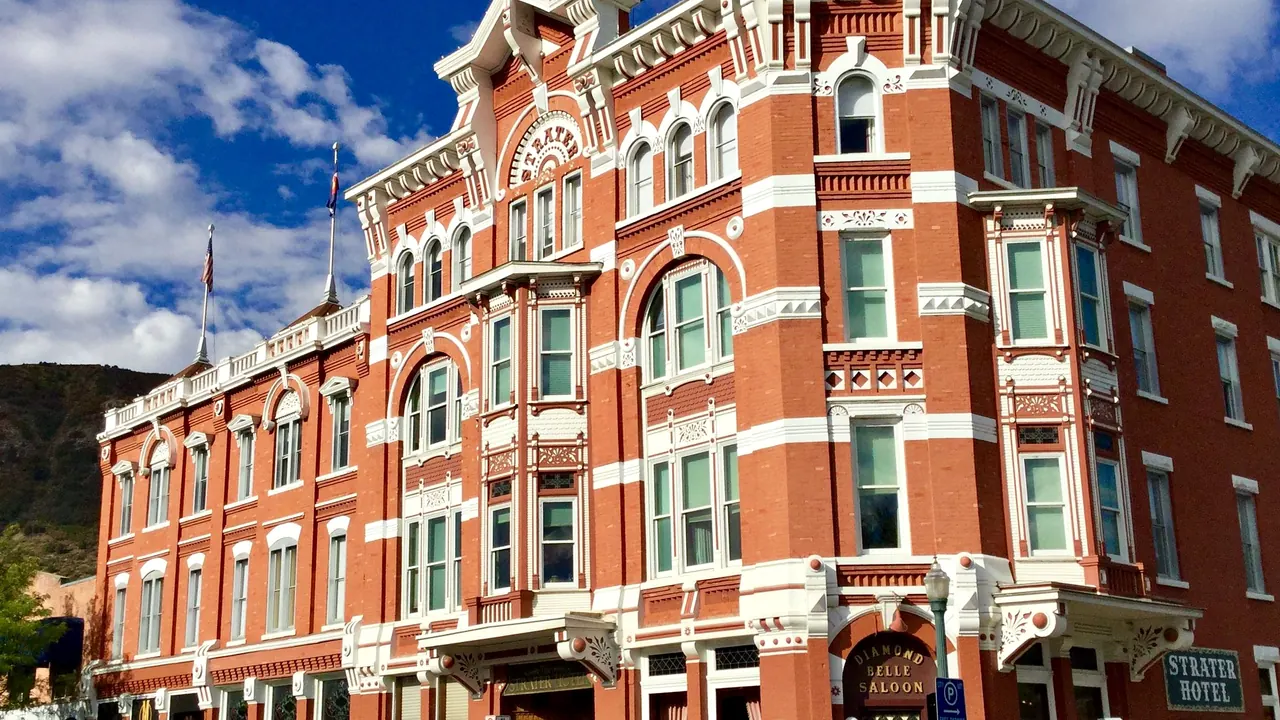
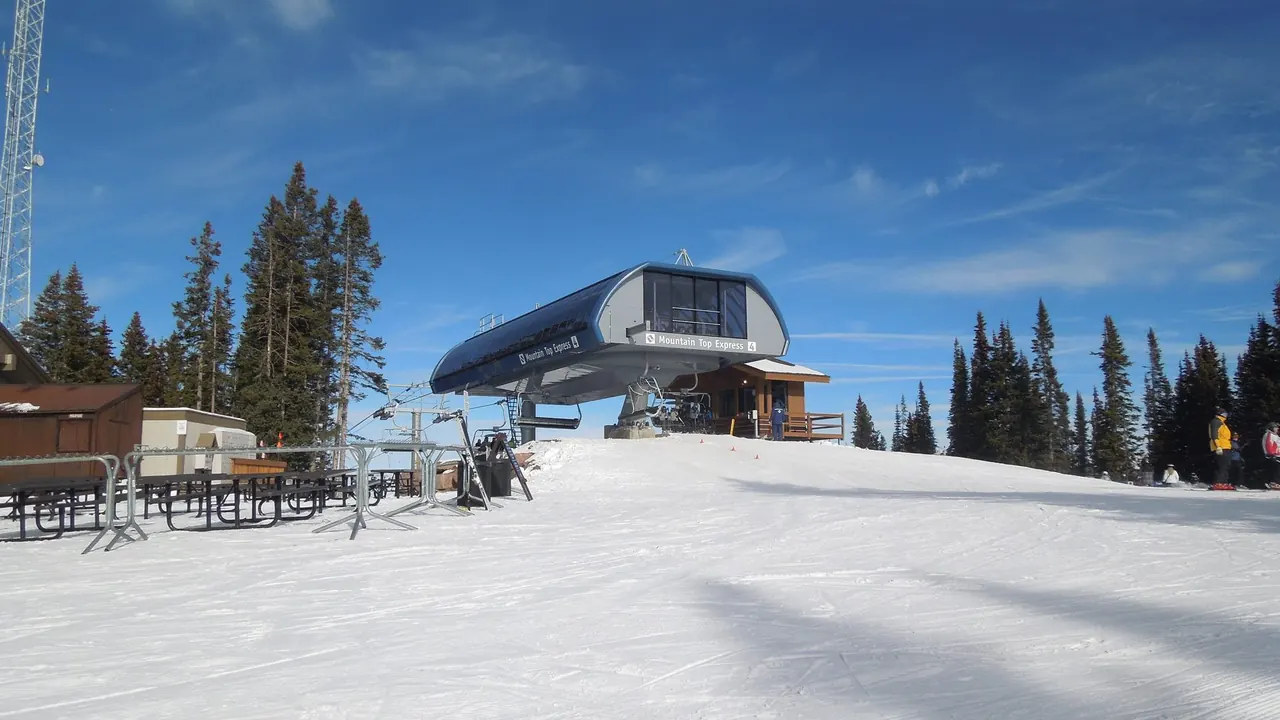
Photos: Durango, Colorado by Adeledstarr, CC BY-SA 4.0, cropped; Vail by DReifGalaxyM31, CC BY 3.0, cropped.
Durango, Colorado or Vail?
Our verdict in twelve categories, each scored against the same fixed benchmark cities, and the climate month by month, so you can choose for your trip.
Choose Durango, Colorado for
- prices
- culture and sights
- day trips
Durango suits travellers who want the mountains with a real town attached and a wide country to explore. Its Victorian main street and steam railway give it a past, Mesa Verde and the old mining towns of the San Juans are within a day's drive, and hot springs sit just up the valley. It is also far easier on the wallet, so it works for longer stays, road trips and anyone who would rather spend money on rafting than on a room.
Choose Vail for
- getting around
- live music and the arts
- nightlife
Vail is the choice for a ski week done in comfort, or a summer of high trails and serious music. The terrain is bigger, the village is car-free with lifts starting in town, and après-ski gives evenings more life than Durango's early nights. You pay heavily for all of it, and there is little to see once you are off the mountain, so it rewards people who come to ski, hike or hear an orchestra rather than to sightsee.
Scoreboard
Twelve categories on one fixed scale from 0 to 100. The shaded stretch is the gap between the two.
Your match
Pick a travel style or drag the sliders, and both match scores follow your weighting.
Too close to call, 2 points apart
Wins on prices and culture and sights with your weighting.
Wins on getting around and live music and the arts with your weighting.
What matters to you?
Category by category
What the scores mean for a trip.
Beaches & swimming
Neither town is a place for a beach day, but Durango has a little more water to enjoy. You can tube the Animas through the middle of town, swim at Lake Nighthorse or find a sandy edge at Vallecito. In Vail the mountain lakes are too cold for most people, so swimming usually means a hotel pool.
Food & drink
Both towns eat reasonably well within a narrow range, but the mood differs. Durango is casual and Western: green-chile plates and breakfast cafés along Main Avenue, plus an unusual number of breweries where cyclists and rafters end the day.
Vail is polished resort dining, with fondue rooms, sushi and hotel dining rooms with long wine lists in the Village and Lionshead. It has no cheap end, and many kitchens close in the off-season.
Culture & sights
Durango has a genuine past to look at. It is a railway town from 1880, with steam locomotives at the old depot, a roundhouse museum, Victorian brick streets and a good Native American collection at the college.
Vail dates only from the 1960s, and its chalets are an imitation Tyrolean village. The snowsports museum and the Tenth Mountain Division story fill an hour, and that is about all there is.
Nightlife
Vail has the livelier evenings, at least in winter. Après-ski fills the slopeside terraces as the lifts close, and on ski-season weekends a few bars and a small club stay open past midnight.
Durango's nights are a taproom, a patio pint or a saloon with a piano player, and the town is quiet well before midnight. Out of season, though, Vail empties after dinner too.
Nature & outdoors
Both are first-rate mountain bases, but they lean different ways. Vail is above all about skiing: a huge area with groomed front-side runs, the Back Bowls and Blue Sky Basin, and gondolas that carry hikers to high trails in summer.
Durango is the stronger summer town for biking and paddling. Singletrack starts at the edge of town, the Animas runs through the centre, and the Weminuche Wilderness and the Colorado Trail are close by. It also has a ski resort half an hour north.
Day trips
Durango has much the richer country around it. Mesa Verde's cliff dwellings, the steam train up the canyon to Silverton, Ouray, and the pueblos at Aztec and Chimney Rock make for very different days out.
From Vail the outings are mostly to other resorts, such as Beaver Creek and Breckenridge, along with silver-era Leadville. Glenwood Springs, about an hour away, is the best of them. In both places you will need a car.
Good for families
Both work well for active families, and the difference is the season. Vail is built around children learning to ski, with large ski schools and a safe car-free village. Durango is at its best for children in summer, with river tubing, the steam train and the ladders at Mesa Verde. Neither has zoos or big museums for wet days, and the altitude tires small children at first in both.
Getting around
Vail is far simpler once you are there. The village core is pedestrian, lifts start from town and a free bus links the whole valley, so many visitors manage a week without a car. Arriving is the harder part, with shuttles from distant airports and a pass that can close in snow.
Durango's centre is small and flat, and a river trail links its parks. Trailheads, the ski area and Mesa Verde all need a car, though, and regional transport is thin.
Shopping & style
Vail offers a little more, aimed squarely at money: upmarket ski clothing, fur and leather, jewellery and gallery art along the village lanes. Durango's Main Avenue is homelier, with outdoor and bike shops, Western boots, and Navajo and Pueblo turquoise and rugs that make the better souvenir. Neither is a reason to travel.
Affordability
This is where the two differ most. Durango is still a US mountain resort, with tight summer rooms and full restaurant prices, but it costs noticeably less than the famous ski towns, and spring and late autumn bring real savings.
In Vail, lodging, lift tickets, ski school and meals all run far above normal American levels. Staying further down the valley helps, but it is never a budget trip.
Live music & performing arts
Vail is the stronger draw in summer. Major orchestras come to the open-air amphitheatre for weeks, and a dance festival with leading ballet dancers is followed by jazz later in the season. Durango has a long-running chamber and orchestral festival and touring shows at the college hall. Its character comes from Western fun, though, such as a boo-the-villain melodrama and cowboy music with a chuckwagon supper. Outside summer, both towns go quiet.
Wellness & relaxation
Durango has the edge thanks to natural water. Spring-fed mineral pools sit minutes north of town, and Pagosa Springs and Ouray have more within a drive.
Vail's version is the polished hotel spa, with massages, saunas and outdoor hot tubs under the peaks. For a real soak, it is an hour's drive down the canyon to Glenwood Springs.
When should you go?
Pick your month. The climate figures are measured averages, not a forecast.
Durango, Colorado in July
Vail in July
Daytime high, °C
Rainfall in the month, mm
Where the figures come from
Durango, Colorado has no weather station within reach, so its figures come from a gridded climate model rather than a measured record, and read a broad area rather than the city itself.
Vail's temperatures are measured 47 km from the centre, at Kremmling.
Vail's station stands 186 m below the city centre, so the centre is likely a little cooler than the figures say.
Vail has no rain gauge within 25 km of the centre, so its rainfall comes from a gridded climate dataset read at the city rather than from a gauge further away.
Temperature and rainfall are climate normals, averaged over the years shown. Durango, Colorado: 1991-2020 normals, TerraClimate 4 km grid at the town, no weather station within 90 km. Vail: 2006-2025 (rainfall 1991-2020) normals, Kremmling (46.5 km from centre).
Durango sits lower and is the milder of the two all year. Its winter days hover just above freezing, and spring warms up quickly. June is the pick for hiking and riding: it is warm and almost dry, with only 12mm of rain. July and August reach about 30°C and bring afternoon storms. September stays warm enough for long days outdoors, and it is when the aspens turn.
Vail is a proper winter place, with daytime highs around -4°C in January and below freezing into December. That keeps the snow in good condition but makes strolling the village a bundled-up affair. Its summer is short and pleasant, peaking at about 29°C in July, and it is a little drier than Durango in late summer. In both towns the rivers and lakes are only warm enough for a quick dip in July and August.
Which traveller are you?
On a trip on a tight budget, Durango is the clear pick. Rooms and meals cost less, the trails and river are free, and spring and late autumn are cheaper still. Vail is among the most expensive places in North America to stay.
For a culture and arts trip, Durango offers more to see: a Victorian historic district, the steam railway and Mesa Verde's cliff dwellings within a day. Vail only pulls ahead in July and August, when its music and dance festivals fill the amphitheatre.
For a short city break, Vail is easier once you arrive. The village is pedestrian, the gondolas leave from town and a free bus runs the length of the valley, so a few days need no car. In Durango almost everything beyond Main Avenue does.
Before you go
| Measure | Durango, Colorado | Vail |
|---|---|---|
| Currency | US Dollar (USD) | US Dollar (USD) |
| Sockets | AB120 V, 60 Hz | AB120 V, 60 Hz |
| Driving side | Right | Right |
| Time zone | UTC-7, UTC-6 in summer | UTC-7, UTC-6 in summer |
| Emergency number | 911 | 911 |
| Elevation | 1,988 m | 2,445 m |
| Main airport | Durango La Plata County Airport (DRO)18 km from centre4 non-stop destinations | Eagle County Regional Airport (EGE)48 km from centre16 non-stop destinations |
| Public holidays this year | 12 days | 12 days |
By the numbers
| Measure | Durango, Colorado | Vail |
|---|---|---|
| City population | 19,071 | 4,835 |
| People per km² | 739 | 400 |
| Museums within 10 km | 2 | 1 |
| UNESCO World Heritage sites within 50 km | 1 | 0 |
Where else could you go?
Every comparison below shares a destination with this one, so you can follow Durango, Colorado or Vail somewhere new.
- Beaver Creekvs Vail
- Copper Mountainvs Vail
- Keystonevs Vail
- Breckenridgevs Vail
- Winter Park, Coloradovs Vail
- Aspenvs Vail