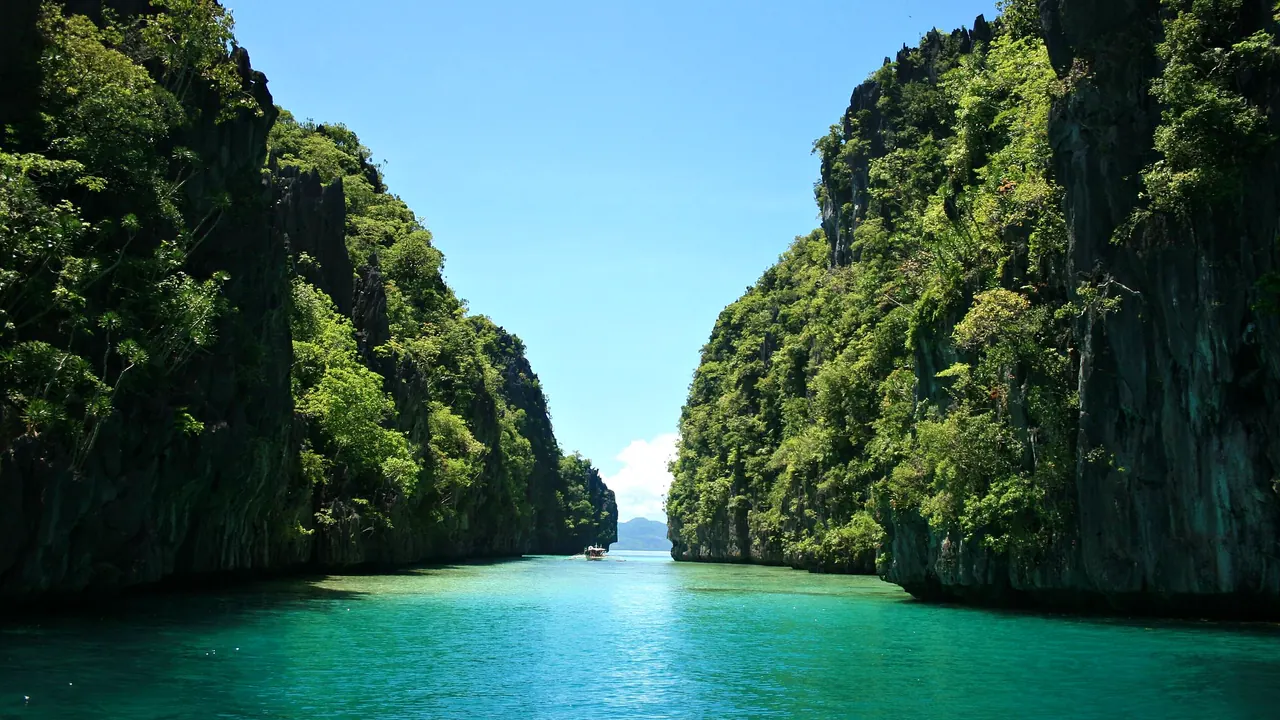
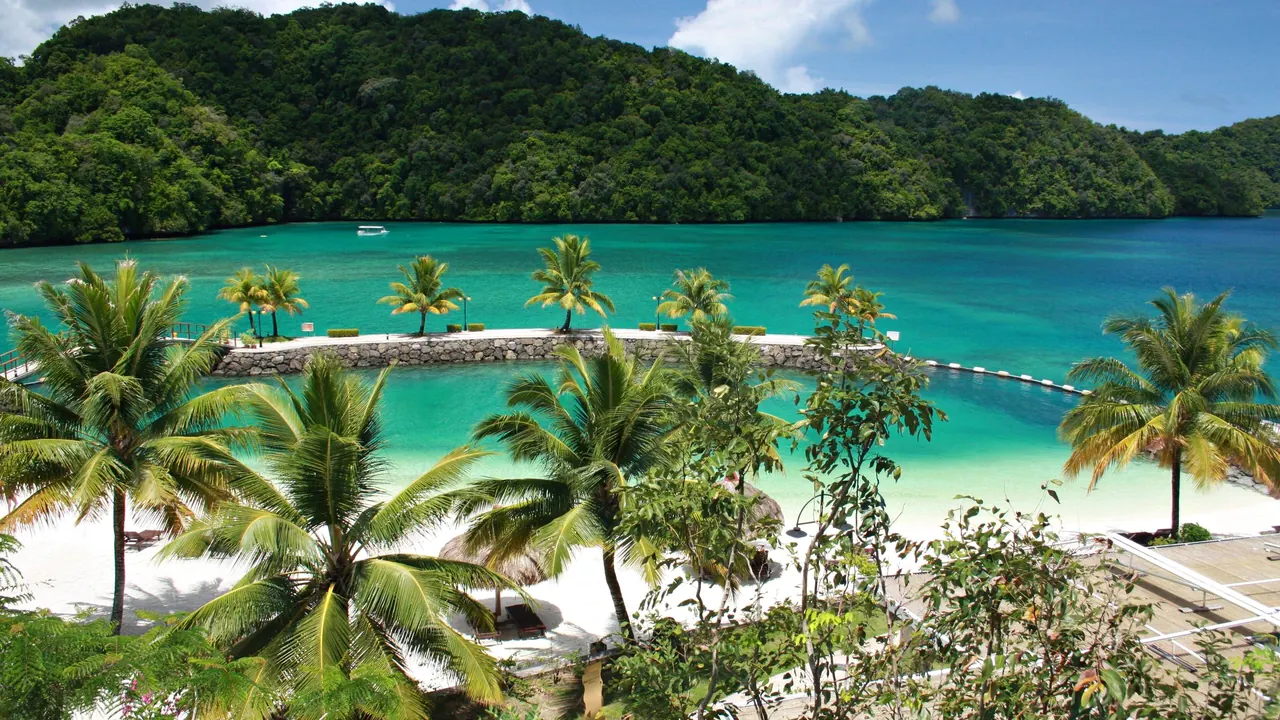
Photos: El Nido by nennnn, CC BY 2.0, cropped; Koror by ito1117, CC BY-SA 3.0, cropped.
El Nido or Koror?
Our verdict in twelve categories, each scored against the same fixed benchmark cities, and the climate month by month, so you can choose for your trip.
Choose El Nido for
- prices
- beaches
- nightlife
El Nido suits travellers who want beaches first and a bit of company in the evening. Long sand at Nacpan and Las Cabanas, island-hopping coves in Bacuit Bay, kayaking into the Miniloc lagoons and a small backpacker bar scene make it the easier and cheaper choice for a sociable tropical week, as long as you come in the dry season.
Choose Koror for
- day trips
- culture and sights
- shopping
Koror is for people who come for the water itself, and above all for divers. The Rock Islands, Blue Corner, German Channel and the marine lakes give it the stronger underwater days, and Peleliu and Babeldaob add some history and culture that El Nido lacks. It costs a good deal more, the nights are early and quiet, and the beaches you reach by boat matter less than the reefs around them.
Scoreboard
Twelve categories on one fixed scale from 0 to 100. The shaded stretch is the gap between the two.
Your match
Pick a travel style or drag the sliders, and both match scores follow your weighting.
Wins on prices and beaches with your weighting.
Wins on day trips and culture and sights with your weighting.
What matters to you?
Category by category
What the scores mean for a trip.
Beaches & swimming
El Nido has the better beaches. Nacpan's sweep of pale, nearly empty sand, the soft beaches and sunsets at Las Cabanas and Marimegmeg, and the shallow coves between the cliffs of Bacuit Bay give you a different stretch of sand every day, some of them by tricycle rather than boat.
Koror's best sand is in the Rock Islands, small crescents you reach on a snorkelling or kayak tour, and back on the main islands the beaches mostly belong to the resorts on Arakabesang and Malakal. Its strength is swimming straight off the boat onto a reef, not a lazy day on the sand.
Food & drink
Neither place is a reason to travel for food. El Nido's lanes lean towards backpacker pasta and smoothie bowls, with kinilaw, charcoal-grilled squid and the rice-and-seafood lunches the boat crews cook on the islands as the best of it.
Koror eats with a Japanese accent, with sashimi, bento and noodle counters alongside Filipino and Korean diners, and taro, coconut crab and even fruit bat soup for the curious. Because so much is imported, the choice soon feels short.
Culture & sights
Koror has more to see, though only enough to fill a morning. The Belau National Museum traces the Spanish, German, Japanese and American periods and has a painted bai meeting house in its grounds, and the Etpison Museum and traces of the Japanese-era capital add a little more. El Nido has a modest parish church, a few wooden houses and a limestone cliff, and no museums at all.
Nightlife
El Nido is clearly livelier after dark. Sunset drinks lead to reggae bars, fire dancers on the beach, hostel pub crawls and party boats, and a few spots stay open past midnight, though there are no real clubs.
Koror goes to bed early because the dive boats leave at dawn. Resort bars, a few places on the main street and weekend karaoke are about all there is, so nobody plans a trip around its nights.
Nature & outdoors
Both are outstanding, built on limestone islands rising from clear water, but they shine in different ways. El Nido is about the surface: kayaking through gaps in the rock into the Big and Small Lagoons, snorkelling over shallow reef flats, and climbing Taraw cliff for the view over Bacuit Bay.
Koror goes deeper. Its walls and channels are among the world's great dive sites, with sharks, mantas and strong currents, and Jellyfish Lake and the Milky Way lagoon have no match in El Nido. On land, Babeldaob's mangrove rivers and the Ngardmau waterfall are on much the same scale as El Nido's Nagkalit-kalit falls.
Day trips
Koror has two proper outings and El Nido has almost none. Peleliu, an hour away by speedboat, still holds tanks, bunkers and wrecks from one of the hardest Pacific War battles, and a day with a driver on Babeldaob takes in the Badrulchau monoliths, the Airai bai houses and the capitol at Melekeok.
From El Nido, the small Spanish fort at Taytay is about the only land excursion within easy reach. Port Barton is a long road trip, so days away from town are spent on the water.
Good for families
They are equally suited to families, and in the same way: good for older children who swim confidently and enjoy boat days, and hard going with toddlers. Koror is calmer and has the coral reef aquarium as a gentle introduction to the reef. El Nido has quiet beach resorts and Filipinos' warmth towards children, but also busy lanes with no pavements and a longer, more awkward journey in.
Getting around
El Nido's small centre is walkable, though you share its narrow lanes, which have no pavements, with tricycles and scooters. Tricycles take you out to Las Cabanas, Corong-Corong and the airport, Nacpan and the north mean hiring a tricycle, van or scooter for the day, and the islands are reached by bangka.
Koror is laid out differently, along one long road across causeways that is too hot and wet to walk end to end. Taxis are easy to find, a hire car makes sense for Babeldaob, and the dive and tour operators collect you from your hotel, so the sea days need no planning at all.
Shopping & style
Koror has the one souvenir worth carrying home, the Palauan storyboard, a carved wooden panel showing legends and village life, sold by local carvers around town. Beyond that, its general stores and T-shirt shops are purely practical. El Nido's stalls are handy for sarongs, swimwear, dry bags and shell or pearl jewellery before a boat day, but they offer nothing you would plan time around.
Affordability
El Nido is far easier on the wallet. It costs more than most of the Philippines, and boat tours and the private-island resorts add up, but simple rooms, local food and tricycles stay cheap.
Koror is expensive almost across the board. Rooms cost a lot for what they offer, and the diving, tours, Rock Islands permits and arrival fee make most days costly. Only the local diners and taxis are reasonably priced.
Live music & performing arts
Neither has a theatre or a concert venue. El Nido's performances are acoustic sets and fire dancing in the beach bars, while Koror occasionally offers traditional Palauan chant and dance at festivals or resort evenings, which is the more authentic of the two when you can catch it.
Wellness & relaxation
The two are fairly close, with El Nido slightly ahead thanks to massage huts on every beach, hilot treatments and yoga classes, though you need to stay outside the noisy town to find real calm. Koror is quieter overall, but proper spas exist only at a few resorts, so unwinding there mostly means the water and the hotel pool.
When should you go?
Pick your month. The climate figures are measured averages, not a forecast.
El Nido in July
Koror in July
Daytime high, °C
Rainfall in the month, mm
Where the figures come from
El Nido has no weather station within reach, so its figures come from a gridded climate model rather than a measured record, and read a broad area rather than one spot.
Temperature and rainfall are climate normals, averaged over the years shown. El Nido: 2001-2020 normals, NASA POWER reanalysis grid, no weather station within 90 km. Koror: 1991-2020 normals, Babelthuap Island, Babelthuap/Koror Airport (6.4 km from centre).
El Nido has a clear dry season. From December to April rain is light, falling to about 27mm in March, the sea is calm and boat trips run reliably. From June to October the monsoon brings heavy rain, often over 300mm a month, and swell that cancels island-hopping. It is warm all year, so the heat never rules out a visit, but the calendar matters a great deal.
Koror has no real dry season. It rains heavily in every month, and even the driest stretch, February to April, sees around 200mm, falling in short heavy bursts rather than all-day grey. Days are a little hotter than El Nido's all year, and the lagoon stays warm enough to swim in every month. March is the sunniest month and June to September the wettest and dullest, so early in the year is the best time for clear water and calm boat days.
Which traveller are you?
On a beach and sun trip, El Nido is the better pick. Nacpan's long empty sand, the sunset beaches at Las Cabanas and the white coves of Bacuit Bay offer far more beach time than Koror, where most sand belongs to resorts or lies out in the Rock Islands.
For a trip on a tight budget, El Nido wins clearly. Guesthouses, Filipino canteens, grilled seafood and tricycle rides stay cheap, while in Koror the rooms, permits, dives and boat tours, together with the arrival fee, add up quickly every day.
For scuba divers, Koror is the place to go. Blue Corner and German Channel bring sharks, mantas and big schools of fish on strong currents, with sheltered reefs for beginners. El Nido's dive sites in the bay are pleasant, but they are not why people travel there.
Before you go
| Measure | El Nido | Koror |
|---|---|---|
| Official language | English, Filipino, Taglish | English, Japanese, Palauan |
| Currency | Philippine Peso (PHP) | US Dollar (USD) |
| Sockets | ABC220 V, 60 Hz | AB120 V, 60 Hz |
| Driving side | Right | Right |
| Time zone | UTC+8 | UTC+9 |
| Emergency number | 911 | 911 |
| Elevation | 35 m | 22 m |
| Main airport | El Nido Airport (ENI)4 km from centre5 non-stop destinations | Roman Tmetuchl International Airport (ROR)7 km from centre7 non-stop destinations |
| Public holidays this year | 18 days | 11 days |
By the numbers
| Measure | El Nido | Koror |
|---|---|---|
| Population | 51,367 | 8,744 |
| People per km² | 56 | - |
| Museums within 10 km | 0 | 2 |
| UNESCO World Heritage sites within 50 km | 0 | 1 |
| Swim season, months above 21 °C | 12 months | 12 months |
Where else could you go?
Every comparison below shares a destination with this one, so you can follow El Nido or Koror somewhere new.