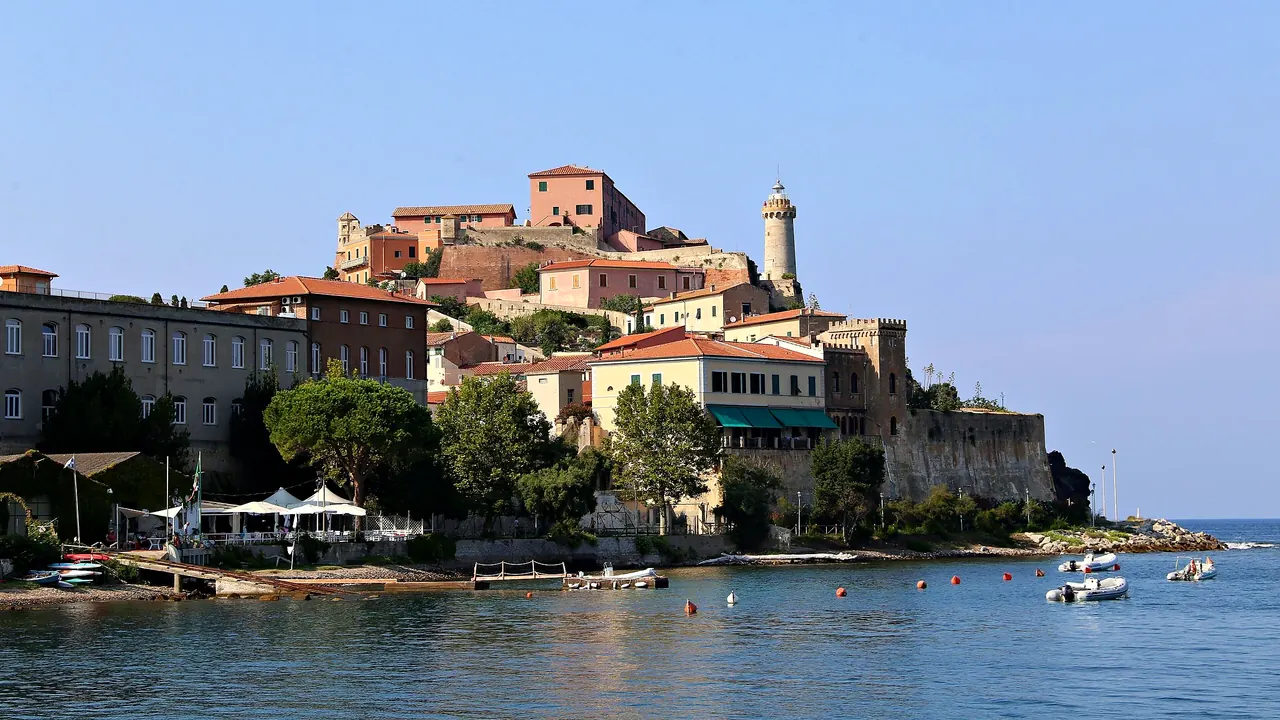
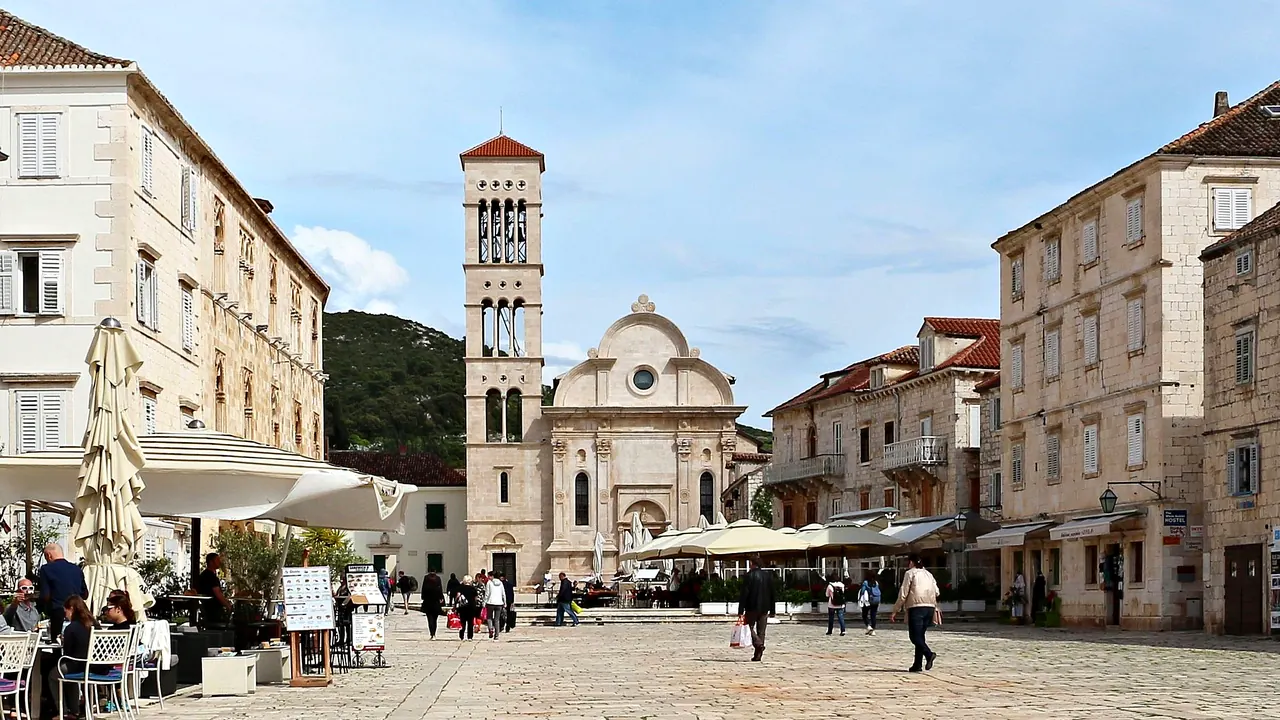
Photos: Elba by Sailko, CC BY 3.0, cropped; Hvar by Bernard Gagnon, CC BY-SA 4.0, cropped.
Elba or Hvar?
Our verdict in twelve categories, each scored against the same fixed benchmark cities, and the climate month by month, so you can choose for your trip.
Choose Elba for
- families
- nature and the outdoors
- wellness
Elba is the better pick for a beach vacation with children, or for anyone who wants to walk and ride between swims. The south coast bays such as Marina di Campo and Lacona are sandy and shelve gently, which is easier for small children than pebbles. Monte Capanne and the ridge trail give the island a mountain interior that Hvar's gentler limestone spine does not match. Evenings mean a stroll round the piazza rather than a night out.
Choose Hvar for
- nightlife
- day trips
- live music and the arts
Choose Hvar if the nights matter as much as the days. In July and August, Hvar Town's harbour bars and the beach clubs on the Pakleni Islands make it a party island, while Stari Grad, Jelsa and Vrboska give you a quieter base on the same island. Fast catamarans to Split, Korčula and Vis also make it much the better island for moving between places, whereas every outing from Elba starts with an hour on the ferry to the mainland.
Scoreboard
Twelve categories on one fixed scale from 0 to 100. The shaded stretch is the gap between the two.
Your match
Pick a travel style or drag the sliders, and both match scores follow your weighting.
Wins on families and nature and the outdoors with your weighting.
Wins on nightlife and day trips with your weighting.
What matters to you?
Category by category
What the scores mean for a trip.
Beaches & swimming
Both islands have very clear water and the same summer swimming season, so the real difference is what you lie on. Elba has proper sand: pale granite bays at Fetovaia and Cavoli in the south-west, and long, gently shelving beaches at Marina di Campo and Lacona. It also has white pebble coves near Portoferraio.
Hvar is pebble and flat rock almost everywhere. Its best swimming is off the Pakleni Islands, a taxi-boat ride from Hvar Town, or in south-coast coves reached by steep tracks or by boat. In high summer its famous bays fill with anchored yachts rather than beach towels.
Food & drink
Neither island is a serious food destination, but Hvar's cooking goes a little further. Its inland konobas in Velo Grablje and Pitve cook peka lamb and octopus with produce from their own land, Hvar Town has the island's more ambitious kitchens, and Plavac Mali from the southern slopes makes wine a stronger reason to visit.
Elba has Tuscan island cooking instead: cacciucco and stuffed squid, the hill trattorias of Capoliveri and Marciana, and Ansonica and Aleatico Passito to take home. On both islands much closes outside summer, and the harbour menus are predictable.
Culture & sights
Both offer a few days of sights rather than a whole cultural trip, and they differ mainly in period. Elba's story is Napoleon's exile, told through his two residences at Portoferraio and San Martino. Around them are Medici bastions, a star-shaped Spanish fort at Porto Azzurro and mining museums that go back to the Etruscans.
Hvar's sights are Venetian and Greek. Hvar Town has its white stone square, its cathedral and the 1612 theatre above the Arsenal, and Stari Grad was founded by Greek settlers, with a UNESCO-listed plain behind it whose fields still follow the ancient boundaries. Hvar's sights hang together a little better, because they are centred on two well-kept old towns.
Nightlife
This is where the two islands differ most. In July and August Hvar Town is a real party destination: sundowners on the waterfront, cocktail bars packed with yacht crews up the stepped lanes, and beach clubs on the Pakleni Islands that run from day into night, with taxi boats ferrying people back and forth.
Elba's evenings are a late dinner and a walk through the piazza at Capoliveri or along the harbour at Porto Azzurro, plus a few seasonal discos around Marina di Campo and Procchio. Elba suits people who want a sociable evening, and Hvar suits those who want a proper night out.
Nature & outdoors
Elba is the wilder, higher island. Monte Capanne rises to about 1,000m above chestnut woods, with an open basket lift from Marciana and views to Corsica, and the Grande Traversata Elbana runs along its ridges. The iron-red east adds paths past old mines and tough mountain-bike tracks.
Hvar's limestone spine tops out at 626m on Sveti Nikola and is more pastoral than dramatic, with dry-stone terraces, abandoned villages and lavender around Velo Grablje in early summer. Both have clear water for kayaking and snorkelling, and Elba's granite reefs are the better choice for diving.
Day trips
Hvar is far better placed for trips off the island. Fast catamarans reach Split and Diocletian's Palace in about an hour, Korčula's walled old town, Vis and Brač are also within reach, and Stari Grad, Jelsa and Vrboska make easy outings on Hvar itself.
From Elba every trip starts with an hour's ferry to Piombino. From there, the Etruscan tombs at Populonia and the hill towns of Campiglia Marittima and Suvereto are close, but the great Tuscan cities are too far for a comfortable day. Excursion boats to Pianosa and Capraia are Elba's answer to island-hopping.
Good for families
Elba is the more natural family island. Its sandy bays at Marina di Campo, Lacona, Biodola and Procchio are shallow enough for toddlers, with campsites and apartments set up for families. It also has a small aquarium and the lift up Monte Capanne for a change from the beach.
Hvar works for simple seaside days from Jelsa, Stari Grad or Vrboska, but children need water shoes on the pebbles and nothing there is built for them. Hvar Town's steps and party nights make it a poor base. On both islands, the August heat means early starts.
Getting around
On both islands a car or scooter makes life much easier, because the buses are sparse and the roads narrow and winding. The difference is in how you arrive and what can replace the car. Elba is reached by car ferry from Piombino in about an hour, and once there most people drive, with August queues into Portoferraio and full car parks at the beaches.
On Hvar the towns are small enough to walk, catamarans land you right in Hvar Town or Jelsa, and taxi boats serve the Pakleni Islands like a bus. That makes a stay without a car more workable, though you still need wheels to reach the south coast.
Shopping & style
Neither island is a place to shop, and on both the best buys are local produce. Elba's are Aleatico and Ansonica wine, honey, schiaccia briaca and minerals from its old mines, picked up on evening walks through Capoliveri and Porto Azzurro. Hvar's are lavender oil, olive oil, wine bought at the cellar door and lace made by the Benedictine nuns in Hvar Town, whose lanes also have boutiques aimed at the yacht crowd.
Affordability
Both are expensive in July and August, and both get noticeably cheaper in June and September. The costs land in different places, though. On Elba the car ferry, car hire, parking and sunbeds add up, but plentiful campsites and self-catering apartments help to balance them.
On Hvar the expense is concentrated in Hvar Town, where rooms, cocktails and beach-club loungers are priced for the yacht crowd. A family-run apartment in Jelsa or Stari Grad and meals at village konobas keep the bill down.
Live music & performing arts
Neither island is worth choosing for performances, and both rely on summer concerts in historic settings. Elba has chamber music in Portoferraio's fortresses and churches during a long-standing late-summer festival. Hvar has classical evenings in its churches and the Franciscan cloister, and you may hear klapa harmony singing at village feasts, which gives it a little more local character.
Wellness & relaxation
Elba has the only real treatment tradition of the two. The thermal establishment at San Giovanni, across the bay from Portoferraio, uses mud and seawater from the old salt pans, and resort hotels around Biodola and Procchio add spas. Hvar has no spa tradition, only hotel facilities and seasonal yoga and massage.
Beyond that, rest on both islands comes from the slow pace rather than from treatments: in Marciana or a farmhouse among the vineyards on Elba, and in Vrboska or Stari Grad among the pine and lavender on Hvar. Both are calmest in June and September.
When should you go?
Pick your month. The climate figures are measured averages, not a forecast.
Elba in July
Hvar in July
Daytime high, °C
Rainfall in the month, mm
Where the figures come from
Elba's temperatures are measured 62 km from the centre, at Grosseto.
Elba has no rain gauge within 25 km of the centre, so its rainfall comes from a gridded climate dataset read at the destination rather than from a gauge further away.
Hvar's temperatures are measured 38 km from the centre, at Split / Marjan.
Hvar has no rain gauge within 25 km of the centre, so its rainfall comes from a gridded climate dataset read at the destination rather than from a gauge further away.
Hvar's sunshine is measured 38 km from the centre, at Split / Marjan.
Temperature and rainfall are climate normals, averaged over the years shown. Elba: 1991-2020 (sunshine 1961-1990) normals, Grosseto (61.7 km from centre). Hvar: 1991-2020 (sunshine 1971-2000) normals, Split / Marjan (38.2 km from centre).
The two islands follow the same Mediterranean pattern, and their seas are almost identical: warm enough to swim from June to late September, at about 25°C in August. Elba's midsummer is slightly hotter, with highs around 32°C, so walking on its open slopes in the middle of the day is hard work. Hvar is the sunnier of the two all year, with about 344 hours in July. July and August are very dry on both.
The rain comes back in September and October, and Hvar's autumn and winter are noticeably wetter, reaching 116mm in November against Elba's 92mm. For walking, cycling and unhurried sightseeing, May and late September suit both islands best, warm without the summer heat. From November to March both are cool and damp.
Which traveller are you?
On a family trip with young children, Elba asks less of parents: sand instead of pebbles, and more to fill a day off the beach. The price is driving everywhere, where Hvar's quiet northern towns work on foot.
For a food and nightlife trip, Elba offers hill-village dinners and a piazza stroll, little more. Hvar is the better pick, with a proper night out and stronger wine, if you accept Hvar Town's summer prices and crowds.
On an outdoors trip, Elba gives more ground to cover, with real mountain walking and biking as well as the sea. Hvar suits gentler walks and paddling, and on both islands summer heat pushes serious effort into spring and autumn.
Before you go
| Measure | Elba | Hvar |
|---|---|---|
| Official language | Italian | Croatian |
| Currency | Euro (EUR) | Euro (EUR) |
| Sockets | CFL230 V, 50 Hz | CF230 V, 50 Hz |
| Driving side | Right | Right |
| Time zone | UTC+1, UTC+2 in summer | UTC+1, UTC+2 in summer |
| Emergency number | 112 | 112 |
| Main airport | Pisa International Airport (PSA)82 non-stop destinations | Split Saint Jerome Airport (SPU)69 non-stop destinations |
| Public holidays this year | 13 days | 14 days |
By the numbers
| Measure | Elba | Hvar |
|---|---|---|
| Population | 32,000 | - |
| People per km² | 143 | - |
| Swim season, months above 21 °C | 4 months | 4 months |
Where else could you go?
Every comparison below shares a destination with this one, so you can follow Elba or Hvar somewhere new.