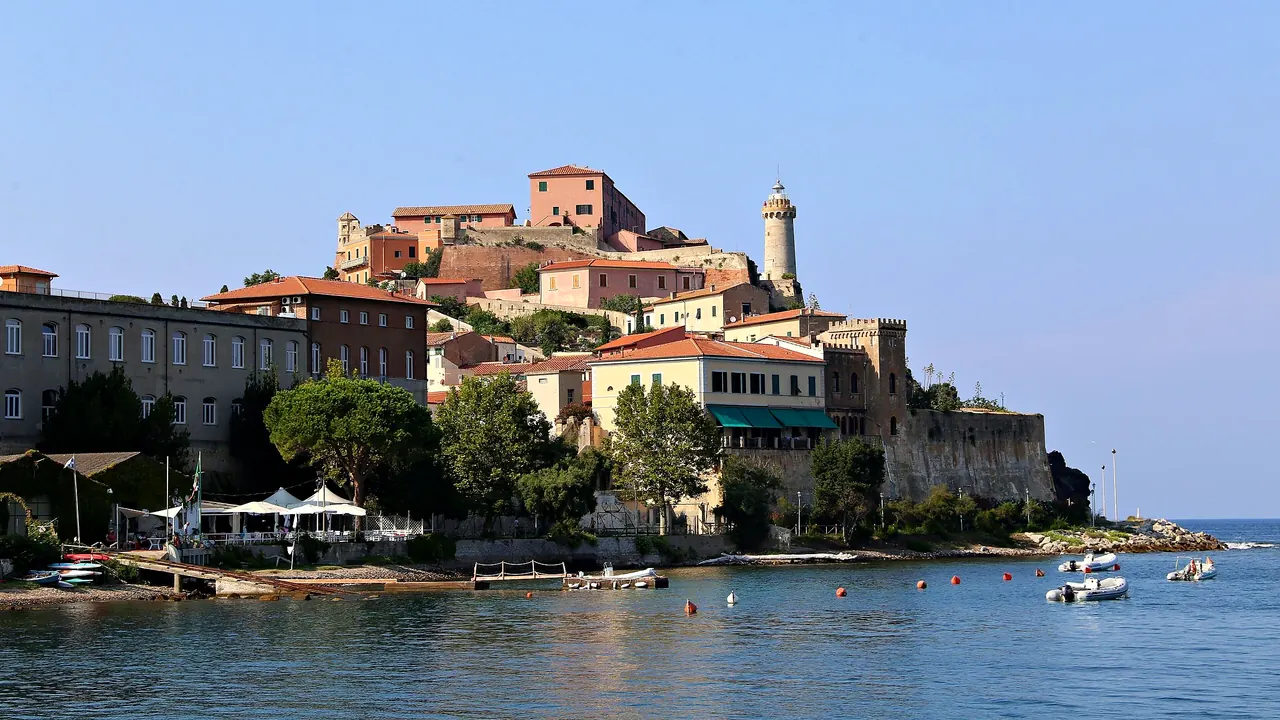
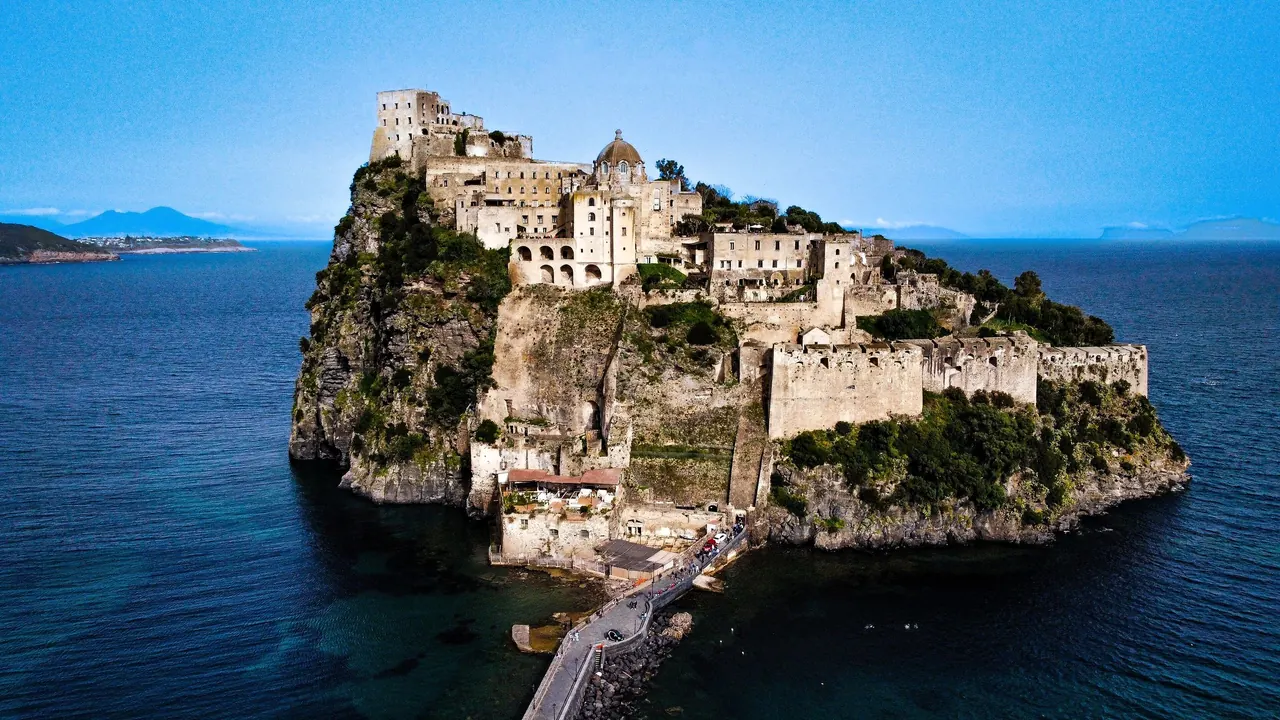
Photos: Elba by Sailko, CC BY 3.0, cropped; Ischia by Pipito93, CC BY-SA 4.0, cropped.
Elba or Ischia?
Our verdict in twelve categories, each scored against the same fixed benchmark cities, and the climate month by month, so you can choose for your trip.
Choose Elba for
- nature and the outdoors
- families
- beaches
Elba is the island for a beach and outdoors vacation with a car. Its granite south-west has some of the clearest water in the Tuscan sea, and Monte Capanne, the ridge trail and the iron-red mining east give walkers, cyclists and divers more ground to cover. Families get gentle sandy bays and a relaxed campsite and apartment culture. The price is a costly summer and very little to do off the island.
Choose Ischia for
- wellness
- day trips
- prices
Pick Ischia if warm water out of the ground matters as much as the sea. Its thermal parks, hotel pools and wild springs such as Sorgeto make it a place to slow right down, well into spring and autumn. It also sits in the Bay of Naples, so Procida, Naples, the Phlegraean Fields and Capri are all an easy boat ride away. It costs a little less, and you can stay without a car. What you give up is Elba's wilder interior and its long hiking routes.
Scoreboard
Twelve categories on one fixed scale from 0 to 100. The shaded stretch is the gap between the two.
Your match
Pick a travel style or drag the sliders, and both match scores follow your weighting.
Wins on nature and the outdoors and families with your weighting.
Wins on wellness and day trips with your weighting.
What matters to you?
Category by category
What the scores mean for a trip.
Beaches & swimming
Both islands are serious beach destinations and closely matched. The difference is in the beaches themselves. Elba has the longer coast and the paler palette: granite coves with light sand and turquoise shallows at Fetovaia and Cavoli, a long town beach at Marina di Campo, and white pebble coves under the cliffs near Portoferraio.
Ischia's sand is dark and volcanic. Its showpiece is Maronti on the south coast, where hot springs come up near Sant'Angelo, and sheltered San Montano suits calm swimming. Much of the rest of its coast is rock, best reached by water taxi. Elba's quiet coves are more often reached by footpath or dirt track.
Food & drink
Ischia eats a little better, mainly because its signature cooking comes from the hills as well as the sea. Rabbit braised in terracotta is the dish to seek out, along with Biancolella whites from the terraces on Epomeo. Elba's table is Tuscan: cacciucco, stuffed squid, Ansonica with fish and wine-soaked schiaccia briaca for dessert, at its best in the hill trattorias of Capoliveri and Marciana.
Both islands have the same weakness. Neither has a market scene, and the best meals take some finding away from the resort waterfronts. On Ischia, half-board spa hotels keep many visitors from exploring. On Elba, many beach restaurants close outside summer.
Culture & sights
The two islands are level on sights, and each has a couple of good half-days rather than a full itinerary. Elba's story is Napoleon and the forts: his residences at Portoferraio and San Martino, the Medici bastions, and the Spanish star fortress at Porto Azzurro.
Ischia goes further back. The Aragonese Castle on its causeway rock is the single most striking monument on either island, and the Villa Arbusta museum holds Nestor's Cup from the early Greek settlement of Pithekoussai. For anything beyond that, Ischia has the mainland close at hand, which Elba does not.
Nightlife
Neither island is for clubbing, and evenings on both are built around dinner and a stroll. On Elba the late crowds gather in the piazza at Capoliveri and along the harbours of Porto Azzurro and Marina di Campo. A few open-air discos near Procchio run later on summer weekends.
Ischia's evening life is concentrated in one place, Ischia Porto, where wine bars and cocktail terraces line the waterfront. Sant'Angelo and Forio are for a sunset drink and then bed.
Nature & outdoors
Elba is the stronger island for the outdoors, mainly because it is bigger and more varied. Monte Capanne's granite and chestnut slopes, the ridge-to-ridge Grande Traversata, the old mines of the red east and the mountain-bike country around Capoliveri give an active traveller a full week or more. Its granite reefs add diving and sea kayaking.
Ischia's landscape is volcanic and steep, with vineyards climbing Monte Epomeo and steam vents on the south coast. The Regno di Nettuno marine reserve is good for snorkelling, and dolphins are sometimes seen offshore. But there is less of it, and keen walkers will cover it quickly.
Day trips
This is where Ischia pulls far ahead. From its quays you can reach pastel Procida in minutes, Naples and its archaeological museum in about an hour, and Pozzuoli for Baia, the Solfatara and the Roman amphitheatre. In summer there are boats to Capri and Sorrento.
From Elba, every outing means the hour-long ferry to Piombino. Beyond that lie Etruscan Populonia, the hill towns of Campiglia and Suvereto, and the Bolgheri wine country, with boat trips to Pianosa or Capraia. These are pleasant, but most visitors manage one or two and stay put.
Good for families
Elba is the easier island with children. Its broad, shallow sandy bays at Lacona, Biodola and Procchio have family campsites and apartments right behind them. The small aquarium at Marina di Campo and the open lift up Monte Capanne fill in the gaps.
Ischia works for a slow beach-and-pool week. The calm water at San Montano and the warm pools of the thermal parks are the highlights. But many villages are long flights of steps, and the summer buses are packed. Older children may get restless unless the trip includes boat days to the neighbouring islands.
Getting around
Getting around is equally awkward on both islands, but in different ways. On Elba a car, scooter or e-bike is close to essential, because the buses are too sparse to rely on and the twisting hill roads make every drive slower than the map suggests. In August that means queues into Portoferraio and full car parks at the beaches.
Ischia is the reverse. A car is more nuisance than help there, and visitors' cars are restricted in high season. Most people pick a base, walk around it, and use the round-the-island buses, microtaxis and water taxis. The trade-off is crowded buses in summer.
Shopping & style
Ischia has slightly more to browse. The long walk along Via Roma and Corso Vittoria Colonna from Ischia Porto to Ischia Ponte has resort fashion, sandals and linen, and thermal cosmetics made from the island's waters are a souvenir only Ischia offers. Elba's shopping is scattered across the lanes of Capoliveri, Porto Azzurro and Portoferraio. Its best buys are island produce such as Aleatico wine, honey and minerals from the old mines.
Affordability
Ischia is the cheaper of the two. Its many family-run spa hotels sell half-board stays that include thermal pools, and because a car is not needed, that cost drops out completely. Elba's summer bill grows with the car ferry, car hire, parking and sunbeds, and August is the dearest month of all.
Both islands reward travelling outside the peak. On Elba, campsites, apartments and June or September dates keep costs down. Ischia's spring and autumn are noticeably cheaper and still warm enough to enjoy.
Live music & performing arts
Neither island is a reason to travel for the arts, but Ischia has a little more. There are chamber concerts in William Walton's Mortella gardens, summer events at the Aragonese Castle during its film festival, and Naples' opera and concert halls are a ferry ride away. Elba's offer is a late-summer classical festival and occasional concerts in Portoferraio's squares and fortresses, and nothing much beyond that.
Wellness & relaxation
Here the islands are not comparable. Ischia is one of the Mediterranean's great spa islands. Hot springs feed hotel pools, terraced thermal parks at Citara, Lacco Ameno and Casamicciola fill whole days, and you can bathe in the hot rock pools of Sorgeto even in winter or in the ancient steam caves of Cavascura.
Elba has one thermal establishment, at San Giovanni near Portoferraio, which uses mud from the old salt pans, plus some resort hotel spas. Its restfulness comes from quiet hill villages and farm stays in June and September, not from the water.
When should you go?
Pick your month. The climate figures are measured averages, not a forecast.
Elba in July
Ischia in July
Daytime high, °C
Rainfall in the month, mm
Where the figures come from
Elba's temperatures are measured 62 km from the centre, at Grosseto.
Elba has no rain gauge within 25 km of the centre, so its rainfall comes from a gridded climate dataset read at the destination rather than from a gauge further away.
Ischia's temperatures are measured 36 km from the centre, at Grazzanise.
Ischia has no rain gauge within 25 km of the centre, so its rainfall comes from a gridded climate dataset read at the destination rather than from a gauge further away.
Temperature and rainfall are climate normals, averaged over the years shown. Elba: 1991-2020 (sunshine 1961-1990) normals, Grosseto (61.7 km from centre). Ischia: 1991-2020 normals, Grazzanise (36 km from centre).
The two islands have almost the same summer. Both are hot in July and August, with afternoons around 31°C to 32°C that make midday walking hard work. Both seas are good for swimming from June, peak at about 25°C to 26°C in August and stay pleasant through September. Ischia's water holds a degree warmer and lasts into early October. May and early June, and then late September, are the best months for walking on either island. That is when the hills are warm but not baking and the sunshine is long.
The real difference comes with the rain. Elba is the drier island all year round. Ischia gets much wetter from October and has its heaviest month in November at about 148mm, roughly half as much again as Elba's wettest. Winter is mild and grey on both, with no beach life. Ischia's hot springs give it a reason to visit in the cooler months that Elba does not have.
Which traveller are you?
On a relaxing and wellness trip, Ischia is the clear choice. Dozens of hot springs feed hotel pools and terraced thermal parks, there is the sea-level spring at Sorgeto and the steam caves at Cavascura, and the island's pace makes it restorative. Elba has one thermal establishment and some hotel spas.
For an outdoors trip, choose Elba. Monte Capanne rises to about 1,000m, the Grande Traversata Elbana runs along the ridges, and the east has rough mountain-bike tracks. Ischia's Monte Epomeo makes a good walk, but a week uses up its trails.
On a family trip with children, Elba has the edge. Marina di Campo, Lacona and Biodola are long, gently shelving sandy bays, with family campsites and apartments behind them. Ischia's thermal parks make easy water days, but its stepped villages and crowded buses are harder with small children.
Before you go
| Measure | Elba | Ischia |
|---|---|---|
| Official language | Italian | Italian |
| Currency | Euro (EUR) | Euro (EUR) |
| Sockets | CFL230 V, 50 Hz | CFL230 V, 50 Hz |
| Driving side | Right | Right |
| Time zone | UTC+1, UTC+2 in summer | UTC+1, UTC+2 in summer |
| Emergency number | 112 | 112 |
| Main airport | Pisa International Airport (PSA)82 non-stop destinations | Naples International Airport (NAP)131 non-stop destinations |
| Public holidays this year | 13 days | 13 days |
By the numbers
| Measure | Elba | Ischia |
|---|---|---|
| Population | 32,000 | 62,027 |
| People per km² | 143 | 1,340 |
| Swim season, months above 21 °C | 4 months | 5 months |
Where else could you go?
Every comparison below shares a destination with this one, so you can follow Elba or Ischia somewhere new.