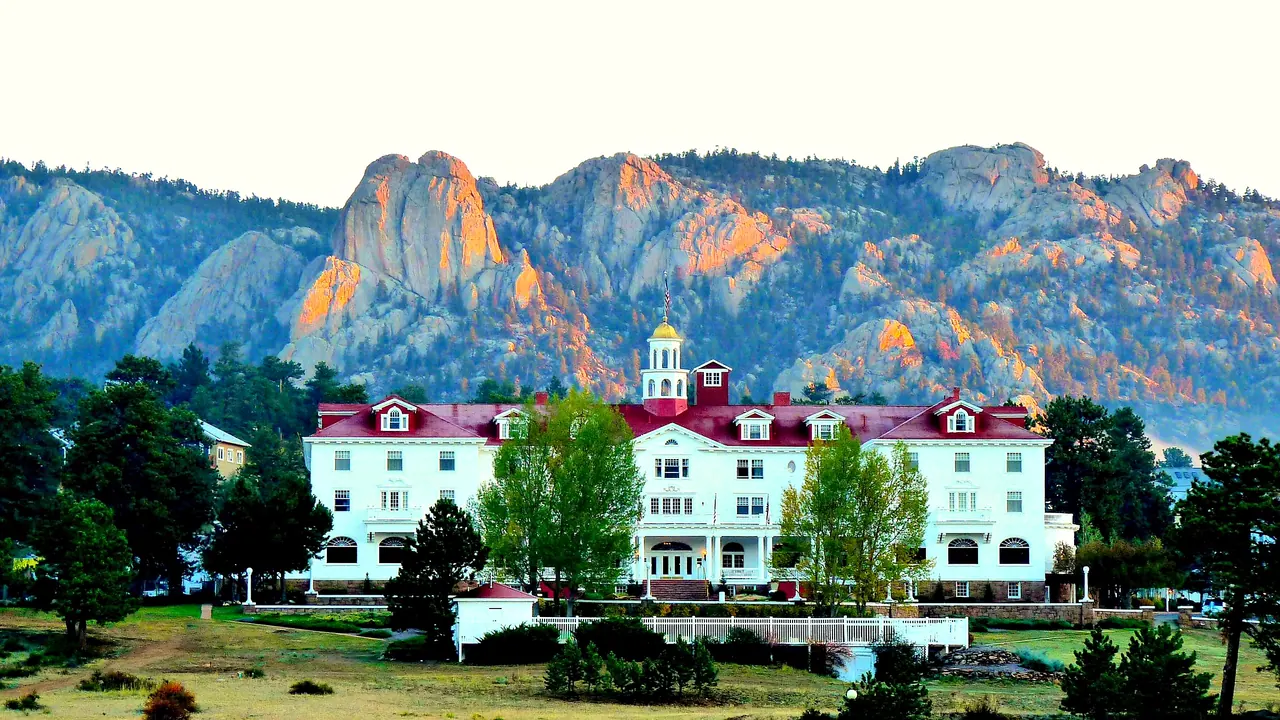
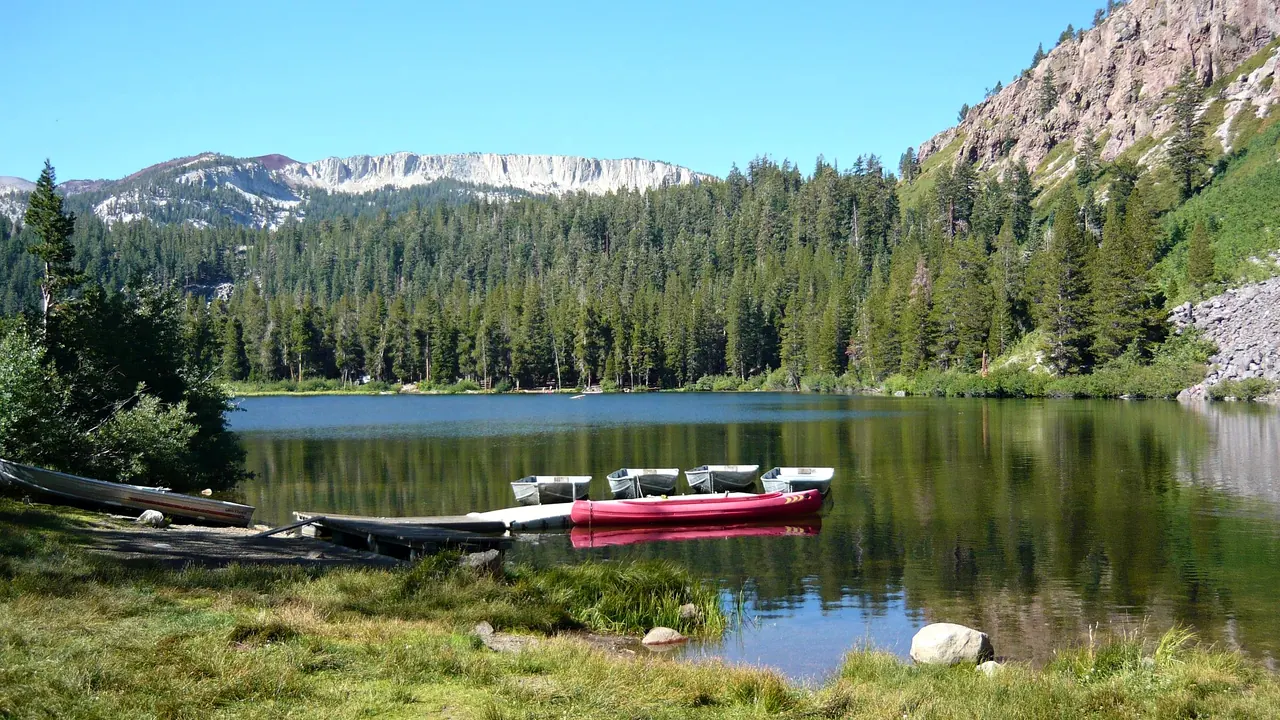
Photos: Estes Park by 1progressivedem1, CC BY-SA 4.0, cropped; Mammoth Lakes by Dr. Al. K. Lisch, CC BY-SA 3.0, cropped.
Estes Park or Mammoth Lakes?
Our verdict in twelve categories, each scored against the same fixed benchmark cities, and the climate month by month, so you can choose for your trip.
Choose Estes Park for
- prices
- culture and sights
- day trips
Estes Park suits travellers who come for wildlife and classic national park hiking, with elk in the meadows, Trail Ridge Road over the tundra and lake trails a few minutes from town. It is also the easier place to mix mountains with towns, because Boulder, Fort Collins and Denver are all within reach. The Stanley Hotel gives a wet afternoon something to do, and the stay costs a little less.
Choose Mammoth Lakes for
- wellness
- nightlife
- beaches
For skiers, and for anyone drawn by hot springs, après-ski and the volcanic country of the Eastern Sierra, Mammoth Lakes is the stronger pick. The gondola and shuttles make a ski week possible without driving, the dry summers suit long days on the trails, and soaking in pools out in the sagebrush makes it the better place to unwind.
Scoreboard
Twelve categories on one fixed scale from 0 to 100. The shaded stretch is the gap between the two.
Your match
Pick a travel style or drag the sliders, and both match scores follow your weighting.
Too close to call, 2 points apart
Wins on prices and culture and sights with your weighting.
Wins on wellness and nightlife with your weighting.
What matters to you?
Category by category
What the scores mean for a trip.
Beaches & swimming
Neither town is a place to swim, but Mammoth Lakes at least offers a hardy swimmer a summer dip. In July and August people do go into Horseshoe Lake in the Lakes Basin, and Crowley Lake, lower down, is a little less cold.
Estes Park offers less. Lake Estes and the park's alpine lakes stay snowmelt-cold all summer, so people walk the shores, paddle and fish instead, and anyone who wants to swim uses a hotel pool or the indoor aquatic centre.
Food & drink
Eating out is much alike in both: filling, informal food that follows a day outdoors rather than giving a reason to come. The flavour differs. Estes Park leans western, with elk and bison, barbecue, big breakfasts before the trail, a distillery or two and the taffy and fudge shops of Elkhorn Avenue.
Mammoth Lakes cooks for a large ski crowd, so its pizza, tacos and steakhouses cover a slightly broader range, and the Village has a few more ambitious dinner kitchens. In both towns some places cut back out of season.
Culture & sights
Estes Park has the one sight here worth planning around: the Stanley Hotel, the white hotel on a rise above the valley that inspired The Shining, with tours of its public rooms and its ghost stories. The homesteading museum and the MacGregor Ranch under Lumpy Ridge add a modest afternoon.
Mammoth Lakes, a mining camp that became a ski resort of condominiums and lodges, has little beyond its log-cabin history museum. Its real heritage lies an hour or more out of town.
Nightlife
Mammoth Lakes has the livelier evenings, thanks to après-ski. In winter the Village and the bars by the lifts fill from late afternoon, and long ski weekends can run late, though it goes quiet out of season.
Estes Park keeps hikers' hours all year. Its brewery taprooms and saloon-style bars on Elkhorn Avenue are busy around dinner, and little happens after ten. Neither town has clubs.
Nature & outdoors
Both are outstanding mountain bases, so the choice comes down to which mountains you want. Estes Park is the gateway to Rocky Mountain National Park. It has Trail Ridge Road over the tundra, hikes to Bear, Dream and Emerald lakes and Longs Peak overhead, with elk, bighorn sheep and moose close at hand. The autumn elk rut is a spectacle in itself.
Mammoth Lakes sits under a major ski mountain that becomes a bike park in summer, and the Eastern Sierra around it is volcanic and dry. There is Devils Postpile, the tufa towers of Mono Lake, Convict Lake and the Yosemite high country over Tioga Pass. For skiing there is no contest, as Estes Park has no ski resort nearby.
Day trips
Estes Park has the slightly better choice of outings because the plains below hold real towns. Boulder and Fort Collins are about an hour away, Denver's museums a little further, and in summer Grand Lake lies over Trail Ridge Road.
From Mammoth Lakes the outings are fewer and more spread out, but more unusual: the ghost town of Bodie, the wartime internment camp at Manzanar, Bishop and Lee Vining on Mono Lake. Winter pass closures narrow the choice, and both towns need a car for all of it.
Good for families
Both suit outdoor families about equally well. They are small and safe, short of museums for a wet day, and both need a day or two to get used to the altitude. Estes Park offers wildlife and easy fun: elk wandering through town, junior ranger activities, flat lake walks, mini golf, go-karts and the tramway up Prospect Mountain.
Mammoth Lakes comes into its own for a winter family trip, with a large ski school, gentle beginner slopes and a tubing hill. In summer it adds rowing boats, trout fishing, the bike park and the summit gondola for older children.
Getting around
Mammoth Lakes is easier without a car, at least for skiers. Free winter shuttles and a gondola from the Village to the slopes make a ski week possible by bus and on foot, and in summer a trolley and a shuttle reach the Lakes Basin and Reds Meadow.
Estes Park has the more walkable centre along Elkhorn Avenue and the Riverwalk, and summer shuttles run to Bear Lake. For most other things you need to drive, and summer weekends bring heavy traffic and scarce parking. Neither town has a train.
Shopping & style
Estes Park has better shops to browse. Elkhorn Avenue mixes souvenirs and taffy with western wear, outdoor gear and galleries selling wildlife art and jewellery, enough for a pleasant hour.
Mammoth Lakes is more about equipment, with good ski, climbing and fly-fishing shops and rental outlets but little to browse for its own sake. Keen shoppers will find neither town enough.
Affordability
Neither is cheap, but Estes Park is easier on the wallet. Its peak is summer and early autumn, rooms are far cheaper in winter and spring, and once inside the national park the hiking and wildlife cost nothing beyond the entry fee.
Mammoth Lakes is dearest in winter, when lift tickets, ski rental and peak-week lodging add up quickly. Summer and the shoulder months are kinder, and cooking in a condominium kitchen is the usual way to save.
Live music & performing arts
Both are modest, in different ways. What Estes Park has is seasonal: free summer concerts at the riverside performance park, evenings at the Stanley Hotel and the Scottish-Irish Highland Festival in September.
Mammoth Lakes has a stage that runs all year, a community theatre company on the college campus. Summer adds a long-running jazz festival, chamber music and concerts in meadows with the mountains behind. Neither has a concert hall.
Wellness & relaxation
Mammoth Lakes is clearly better for unwinding because of its volcanic ground. Soaking in a simple hot spring out in the sagebrush, with the Sierra across the valley, is a local ritual, and the large lodges add spas and hot tubs for ski-tired legs.
Estes Park has no hot springs and only a few lodge spas. Its calm comes instead from a riverside cabin, elk at dusk and quiet evenings, and it is most restful in winter and spring.
When should you go?
Pick your month. The climate figures are measured averages, not a forecast.
Estes Park in July
Mammoth Lakes in July
Daytime high, °C
Rainfall in the month, mm
Where the figures come from
Estes Park's temperatures are measured 80 km from the centre, at Kremmling.
Estes Park has no rain gauge within 25 km of the centre, so its rainfall comes from a gridded climate dataset read at the city rather than from a gauge further away.
Mammoth Lakes's station stands 227 m below the city centre, so the centre is likely a little cooler than the figures say.
Mammoth Lakes has no rain gauge within 25 km of the centre, so its rainfall comes from a gridded climate dataset read at the city rather than from a gauge further away.
Temperature and rainfall are climate normals, averaged over the years shown. Estes Park: 2006-2025 (rainfall 1991-2020) normals, Kremmling (80.4 km from centre). Mammoth Lakes: 2008-2020 (rainfall 1991-2020) normals, Mammoth / Whitmore Hot Springs (12 km from centre).
Both towns are at their best from June to September, when daytime highs reach the high twenties and the high trails are open. Their weather runs on opposite patterns, though. Estes Park gets most of its rain in summer, peaking at 50mm in July, so hikes are best started early in the day. Its winters are cold and fairly dry, with January days around -4°C. That is fine for snowshoeing but harsh for strolling around town.
Mammoth Lakes is almost dry in summer, with about 10mm a month from June to August. That makes it the more reliable choice for long days outdoors, and the only one of the two where a quick lake dip in July or August is realistic. Its wet season is winter, peaking near 80mm in January and falling as snow on the ski mountain, while daytime highs stay a few degrees above freezing, noticeably milder than in Estes Park. October is still pleasant in both.
Which traveller are you?
For a ski vacation, Mammoth Lakes is the clear choice. One of North America's largest ski areas rises above town, with a long season, a big ski school, free shuttles and a gondola. Estes Park has no ski resort nearby.
On a relaxing and wellness trip, Mammoth Lakes wins with its natural hot springs, simple pools in open sagebrush facing the Sierra, plus lodge spas and hot tubs. Estes Park offers quiet riverside cabins and elk at dusk, but no thermal water and few spas.
On a tight budget, Estes Park goes further. Neither town is cheap, but Estes Park has no ski-resort prices and its winter and spring rooms fall sharply. Once inside the national park, the hiking and wildlife cost only the entrance fee.
Before you go
| Measure | Estes Park | Mammoth Lakes |
|---|---|---|
| Currency | US Dollar (USD) | US Dollar (USD) |
| Sockets | AB120 V, 60 Hz | AB120 V, 60 Hz |
| Driving side | Right | Right |
| Time zone | UTC-7, UTC-6 in summer | UTC-8, UTC-7 in summer |
| Emergency number | 911 | 911 |
| Elevation | 2,293 m | 2,402 m |
| Main airport | Denver International Airport (DEN)92 km from centre231 non-stop destinations | Reno Tahoe International Airport (RNO)217 km from centre25 non-stop destinations |
| Public holidays this year | 12 days | 13 days |
By the numbers
| Measure | Estes Park | Mammoth Lakes |
|---|---|---|
| City population | 5,904 | 7,191 |
| People per km² | 335 | 110 |
| Museums within 10 km | 4 | 0 |
| UNESCO World Heritage sites within 50 km | 0 | 0 |
Where else could you go?
Every comparison below shares a destination with this one, so you can follow Estes Park or Mammoth Lakes somewhere new.
- Bouldervs Estes Park
- Winter Park, Coloradovs Estes Park
- Denvervs Estes Park
- Keystonevs Estes Park
- Breckenridgevs Estes Park
- Vailvs Estes Park