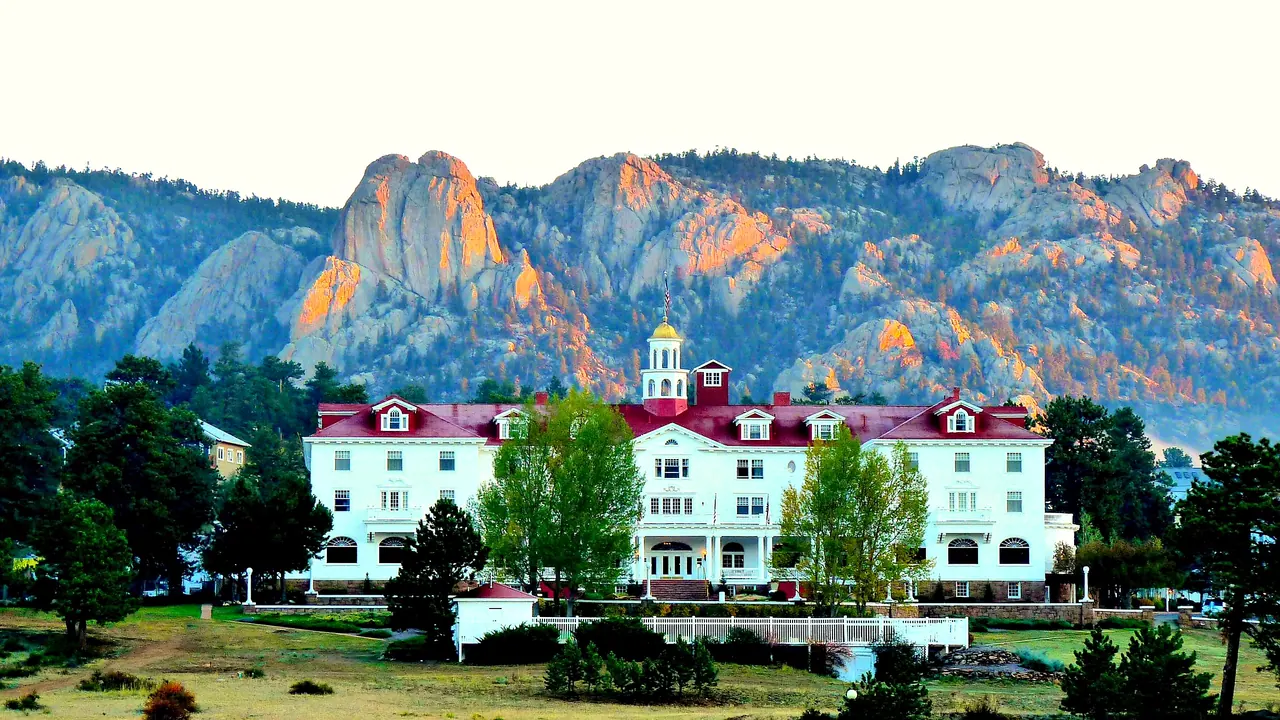
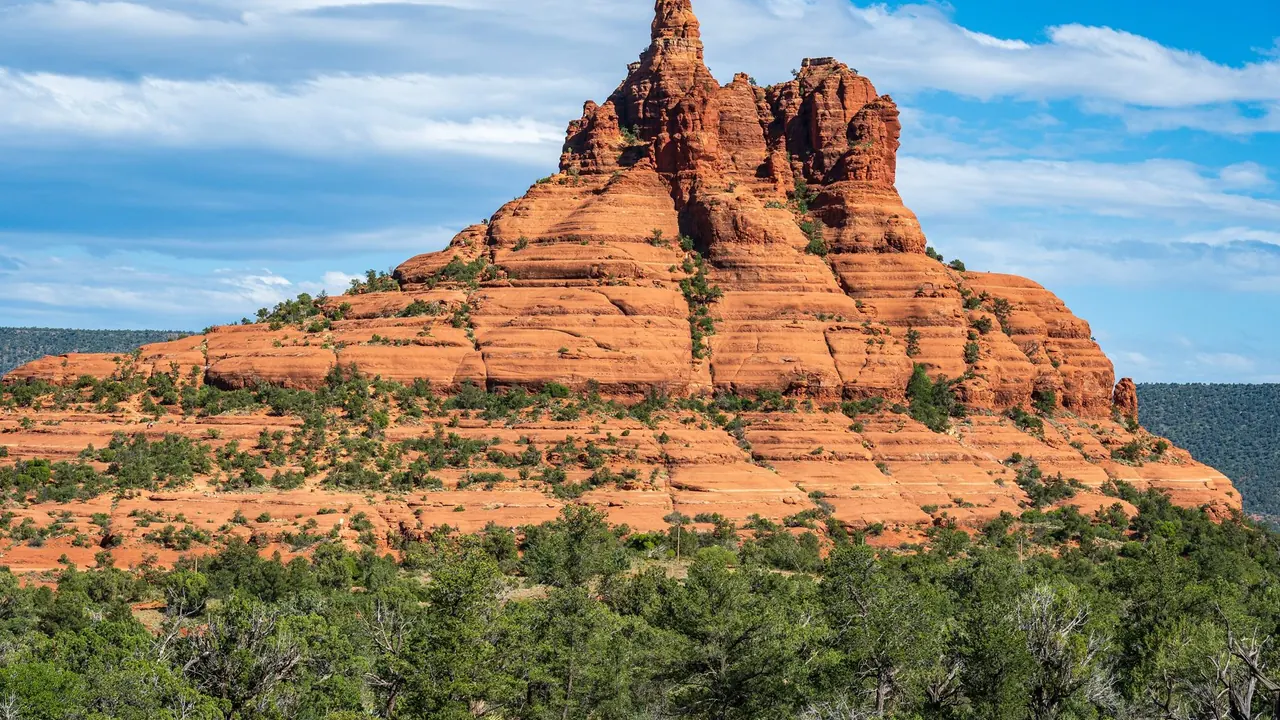
Photos: Estes Park by 1progressivedem1, CC BY-SA 4.0, cropped; Sedona by dconvertini, CC BY-SA 2.0, cropped.
Estes Park or Sedona?
Our verdict in twelve categories, each scored against the same fixed benchmark cities, and the climate month by month, so you can choose for your trip.
Choose Estes Park for
- families
- prices
- getting around
Estes Park is the better choice for families who want their days in the mountains. Elk wander through town, there are flat lakeside walks for small children and junior ranger programmes in the park, and the compact downtown has summer shuttles up to the trailheads. It suits a summer trip of alpine scenery, wildlife and cool air, and it is a little kinder on the budget, especially outside high season.
Choose Sedona for
- wellness
- day trips
- shopping
Couples and anyone who wants to rest should lean towards Sedona. Its red rock country is every bit as striking, and the town adds a real retreat culture of resort spas, yoga and sunrise walks to the vortexes. It also has better gallery and craft shopping at Tlaquepaque, and more varied day trips to Jerome, the Sinagua cliff dwellings and the Grand Canyon. It is also the one to pick in spring, autumn or winter, when the Rockies are cold.
Scoreboard
Twelve categories on one fixed scale from 0 to 100. The shaded stretch is the gap between the two.
Your match
Pick a travel style or drag the sliders, and both match scores follow your weighting.
Wins on families and prices with your weighting.
Wins on wellness and day trips with your weighting.
What matters to you?
Category by category
What the scores mean for a trip.
Beaches & swimming
Neither town is a beach destination, but Sedona at least offers a proper swim. In summer, the sandstone chute at Slide Rock and the deeper pools at Grasshopper Point and Red Rock Crossing make a cool dip after a hot hike.
In Estes Park, Lake Estes and the alpine lakes are fed by snowmelt and are for paddling, fishing and walking the shore rather than swimming. Getting wet there means a hotel pool or the town's indoor aquatic centre.
Food & drink
Neither is a place to plan a trip around meals, but Sedona eats somewhat better. It has resort terraces facing the red rocks, Southwestern cooking and plenty of vegetarian and health-minded menus, and the Verde Valley tasting rooms down the road add wine to the mix.
Estes Park sticks to mountain-town food: bison burgers, barbecue, big breakfasts before the trail, a few breweries and the taffy and fudge of Elkhorn Avenue. Many of its kitchens also cut back outside summer, and visitors who want a serious dinner save it for Boulder or Denver.
Culture & sights
Both towns have only a few sights, and the difference is in what kind they are. Estes Park's heritage is the story of early mountain tourism: the Stanley Hotel with its tours and its link to The Shining, plus the homesteading museum and the working MacGregor Ranch.
Sedona offers architecture and much older history. The Chapel of the Holy Cross is built into a butte, and the Sinagua cliff dwellings at Palatki and Honanki and the V Bar V petroglyphs lie a short drive away. Its many galleries of Western and Native American art add a little more to do indoors.
Nightlife
Evenings end early in both, because in each town most visitors are on the trail at dawn. In Estes Park that means a brewery taproom or saloon-style bar on Elkhorn Avenue after a hike. Sedona leans more to wine bars and resort lounges in Uptown, and its dark desert sky makes stargazing the best thing to do after dinner.
Nature & outdoors
Both are outstanding for the outdoors, but the landscapes could hardly be more different. Estes Park is the gateway to Rocky Mountain National Park, with alpine lakes such as Bear and Emerald, tundra along Trail Ridge Road and the granite of Longs Peak. Elk, moose and bighorn sheep are close at hand, though the altitude takes a day to get used to.
Sedona is red sandstone desert: Cathedral Rock, Bell Rock, Devil's Bridge and the shaded West Fork of Oak Creek, with famous slickrock mountain biking and jeep roads into the backcountry. Wildlife watchers will prefer Estes Park. Mountain bikers, and anyone hiking in the cooler months, will prefer Sedona.
Day trips
Sedona has the stronger set of outings. The old mining town of Jerome, the Verde Canyon Railroad, the valley tasting rooms, Montezuma Castle and Tuzigoot are all close by. Flagstaff and the Grand Canyon's South Rim are within reach for a longer day.
From Estes Park, most outings go down the canyons to the towns on the plains: Boulder, the Old Town and breweries of Fort Collins, and Denver's museums. In summer you can also drive over Trail Ridge Road to Grand Lake. These are pleasant trips rather than remarkable ones, and they offer city life rather than ancient sites.
Good for families
Estes Park is the easier place to take children. Elk in town, junior ranger activities and flat loops around Sprague and Bear lakes fill the days, as do mini golf, go-karts, riding stables and the Prospect Mountain tramway. The altitude needs a day of adjustment.
Sedona has Slide Rock and the open-air jeep tours, but much of its hotel stock is aimed at couples and spa guests. Summer heat makes its steep, exposed trails hard work for small children, and almost everything means a drive.
Getting around
You need a car in both, but Estes Park asks less of it. Its downtown along Elkhorn Avenue and the Riverwalk is easy on foot, and free summer shuttles run to the Bear Lake corridor, so you avoid the scramble for trailhead parking.
Sedona spreads out along two highways from the junction known as the Y, and only Uptown is easy to walk. Its shuttle covers just some of the trailheads, and the drive up from Phoenix, where most visitors fly in, is a little longer than Estes Park's drive from Denver.
Shopping & style
Sedona has more worth taking home. Tlaquepaque has galleries and craft studios set around courtyards and fountains, and the main road is lined with Western art and Native American jewellery, pottery and rugs. Its crystal and metaphysical shops give it a character all its own.
Estes Park's Elkhorn Avenue is mostly souvenirs, taffy, western wear and outdoor gear, with a few galleries of wildlife photography. Neither town has fashion shopping, so serious shoppers head for Phoenix or Denver.
Affordability
Neither is cheap, but Estes Park is the gentler on the wallet. Its rates climb in summer and early autumn, but rooms in winter and spring are far cheaper, and cabins with kitchens let families cook for themselves.
Sedona's resorts and boutique lodges charge high rates, especially in spring and autumn, and jeep tours, balloon flights and spa treatments push costs higher. In both towns the trails cost little beyond a park entrance or parking pass.
Live music & performing arts
There is little to attend in either town, and what there is runs on a different calendar. Estes Park's offer is summery and outdoors: free concerts at the riverside performance park, plus pipe bands and Celtic music at the Highland Festival each September. Sedona's is spread through the year, with chamber music, local theatre and its long-running film festival in late winter. For a real concert hall, both towns send you to the cities.
Wellness & relaxation
This is where the two differ most. Sedona is one of America's best-known retreat towns, with destination spas set against the canyons, yoga, meditation and breathwork, and sunrise walks to the vortexes. People travel there simply to unwind, though usually at resort prices.
Estes Park offers calm rather than treatments: a cabin by the river, mountain air and elk at dusk, with only a handful of lodge spas and massage studios. Neither town has hot springs or a bathing tradition.
When should you go?
Pick your month. The climate figures are measured averages, not a forecast.
Estes Park in July
Sedona in July
Daytime high, °C
Rainfall in the month, mm
Where the figures come from
Estes Park's temperatures are measured 80 km from the centre, at Kremmling.
Estes Park has no rain gauge within 25 km of the centre, so its rainfall comes from a gridded climate dataset read at the city rather than from a gauge further away.
Sedona's station stands 153 m above the city centre, so the centre is likely a little warmer than the figures say.
Sedona has no rain gauge within 25 km of the centre, so its rainfall comes from a gridded climate dataset read at the city rather than from a gauge further away.
Temperature and rainfall are climate normals, averaged over the years shown. Estes Park: 2006-2025 (rainfall 1991-2020) normals, Kremmling (80.4 km from centre). Sedona: 2009-2025 (rainfall 1991-2020) normals, Sedona / West Sedona (1.3 km from centre).
Estes Park is a summer destination. Daytime highs go from well below freezing in midwinter, around -4°C in January, to a comfortable 29°C in July. That makes June to September the season for the town and the high trails, with July the wettest month as afternoon storms build. From November to March it is cold and quiet, more for snowshoes than for strolling.
Sedona's year runs almost the other way. Spring and autumn are its best seasons, with highs around 22°C in April and only slightly warmer in October. From June to August days reach 34°C, too hot for walking except early in the morning, and July and August also bring the heaviest rain of the year at around 56mm. Winters stay mild enough for hiking, so Sedona is the better choice from October to May and Estes Park from June to September.
Which traveller are you?
On a family trip with young children, Estes Park is the better choice. The town is small and easy to manage, and simple outdoor fun fills the days without much planning. In Sedona the heat and steep trails are harder going for small legs.
For a relaxing and wellness trip, choose Sedona. Much of the town exists so that people can rest, and treatments, classes and quiet rituals are easy to find. Estes Park is peaceful too, but there you find the calm yourself rather than being looked after.
On a tight budget, Estes Park is the better bet of two expensive towns, provided you skip the summer peak. In Sedona, prices stay high through spring and autumn, its best seasons, so budget travellers often stay in Cottonwood or Flagstaff and drive in.
Before you go
| Measure | Estes Park | Sedona |
|---|---|---|
| Currency | US Dollar (USD) | US Dollar (USD) |
| Sockets | AB120 V, 60 Hz | AB120 V, 60 Hz |
| Driving side | Right | Right |
| Time zone | UTC-7, UTC-6 in summer | UTC-7 |
| Emergency number | 911 | 911 |
| Elevation | 2,293 m | 1,319 m |
| Main airport | Denver International Airport (DEN)92 km from centre231 non-stop destinations | Phoenix Sky Harbor International Airport (PHX)160 km from centre149 non-stop destinations |
| Public holidays this year | 12 days | 12 days |
By the numbers
| Measure | Estes Park | Sedona |
|---|---|---|
| City population | 5,904 | 9,684 |
| People per km² | 335 | 195 |
| Museums within 10 km | 4 | 0 |
| UNESCO World Heritage sites within 50 km | 0 | 0 |
Where else could you go?
Every comparison below shares a destination with this one, so you can follow Estes Park or Sedona somewhere new.
- Flagstaffvs Sedona
- Bouldervs Estes Park
- Winter Park, Coloradovs Estes Park
- Denvervs Estes Park
- Keystonevs Estes Park
- Breckenridgevs Estes Park