Photos: Fethiye by rheins, CC BY 3.0, cropped; Goreme by Guerrero De la Luz, Pexels License.
Fethiye or Goreme?
Our verdict in twelve categories, each scored against the same fixed benchmark cities, and the climate month by month, so you can choose for your trip.
Choose Fethiye for
- beaches
- nightlife
- food and drink
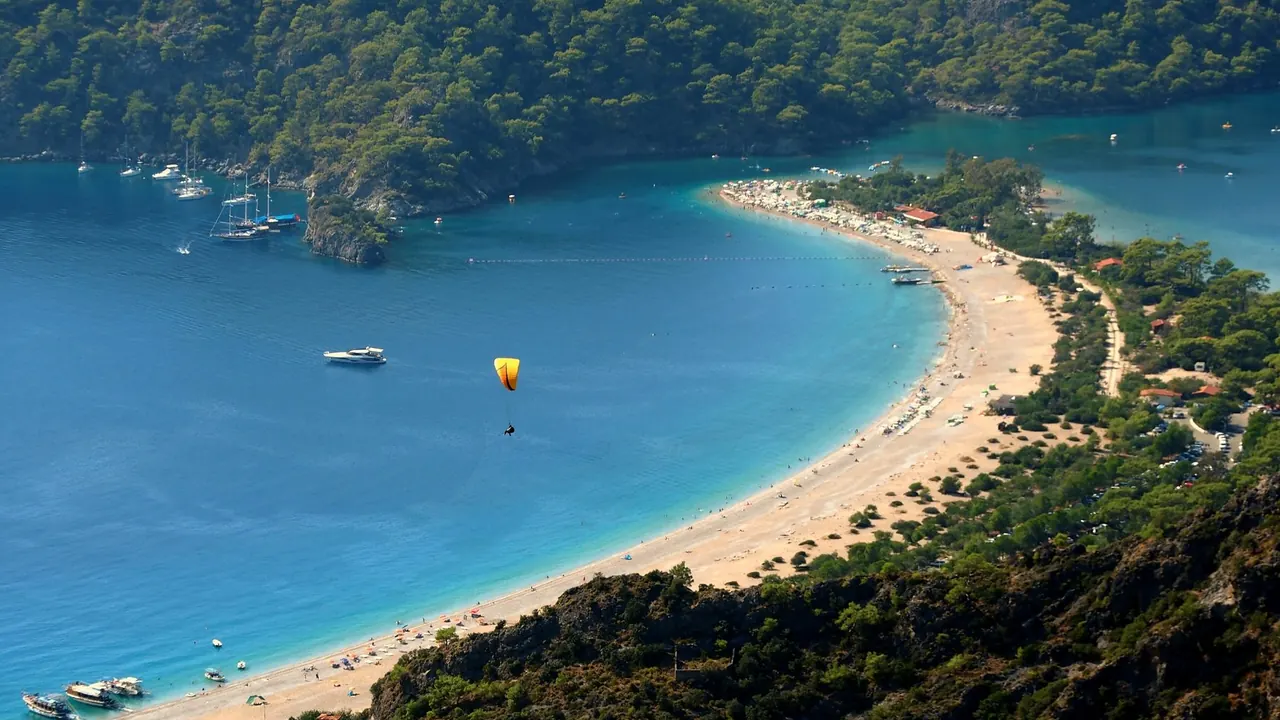
Fethiye suits a summer trip built around water and the outdoors. The Oludeniz lagoon and the coves along the coast, the paragliding off Babadag and the cliff paths of the Lycian Way give you a full week, and in the evenings there are fish suppers by the harbour and drinks in Paspatur. Families with small swimmers, walkers and anyone who wants a resort night out will all find more here.
Choose Goreme for
- culture and sights
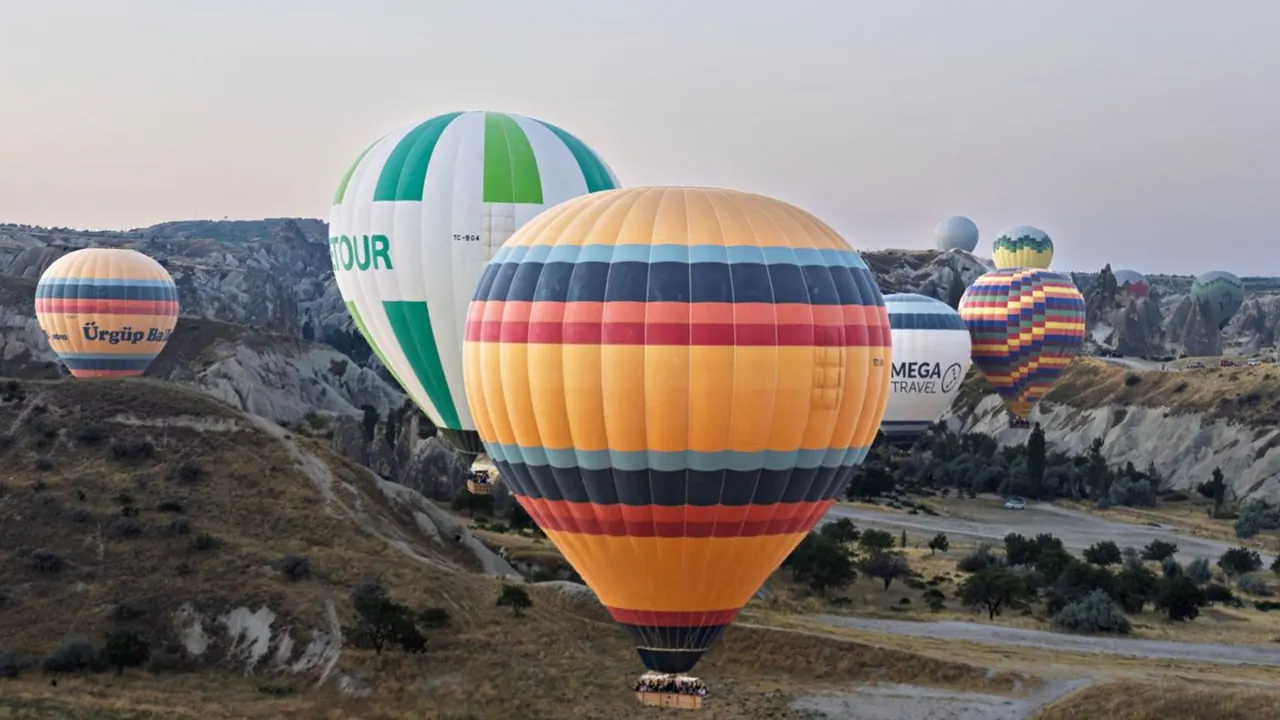
Goreme is for a shorter, more focused trip into one extraordinary landscape. You sleep in a cave room, walk valleys of fairy chimneys, see the frescoed churches of the Open Air Museum and watch balloons rise at dawn. Choose it for rock-cut Byzantine heritage and quiet evenings. Don't expect sea, varied food or anything to do late at night.
Scoreboard
Twelve categories on one fixed scale from 0 to 100. The shaded stretch is the gap between the two.
Your match
Pick a travel style or drag the sliders, and both match scores follow your weighting.
Wins on beaches and nightlife with your weighting.
Wins on culture and sights with your weighting.
What matters to you?
Category by category
What the scores mean for a trip.
Beaches & swimming
This is the starkest difference between the two. Fethiye is a beach destination first. It has the pine-backed lagoon at Oludeniz, the boat-only cove at Butterfly Valley, the sand at Kidrak and the quieter shingle at Kabak, along with Calis on the town's own bay.
Goreme is landlocked on the Anatolian plateau, and the river at Avanos is not for swimming. Anyone who wants both usually splits the trip, a few days among the rock formations and then the rest on the coast.
Food & drink
Neither place is a food destination, but Fethiye gives you more to work with. You choose fish at the town market and have it cooked with meze around the square, the canal-side market sells olives, honey and gozleme, and plain lokantas serve the locals. The resort strips are much weaker.
Goreme is a small village with menus written for visitors, so the choice is narrower still. Its pleasures are regional ones: testi kebab cracked open at the table, manti, and wine from Cappadocia's volcanic soils.
Culture & sights
Goreme has the deeper heritage on its doorstep. The Open Air Museum is a whole monastic valley of rock-cut churches, and the Dark Church and Tokali Church keep frescoes of real quality. More chapels are tucked into the surrounding valleys and the village itself is carved from the tuff.
Fethiye's sights are dramatic but few: the temple-fronted Lycian tombs in the cliff above the town, a Roman theatre by the harbour, sarcophagi in the streets and the ghost village of Kayakoy over the ridge. Rebuilt after the 1957 earthquake, the rest of the town is modern.
Nightlife
Fethiye has a real night out in summer. You can choose relaxed cocktails and meyhane tables in the lit lanes of Paspatur, or loud bars, karaoke and clubs on the Hisaronu strip until the early hours.
In Goreme, a glass of local wine on a terrace overlooking the floodlit rocks is about as late as it gets. Everyone is in bed early for the pre-dawn balloon launches.
Nature & outdoors
Both are outstanding, but Fethiye offers more variety. Mountains, sea and gorge all lie within reach: tandem paragliding from Babadag down to the lagoon, the Lycian Way's cliff paths past Faralya and Kabak, wading up Saklikent Gorge, and kayaking or diving in clear water.
Goreme has a single landscape, but a unique one. Rose, Red, Love and Pigeon valleys begin at the edge of the village, among pink and pale tuff pinnacles, and the dawn balloon flight over them is Cappadocia's signature experience. Without coast or forest, the outdoor options are narrower.
Day trips
Both towns make excellent bases, Fethiye slightly more so, and the outings differ in kind. From Fethiye the trips go to Lycian ruins at Tlos, Pinara, Xanthos and Patara, by boat to the tombs at Dalyan, along the coast to Kas and Kalkan, and in season across to Rhodes's medieval Old Town if you have your passport.
From Goreme the circuit is closer and more alike. You can visit the underground cities of Kaymakli and Derinkuyu, the citadel at Uchisar, the cave villages of Zelve, potters in Avanos and the Greek mansions of Mustafapasa. Kayseri's Seljuk mosques and bazaar make the main change of scene.
Good for families
Fethiye is easier with young children. The shallow, sheltered lagoon at Oludeniz is close to ideal for small swimmers, the hotels are built around pools, and boat trips with swimming stops keep a week going. Avoid the heat of July and August.
Goreme is better suited to older children than to toddlers. Sleeping in a cave, crawling through an underground city and riding horses through the valleys are memorable, but the paths have unfenced drops, buggies struggle on the lanes and balloon flights have minimum ages.
Getting around
Fethiye is the easier of the two to get around without a car. Shared dolmus minibuses run regularly from town to Oludeniz, Hisaronu, Ovacik, Kayakoy and Calis, water taxis cross the bay to Calis, and intercity buses reach Dalyan, Kas and Kalkan. Only inland sites such as Tlos, Pinara and Saklikent Gorge really need a hire car or a tour.
Goreme is tiny, and you can walk from the centre to the Open Air Museum and the valley trailheads, but public transport beyond the village is thin. Local buses to Uchisar, Avanos and Urgup are slow and sparse, so many visitors hire a scooter or bicycle to get between these nearby villages. For the underground cities, and for the Ihlara gorge more than an hour's drive away, you will realistically need an organised tour, a taxi or a hired car.
Shopping & style
Peshtemal towels, honey and spices are Fethiye's best buys, from the long covered weekly market by the canal. The lanes of Paspatur add carpets, leather, ceramics and lamps to browse, though there are no fashion streets.
Goreme comes down to two crafts beyond the souvenirs on its main street: carpets and kilims from the large showrooms, and red-clay pottery from Avanos, where you can watch it being thrown. Buy one good piece, but not much else.
Affordability
Overall costs are much the same, and in both places the bill depends on choices more than on the destination. In Fethiye, staying in town and eating at lokantas is cheap, while lagoon-side hotels, sunbeds and extras like paragliding and diving push costs up.
In Goreme, a basic stay is cheap: hostels in old cave houses, gozleme stalls and walking the valleys. The boutique cave hotels and the dawn balloon flight are what make a stay expensive.
Live music & performing arts
Neither has a performing arts season, and the little there is differs in kind. In Fethiye you get informal music, a saz player in a meyhane or a cover band in Hisaronu. Goreme offers staged shows for visitors, including the whirling dervishes' Sema ceremony in a caravanserai near Avanos, which is the more memorable evening of the two.
Wellness & relaxation
Fethiye is the better place to slow down. A historic Ottoman hammam in Paspatur offers the full ritual, and the yoga retreats on the terraced slopes above Kabak and Faralya are quiet, with the sea below. Stay away from the resort strips in high summer.
Goreme's evenings are calm and its terrace breakfasts are unhurried, but the pre-dawn balloon starts and packed tour days make it hard to rest. Its hammams and cave-hotel spas are small, and for real thermal water you have to drive elsewhere in the province.
When should you go?
Pick your month. The climate figures are measured averages, not a forecast.
Fethiye in July
Goreme in July
Daytime high, °C
Rainfall in the month, mm
Where the figures come from
Fethiye's temperatures are measured 31 km from the centre, at Dalaman.
Fethiye has no rain gauge within 25 km of the centre, so its rainfall comes from a gridded climate dataset read at the city rather than from a gauge further away.
Goreme's station stands 160 m above the city centre, so the centre is likely a little warmer than the figures say.
Temperature and rainfall are climate normals, averaged over the years shown. Fethiye: 2000-2020 (rainfall 1991-2020) normals, Dalaman (30.8 km from centre). Goreme: 1991-2020 normals, Nevsehir (10.2 km from centre).
Fethiye's beach season runs from late May into October, when the sea is warm enough for easy swimming and reaches about 27°C in August. July and August are very hot, around 32°C by day, so ruins and walks are best left to the early morning. May, June, September and October give the best balance of warm water and comfortable sightseeing. Winter is mild but wet, with heavy rain from November to February.
Goreme has a harsher upland climate. January highs are only about 5°C, and snow can dust the rocks. Rain is moderate from December through June and heaviest in late spring, at around 59mm in May. The plateau then dries out from July to September, when days are hot and very sunny and the valleys have no shade by late morning. Spring and autumn are the times for long valley walks, though a spring visit may bring showers. Spring and autumn suit both places, but only Fethiye works for the beach, and only from late May to October.
Which traveller are you?
For a beach and sun trip, Fethiye is the obvious choice. It has the shallow turquoise lagoon at Oludeniz, cove-hopping boat cruises and a sea that stays warm into October. Goreme sits on a dry inland plateau, a long day's drive from any coast, and the best it can offer swimmers is a hotel pool.
On a culture and arts trip, Goreme has the edge. Its Open Air Museum keeps some of the finest Byzantine frescoes in Turkey, and underground cities and cave villages lie close by. Fethiye's rock tombs and Kayakoy are striking but few, so they fill only a day.
For a food and nightlife trip, Fethiye wins easily. You choose your own fish at the market and drink raki with meze on the harbour, then pick between Paspatur's rooftop bars and the late strip at Hisaronu. Goreme's menus repeat after a couple of nights, and the village is quiet soon after dinner.
Before you go
| Measure | Fethiye | Goreme |
|---|---|---|
| Official language | Turkish | Turkish |
| Currency | Turkish Lira (TRY) | Turkish Lira (TRY) |
| Sockets | CF230 V, 50 Hz | CF230 V, 50 Hz |
| Driving side | Right | Right |
| Time zone | UTC+3 | UTC+3 |
| Emergency number | 112 | 112 |
| Elevation | 0 m | 1,100 m |
| Main airport | Dalaman International Airport (DLM)30 km from centre61 non-stop destinations | Kayseri Erkilet International Airport (ASR)60 km from centre22 non-stop destinations |
| Public holidays this year | 14 days | 14 days |
By the numbers
| Measure | Fethiye | Goreme |
|---|---|---|
| City population | 182,200 | 2,000 |
| People per km² | - | 20 |
| Museums within 10 km | 1 | 5 |
| UNESCO World Heritage sites within 50 km | 1 | 1 |
| Swim season, months above 21 °C | 6 months | - |
Where else could you go?
Every comparison below shares a destination with this one, so you can follow Fethiye or Goreme somewhere new.