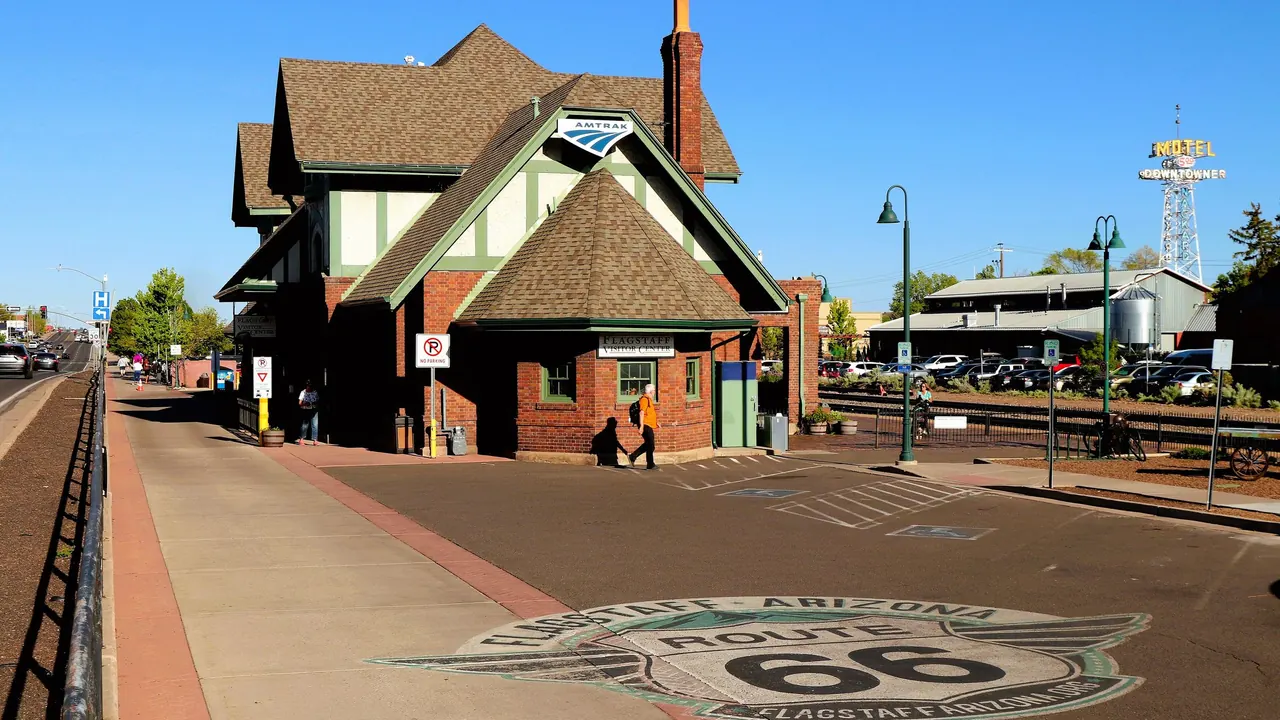
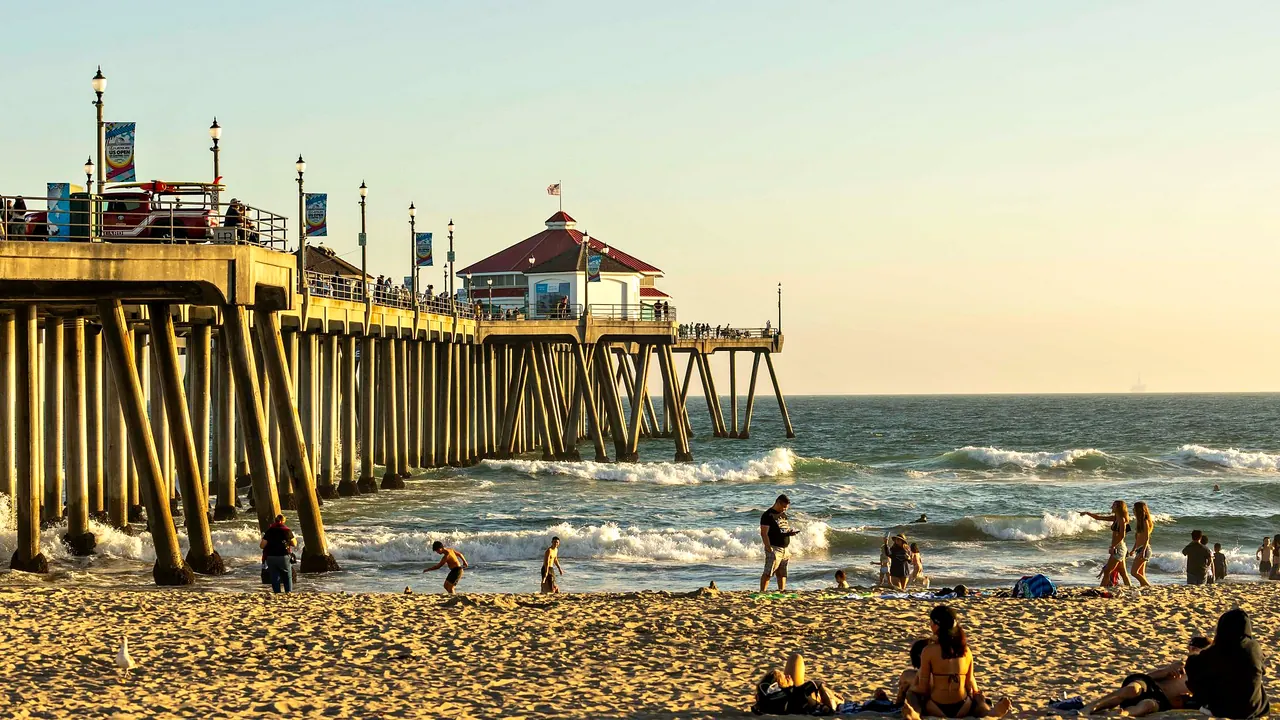
Photos: Flagstaff by Thank You (25 Millions) views, CC BY 2.0, cropped; Huntington Beach by Stephen Leonardi, Pexels License.
Flagstaff or Huntington Beach?
Our verdict in twelve categories, each scored against the same fixed benchmark cities, and the climate month by month, so you can choose for your trip.
Choose Flagstaff for
- nature and the outdoors
- culture and sights
- prices
Flagstaff suits travellers who come for the land rather than the town: hikers, stargazers and anyone using it as a base for the Grand Canyon, Sedona and the volcanic country to the north. Its few sights are distinctive, from the Lowell Observatory to the Museum of Northern Arizona, and it is the cheaper place to sleep, though you will be driving most days.
Choose Huntington Beach for
- beaches
- families
- shopping
Families and beach lovers are better off in Huntington Beach. Its long, wide sand and steady surf, with Disneyland and Knott's Berry Farm about half an hour away, make easy days with children, and Los Angeles, Laguna and Catalina add more outings. Expect higher bills, a cool ocean for much of the year and very little history to see.
Scoreboard
Twelve categories on one fixed scale from 0 to 100. The shaded stretch is the gap between the two.
Your match
Pick a travel style or drag the sliders, and both match scores follow your weighting.
Wins on nature and the outdoors and culture and sights with your weighting.
Wins on beaches and families with your weighting.
What matters to you?
Category by category
What the scores mean for a trip.
Beaches & swimming
There is no real contest here. Flagstaff stands on a forested plateau at about 2,100m, far from any coast. Its swimming comes down to the cold, slippery creek pools of Slide Rock and Oak Creek Canyon, or a hotel pool.
Huntington Beach is built around roughly 14km of wide, flat sand, with volleyball nets, fire rings and surfers in the water from dawn. The Pacific is cool outside late summer and rip currents mean swimming near the lifeguard towers, but for a beach trip it is the clear choice.
Food & drink
Neither town is a dining destination, but Huntington Beach gives you more choice. Its own food is casual, with fish tacos by the pier and brewpubs along the coast highway. Little Saigon is a short drive inland and worth a dedicated trip for pho and banh mi, and Newport and Costa Mesa cover finer dining.
Flagstaff's strength is beer, from craft breweries clustered downtown and in the Southside, along with New Mexican cooking and Navajo frybread. Beyond that it is diners and coffee houses suited to hungry hikers.
Culture & sights
Flagstaff has the better short list. The Lowell Observatory, where Pluto was discovered in 1930, the Hopi, Navajo and Zuni collections at the Museum of Northern Arizona and the brick railroad-era downtown on Route 66 fill a day or two. Ancient pueblo sites lie close by.
In Huntington Beach the sights are all about surfing: the pier, the International Surfing Museum and the handprints of the Surfers' Hall of Fame. The rest is postwar suburb, so for museums you drive to Los Angeles.
Nightlife
In both towns a night out covers a few small-town blocks, but Huntington Beach is livelier. The sports bars, rooftop beach bars and handful of dance spots on Main Street get loud with a young local crowd on summer weekends, though weeknights are quiet.
Evenings in Flagstaff are slower. They centre on brewery taprooms, cocktail bars and old Route 66 saloons downtown and in the Southside, with students adding life in term time but almost no clubs. Most visitors are up early for the canyon anyway.
Nature & outdoors
This is where Flagstaff pulls well ahead. It sits below the volcanic San Francisco Peaks, with alpine trails, a ski area and one of the world's largest ponderosa pine forests on the doorstep. Sunset Crater, the red rock around Sedona and the South Rim of the Grand Canyon are all an easy drive away, and the dark skies are ideal for stargazing.
In Huntington Beach the outdoors means the ocean: steady surf, paddling in the harbour channels and birding in the Bolsa Chica wetland. For hills you drive half an hour to Crystal Cove or Laguna.
Day trips
Huntington Beach has the bigger names within reach. Los Angeles is about an hour away, and the arts town of Laguna Beach, Mission San Juan Capistrano and the ferry to Catalina Island are all close. San Diego works on a longer day.
Flagstaff's outings are smaller but more varied: the hillside copper town of Jerome, the cliff dwellings at Montezuma Castle, the Sinagua ruins at Walnut Canyon and Wupatki, the railway from Williams to the Grand Canyon and the Hopi mesas. Both need a car, and the drives from Flagstaff are longer.
Good for families
Huntington Beach is the stronger family base. Disneyland, California Adventure and Knott's Berry Farm are around half an hour away, and the Aquarium of the Pacific makes an easy morning. The sand, the pelicans at Bolsa Chica and the playgrounds of Central Park fill the gaps, though the waves suit boogie boarding better than toddlers.
Flagstaff works well for curious children, with telescope evenings at Lowell, dinosaur displays at the museum and sledding on the mountain in winter. The altitude, cold nights and long drives make it harder going with very young ones.
Getting around
Both are car country, but Flagstaff is a little easier without one. Its downtown and Southside are compact, a paved urban trail network makes cycling practical, local buses run along the main roads and long-distance trains stop downtown. The catch is that the mountain, the monuments and the Grand Canyon are beyond any useful public transport.
In Huntington Beach, only the pier, Main Street and the beachfront bike path are easy on foot or by bike. There is no rail in town and the buses are slow. Every bigger outing means busy freeways, and beach parking fills up on summer weekends.
Shopping & style
Huntington Beach has more to buy. Surf shops, board makers and swimwear line Main Street, and South Coast Plaza in Costa Mesa, about twenty minutes away, has the major fashion houses under one roof.
Flagstaff's shopping is small, but it has something the coast lacks: Native American craft. Navajo rugs, Hopi kachina carvings and silver and turquoise jewellery are sold in downtown galleries, the museum shop and trading posts. Buying from established dealers or directly from the artists is the safest way to get authentic work.
Affordability
Flagstaff is the cheaper of the two, though neither is cheap. Chain motels along Route 66 keep a basic stay affordable outside summer weekends and school breaks, and brewery meals are reasonable. You will still pay for a hire car, fuel and park entry fees.
In Huntington Beach, beachfront hotels charge high rates, sit-down meals add up quickly and parking is another cost. The free beach, the motels on the inland boulevards and the modest Vietnamese and Mexican places around the county all help.
Live music & performing arts
Flagstaff keeps its modest stage life in town, while Huntington Beach's serious programme sits a short drive away in Costa Mesa. In Flagstaff you can walk to an evening out: the Flagstaff Symphony and the university music school play the campus concert hall, the restored Orpheum Theater downtown brings touring folk and indie acts, and summer adds outdoor concerts in the pines.
On the coast, the town itself offers little beyond cover bands in the Main Street bars and a small community theatre. Drive to Costa Mesa, though, and the Segerstrom Center has the Pacific Symphony, touring Broadway productions, ballet and opera, and South Coast Repertory runs a respected theatre season. That makes it the better choice if you want a big night at the theatre.
Wellness & relaxation
Neither town has hot springs or a bathing tradition, so the difference is in the kind of rest. Flagstaff gives you mountain stillness: early nights, crisp air under the pines and a sky thick with stars, though the altitude can unsettle sleep at first. It has few places offering treatments, so anyone wanting proper pampering drives an hour down to Sedona.
Huntington Beach is for switching off by the sea, with a morning stretch on the sand and an idle evening beside a bonfire. Massages and facials are also closer to hand, in the resort hotels on the coast highway and the day spas in the shopping centres, though none of it adds up to a real retreat.
When should you go?
Pick your month. The climate figures are measured averages, not a forecast.
Flagstaff in July
Huntington Beach in July
Daytime high, °C
Rainfall in the month, mm
Where the figures come from
Flagstaff has no rain gauge within 25 km of the centre, so its rainfall comes from a gridded climate dataset read at the city rather than from a gauge further away.
Temperature and rainfall are climate normals, averaged over the years shown. Flagstaff: 1991-2020 normals, Flagstaff / Fort Tuthill (7.4 km from centre). Huntington Beach: 1991-2020 normals, Santa Ana / Paularino (12.3 km from centre).
Flagstaff is a mountain town with real seasons. Winters are cold and snowy, with January highs around 5°C, which is better for skiing and snow play than for sightseeing. Late spring is dry and mild, and June is warm and almost rainless. July and August reach about 27°C but bring afternoon thunderstorms, with August the wettest month at 64mm. September and early October are the most comfortable for long walks and hikes, once the storms ease and the aspens turn.
Huntington Beach stays mild all year and is pleasant for walking in any month. Its rain falls in winter, mostly from December to February, and summers are almost completely dry. The sea limits swimming. It warms to about 21°C in August and September, the best beach months, but stays near 15°C from winter through spring, which is cold for more than a quick dip. Early summer can start grey, so late summer and early autumn are the safest time for the coast.
Which traveller are you?
For a beach and sun trip, Huntington Beach is the only real choice. It has kilometres of wide sand, surf watched by lifeguards and fire rings for evening bonfires. Flagstaff sits high in the pines, hours from any coast, with only cold creek pools nearby.
On an outdoors trip, Flagstaff is far ahead. The San Francisco Peaks, a huge ponderosa forest, the lava flows at Sunset Crater and the South Rim of the Grand Canyon are all close. Huntington Beach has surf breaks, wetland birding and mostly flat suburbs.
On a family trip with children, Huntington Beach is the easier base. Disneyland, Knott's Berry Farm and the Long Beach aquarium are near, the beach fills the other days, and there is no altitude to tire small children when they arrive.
Before you go
| Measure | Flagstaff | Huntington Beach |
|---|---|---|
| Currency | US Dollar (USD) | US Dollar (USD) |
| Sockets | AB120 V, 60 Hz | AB120 V, 60 Hz |
| Driving side | Right | Right |
| Time zone | UTC-7 | UTC-8, UTC-7 in summer |
| Emergency number | 911 | 911 |
| Elevation | 2,106 m | 12 m |
| Main airport | Flagstaff Pulliam Airport (FLG)7 km from centre2 non-stop destinations | John Wayne Orange County International Airport (SNA)12 km from centre53 non-stop destinations |
| Public holidays this year | 12 days | 13 days |
By the numbers
| Measure | Flagstaff | Huntington Beach |
|---|---|---|
| City population | 76,831 | 198,711 |
| People per km² | 464 | 2,406 |
| Museums within 10 km | 1 | 3 |
| UNESCO World Heritage sites within 50 km | 0 | 0 |
| Swim season, months above 21 °C | - | None |
Where else could you go?
Every comparison below shares a destination with this one, so you can follow Flagstaff or Huntington Beach somewhere new.