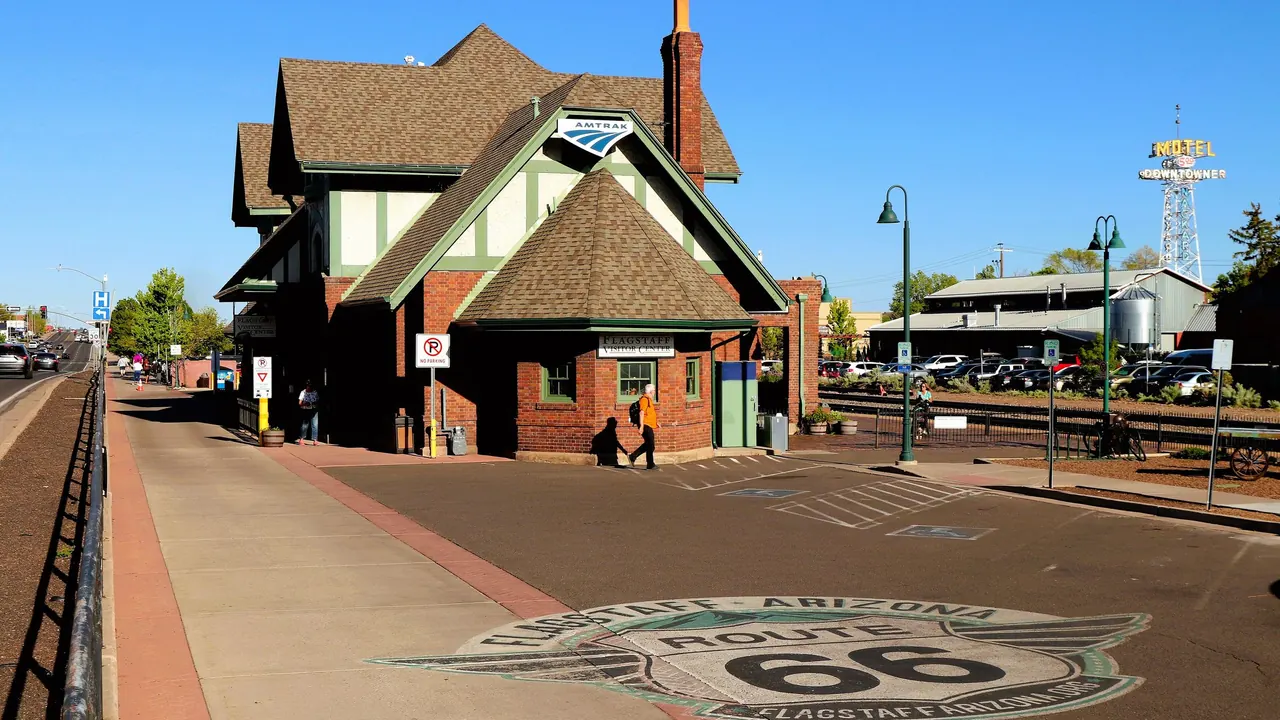
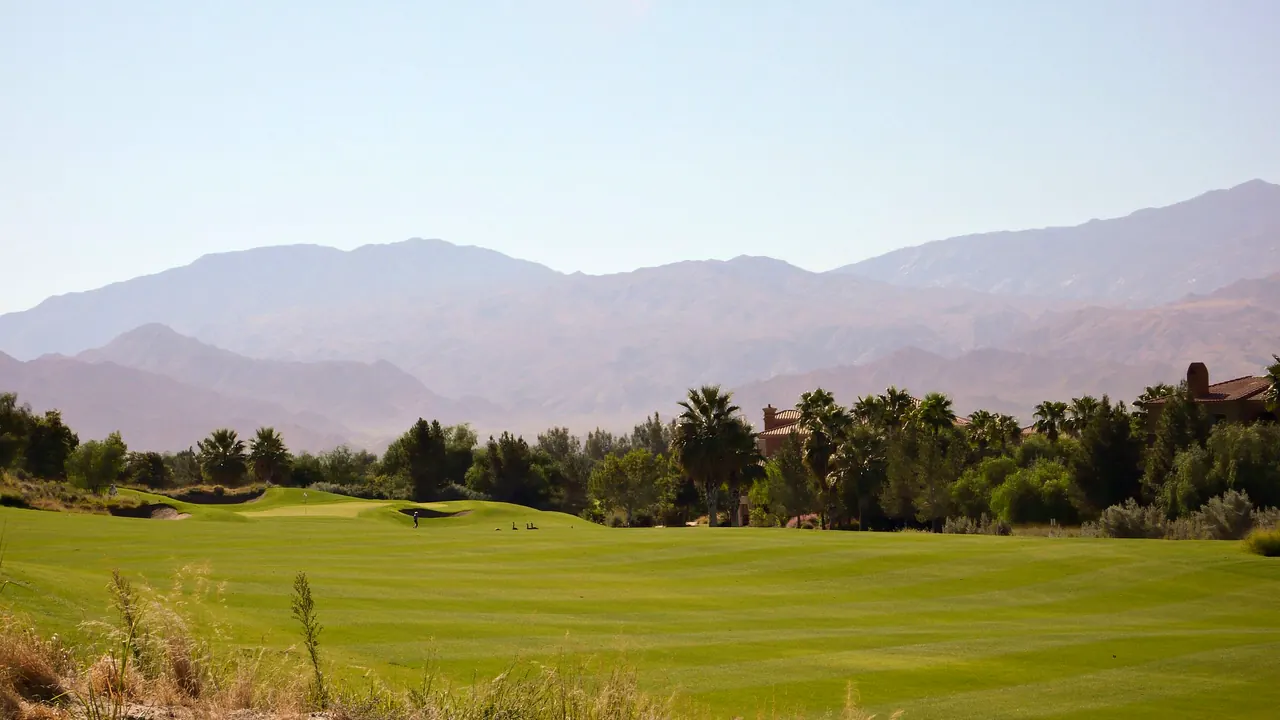
Photos: Flagstaff by Thank You (25 Millions) views, CC BY 2.0, cropped; Palm Desert by David Balmer, CC BY 3.0, cropped.
Flagstaff or Palm Desert?
Our verdict in twelve categories, each scored against the same fixed benchmark cities, and the climate month by month, so you can choose for your trip.
Choose Flagstaff for
- nature and the outdoors
- getting around
- culture and sights
Choose Flagstaff if the trip is about getting outdoors. The San Francisco Peaks, a vast pine forest, Sedona's red rock and the South Rim of the Grand Canyon are all within reach, and the town adds the Lowell Observatory, the Museum of Northern Arizona and brewery evenings downtown. It suits active travellers, families with curious children and anyone touring the Southwest by car, and it is at its best from late spring to autumn.
Choose Palm Desert for
- wellness
- shopping
- live music and the arts
Palm Desert is the better pick for a slow, warm winter escape. Resort spas, pools under the palms, the mineral springs of Desert Hot Springs and the boutiques of El Paseo set the pace, and the McCallum Theatre is there for an evening out. It suits couples and older travellers who care more about sun and comfort than sightseeing, and it shines between autumn and spring, while Flagstaff is under snow.
Scoreboard
Twelve categories on one fixed scale from 0 to 100. The shaded stretch is the gap between the two.
Your match
Pick a travel style or drag the sliders, and both match scores follow your weighting.
Too close to call, 1 point apart
Wins on nature and the outdoors and getting around with your weighting.
Wins on wellness and shopping with your weighting.
What matters to you?
Category by category
What the scores mean for a trip.
Beaches & swimming
Neither town has a beach, and both are hours from the coast. Where they differ is in what replaces it. In Flagstaff, swimming means the cold creek pools of Oak Creek Canyon, such as Slide Rock, which are crowded on summer weekends, or else a hotel pool.
In Palm Desert the pool is the whole point. Nearly every resort has one, often heated in winter, and lazy days beside it are a large part of a stay. The Pacific is about two hours away over the mountains, so reaching it takes a full day out.
Food & drink
Neither town is worth travelling to for the food, and they differ mostly in style. Flagstaff's strength is beer. Craft breweries with patios fill the downtown and the Southside, alongside diners, Mexican cooking and regional touches such as Navajo frybread and green chile.
Palm Desert eats more formally, at steakhouses and Californian bistros on El Paseo and in the resorts, which are polished but much alike. Its local flavour comes from the date groves and taquerias of Indio and Coachella, and a date shake is the one thing you will not find in Flagstaff.
Culture & sights
Flagstaff has more to see, though neither town will fill a week. It has two real draws: the Lowell Observatory, where Pluto was found in 1930, and the Hopi, Navajo and Zuni collections at the Museum of Northern Arizona. The railroad-era downtown on Route 66 and the ancient pueblo sites nearby add history.
Palm Desert is a post-war resort town. It has a branch of the Palm Springs Art Museum with a sculpture garden, plus the galleries along El Paseo. Most of the valley's cultural interest, especially its mid-century modern architecture, lies in Palm Springs, a short drive west.
Nightlife
Both are early-to-bed places, but Flagstaff has a little more life after dark. Its taprooms, cocktail bars and old Route 66 saloons are a short walk apart downtown and in the Southside, and university students make term-time weekends busier than you might expect.
In Palm Desert, evenings mean wine bars and patio happy hours around El Paseo, with an older crowd and early closing. For a later night you drive to the tribal casinos or to Palm Springs, which has the valley's best bars and a well-known gay scene.
Nature & outdoors
Both are good bases for the outdoors, but Flagstaff is exceptional. Volcanic peaks, aspen groves, a huge ponderosa forest and the Arizona Trail begin at the edge of town. The Grand Canyon, Sedona's red rock and Sunset Crater are within easy reach, and the night skies are among the darkest anywhere.
Palm Desert has its own drama, with the Santa Rosa Mountains rising behind the town, palm oases in the Indian Canyons and the boulders of Joshua Tree an hour away. The real difference is the season. The desert is for October to May, while Flagstaff's high country is best in summer and adds skiing in winter.
Day trips
Flagstaff's outings have more depth and mix landscape with history. There is Sedona, the hillside mining town of Jerome, the cliff dwellings of Montezuma Castle, the Sinagua ruins at Walnut Canyon and Wupatki, the railway from Williams to the Grand Canyon and, further east, the Hopi mesas.
Palm Desert's trips are lighter in tone. You can see the mid-century neighbourhoods of Palm Springs, taste wine in Temecula, cool off in the mountain village of Idyllwild, walk the film-set street of Pioneertown or visit the painted folk art of Salvation Mountain. From either town you need a car, and the distances add up.
Good for families
Flagstaff gives children more variety. There are telescope evenings at the Lowell Observatory, dinosaurs at the Museum of Northern Arizona, rope courses in the pines in summer, sledding in winter and a steam-era train to the Grand Canyon. The altitude and cold nights take a day or two to get used to.
Palm Desert has one excellent outing in the Living Desert, a zoo and botanical garden with giraffes and cheetahs, and resort pools with slides fill the time in between. Apart from the tramway in Palm Springs, though, the valley is built for golf and adults, and in summer the heat rules out the middle of the day.
Getting around
You need a car in both, but Flagstaff is easier on foot. Its downtown and Southside are compact and walkable, a paved trail network makes cycling practical and long-distance trains stop at the downtown station. The parks and monuments are out of reach of the buses, though, and winter snow can make the mountain roads hard going.
Palm Desert is spread out along wide boulevards, El Paseo is the only part made for strolling and the buses are too slow to rely on. On the plus side, the roads are uncongested, parking is easy and ride-hailing covers evenings out.
Shopping & style
Palm Desert is the shopping town of the two. Browsing El Paseo, a palm-lined boulevard of upscale boutiques, jewellers and galleries, is an outing in itself. A large designer outlet centre is half an hour away, and Palm Springs adds vintage and mid-century furniture.
Flagstaff's shops are small and practical, selling outdoor gear, books and Route 66 souvenirs. What sets it apart is Native American craft: Navajo rugs, Hopi kachina carvings and turquoise jewellery, best bought from established dealers or from the artists themselves.
Affordability
Neither is cheap for international visitors, but Flagstaff is easier on the budget. Chain motels along Route 66 keep a basic stay modest. Rooms do climb on summer weekends, when the town fills up as a base for the Grand Canyon, and park fees and a hire car add up.
Palm Desert's resorts are expensive in the winter and spring season, and golf and spa treatments stretch any budget. The catch is that its cheap months, June to September, are exactly when the heat makes the town hard to enjoy.
Live music & performing arts
Palm Desert has the better stage. Through the winter the McCallum Theatre brings touring Broadway shows, ballet, orchestras and well-known singers. The casinos and an arena add big-name concerts, and in spring the Coachella and Stagecoach festivals take over the polo grounds at Indio.
Flagstaff's calendar is smaller and more local. It has the symphony and university musicians on campus, touring folk and indie bands at the restored Orpheum Theater, community theatre and summer concerts in the pines. These make a pleasant evening but not a reason to go.
Wellness & relaxation
This is where Palm Desert pulls clearly ahead. The town is built around resort spas, pools under the palms and an unhurried winter pace. Half an hour north, Desert Hot Springs has small spa hotels whose pools are filled straight from natural mineral springs.
Flagstaff has no hot springs and only a few day spas. Its calm comes from cool evenings, pine-scented air and bright stars, and visitors who want treatments drive an hour down to Sedona. The altitude can also disturb sleep for the first night or two.
When should you go?
Pick your month. The climate figures are measured averages, not a forecast.
Flagstaff in July
Palm Desert in July
Daytime high, °C
Rainfall in the month, mm
Where the figures come from
Flagstaff has no rain gauge within 25 km of the centre, so its rainfall comes from a gridded climate dataset read at the city rather than from a gauge further away.
Palm Desert has no rain gauge within 25 km of the centre, so its rainfall comes from a gridded climate dataset read at the city rather than from a gauge further away.
Temperature and rainfall are climate normals, averaged over the years shown. Flagstaff: 1991-2020 normals, Flagstaff / Fort Tuthill (7.4 km from centre). Palm Desert: 2006-2020 (rainfall 1991-2020) normals, Palm Springs (17.2 km from centre).
Through the year the two are close to opposites. Flagstaff sits high on its plateau and is cold from November to March, with January highs of around 5°C and snow on the ground. That suits the ski slopes but not long walks. Spring is dry and mild, and June is warm and the driest month. In July and August the monsoon brings afternoon storms, with about 64mm of rain in August, while highs stay near 27°C. September and October are clear and cool, which makes them the best months for hiking.
Palm Desert is dry all year and at its best from November to April. Highs of around 21°C make walking and golf comfortable then, and a heated pool is pleasant even in January. From May the heat builds quickly, and by July and August highs reach 42°C, too hot for anything outdoors except early in the morning. In short, go to Flagstaff in summer and early autumn, and to Palm Desert in winter and spring.
Which traveller are you?
On an outdoors trip, Flagstaff is the stronger base. Trails start in town, the San Francisco Peaks and Sunset Crater are close, and Sedona, Meteor Crater and the Grand Canyon make easy day outings. Palm Desert has good hiking too, but only outside summer.
For a relaxing and wellness trip, Palm Desert wins easily. It has resort spas, warm pools under the palms, and natural hot springs half an hour away in Desert Hot Springs. Flagstaff offers quiet pine air and starry nights but very few treatments.
On a shopping trip, Palm Desert has El Paseo's boutiques, jewellers and galleries, a nearby designer outlet centre and the vintage shops of Palm Springs. Flagstaff is worth it mainly for Navajo rugs, Hopi carvings and turquoise jewellery from its galleries and trading posts.
Before you go
| Measure | Flagstaff | Palm Desert |
|---|---|---|
| Currency | US Dollar (USD) | US Dollar (USD) |
| Sockets | AB120 V, 60 Hz | AB120 V, 60 Hz |
| Driving side | Right | Right |
| Time zone | UTC-7 | UTC-8, UTC-7 in summer |
| Emergency number | 911 | 911 |
| Elevation | 2,106 m | 67 m |
| Main airport | Flagstaff Pulliam Airport (FLG)7 km from centre2 non-stop destinations | Palm Springs International Airport (PSP)17 km from centre29 non-stop destinations |
| Public holidays this year | 12 days | 13 days |
By the numbers
| Measure | Flagstaff | Palm Desert |
|---|---|---|
| City population | 76,831 | 51,163 |
| People per km² | 464 | 731 |
| Museums within 10 km | 1 | 2 |
| UNESCO World Heritage sites within 50 km | 0 | 0 |
Where else could you go?
Every comparison below shares a destination with this one, so you can follow Flagstaff or Palm Desert somewhere new.