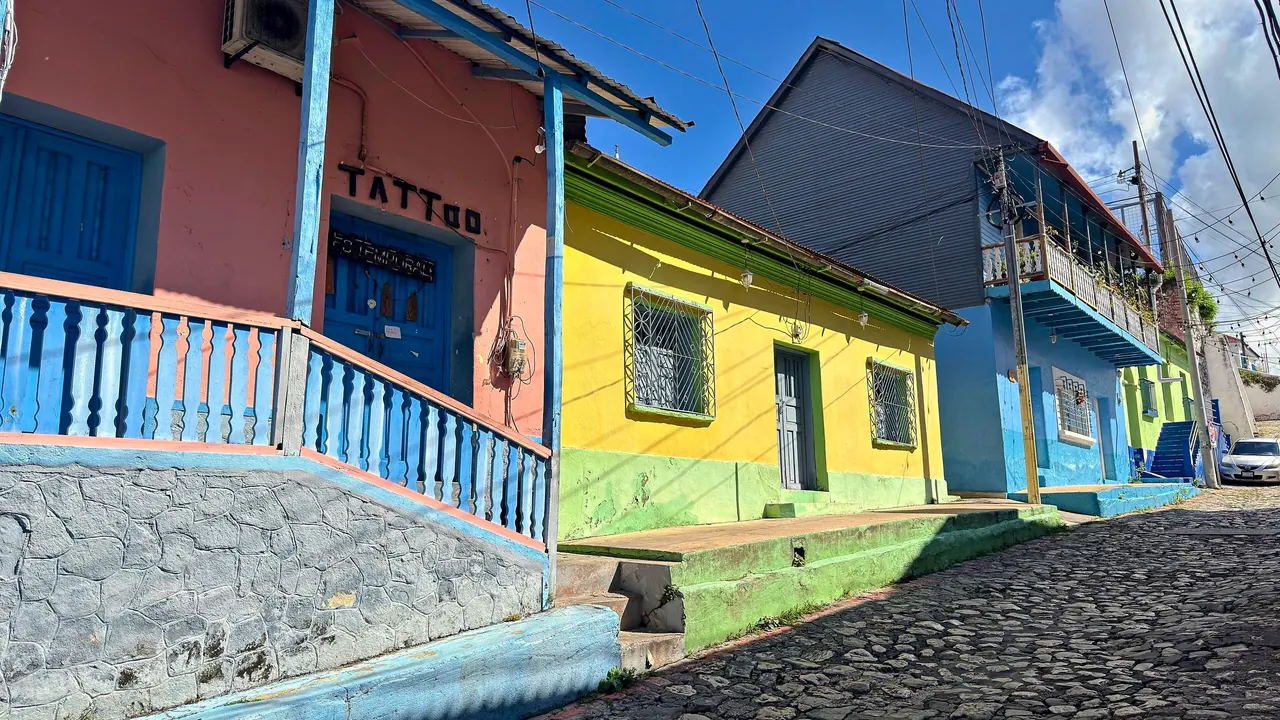
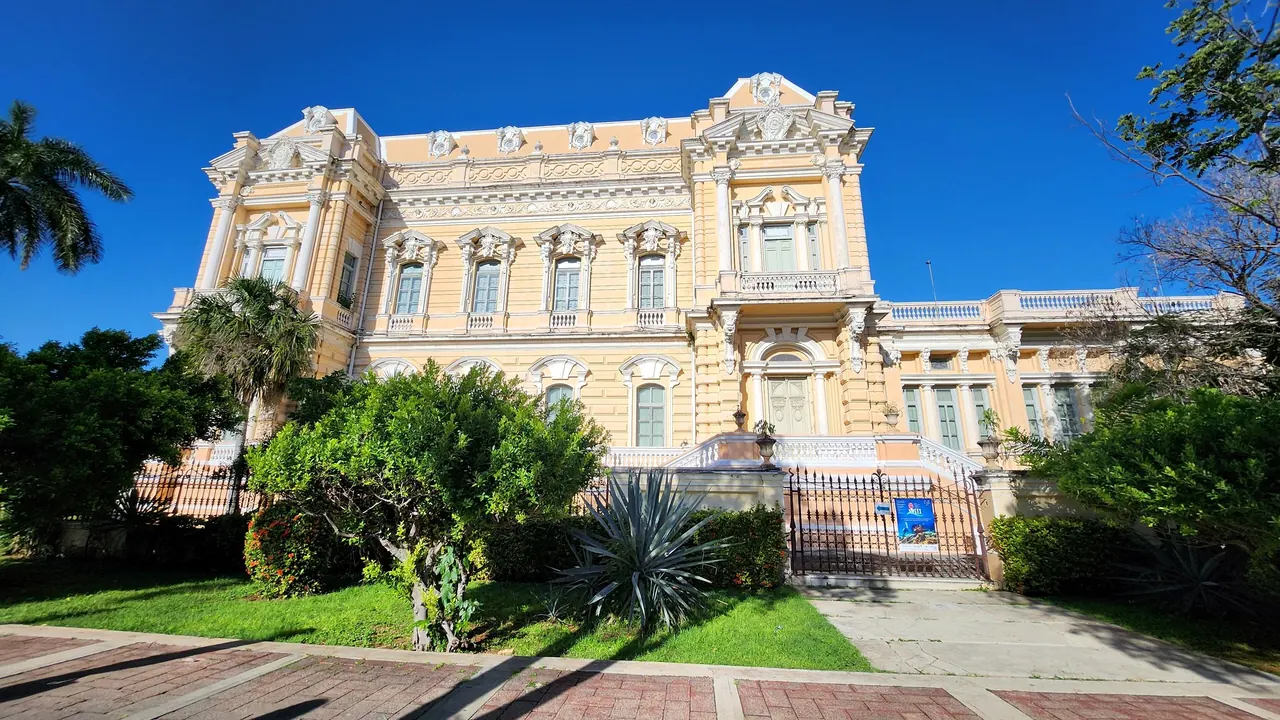
Photos: Flores, Guatemala by Bex Walton, CC BY 4.0, cropped; Merida by Mariposa2723, CC BY 4.0, cropped.
Flores, Guatemala or Merida?
Our verdict in twelve categories, each scored against the same fixed benchmark cities, and the climate month by month, so you can choose for your trip.
Choose Flores, Guatemala for
- nature and the outdoors
- prices
Flores is for travellers whose trip is really about the jungle and the ruins inside it. The island is small, cheap and sleepy. It works as a base for dawn starts to Tikal and Yaxhá, with howler monkeys and toucans on the way and a warm lake to jump into afterwards. Come for the forest rather than the town, and expect quiet evenings.
Choose Merida for
- live music and the arts
- culture and sights
- food and drink
Anyone who wants a proper city around the archaeology will do better in Merida. Its colonial centre, its own Yucatecan cuisine, free music and dance in the squares, and a craft tradition built on hammocks and Panama hats fill the hours between excursions. Uxmal, Chichen Itza and the cenotes are all within reach. It rewards a longer stay and travellers who like an evening out.
Scoreboard
Twelve categories on one fixed scale from 0 to 100. The shaded stretch is the gap between the two.
Your match
Pick a travel style or drag the sliders, and both match scores follow your weighting.
Wins on nature and the outdoors and prices with your weighting.
Wins on live music and the arts and culture and sights with your weighting.
What matters to you?
Category by category
What the scores mean for a trip.
Beaches & swimming
Neither is a beach destination, but Merida at least has the sea. Progreso, about 40 minutes away, has a wide sandy shore on a calm, shallow stretch of the Gulf. Inland, the cenotes offer clear freshwater swimming in limestone caverns, and many visitors remember them more than the coast.
Flores has almost no sand. Swimming means jumping off docks and rope swings into Lake Petén Itzá, ideally on the cleaner eastern shore around El Remate. It is a welcome cool-off after Tikal rather than a reason to come.
Food & drink
The gap here is wide. Merida is the home of Yucatecan cooking. Cochinita pibil is eaten for breakfast in the Lucas de Galvez and Santiago markets, sopa de lima and relleno negro are served in old townhouse dining rooms, and marquesita carts work the squares in the evening. Eating is one of the reasons to go.
Flores uses some of the same flavours in its achiote stews and tamales, and it has the lake's pescado blanco, but most menus on the island lean towards pasta and pizza for travellers. The more authentic meals are the set lunches across the causeway in Santa Elena.
Culture & sights
Merida is worth exploring in its own right. Its large colonial grid surrounds the cathedral of San Ildefonso and the Casa de Montejo. Add the murals of the Palacio de Gobierno, the mansions of Paseo de Montejo built in the henequen boom, and the Gran Museo del Mundo Maya, which is the best preparation for the ruins.
Flores is charming but small. Its painted lanes climb to a church and a plaza. Nojpetén, the last Maya capital to fall, in 1697, has left almost nothing to see. An hour covers the town, and in both places the great Maya cities lie outside.
Nightlife
Merida has a real evening life, if a relaxed one. The centre fills after dark with people heading to mezcal bars on Calle 60, rooftop terraces and cantinas that serve free botanas. A few late clubs open at weekends, helped along by a student crowd.
Flores goes quiet early. A sunset drink by the lake and the happy hours in the backpacker bars are about all there is. With the Tikal minibuses leaving before dawn, most people are in bed well before midnight.
Nature & outdoors
Flores has the wilder setting. It sits at the edge of Central America's largest tropical forest. A day at Tikal or Yaxhá brings howler and spider monkeys, toucans, coatis and crocodiles in the lagoon, and the lake itself is good for kayaking and paddleboarding.
The country around Merida is a flat, dry limestone plain, and its best nature is underground, in the cenotes around Cuzama and Homun. Above ground there are the flamingos of Celestun, seen by boat. It is rewarding but has less wildlife than the Petén forest. Neither place has mountains, and in both the heat makes early mornings the best time to be outdoors.
Day trips
Both are bases for the Maya world, but from Merida you can reach more of it and more variety. Uxmal and the Ruta Puuc sites, Chichen Itza with Valladolid, Dzibilchaltun and Mayapan are all day trips. The yellow town of Izamal and the restored haciendas make a break from the ruins.
Flores has the single greatest site in Tikal, little more than an hour away. It also has Yaxhá on its lagoon and the river trip to Ceibal. Apart from these and a trip over the border to San Ignacio and Xunantunich in Belize, almost every outing is another archaeological site.
Good for families
Merida is the easier choice with children. There is a free zoo and playground in the Parque del Centenario, the larger Animaya park, and evening squares with balloon sellers. The water is gentle at Progreso and in the cenotes, though the heat and uneven pavements are hard work.
Flores suits adventurous school-age children who will enjoy climbing temples, spotting monkeys at Tikal and jumping off the docks. The pre-dawn starts, steep island lanes and basic medical care make it much harder with toddlers.
Getting around
Getting about is simpler from Merida, where taxis, ride-hailing and intercity buses cover much of what Flores leaves to booked shuttles and tours. The island itself takes minutes to walk round, and tuk-tuks shuttle across the causeway to Santa Elena. Beyond that there is no public transport, so every trip to Tikal, Yaxhá or El Remate means arranging a shuttle or tour the evening before, or squeezing into a colectivo.
Merida's numbered grid makes the centre hard to get lost in on foot, and taxis or ride-hailing handle anything further out. Long-distance buses reach Chichen Itza, Valladolid and Progreso without any planning, and for the Puuc sites and haciendas a hire car on the flat roads is straightforward.
Shopping & style
Merida is a good place to buy crafts. Look for hammocks in every size, guayabera shirts, Panama hats from Becal and embroidered huipiles. You will find them in the chaotic Lucas de Galvez market or in galleries in the restored houses, and the malls in the north have everything else.
Flores has a few souvenir stalls selling highland textiles, masks and Tikal T-shirts, and little more. Anyone keen on Guatemalan weaving does better in the highlands.
Affordability
Both are cheap, and you save in the same places: market meals, simple guesthouses and short taxi or tuk-tuk rides. Where they differ is in what costs more. In Flores the big costs are the entry fees at Tikal and the guided sunrise tours, plus the lodges on the quieter lakeshore if you choose one.
In Merida the extra spending goes on a hire car for the outlying sites and on the boutique courtyard hotels, which cost more but are good for the money. The free evening performances and the snacks that come with drinks at the cantinas keep daily costs low.
Live music & performing arts
In Flores, music happens by chance: a guitarist or marimba playing over dinner, or dancing in the street if your dates happen to match a village saint's day. There is nothing to book and no venue to look up, so evenings here are built around the sunset instead.
Merida turns performance into part of an ordinary evening. You can finish dinner, wander into one of the central squares and find a free show already under way, with locals on folding chairs and no ticket needed, on most nights of the week. For a dressed-up night out, the grand Teatro Jose Peon Contreras offers a proper seated programme, though opera and big theatre productions are rare.
Wellness & relaxation
Neither has a bathing tradition, so rest comes from the slow pace rather than from spas. Merida does better, with spa treatments at the restored haciendas, some drawing on Maya practice, and courtyard hotels with plunge pools and hammocks for the shuttered afternoons.
Flores has hammocks on guesthouse terraces, a few massage rooms and lodges on the far shore where you mostly hear the birds. The early starts and the noise from backpackers on the island make it less restful.
When should you go?
Pick your month. The climate figures are measured averages, not a forecast.
Flores, Guatemala in July
Merida in July
Daytime high, °C
Rainfall in the month, mm
Where the figures come from
Flores, Guatemala has no rain gauge within 25 km of the centre, so its rainfall comes from a gridded climate dataset read at the destination rather than from a gauge further away.
Temperature and rainfall are climate normals, averaged over the years shown. Flores, Guatemala: 2011-2025 (rainfall 1991-2020) normals, Mundo Maya International Airport (2.8 km from centre). Merida: 1991-2020 normals, Merida / lic Manuel Crecencio (5.1 km from centre).
Both places are hot all year, with a drier winter and a wet summer, but the rains come earlier and heavier in Flores. Its most comfortable stretch runs from December to March, when highs sit around 28°C in January and rain is light. April is the driest month but also one of the hottest. The rains begin in May and build through the summer to nearly 250mm in the wettest months, leaving the jungle trails muddy until they ease in November.
Merida runs a few degrees hotter and stays dry for longer, with little rain from November to April. November to February is the best time for walking its streets. By April and May highs reach 37°C, which is punishing in the open sun at the ruins. The rains from June to October are lighter than in Petén. The Gulf at Progreso is coolest at about 24°C in January and warmest at 28°C from August to October, and the sunniest weather comes in spring, peaking in May.
Which traveller are you?
For an outdoors trip, Flores is the stronger base. The Maya Biosphere Reserve begins just to the north, the trails at Tikal are full of monkeys and toucans, and the lake is good for kayaking and paddleboarding. Merida's outdoors means flat dry forest, cenotes and the flamingos of Celestun.
On a culture and arts trip, Merida is the clear choice. The Plaza Grande, the mansions of Paseo de Montejo and the Gran Museo del Mundo Maya fill your days, and the evenings bring jarana dancing, trova and the symphony. Flores has its pretty island and little else besides the ruins.
For a food and nightlife trip, Merida is the only real option of the two. Cochinita pibil at a market breakfast, cantinas that bring free botanas with your drinks and mezcal bars around Santa Lucia fill both the day and the night. Flores has sunset terraces and a few backpacker bars.
Before you go
| Measure | Flores, Guatemala | Merida |
|---|---|---|
| Official language | Spanish | Spanish, Nahuatl, Yucatec Maya |
| Currency | Quetzal (GTQ) | Mexican Peso (MXN) |
| Sockets | AB120 V, 60 Hz | AB127 V, 60 Hz |
| Driving side | Right | Right |
| Time zone | UTC-6 | UTC-6 |
| Emergency number | Police 110/120, ambulance 128, fire 123 | 911 |
| Elevation | 113 m | 12 m |
| Main airport | Mundo Maya International Airport (FRS)3 km from centre1 non-stop destination | Manuel Crescencio Rejón International Airport (MID)5 km from centre22 non-stop destinations |
| Public holidays this year | 13 days | 9 days |
By the numbers
| Measure | Flores, Guatemala | Merida |
|---|---|---|
| Population | 44,706 | 892,363 |
| People per km² | 10 | 1,010 |
| Museums within 10 km | 0 | 5 |
| UNESCO World Heritage sites within 50 km | 1 | 0 |
| Swim season, months above 21 °C | - | 12 months |
Where else could you go?
Every comparison below shares a destination with this one, so you can follow Flores, Guatemala or Merida somewhere new.
- Valladolid, Mexicovs Merida
- Caye Caulkervs Flores, Guatemala
- Tulumvs Merida
- Akumalvs Merida
- Bacalarvs Flores, Guatemala
- Playa del Carmenvs Merida