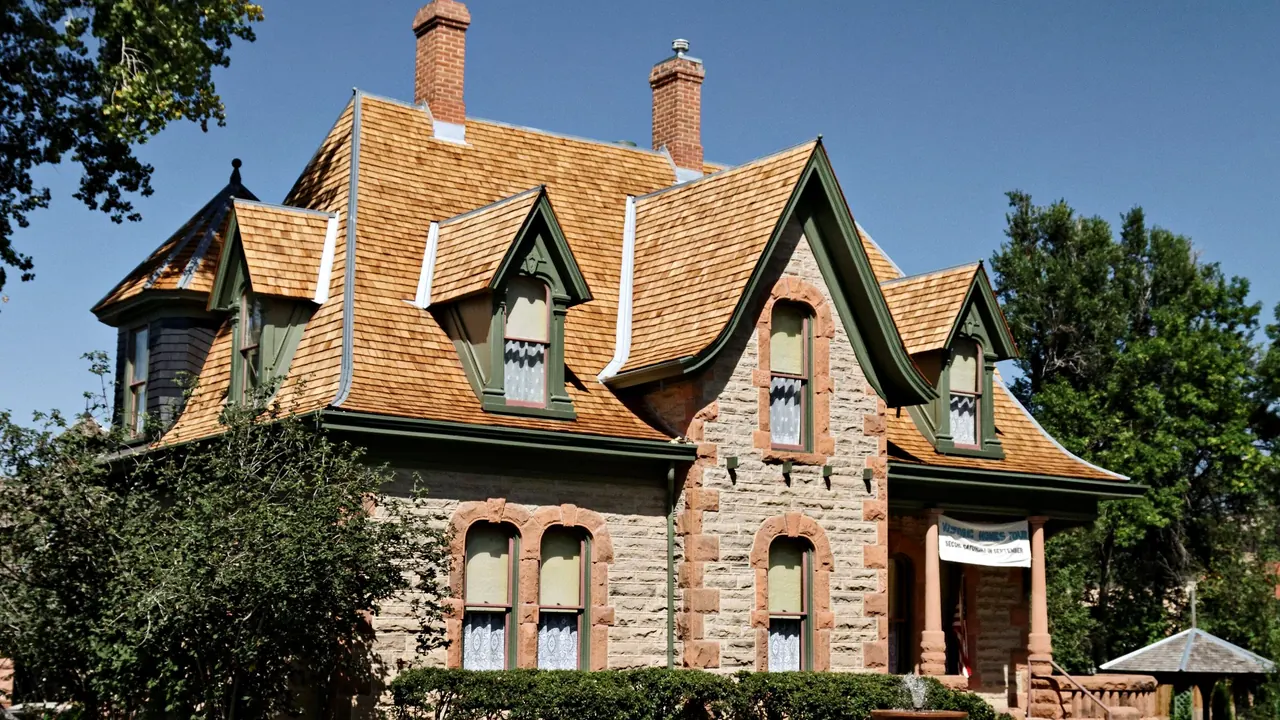
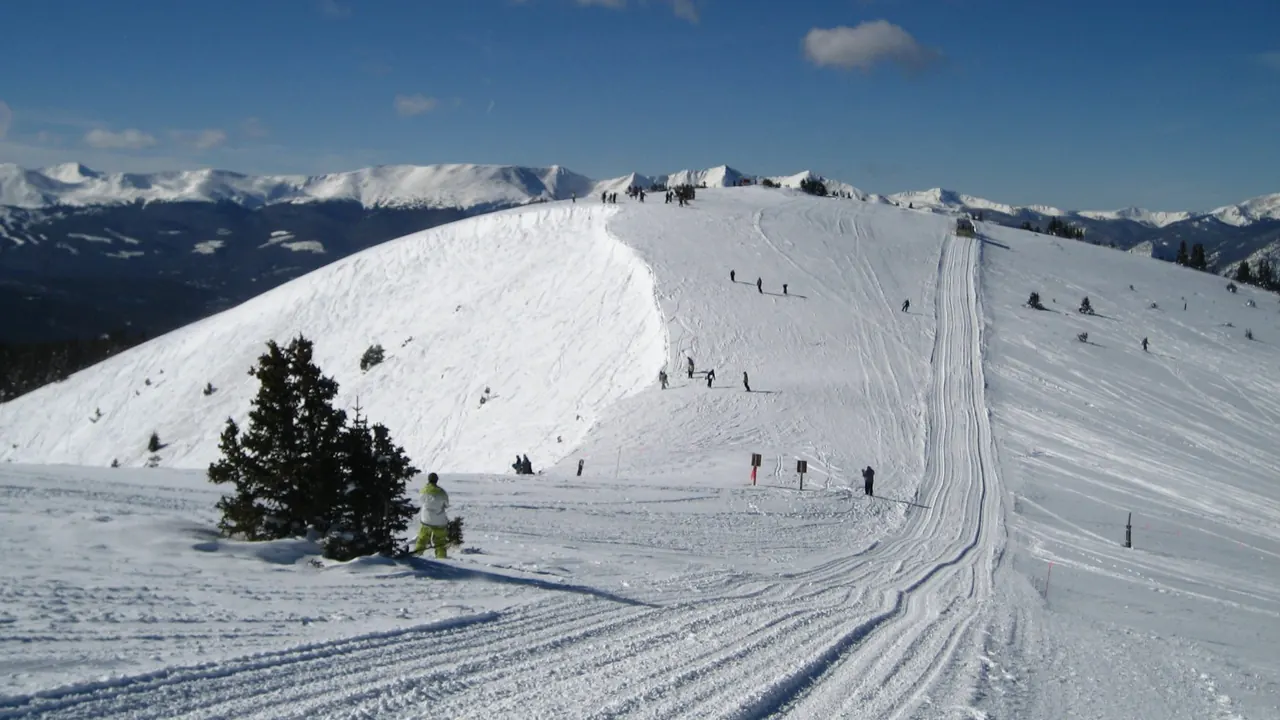
Photos: Fort Collins by Gribeco, CC BY-SA 3.0, cropped; Keystone by Rudi Riet, CC BY-SA 2.0, cropped.
Fort Collins or Keystone?
Our verdict in twelve categories, each scored against the same fixed benchmark cities, and the climate month by month, so you can choose for your trip.
Choose Fort Collins for
- prices
- nightlife
- food and drink
Fort Collins suits a summer or shoulder-season trip where the outdoors comes with a real town attached. You can hike Horsetooth Mountain or raft the Poudre by day, then cycle back to Old Town for its breweries, pubs and a show at the Lincoln Center. It also costs a good deal less than a mountain resort.
Choose Keystone for
- families
- nature and the outdoors
- day trips
Pick Keystone if the mountains themselves are the point of the vacation. With three peaks of its own, Arapahoe Basin up the road and Breckenridge, Copper and Vail within an hour, it is a far stronger base for skiing, and in summer the alpine trails start close by. It is built around families on the slopes, but it is expensive and goes quiet soon after dinner.
Scoreboard
Twelve categories on one fixed scale from 0 to 100. The shaded stretch is the gap between the two.
Your match
Pick a travel style or drag the sliders, and both match scores follow your weighting.
Wins on prices and nightlife with your weighting.
Wins on families and nature and the outdoors with your weighting.
What matters to you?
Category by category
What the scores mean for a trip.
Beaches & swimming
Neither is a place to swim, but the water on offer is different. Fort Collins at least has a designated swim beach at Horsetooth Reservoir, warm enough in July and August for a dip and an afternoon of paddleboarding. Keystone's Dillon Reservoir is cold with snowmelt and mostly closed to swimming, so there the realistic options are hotel pools and hot tubs.
Food & drink
Fort Collins is the better place to eat, and especially to drink. Its big breweries on the north side of Old Town and many smaller taprooms make it a real beer destination, and the gastropubs, farm-to-table kitchens and summer farmers' markets offer more range than a resort can.
Keystone's eating is resort dining: slopeside grills, pizza, après-ski burgers and a summit restaurant reached by gondola, with elk and trout on the menus. The choice is narrow, so many visitors cook in their condo or drive to Frisco or Breckenridge.
Culture & sights
Neither is a sightseeing destination, but Fort Collins has more to show. Its Old Town of red-brick and sandstone buildings from the late nineteenth century is a genuine historic centre, and the Museum of Discovery, the Avery House and the university's art museum easily fill a day.
Keystone is a 1970s ski resort with nothing comparable inside it. Its history lies beyond the resort, in the mining ruins and old cabins above Montezuma and in Victorian towns such as Breckenridge.
Nightlife
Fort Collins has the livelier evenings, thanks to its university. Pubs, sports bars, rooftop patios and taprooms cluster around Old Town's square, though it is a casual, student-heavy scene with few clubs.
In Keystone the night revolves around après-ski at River Run, and because the crowd is mostly families and early risers, the resort is quiet soon after dinner. A proper night out there means heading to Breckenridge's Main Street.
Nature & outdoors
Both are outdoor places, but Keystone is in the high mountains while Fort Collins sits at their edge. Fort Collins has Horsetooth Mountain, Lory State Park and the wild Poudre Canyon for rafting and fly fishing on its doorstep, with Rocky Mountain National Park about an hour and a half away, but there is no downhill skiing nearby.
Keystone puts you right on the slopes, with three peaks of its own, Arapahoe Basin minutes away and several more big resorts within an hour. In summer it has alpine tundra, 14,000ft summits and lift-served mountain biking. The altitude takes a day or two to get used to.
Day trips
The two are broadly level here, but the outings differ in character. From Fort Collins the choices are mostly towns and cities: Boulder beneath the Flatirons, Denver's museums, frontier-era Cheyenne across the Wyoming line and Estes Park for the national park. Nearly all of them need a car.
Keystone's day trips lean towards mining history: Breckenridge's Victorian centre, the silver towns of Georgetown and Silver Plume with their loop railway, and Leadville's old streets and opera house, plus Vail's alpine village. Denver is within reach of both, but from Keystone the weekend ski traffic on I-70 can stretch the journey.
Good for families
Keystone is the more rewarding choice for families, at least in winter. The ski school, gentle lower mountain, tubing, snow fort and the vast skating rink on the frozen lake at Lakeside Village are made for children, and condos near the lifts and free shuttles ease the logistics, though the altitude and cold need watching.
Fort Collins is easy and safe rather than exciting, with parks, flat river cycle paths, the farm at Lee Martinez Park and the Museum of Discovery's dome theatre. It works in any season, but for a zoo or an amusement park families drive to Denver.
Getting around
Fort Collins is a cycling city, while Keystone is a cluster of resort bases tied together by free buses. In Fort Collins the compact, flat Old Town, the rapid-bus line, protected lanes and long off-street trails make a bike the obvious choice, though the foothills and the canyon need a car.
At Keystone you can walk around each of River Run, Mountain House and Lakeside, and free shuttles link them. County buses run free to Breckenridge, Frisco and Dillon. The harder part is getting there: there is no train, so the way up from Denver is a shuttle or a drive over I-70, which can be slow in winter.
Shopping & style
Shopping is a minor matter in both, with a small edge to Fort Collins for browsing. Old Town's few blocks of independent boutiques, bookshops, vintage clothing and Colorado-made gifts make a pleasant hour or two. Keystone has ski gear and gift shops at River Run, and its main draw is the large outlet centre in nearby Silverthorne for brand-name outdoor wear.
Affordability
Fort Collins is much easier on the wallet. Rooms and casual meals are mid-priced for the country, the trails and Old Town cost nothing, and the main expense is a hire car.
Keystone is expensive throughout, with lift access, slopeside lodging, equipment rental and ski school adding up fast, above all over Christmas and spring break. Free buses and condo kitchens help, and summer is gentler, but it never becomes a cheap trip.
Live music & performing arts
Fort Collins has the steadier programme. The Lincoln Center brings touring Broadway shows, dance and the local symphony, the university's arts centre stages opera and theatre during term, and Old Town's bar stages book indie and bluegrass bands.
Keystone's live performance is mostly seasonal: outdoor festivals on the village stages, concerts at Dillon's amphitheatre by the reservoir and Breckenridge's summer classical festival. In winter it narrows to acoustic sets at après-ski and the professional theatre company in Silverthorne.
Wellness & relaxation
There is little between them, and neither has hot springs of its own, so a natural soak means driving to Idaho Springs or further. In Fort Collins wellness means ordinary day spas and yoga, and the real calm comes from its quiet neighbourhoods and shaded river paths. Keystone's version is recovery after skiing, with resort spas and outdoor hot tubs at almost every lodge, best enjoyed with snow falling.
When should you go?
Pick your month. The climate figures are measured averages, not a forecast.
Fort Collins in July
Keystone in July
Daytime high, °C
Rainfall in the month, mm
Where the figures come from
Fort Collins has no rain gauge within 25 km of the centre, so its rainfall comes from a gridded climate dataset read at the destination rather than from a gauge further away.
Keystone's temperatures are measured 51 km from the centre, at Leadville / Stringtown.
Keystone's station stands 232 m above the city centre, so the centre is likely a little warmer than the figures say.
Keystone has no rain gauge within 25 km of the centre, so its rainfall comes from a gridded climate dataset read at the destination rather than from a gauge further away.
Temperature and rainfall are climate normals, averaged over the years shown. Fort Collins: 2006-2020 (rainfall 1991-2020) normals, Fort Collins / Redmond (16.1 km from centre). Keystone: 2006-2020 (rainfall 1991-2020) normals, Leadville / Stringtown (50.8 km from centre).
Fort Collins has the more familiar seasons. Summer is properly hot, with July highs around 32°C, which is good for an afternoon at Horsetooth Reservoir but tiring for midday walks around Old Town. Late May, early June and September are the most comfortable months for both trails and streets. Late spring is the wettest stretch, peaking in May. Winters are cold but very dry.
Keystone sits at about 2,800m and never gets hot. Even July only reaches around 21°C, which makes June to September ideal for hiking and biking. From November to March daytime highs hover around freezing or below, about -2°C in midwinter, and the steady precipitation falls as snow, which is exactly what the ski season needs. In short, Fort Collins is at its best from late spring to early autumn, while Keystone has two good seasons: a snowy winter for skiing and a cool summer for the high trails.
Which traveller are you?
On a trip on a tight budget, Fort Collins leaves you with money to spare. A bike-share bike covers the town and a day in the foothills needs only a packed lunch. At Keystone the main attraction comes with a ticket and resort prices.
For a food and nightlife trip, Fort Collins wins easily. A beer lover can spend several days working through its breweries and taprooms, and a large student population keeps Old Town busy at weekends. Keystone winds down soon after après-ski.
On a family trip with children, Fort Collins is safe and easy but soon runs out of big outings. Keystone suits families better, above all in winter, because the whole resort is designed around children learning to ski and everything is close together.
Before you go
| Measure | Fort Collins | Keystone |
|---|---|---|
| Currency | US Dollar (USD) | US Dollar (USD) |
| Sockets | AB120 V, 60 Hz | AB120 V, 60 Hz |
| Driving side | Right | Right |
| Time zone | UTC-7, UTC-6 in summer | UTC-7, UTC-6 in summer |
| Emergency number | 911 | 911 |
| Elevation | 1,525 m | 2,796 m |
| Main airport | Denver International Airport (DEN)88 km from centre231 non-stop destinations | Denver International Airport (DEN)116 km from centre231 non-stop destinations |
| Public holidays this year | 12 days | 12 days |
By the numbers
| Measure | Fort Collins | Keystone |
|---|---|---|
| Population | 169,810 | 1,369 |
| People per km² | 1,181 | 13 |
| Museums within 10 km | 2 | 0 |
| UNESCO World Heritage sites within 50 km | 0 | 0 |
Where else could you go?
Every comparison below shares a destination with this one, so you can follow Fort Collins or Keystone somewhere new.
- Breckenridgevs Keystone
- Copper Mountainvs Keystone
- Vailvs Keystone
- Winter Park, Coloradovs Keystone
- Estes Parkvs Fort Collins
- Beaver Creekvs Keystone