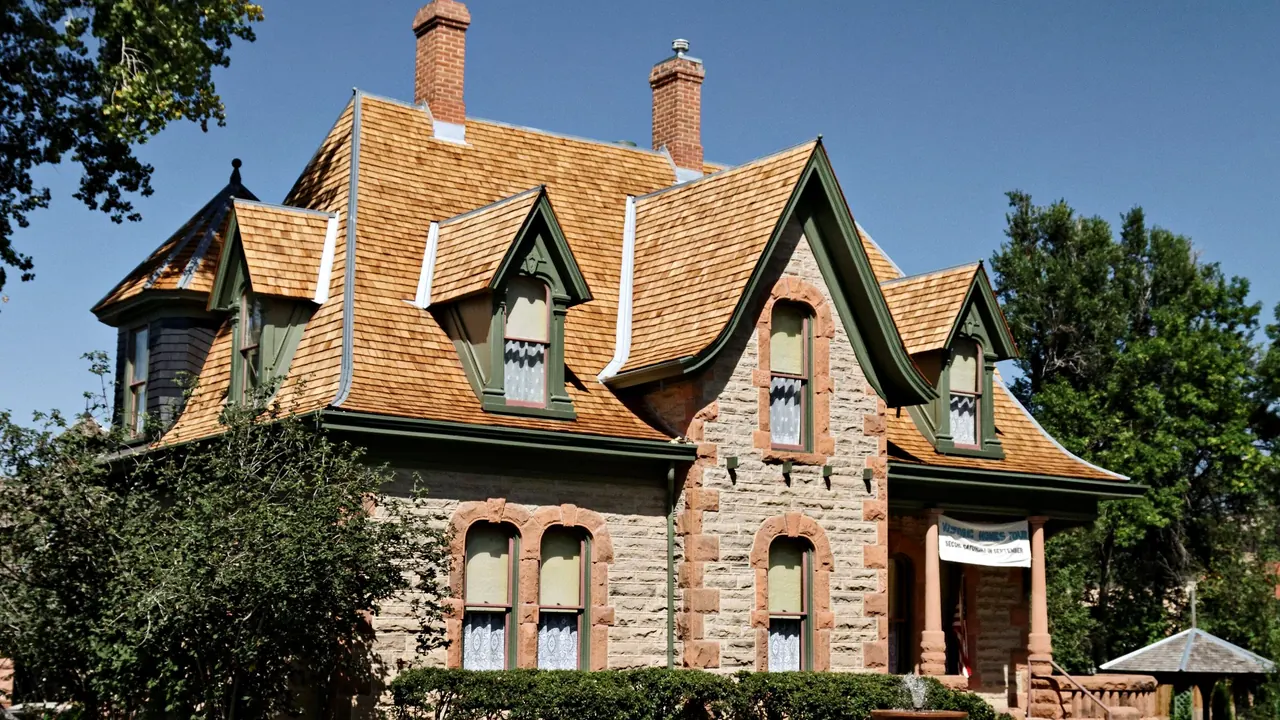
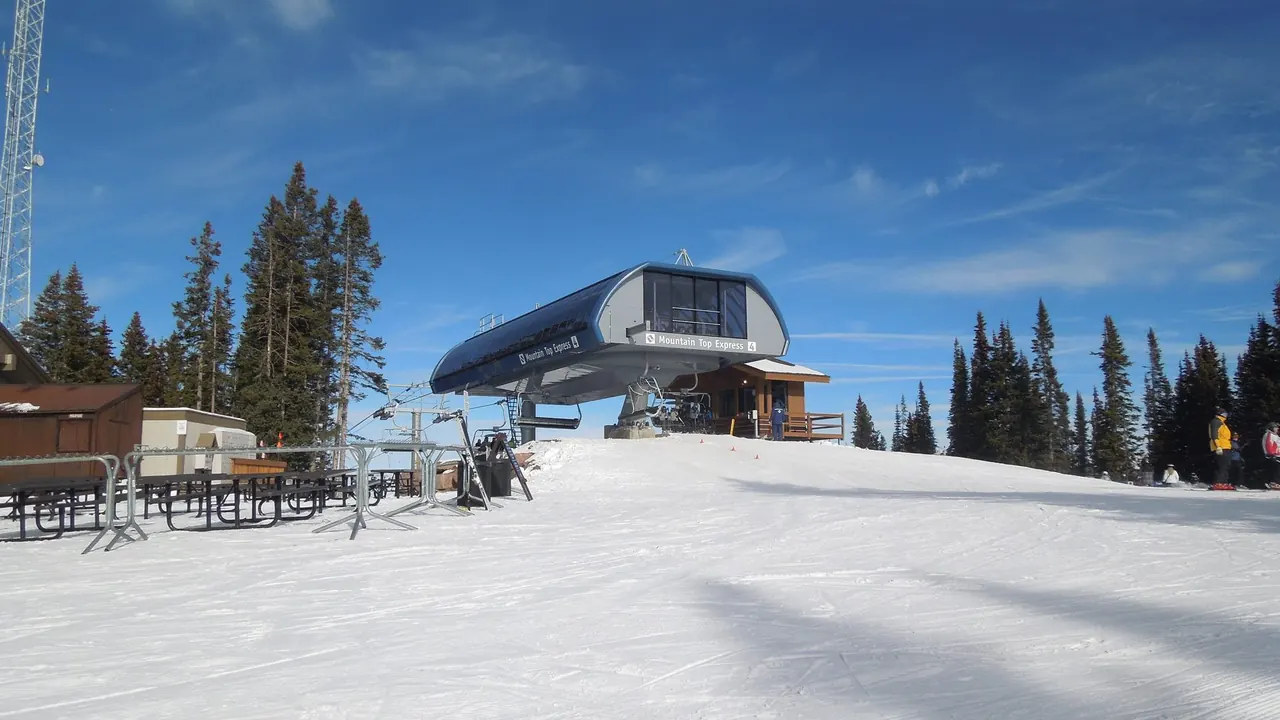
Photos: Fort Collins by Gribeco, CC BY-SA 3.0, cropped; Vail by DReifGalaxyM31, CC BY 3.0, cropped.
Fort Collins or Vail?
Our verdict in twelve categories, each scored against the same fixed benchmark cities, and the climate month by month, so you can choose for your trip.
Choose Fort Collins for
- prices
- culture and sights
- food and drink
Fort Collins is the better pick for travellers who want an easy, affordable base with brewery taprooms, a walkable red-brick Old Town and lively student evenings, while still reaching foothills trails and the Poudre canyon within minutes. It suits a cycling, beer and hiking trip, or a stop on a wider Colorado road trip, at a far gentler cost.
Choose Vail for
- wellness
- getting around
- nature and the outdoors
Choose Vail when the mountains themselves are the point: a winter of skiing the Back Bowls and Blue Sky Basin, or a summer of high wilderness trails, gondola rides and open-air orchestral concerts. It costs a great deal more and offers little in sights or variety of food, but for a ski week with hotel spas and a car-free village, Fort Collins cannot match it.
Scoreboard
Twelve categories on one fixed scale from 0 to 100. The shaded stretch is the gap between the two.
Your match
Pick a travel style or drag the sliders, and both match scores follow your weighting.
Too close to call, level with your weighting
Wins on prices and culture and sights with your weighting.
Wins on wellness and getting around with your weighting.
What matters to you?
Category by category
What the scores mean for a trip.
Beaches & swimming
Neither city is a swimming destination, and both send you to reservoirs rather than the sea. The difference is the water. Horsetooth Reservoir west of Fort Collins has a designated swim beach and warms well in July and August, while Vail's small mountain lakes stay cold even in midsummer, so a swim there usually means a hotel pool.
Food & drink
Fort Collins wins, mostly because of what it pours. Its long-established breweries north of Old Town and the taprooms spread across the city, many with food trucks outside, can fill several days, and summer markets bring in Palisade peaches and Colorado produce. The eating itself is ordinary gastropub, burger and taco fare.
Vail's cooking is more polished, with steak, game, fondue, elk and trout on menus backed by long wine lists. But it is resort dining with no cheap end and almost no street food, and many kitchens shut in the spring and autumn lulls.
Culture & sights
Fort Collins has more to see, though not a great deal. Its Old Town is a genuine late nineteenth-century district of red brick and sandstone, surrounded by streets of Victorian and Craftsman houses, and the Museum of Discovery and the Avery House fill a rainy afternoon.
Vail's village of chalets and covered bridges was built in the 1960s to look Tyrolean. Beyond that there is the Colorado Snowsports Museum, which tells the story of the Tenth Mountain Division, and the Betty Ford Alpine Gardens, and little else.
Nightlife
Fort Collins has the steadier night out, thanks to its university, with pubs, rooftop patios, cocktail bars and busy taprooms around the Old Town square. It is casual and full of students rather than late. Vail's evenings follow the lifts: packed après-ski terraces and a small club on winter weekends, with an affluent, festive crowd, but calm summer nights and an almost empty town after dinner in the off-seasons.
Nature & outdoors
Both are outdoor towns, but Fort Collins sits at the edge of the mountains while Vail sits high in them. From Fort Collins, Horsetooth Mountain and Lory State Park are a short drive west, the Poudre Canyon offers rafting and fly fishing, and Rocky Mountain National Park is about an hour and a half away. Winter there means cross-country skiing, not downhill.
Vail has one of the great ski areas, with the Back Bowls and Blue Sky Basin, directly above town. In summer the gondolas carry hikers and mountain bikers to high trails, and the Gore Range and Holy Cross wilderness rise beyond to peaks above 4,000m. The price is altitude: at about 2,500m, the first day can be hard going.
Day trips
The two are evenly matched here, and both need a car. From Fort Collins the outings head to cities and plains towns: Boulder beneath the Flatirons, Denver's museums, mining-era Golden, and Cheyenne's capitol and frontier museum across the Wyoming line.
From Vail almost every outing is to another mountain town: polished Beaver Creek, Breckenridge's Victorian main street and the silver-boom streets of Leadville. Glenwood Springs, down the Colorado River canyon, makes the best single day out. Choose by whether you want a change of scene or more high country.
Good for families
Both work for families, in different ways. Fort Collins is easy everyday ground, with playgrounds in every neighbourhood, flat river cycle paths, the dome theatre at the Museum of Discovery and the farm at Lee Martinez Park, plus reservoir days and gentle tubing in summer.
Vail is the better choice for a skiing family, with large ski schools, children's terrain and a car-free village. In summer there are a mountain coaster and ropes courses at the top of the gondola. The altitude and winter cold make it harder going with toddlers, and neither town has a zoo or aquarium.
Getting around
Vail is the easier place to be without a car. Its village core is pedestrian, the lifts start in town and a free bus runs the length of the valley, so a week on foot is realistic. Getting there is harder, with an airport shuttle and a pass road that can close in snow.
Fort Collins has a compact, flat Old Town, a rapid-bus line and some of the best cycling routes in the country. But its suburbs sprawl, buses elsewhere are sparse, and the foothills and canyon all need a car.
Shopping & style
Vail has more to buy, though almost all of it is in one style. Its pedestrian lanes sell upmarket ski clothing, jewellery, Western boots and hats, and mountain landscapes in the galleries, which is ideal for new gear or a luxury souvenir. Fort Collins is more independent and less expensive, with bookshops, vintage clothing, cycling shops and Colorado-made gifts in Old Town, but it adds up to an afternoon's browsing.
Affordability
This is where the two differ most. Fort Collins is mid-priced for the United States. It has chain hotels along the highways, reasonably priced taproom meals and free trails and river paths, and a hire car is the main extra cost.
Vail is among the most expensive places to vacation in North America, with lodging, lift tickets, ski school and meals all far above normal American levels. Summer, the off-seasons or a bed further down the valley soften the bill only a little.
Live music & performing arts
Vail has the bigger occasions, but only in summer. The Bravo! Vail festival brings major orchestras to the open-air Gerald R. Ford Amphitheater, the Vail Dance Festival draws leading dancers and a jazz festival follows. In winter there is little beyond après-ski bands.
Fort Collins works on a smaller scale but runs through the year. The Lincoln Center hosts touring Broadway, dance and the symphony, the university stages concerts and opera, and bluegrass and indie bands play the small Old Town stages.
Wellness & relaxation
Vail is the better place to unwind in comfort. Its hotels have polished spas, saunas, steam rooms and outdoor hot tubs under the peaks, and Glenwood Springs, with mineral pools and vapour caves in use since the 1800s, is about an hour away.
Fort Collins has day spas and yoga classes, and most of its calm comes from shaded river paths and quiet streets. The nearest hot-spring soak is at Idaho Springs, close to two hours' drive.
When should you go?
Pick your month. The climate figures are measured averages, not a forecast.
Fort Collins in July
Vail in July
Daytime high, °C
Rainfall in the month, mm
Where the figures come from
Fort Collins has no rain gauge within 25 km of the centre, so its rainfall comes from a gridded climate dataset read at the destination rather than from a gauge further away.
Vail's temperatures are measured 47 km from the centre, at Kremmling.
Vail's station stands 186 m below the city centre, so the centre is likely a little cooler than the figures say.
Vail has no rain gauge within 25 km of the centre, so its rainfall comes from a gridded climate dataset read at the destination rather than from a gauge further away.
Temperature and rainfall are climate normals, averaged over the years shown. Fort Collins: 2006-2020 (rainfall 1991-2020) normals, Fort Collins / Redmond (16.1 km from centre). Vail: 2006-2025 (rainfall 1991-2020) normals, Kremmling (46.5 km from centre).
Fort Collins has the milder and drier year. Summers are hot, with July highs around 32°C, which suits a day at Horsetooth Reservoir but makes midday walking tiring. Late May and September are the comfortable months for trails and cycling. Winters are cold but very dry, with barely 9mm a month in December and January. Most of the year's rain falls between April and July, and May is the wettest month.
Vail is colder at every point. January highs stay below freezing at about -4°C, and steady winter precipitation is what feeds the skiing. Summer days peak near 29°C in July, warm enough for hiking, though the lakes stay chilly. Rain and snow are spread evenly through the year, so April, May, October and November bring neither reliable snow nor full summer.
Which traveller are you?
On a trip on a tight budget, Fort Collins is the clear choice. Its foothills trails, river paths and Old Town cost nothing, taproom meals are reasonable and the highway hotels are moderate, whereas Vail's lodging, lift tickets and restaurant meals sit far above normal American levels.
For a relaxing and wellness trip, Vail does better. Its big hotels in Vail Village and Lionshead have polished spas, saunas and outdoor hot tubs under the peaks, and Glenwood Springs' mineral pools are an hour away. Fort Collins offers only day spas and quiet paths.
For skiers, Vail wins outright. Its vast ski area, with groomed front-side runs and the open Back Bowls, starts right from town. Near Fort Collins winter means snowshoeing and cross-country skiing, and the big downhill resorts are several hours' drive away.
Before you go
| Measure | Fort Collins | Vail |
|---|---|---|
| Currency | US Dollar (USD) | US Dollar (USD) |
| Sockets | AB120 V, 60 Hz | AB120 V, 60 Hz |
| Driving side | Right | Right |
| Time zone | UTC-7, UTC-6 in summer | UTC-7, UTC-6 in summer |
| Emergency number | 911 | 911 |
| Elevation | 1,525 m | 2,445 m |
| Main airport | Denver International Airport (DEN)88 km from centre231 non-stop destinations | Eagle County Regional Airport (EGE)48 km from centre16 non-stop destinations |
| Public holidays this year | 12 days | 12 days |
By the numbers
| Measure | Fort Collins | Vail |
|---|---|---|
| Population | 169,810 | 4,835 |
| People per km² | 1,181 | 400 |
| Museums within 10 km | 2 | 1 |
| UNESCO World Heritage sites within 50 km | 0 | 0 |
Where else could you go?
Every comparison below shares a destination with this one, so you can follow Fort Collins or Vail somewhere new.
- Beaver Creekvs Vail
- Copper Mountainvs Vail
- Keystonevs Vail
- Breckenridgevs Vail
- Estes Parkvs Fort Collins
- Winter Park, Coloradovs Vail