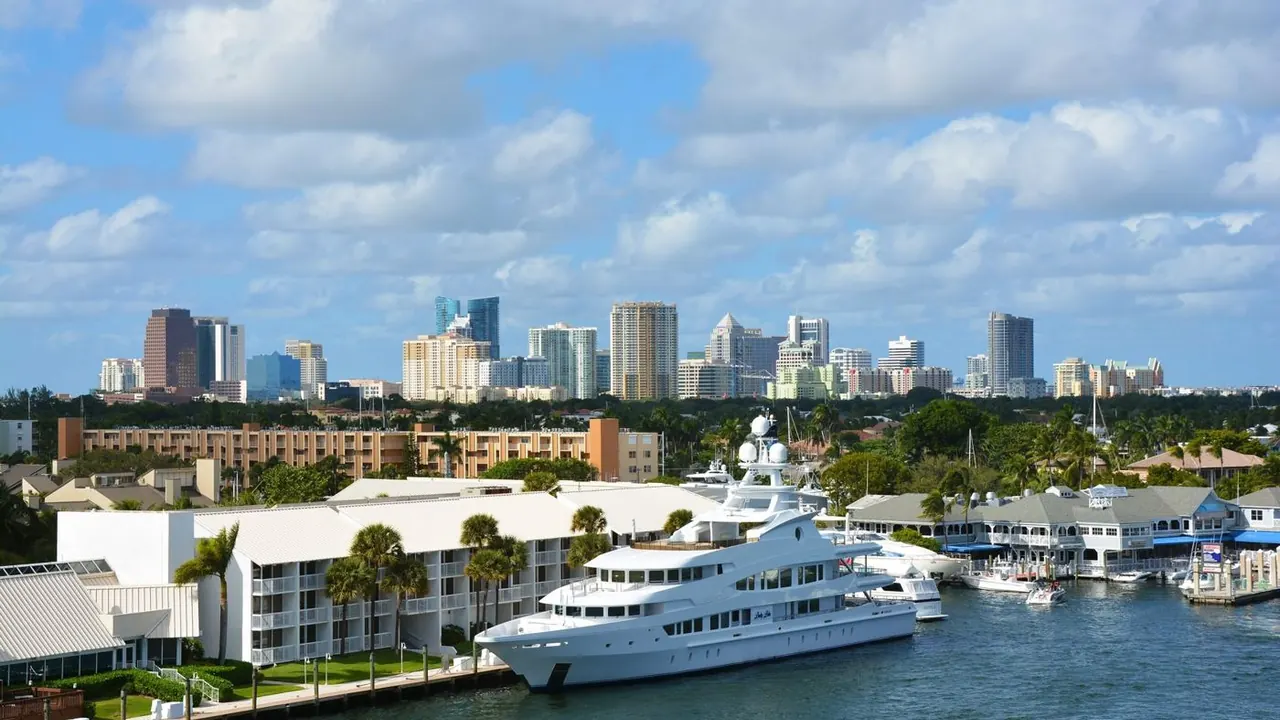
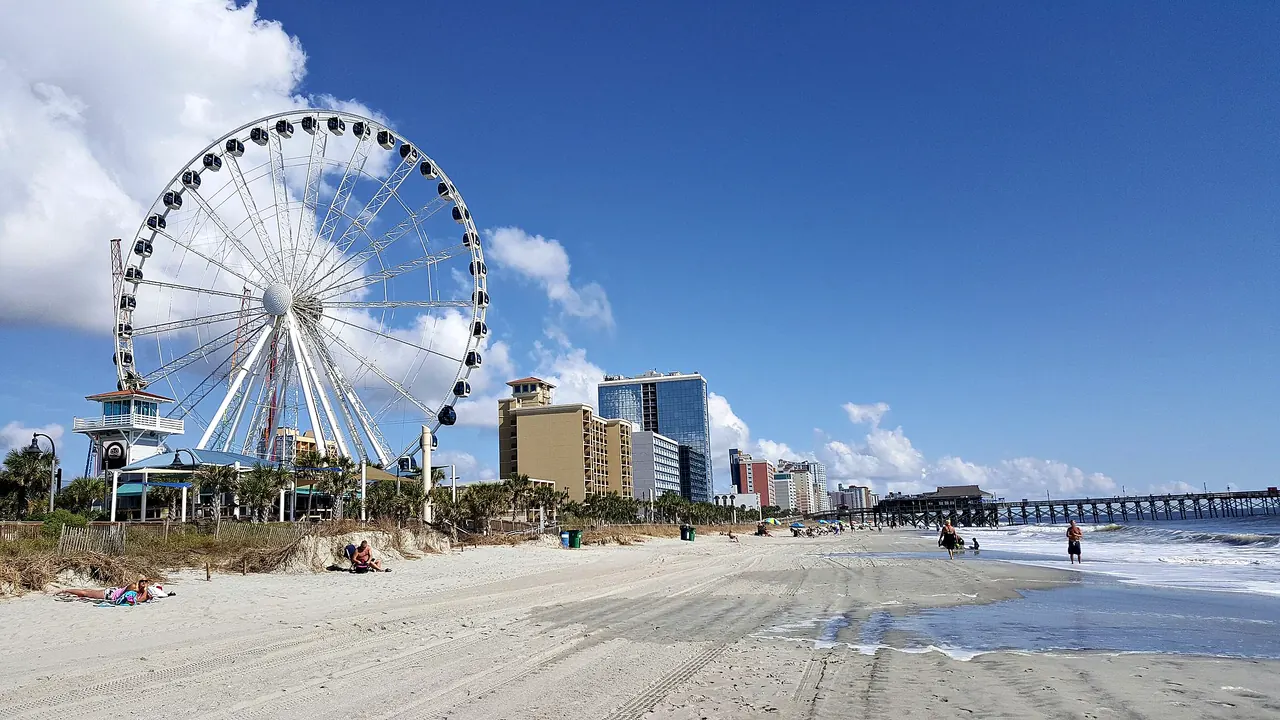
Photos: Fort Lauderdale by KeanoManu, CC BY-SA 4.0, cropped; Myrtle Beach by The ed17, CC BY-SA 4.0, cropped.
Fort Lauderdale or Myrtle Beach?
Our verdict in twelve categories, each scored against the same fixed benchmark cities, and the climate month by month, so you can choose for your trip.
Choose Fort Lauderdale for
- nature and the outdoors
- getting around
- shopping
Fort Lauderdale suits adults who want a beach they can swim from in any month and a bit more around it: diving on the reefs and wrecks offshore, paddling the canals, an evening on Las Olas or in Wilton Manors, and Miami close enough for a day. It costs more, especially in the winter high season, but it is the better all-round choice and the obvious one for escaping a northern winter.
Choose Myrtle Beach for
- prices
- families
Families on a summer vacation will usually be happier in Myrtle Beach. The surf is gentle, condos come with kitchens, and the aquarium, amusement park, water parks and endless mini-golf keep children busy between swims. Its large supply of rooms helps keep stays cheaper. There is little beyond the resort strip, though, and the sea is too cold from late autumn to spring, so this is a warm-season trip.
Scoreboard
Twelve categories on one fixed scale from 0 to 100. The shaded stretch is the gap between the two.
Your match
Pick a travel style or drag the sliders, and both match scores follow your weighting.
Wins on nature and the outdoors and getting around with your weighting.
Wins on prices and families with your weighting.
What matters to you?
Category by category
What the scores mean for a trip.
Beaches & swimming
Both are long, wide strips of pale sand on the Atlantic, so the difference is in the water and the season. Fort Lauderdale's sea is often clear to the bottom and warm enough to swim in all year. At Lauderdale-by-the-Sea there is a reef you can snorkel from the shore.
Myrtle Beach has far more coastline, roughly 100km of the Grand Strand, and the water shelves gently with small waves, which suits paddling children. The water is greenish rather than clear, and swimming is limited to the warm months. To get away from the crowded central blocks, try the dune-backed beaches at Surfside and Garden City.
Food & drink
Neither is a food city, but Fort Lauderdale has more range. You can eat grilled fish on a dock beside the Intracoastal or order stone crab in winter. The Jamaican and Haitian kitchens and Cuban bakeries of the western suburbs give it a Caribbean side, and Miami is close enough for a serious dinner.
Myrtle Beach's own strip is mostly seafood buffets, pancake houses and chains built to feed families in large numbers. The good meals are just outside town, at the waterfront places in Murrells Inlet with local shrimp and oysters, or in Calabash-style fried seafood over the state line.
Culture & sights
Neither city takes more than a day to see, but Fort Lauderdale's sights are in town and easy to string together: the Bonnet House estate behind the beach, the Stranahan House trading post on the New River and the NSU Art Museum on Las Olas.
Myrtle Beach has one outstanding sight, Brookgreen Gardens. This former rice plantation, now a sculpture garden under live oaks, also tells the story of the people enslaved there. Atalaya, a Moorish-style 1930s winter house, stands next door. Both are a drive south of town, and the city itself has little else to show.
Nightlife
Fort Lauderdale has the more varied evening, and it runs all year. Himmarshee Street has late bars for a young crowd and Las Olas has wine bars and terraces. Wilton Manors, with its drag shows along Wilton Drive, is one of the country's best-known gay neighbourhoods.
Myrtle Beach is more seasonal and rowdier. In summer, beach bars, rooftop decks and dance clubs cluster around the boardwalk and the entertainment complexes, and spring break weeks get loud. Its distinctive touch is the shag, the Carolina beach dance, still danced in the old clubs of North Myrtle Beach. Out of season much of it shuts early.
Nature & outdoors
Both are flat, but Fort Lauderdale's outdoors is livelier and mostly on the water. You can kayak the canals and the Intracoastal, dive on reefs and deliberately sunk wrecks close to shore and go sport fishing for sailfish. The Everglades, with sawgrass marsh and alligators, start less than an hour west.
Myrtle Beach is quieter and more about wildlife watching. Huntington Beach State Park has marsh boardwalks with herons and ospreys, and you can paddle the cypress swamps of the Waccamaw River. Golf is the big draw here, with dozens of courses along the coast.
Day trips
Fort Lauderdale has the easier and fuller choice. Miami, with Art Deco South Beach, the Wynwood murals and Little Havana, is under an hour away by car or fast train. Palm Beach's Flagler Museum and Delray Beach are close to the north, and Key Largo is a stretch but doable.
Myrtle Beach's best outing is Charleston, with its antebellum streets and harbour forts, but it is about two hours each way. The nearer stops are smaller: Georgetown's old port, Pawleys Island and the riverfront at Wilmington. Every one of them means driving, as there is no useful train.
Good for families
Myrtle Beach was built for the American family vacation, and it shows. Resort hotels have lazy rivers and kiddie pools, and inland there is a large aquarium, a seaside amusement park with a wooden roller coaster, water parks, an observation wheel on the boardwalk and pirate-themed mini-golf everywhere. Its swimming season also matches the school summer.
Fort Lauderdale is calm and safe, with a lifeguarded beach and a good hands-on science museum. An airboat ride with alligators is a sure hit with children. Once those are done there are fewer outings, and the theme parks of Orlando are too far for a day.
Getting around
Water taxis on the canals give Fort Lauderdale something Myrtle Beach lacks: a way to manage without a car, as long as you stay between the beach, Las Olas and downtown. Free trolleys cover the same area, and trains run to Miami and the Palm Beaches for day trips. Beyond that, you need a car or ride-hailing.
Myrtle Beach spreads along about 100km of multi-lane highway with few pavements, sparse buses and no train. You can walk the oceanfront blocks or cycle the flat beach, but reaching anything else means driving, often in slow summer traffic on Kings Highway.
Shopping & style
Fort Lauderdale has the better shopping. Las Olas Boulevard makes a pleasant afternoon of boutiques, galleries and resort fashion. The outlet mall at Sunrise is one of the largest in the country, and Palm Beach and Miami are close for luxury.
Myrtle Beach has two big outlet centres, waterfront complexes that mix chain shops with attractions, and huge beach shops full of inflatables. The Market Common feels more like a town centre. The only local craft worth looking for is the sweetgrass baskets sold along the coast road to the south.
Affordability
Myrtle Beach is the cheaper stay. It has a huge number of motels and condos, oceanfront rooms can be very cheap outside summer, and kitchens help keep food costs down. The catch is that rooms are cheapest when the sea is too cold, and July is expensive.
Fort Lauderdale costs more for most of the year, with high winter rates and tipped American menu prices even at casual places. Its low season is the hot, stormy summer. In both places a hire car and tips add to the bill, so it helps to book an apartment a few blocks back from the sand.
Live music & performing arts
Fort Lauderdale has more to see in the evenings. The Broward Center on the New River hosts touring Broadway musicals, ballet and concerts, the Parker Playhouse adds to the programme, and a few downtown venues book touring bands. Miami's arts centre is close for opera or an orchestra.
Myrtle Beach's evenings are a different kind of show: country, gospel and pop revues in large theatres, Christmas spectaculars and dinner shows with knights or pirates. They are polished and suit children, but there is nothing in the way of serious drama or classical music.
Wellness & relaxation
Fort Lauderdale's most restful asset is its winter. The weather is warm and dry, the pace is easy, and the mornings suit long walks on the promenade. Resort spas, day spas along Las Olas and sunrise yoga on the sand make up the rest. They are good, but there is no bathing culture behind them.
In Myrtle Beach the summer strip is loud and car-bound, and the resort and golf-hotel treatment rooms are the main option. For real rest, head to the quieter southern end around Pawleys Island, or come in spring or autumn when the pace slows down.
When should you go?
Pick your month. The climate figures are measured averages, not a forecast.
Fort Lauderdale in July
Myrtle Beach in July
Daytime high, °C
Rainfall in the month, mm
Where the figures come from
Myrtle Beach has no rain gauge within 25 km of the centre, so its rainfall comes from a gridded climate dataset read at the city rather than from a gauge further away.
Temperature and rainfall are climate normals, averaged over the years shown. Fort Lauderdale: 1991-2020 normals, Fort Lauderdale (7.1 km from centre). Myrtle Beach: 1971-2000 (rainfall 1991-2020) normals, Myrtle Beach Air Force Base (5.5 km from centre).
Fort Lauderdale is a beach destination all year. Even in January the sea stays around 25°C and the days are warm and dry, so December to April is the best time for both swimming and walking the streets. From May to October it turns hot and humid, with heavy afternoon storms. June is the wettest month, at over 200mm, and midday outings in summer are hard work.
Myrtle Beach has proper seasons. Winter days are cool, around 12°C in January, and the sea is too cold for most swimmers from November to April. In May and October the water is cooler but still swimmable for many people, and the mild air suits golf and getting around. The sea is warmest in July and August, at about 28°C, but those are also the hottest, most humid and wettest weeks. If you want to swim in winter, only Fort Lauderdale works. In midsummer both are hot and stormy.
Which traveller are you?
On a family trip with young children, Myrtle Beach is the stronger pick. Its oceanfront resorts have lazy rivers and kitchen suites, and the aquarium, wooden roller coaster, water parks and themed mini-golf add up to far more for children than Fort Lauderdale offers.
For a trip on a tight budget, Myrtle Beach goes further. The huge supply of motels and rental condos keeps rooms cheap outside July, and kitchens cut the cost of eating. Fort Lauderdale stays expensive for most of the year, and its cheap months are the stormy summer.
On an outdoors trip, Fort Lauderdale has more to offer. You can dive on reefs and sunken wrecks close to shore, kayak miles of canals, go sport fishing and take an Everglades airboat ride within the hour. Myrtle Beach mostly offers birdwatching, swamp paddling and golf.
Before you go
| Measure | Fort Lauderdale | Myrtle Beach |
|---|---|---|
| Currency | US Dollar (USD) | US Dollar (USD) |
| Sockets | AB120 V, 60 Hz | AB120 V, 60 Hz |
| Driving side | Right | Right |
| Time zone | UTC-5, UTC-4 in summer | UTC-5, UTC-4 in summer |
| Emergency number | 911 | 911 |
| Elevation | 11 m | 8 m |
| Main airport | Fort Lauderdale Hollywood International Airport (FLL)7 km from centre138 non-stop destinations | Myrtle Beach International Airport (MYR)5 km from centre60 non-stop destinations |
| Public holidays this year | 11 days | 12 days |
By the numbers
| Measure | Fort Lauderdale | Myrtle Beach |
|---|---|---|
| City population | 182,760 | 35,682 |
| People per km² | 1,829 | 591 |
| Museums within 10 km | 6 | 2 |
| UNESCO World Heritage sites within 50 km | 0 | 0 |
| Swim season, months above 21 °C | 12 months | 6 months |
Where else could you go?
Every comparison below shares a destination with this one, so you can follow Fort Lauderdale or Myrtle Beach somewhere new.