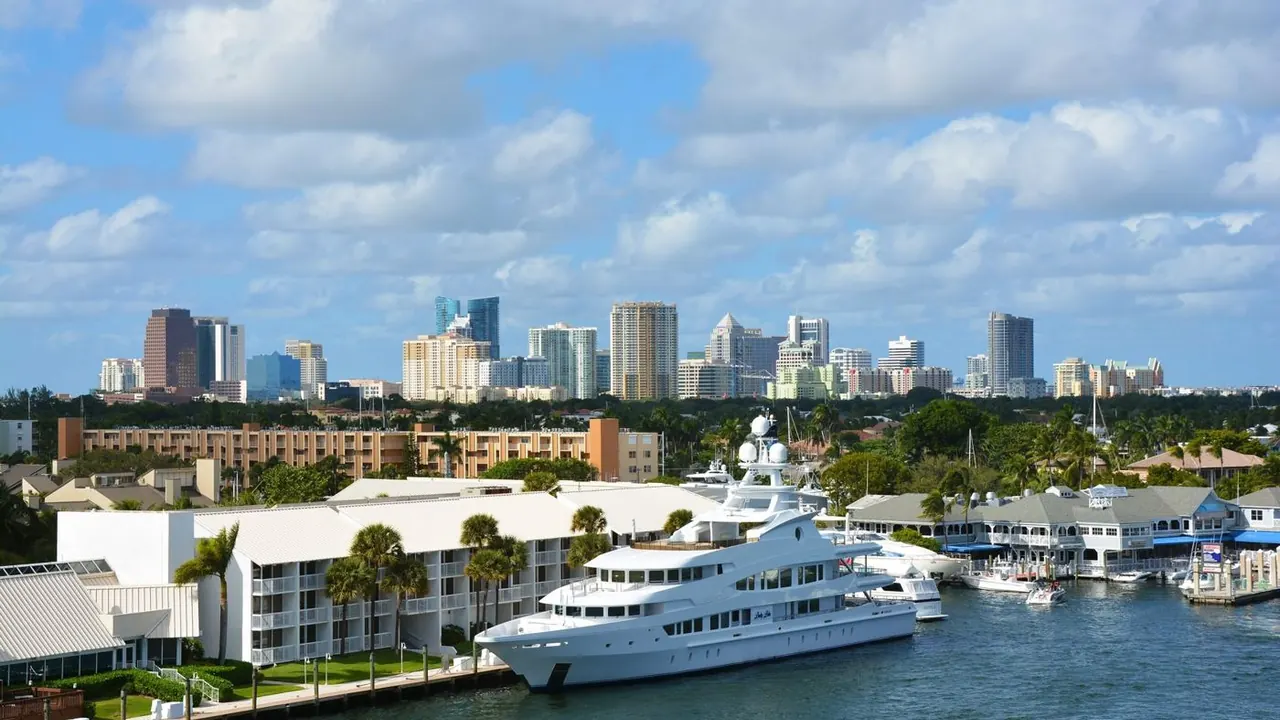
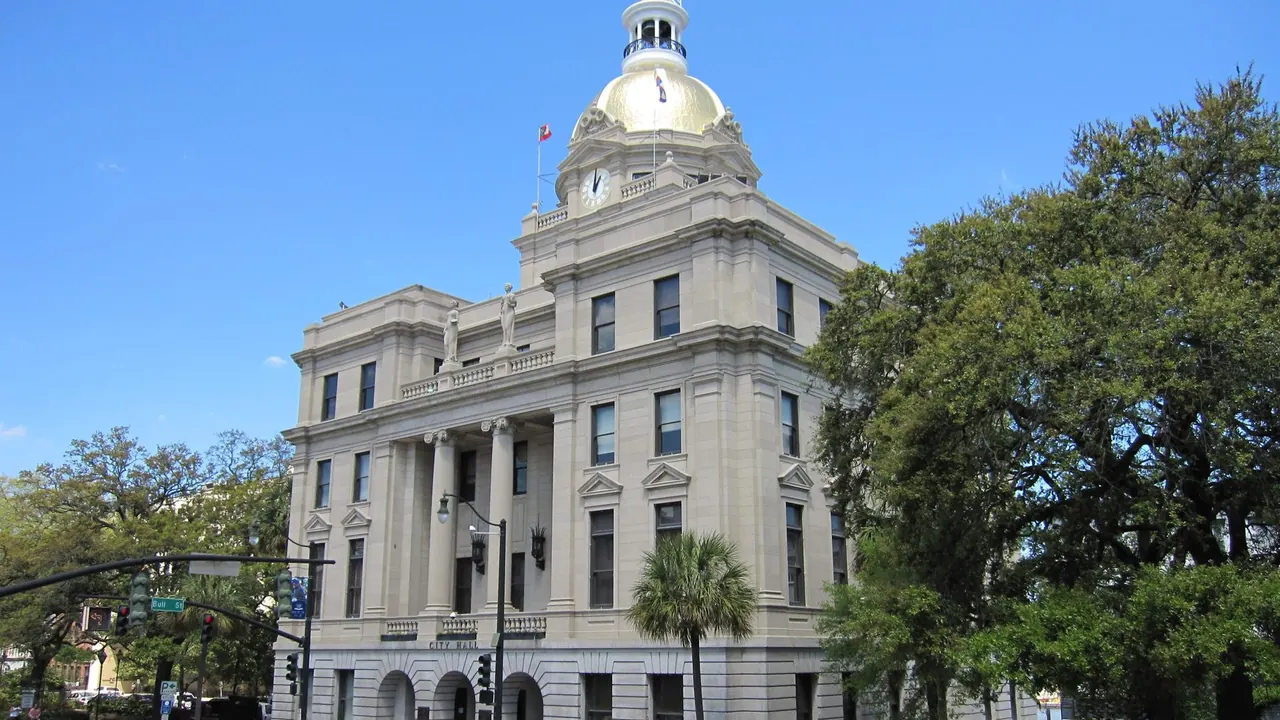
Photos: Fort Lauderdale by KeanoManu, CC BY-SA 4.0, cropped; Savannah by Chris M Morris, CC BY 2.0, cropped.
Fort Lauderdale or Savannah?
Our verdict in twelve categories, each scored against the same fixed benchmark cities, and the climate month by month, so you can choose for your trip.
Choose Fort Lauderdale for
- beaches
- families
- nature and the outdoors
Fort Lauderdale is the choice for a trip built around the sea. It has a long, lifeguarded beach on warm and often clear Atlantic water in any month, canals to paddle, reefs and wrecks to dive, and Miami close by for a day out. It suits families and anyone happy to spend most of the day near the sand, provided they accept that the sights are few and a car helps once you leave the centre.
Choose Savannah for
- culture and sights
- getting around
- food and drink
Travellers who would rather walk than swim will get more from Savannah. Its garden squares, live oaks and old houses make the town itself the attraction, and the historic district is compact enough to cover entirely on foot. Its Lowcountry cooking also has a clearer identity than Fort Lauderdale's seafood and brunch. The beach at Tybee makes a pleasant extra day, not the point of the trip.
Scoreboard
Twelve categories on one fixed scale from 0 to 100. The shaded stretch is the gap between the two.
Your match
Pick a travel style or drag the sliders, and both match scores follow your weighting.
Too close to call, 1 point apart
Wins on beaches and families with your weighting.
Wins on culture and sights and getting around with your weighting.
What matters to you?
Category by category
What the scores mean for a trip.
Beaches & swimming
Here the gap is wide. Fort Lauderdale's beach is right at the front of the town, a long strip of pale sand on clear, warm water that stays swimmable through winter. Lauderdale-by-the-Sea adds a reef you can snorkel from shore, and Hollywood's Broadwalk has a more local feel.
Savannah has no beach of its own. Tybee Island, half an hour's drive away, has wide, flat sand and a low-key small-town setting. The water is coloured by the marshes and too cool for most people in winter, so Tybee works best as a single summer day out.
Food & drink
Savannah has the stronger kitchen and the clearer sense of place. Expect shrimp and grits, she-crab soup, Lowcountry boils, oyster roasts in the cooler months and family-style Southern dining rooms. There is also a small group of chef-led restaurants in restored townhouses around the historic district.
Fort Lauderdale eats well on seafood, from grouper on a dock by the Intracoastal to stone crab in winter. The Jamaican, Haitian and Cuban cooking of its western suburbs adds a range Savannah lacks, but the beachfront is mostly hotel dining, and visitors serious about food tend to head to Miami.
Culture & sights
This is Savannah's strongest advantage, because the whole historic district is the sight. Oglethorpe's grid of squares under the live oaks is framed by Federal and Greek Revival houses, and the Cathedral of St John the Baptist, the Telfair Museums and the Owens-Thomas House are all within walking distance. Together they make two unhurried days.
Fort Lauderdale, a much younger city, offers the Bonnet House, the Stranahan House and the NSU Art Museum. They are worth seeing but are done in a day, and the city's draw is its water rather than its heritage.
Nightlife
Evenings out are about equally lively, but the character differs. Fort Lauderdale has beach bars along A1A that fill from late afternoon and a late-running strip on Himmarshee Street. Its standout is Wilton Manors, one of the country's best-known gay neighbourhoods, and Miami is close by for clubs.
In Savannah a night out is a stroll. Drinks in to-go cups are allowed in the historic district, so people drift between River Street's cobbled bars, the City Market taverns and cocktail rooms in old townhouses. Weekends bring bachelorette crowds and St Patrick's Day turns into a huge street party, but most of the city is quiet well before the early hours.
Nature & outdoors
Both sit in flat, watery country, but Fort Lauderdale gives you more to do in it. The canals and the Intracoastal are made for kayaks and boat trips, and reefs and sunken wrecks offer diving close to shore. Sport fishing is taken seriously, and the Everglades, with airboats and alligators, lie less than an hour west.
Savannah's Lowcountry is gentler: salt marsh to paddle at high tide, dolphin-spotting trips, birding for wood storks and the oak avenue at Wormsloe. Summer insects and humidity largely limit it to spring and autumn.
Day trips
The two are about even for days out, but the places you reach are of a different kind. From Fort Lauderdale the pull is urban and glossy. Miami's Art Deco district, Wynwood and Little Havana are under an hour away, Palm Beach's Flagler Museum lies to the north, and Key Largo sits at the edge of a long day.
Savannah's day trips are historic: Charleston two hours north, antebellum Beaufort, Fort Pulaski and the old millionaires' district on Jekyll Island. Nearly all of them need a car, whereas Miami and the Palm Beaches can be reached by train from Fort Lauderdale.
Good for families
Fort Lauderdale is the easier place with children. It has calm, warm water at a lifeguarded beach with showers and parks behind it, plus the Museum of Discovery and Science with its aquarium section, a butterfly garden and Everglades airboat rides. The catch is summer storms and a car for most outings.
Savannah works for a few days. Forsyth Park gives children room to run, the trolley tours and free river ferry are easy treats, and older children enjoy the ghost walks and the Girl Scouts founder's birthplace. With no zoo, aquarium or theme park, younger children may tire of it sooner, especially in the summer heat.
Getting around
Savannah is far easier without a car. The historic district is flat, compact and laid out on a grid, with sights, inns and restaurants a short walk apart and a free shuttle and ferry to fill the gaps. Only Tybee, Wormsloe and Bonaventure need wheels.
Fort Lauderdale works on foot only within the triangle of beach, Las Olas and the New River, which is linked by water taxis and trolleys. Beyond it, slow buses and wide roads mean a hire car or ride-hailing, though the trains to Miami and the Palm Beaches help.
Shopping & style
Fort Lauderdale has more to buy, chiefly because of the huge outlet mall out in Sunrise, along with the swimwear and resort-fashion boutiques of Las Olas. Neither city has a luxury district, and from Fort Lauderdale that means a trip to Palm Beach or Miami.
Savannah's shopping is smaller but more personal. Broughton Street has restored storefronts, and there is work by art school students and graduates, with antique dealers and bookshops around the squares. It makes a pleasant browse rather than a shopping trip.
Affordability
Neither city is cheap, and the costs are similar, shaped by American menu prices with tax and tip added. Fort Lauderdale's beachfront rooms peak in the winter season and drop sharply in the stormy summer, and a hire car and paid parking near the sand usually belong in the budget.
Savannah's historic district inns are priced as a weekend destination and climb further in spring and at festival time. The squares, Forsyth Park and the cemeteries cost nothing, though, and you can stay central without a car. The cheaper motels out by the highway bring the car back into the sums.
Live music & performing arts
Neither is a serious arts city, and the difference lies in how the programme is spread through the year. Fort Lauderdale's Broward Center runs touring Broadway shows, ballet and concerts year-round, backed by the Parker Playhouse and a few rock venues. It has no resident orchestra or opera of note.
Savannah has a local philharmonic and the restored Lucas and Trustees theatres, but it really comes alive for the spring Savannah Music Festival and the autumn jazz festival in Forsyth Park. A visit timed for those finds plenty, while one at a random time may find less than Fort Lauderdale offers.
Wellness & relaxation
Rest in Fort Lauderdale happens by the water. It means a long early walk on the promenade, yoga on the sand at sunrise and slow afternoons on the beach, and it is at its best in the warm, dry winter. The spas are those of the big beachfront resorts and the day spas along Las Olas, comfortable but much like those of any American resort town.
Savannah's calm is shaded and urban: a bench under the oaks in one of the southern squares, or a porch in the garden courtyard of an old inn. It works best midweek in spring or autumn, since River Street gets loud at weekends and the summer humidity drains more than it soothes.
When should you go?
Pick your month. The climate figures are measured averages, not a forecast.
Fort Lauderdale in July
Savannah in July
Daytime high, °C
Rainfall in the month, mm
Temperature and rainfall are climate normals, averaged over the years shown. Fort Lauderdale: 1991-2020 normals, Fort Lauderdale (7.1 km from centre). Savannah: 1991-2020 normals, Savannah Airport (9.9 km from centre).
Fort Lauderdale is a beach destination in every month. Even in January the sea is around 25°C and the afternoons are warm, and winter is also the dry season. From May to October the heat builds and heavy afternoon storms make these the wettest months, with June over 200mm, though the water is at its warmest then.
Savannah has proper seasons. Winter days are cool, around 16°C in January. That is fine for walking the squares, but the sea is far too cold for swimming until late spring. April, May and October are the best months for being out on foot. July reaches about 34°C with humid, stormy afternoons, and Tybee's warm water is then the most comfortable place to be.
Which traveller are you?
On a beach and sun trip, Fort Lauderdale is the clear pick. Its wide, lifeguarded sand runs the length of the town on warm, often clear water all year, while Savannah's beach means a drive to Tybee and greenish-brown water.
For a culture and arts trip, Savannah wins easily. Oglethorpe's squares, the Telfair Museums, the Owens-Thomas House and Bonaventure Cemetery fill two days, and the spring music festival adds concerts. Fort Lauderdale's handful of sights is done in a single day.
On a family trip with children, Fort Lauderdale has more to offer. It has gentle, lifeguarded water, a hands-on science museum with an aquarium and airboat rides among alligators. Savannah has parks, trolley tours and ghost walks, but no zoo, aquarium or big attraction.
Before you go
| Measure | Fort Lauderdale | Savannah |
|---|---|---|
| Currency | US Dollar (USD) | US Dollar (USD) |
| Sockets | AB120 V, 60 Hz | AB120 V, 60 Hz |
| Driving side | Right | Right |
| Time zone | UTC-5, UTC-4 in summer | UTC-5, UTC-4 in summer |
| Emergency number | 911 | 911 |
| Elevation | 11 m | 15 m |
| Main airport | Fort Lauderdale Hollywood International Airport (FLL)7 km from centre136 non-stop destinations | Savannah Hilton Head International Airport (SAV)12 km from centre39 non-stop destinations |
| Public holidays this year | 11 days | 12 days |
By the numbers
| Measure | Fort Lauderdale | Savannah |
|---|---|---|
| City population | 182,760 | 147,780 |
| People per km² | 1,829 | 524 |
| Museums within 10 km | 6 | 19 |
| UNESCO World Heritage sites within 50 km | 0 | 0 |
| Swim season, months above 21 °C | 12 months | 6 months |
Where else could you go?
Every comparison below shares a destination with this one, so you can follow Fort Lauderdale or Savannah somewhere new.