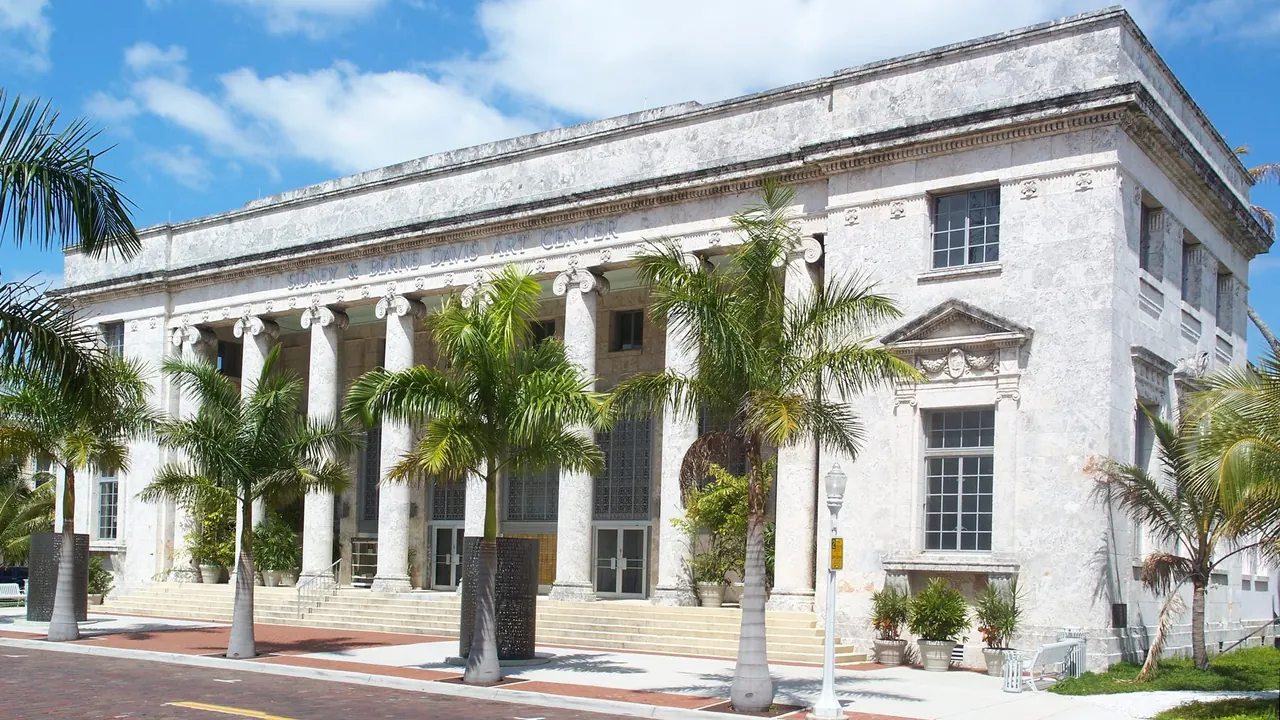
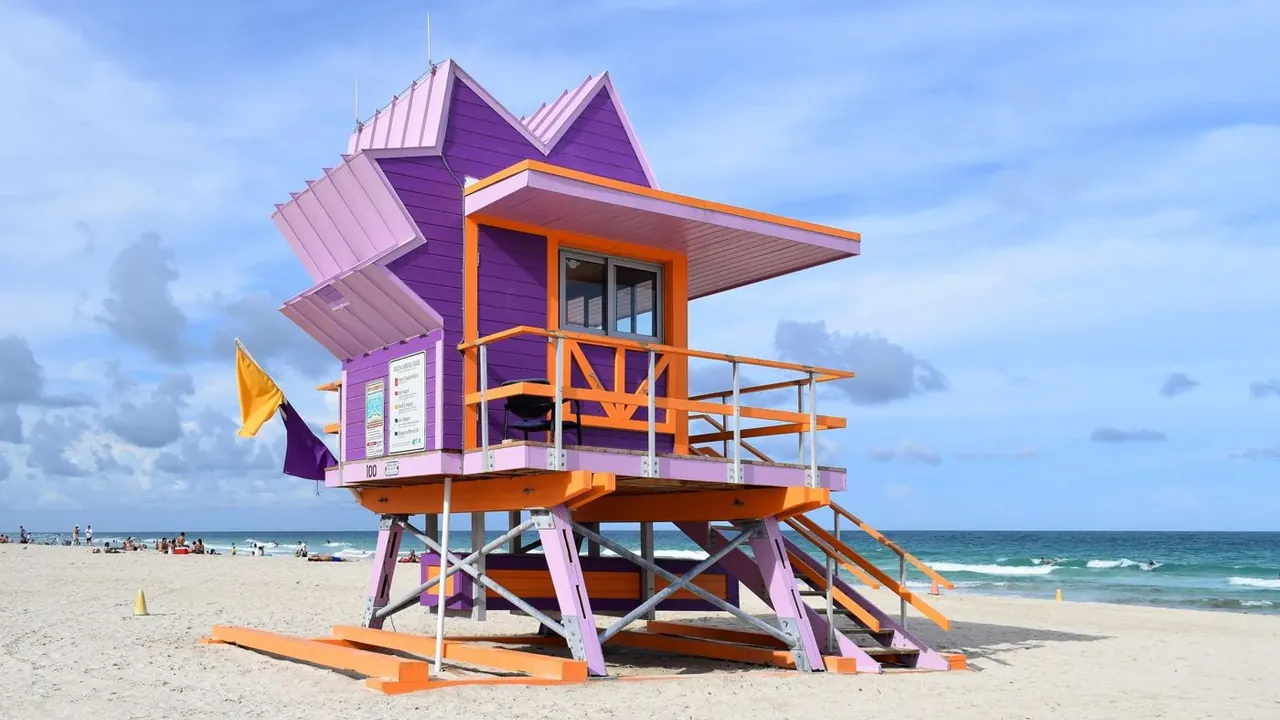
Photos: Fort Myers by Ebyabe, CC BY-SA 3.0, cropped; Miami by Radomianin, CC BY-SA 4.0, cropped.
Fort Myers or Miami?
Our verdict in twelve categories, each scored against the same fixed benchmark cities, and the climate month by month, so you can choose for your trip.
Choose Fort Myers for
- prices
- day trips
Fort Myers suits a slower, outdoor-minded Gulf Coast vacation: shelling on Sanibel at dawn, calm shallow water for small children, paddling through mangroves and drives to Naples, Boca Grande or Sarasota. It costs less than Miami if you stay in town, and the evenings are quiet. Choose it if you want birds and beaches more than restaurants and bars.
Choose Miami for
- nightlife
- shopping
- food and drink
Miami is the better choice for a city trip with a beach attached. The sea is warmer through the winter, the Cuban and Latin American cooking is far better, the Art Deco streets of South Beach are worth seeing, and the nightlife, luxury shopping and arts calendar are on a different level. It costs more and the noise and traffic can wear you down, but a weekend there is much fuller than one on the Gulf.
Scoreboard
Twelve categories on one fixed scale from 0 to 100. The shaded stretch is the gap between the two.
Your match
Pick a travel style or drag the sliders, and both match scores follow your weighting.
Wins on prices and day trips with your weighting.
Wins on nightlife and shopping with your weighting.
What matters to you?
Category by category
What the scores mean for a trip.
Beaches & swimming
Miami has the stronger beach and the easier one. On Miami Beach the sand starts at the hotel door and runs from Art Deco South Beach up to the quieter, family-friendly North Beach. The warm Atlantic means you can swim even in mid-winter, and Key Biscayne has calmer water away from the crowds.
Fort Myers has its beaches out on the barrier islands, a drive away. Fort Myers Beach is wide and lively, while Lovers Key and Bonita Beach are quieter. The main draw is Sanibel's shelling, which Miami cannot match. The Gulf is shallower and gentler than the Atlantic, but noticeably cooler in winter.
Food & drink
Miami eats far better. Cuban cooking is the base, from cafecito at ventanita windows on Calle Ocho to slow-roasted lechon. Around it are Venezuelan arepas, Haitian griot in Little Haiti and a serious upscale tier in Brickell and the Design District.
Fort Myers keeps it simple: peel-and-eat shrimp, grouper and fish tacos on waterfront decks at sunset, plus a few independent places and breweries in the River District. Both serve stone crab in season. Beyond seafood, though, Fort Myers has little range, and much of the eating out is at highway chains.
Culture & sights
Neither city has much history older than a century, but Miami makes more of what it has. The pastel Art Deco blocks along Ocean Drive and Collins Avenue are a sight in their own right. Vizcaya's villa and gardens, the Perez Art Museum, the Wolfsonian and Wynwood's murals add a few days of interest.
In Fort Myers the essential visit is the Edison and Ford Winter Estates, a rewarding half day of homes, laboratory and gardens beside the river. After that, a walk under the royal palms of McGregor Boulevard and the brick streets of the River District covers most of the town in a day.
Nightlife
This is where the two cities differ most. Miami goes out late and in style, from South Beach's big-room clubs with international DJs to the downtown venues that run until dawn. Wynwood's breweries, Brickell's rooftop bars and the salsa nights on Calle Ocho add variety.
Fort Myers goes to bed early. A drink in a River District pub, the monthly art walk or a sunset beer by the pier on Fort Myers Beach is about the extent of it. Most places wind down long before Miami's clubs even fill.
Nature & outdoors
Both sit in the same flat, watery South Florida landscape, and winter is the season in both, but they show different sides of it. Fort Myers is about birds and paddling. Roseate spoonbills and herons gather at Ding Darling on Sanibel, the boardwalk at Corkscrew Swamp runs through old-growth cypress, the Great Calusa Blueway leads through mangrove tunnels, and manatees collect on the Orange River in winter.
Miami has the Everglades on its doorstep, with alligators along the Anhinga Trail, airboat rides and the cycling loop at Shark Valley. It also has what the Gulf lacks: reefs for snorkelling in Biscayne National Park and off Key Largo, plus kitesurfing and boating on Biscayne Bay.
Day trips
Fort Myers has the better choice of day trips. Naples, Sanibel and Captiva, and the old railroad town of Boca Grande each make an easy day out. Sarasota's Ringling museum and the Ca' d'Zan mansion give the region its best cultural outing, and Everglades City opens up the Ten Thousand Islands.
From Miami, Fort Lauderdale and Palm Beach's Gilded Age mansions are pleasant, and the Upper Keys are good for a seafood lunch. Key West really needs an overnight stay. From either base, every trip means a car.
Good for families
Both work well for families, in different ways. Fort Myers is the gentler beach base: shallow, calm water, shell hunting on Sanibel, dolphin boat trips and the Shell Factory's animal park. It has no zoo or aquarium, though.
Miami has the bigger attractions, with Zoo Miami, the aquarium and planetarium at the Frost Science Museum, and the Venetian Pool in Coral Gables. Parents will want to stay at North Beach or Key Biscayne rather than among South Beach's late nights. In both cities the outings mean driving, and Orlando's parks are a long way off.
Getting around
Both are car cities, but Miami gives you more options without one. South Beach is flat and easy to walk or cycle, the free Metromover links downtown and Brickell, and ride-hailing covers the trips to Wynwood or Little Havana.
In Fort Myers a hire car is essential from the first day. The beaches, Sanibel and the reserves are spread across the county, buses are too sparse to rely on, and in the winter season the bridges to the islands back up badly.
Shopping & style
Miami is a destination for luxury shopping. The Design District gathers flagship fashion stores among architect-designed buildings, and Bal Harbour and the huge Aventura Mall draw buyers from across Latin America. Lincoln Road and a few cigar and guayabera shops in Little Havana round it off.
Fort Myers offers suburban open-air centres and an outlet mall towards Estero. Its most enjoyable browsing is in the galleries and shell shops along Sanibel's Periwinkle Way, but few visitors plan a trip around it.
Affordability
Fort Myers is the cheaper of the two, although neither is a bargain in the winter high season. Beachfront rooms on Sanibel are expensive, but staying in town or near the interstate keeps costs down. Plan for the hire car and the Sanibel causeway toll.
Miami's costs add up faster. Resort fees, hotel parking and South Beach club drinks push bills up quickly. Cuban bakeries and lunch counters, the free beaches and the free Metromover help, as does staying on the mainland.
Live music & performing arts
Miami has the deeper arts scene. The Adrienne Arsht Center hosts Florida Grand Opera and touring Broadway shows, Miami City Ballet is a company of real standing, and the New World Symphony plays in its Frank Gehry building. Salsa and timba bands in Little Havana give it a sound of its own.
Fort Myers has a smaller winter season: Broadway tours at the Barbara B. Mann hall, a repertory company in a restored 1908 theatre and a regional symphony. In both cities the main season is winter, and in Fort Myers the programme largely stops in summer.
Wellness & relaxation
For proper spa time, Miami offers more. Large hotel spas on Miami Beach and Key Biscayne have ocean-view pools, there is sunrise yoga on the sand, and a long-established Russian and Turkish bath house offers banya and cold plunges. The catch is the noise and traffic, so the calmer bases are Key Biscayne or Surfside.
Fort Myers has the quieter pace, especially on Sanibel and Captiva with their low buildings and bike paths. Its spas, though, are only resort treatment rooms, and relaxing there mostly means a pool and a walk along the shore.
When should you go?
Pick your month. The climate figures are measured averages, not a forecast.
Fort Myers in July
Miami in July
Daytime high, °C
Rainfall in the month, mm
Where the figures come from
Fort Myers has no rain gauge within 25 km of the centre, so its rainfall comes from a gridded climate dataset read at the city rather than from a gauge further away.
Temperature and rainfall are climate normals, averaged over the years shown. Fort Myers: 1991-2020 normals, Fort Myers / Page Park (4.5 km from centre). Miami: 1991-2020 normals, Miami International Airport (10 km from centre).
Both cities are at their best from November to April, when days are warm, dry and good for walking. The difference is the water. Miami's Atlantic stays at about 25°C through the winter, so a January swim is easy. The Gulf off Fort Myers drops to about 20°C, which is cool but still possible on sunny days. In spring both seas warm up, and by May both are at beach temperature.
Summer is hot and stormy in both cities, with highs of about 33°C and heavy afternoon downpours. At Fort Myers the wet season runs from June to September, peaking at about 244mm in June, and October is dry again. Miami's wet season starts in May and lasts longer, with October still bringing about 193mm. That makes autumn a slightly better time on the Gulf side.
Which traveller are you?
For a food and nightlife trip, Miami is the clear choice. Little Havana's lunch counters, Haitian and Peruvian cooking and chef-led restaurants in Brickell lead on to rooftop bars, Wynwood warehouse parties and clubs that stay open until dawn. Fort Myers offers grouper sandwiches and early nights.
On a tight budget, Fort Myers goes further. Rooms in town or near the interstate are much cheaper than Miami Beach hotels, which add resort fees and parking. The beaches and wildlife refuges cost little, though you still need to budget for a hire car.
For a shopping trip, Miami wins easily. The Design District has fashion-house flagships, Bal Harbour and Aventura are big destination malls, and there are outlets on the western edge. In Fort Myers, shopping is mostly suburban centres, plus some shell and gift shops on Sanibel.
Before you go
| Measure | Fort Myers | Miami |
|---|---|---|
| Currency | US Dollar (USD) | US Dollar (USD) |
| Sockets | AB120 V, 60 Hz | AB120 V, 60 Hz |
| Driving side | Right | Right |
| Time zone | UTC-5, UTC-4 in summer | UTC-5, UTC-4 in summer |
| Emergency number | 911 | 911 |
| Elevation | 3 m | 2 m |
| Main airport | Southwest Florida International Airport (RSW)12 km from centre79 non-stop destinations | Miami International Airport (MIA)7 km from centre198 non-stop destinations |
| Public holidays this year | 11 days | 11 days |
By the numbers
| Measure | Fort Myers | Miami |
|---|---|---|
| City population | 86,395 | 442,241 |
| People per km² | 681 | 3,046 |
| Museums within 10 km | 3 | 17 |
| UNESCO World Heritage sites within 50 km | 0 | 0 |
| Swim season, months above 21 °C | 10 months | 12 months |
Where else could you go?
Every comparison below shares a destination with this one, so you can follow Fort Myers or Miami somewhere new.