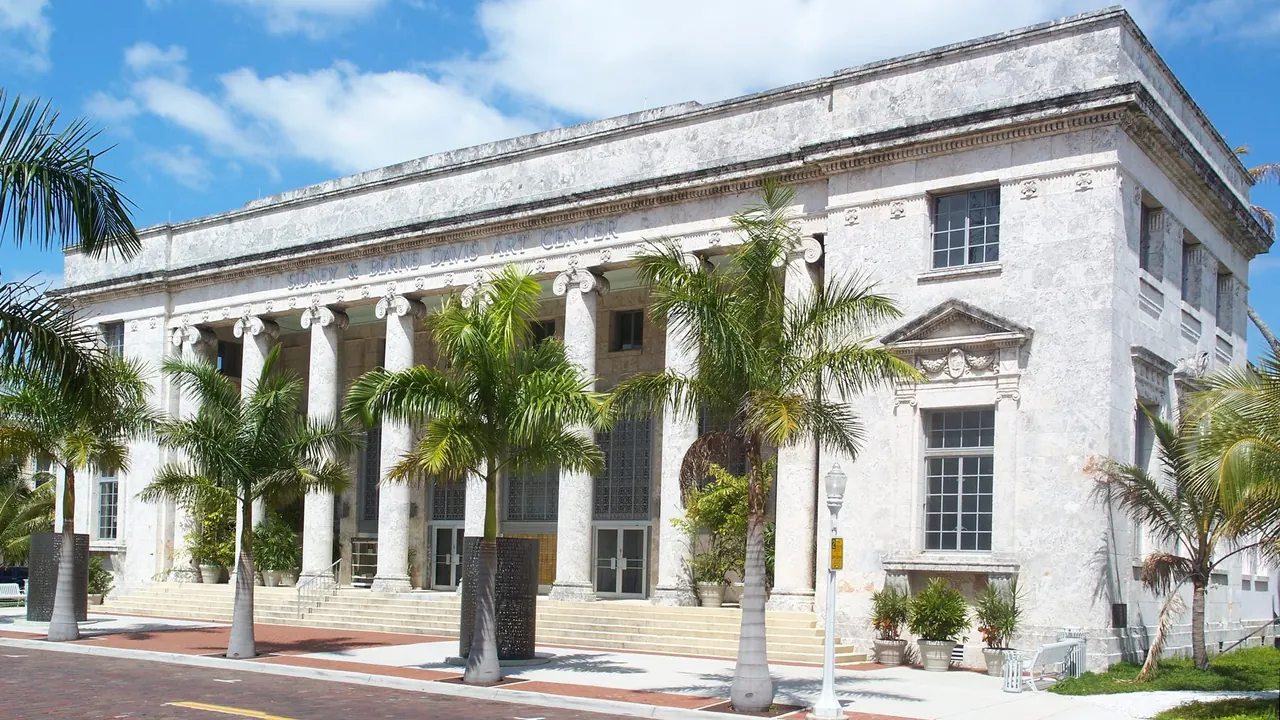
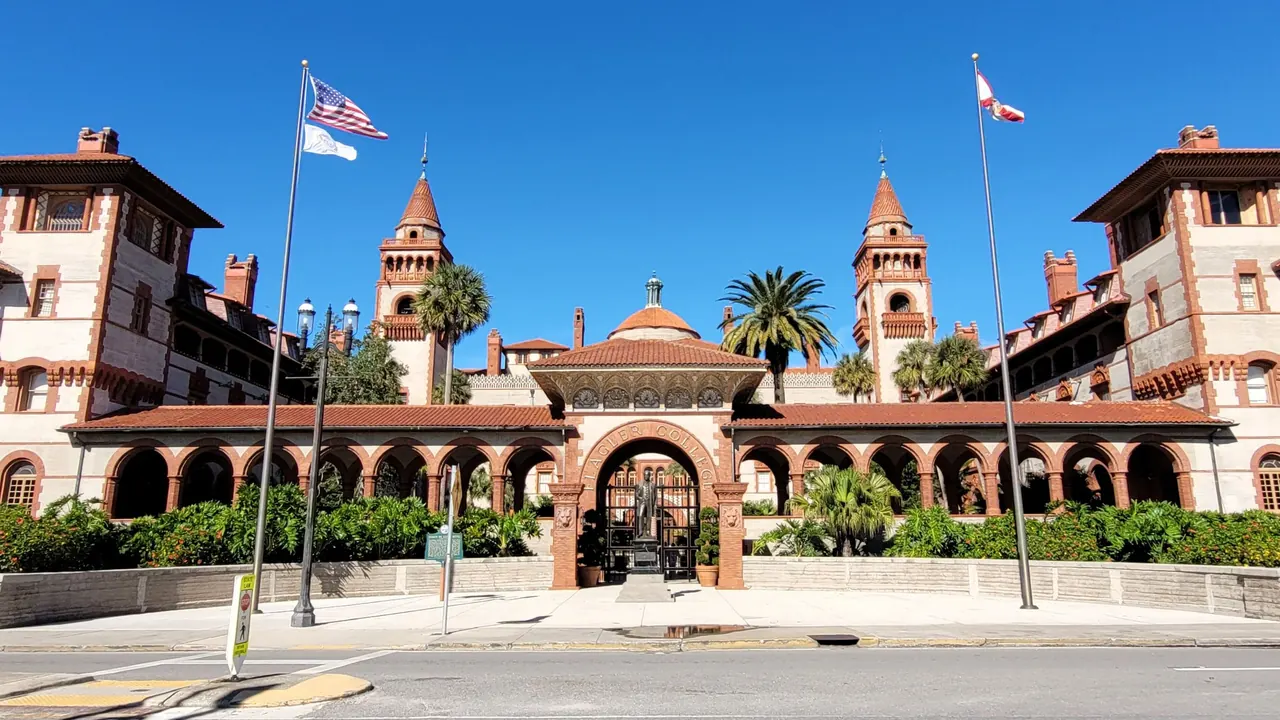
Photos: Fort Myers by Ebyabe, CC BY-SA 3.0, cropped; St. Augustine by Farragutful, CC BY-SA 4.0, cropped.
Fort Myers or St. Augustine?
Our verdict in twelve categories, each scored against the same fixed benchmark cities, and the climate month by month, so you can choose for your trip.
Choose Fort Myers for
- nature and the outdoors
- beaches
- shopping
Fort Myers suits a slow, warm-weather vacation built around the Gulf and its wildlife. The water is calm and shallow, the sand on Estero Island and Sanibel is soft and pale, and the refuges and mangrove creeks nearby are among the best in Florida for birds, dolphins and manatees. It works best for travellers who are happy to drive everywhere and want a mild winter escape rather than sights to tick off.
Choose St. Augustine for
- culture and sights
- getting around
St. Augustine is the better choice for anyone who wants a town to explore on foot. The Spanish colonial lanes, the Castillo de San Marcos and Flagler's Gilded Age hotels give it a depth of history that Fort Myers cannot match, and the Atlantic beaches are only a short drive across the Bridge of Lions. Travellers who like an afternoon on the sand after a morning of old streets will find it the more rounded trip, though winters are cooler and the sea is too cold for swimming then.
Scoreboard
Twelve categories on one fixed scale from 0 to 100. The shaded stretch is the gap between the two.
Your match
Pick a travel style or drag the sliders, and both match scores follow your weighting.
Too close to call, 1 point apart
Wins on nature and the outdoors and beaches with your weighting.
Wins on culture and sights and getting around with your weighting.
What matters to you?
Category by category
What the scores mean for a trip.
Beaches & swimming
Fort Myers has the better beaches for swimming, though they take more effort to reach. Estero Island, Lovers Key, Bonita Beach and the shelling shores of Sanibel and Captiva are half an hour or more from town, but the Gulf there is shallow, calm and gentle enough for children and weak swimmers, and it stays swimmable through much of the winter.
St. Augustine's sand on Anastasia Island is just as wide and pale and only ten to fifteen minutes from the old town, which makes it easy to mix sightseeing with a swim. The Atlantic is livelier and greener, though, and in winter it becomes a place to walk rather than swim.
Food & drink
Both towns eat seafood in casual places by the water and neither has much range. Fort Myers leans on Gulf staples like grouper sandwiches, peel-and-eat shrimp and stone crab claws, with a few independent restaurants and breweries downtown and a lot of chain dining along the highways.
St. Augustine has something Fort Myers lacks, a local flavour of its own: the Minorcan datil pepper in hot sauces, spicy clam chowder and pilau. The trade-off is that the restaurants along St. George Street lean heavily on passing tourists.
Culture & sights
This is the widest gap between the two. Fort Myers has one sight that is worth the trip, the Edison and Ford Winter Estates with their laboratory and riverside gardens, plus a few streets of old brick buildings downtown. Most visitors have seen it all in a day.
St. Augustine has more than four centuries of history in a compact centre. The coquina-walled Castillo de San Marcos, the balconied lanes of the Spanish quarter, Flagler's Ponce de Leon Hotel with its Tiffany glass and the Lightner Museum give it layers of history that no other town in Florida has, and Fort Matanzas and the lighthouse add more just outside town.
Nightlife
Evenings are quiet in both, with no real club scene and most bars closing well before the small hours. What differs is the layout. Fort Myers splits its nightlife between the pubs and rooftop bars of the River District and the beach bars around the pier on Estero Island, which fill up in March, so a night out usually means a drive or a taxi.
St. Augustine keeps its taverns and courtyard bars together in the old town, close enough to walk between, with Flagler College students adding some life in term time.
Nature & outdoors
Fort Myers is the better choice for wildlife. Ding Darling refuge on Sanibel is one of the best places in the country for roseate spoonbills and herons, Corkscrew Swamp has old-growth bald cypress, and the mangrove tunnels of the Great Calusa Blueway make for excellent paddling. Manatees gather near the Orange River in winter.
St. Augustine's salt marsh, dunes and maritime forest are pleasant rather than exceptional. Anastasia State Park and the Guana Tolomato Matanzas reserve are good for a walk, a paddle or birding, and the coastal road south is good for cycling.
Day trips
Both need a car for every outing, and the lists are about equally useful. From Fort Myers the trips are mostly along the Gulf: polished Naples, the island villages of Sanibel, Captiva and Boca Grande, the Ringling museum in Sarasota and Everglades City at the edge of the Ten Thousand Islands.
From St. Augustine the options are more varied: Jacksonville's museums, Victorian Fernandina Beach, the Daytona speedway and Kennedy Space Center. Orlando's parks are also an hour closer than they are from Fort Myers.
Good for families
A family trip to Fort Myers is spent on the sand and the water, while St. Augustine fills its days with forts, alligators and lighthouses. In Fort Myers that means shallow, calm Gulf water, shell hunting on Sanibel, dolphin boats and gentle kayaking. There is no zoo or aquarium, though, and every outing starts in the car.
St. Augustine offers the Alligator Farm with its zipline, cannon firing at the fort, the lighthouse climb and pirate museums, all in a compact centre that is safe to walk. Its beaches suit children mainly in summer, because the sea is cold in winter.
Getting around
St. Augustine is much easier without driving all the time. The fort, St. George Street, Flagler College and the bayfront are minutes apart on foot, sightseeing trolleys loop past the main sights, and most visitors park once and walk. You will still need wheels for the beaches.
In Fort Myers a car is essential from day one. The town, the beaches, Sanibel and the reserves are spread across a wide county, the buses are too sparse to rely on, and the bridges to the islands back up badly in the winter season.
Shopping & style
Neither is a shopping destination, but Fort Myers has a little more to offer. The outlet mall and large open-air centres towards Estero cover mainstream brands well, and Periwinkle Way on Sanibel adds galleries and shell shops.
St. Augustine's shopping is more of a stroll than an errand. St. George Street is mostly fudge and pirate souvenirs, but the galleries and antique dealers around Aviles Street and the datil-pepper sauces make better gifts than anything typical of Fort Myers.
Affordability
The two charge extra for different things. In Fort Myers you pay for being near the beach. Rooms on Estero Island, and above all on Sanibel, are the dearest from January to April, and summer rates fall sharply. Staying in town or near the interstate saves money, but a rental car, beach parking and the causeway fee are extras you cannot avoid.
In St. Augustine you pay for being near the old town. Historic inns and B&Bs within walking distance of it become much dearer at weekends and in the spring and summer peaks. Midweek stays and motels by the highway or on the island cost less, and the old streets and public beaches are free.
Live music & performing arts
The two are about equal for evenings out, but they offer different kinds of shows. Fort Myers has a proper indoor winter season, with touring Broadway musicals at the Barbara B. Mann hall, a repertory company in a restored 1908 theatre and a regional symphony, but it largely stops in summer.
St. Augustine's main stage is the open-air Amphitheatre in the woods on Anastasia Island, which books rock, country and folk acts through much of the year. For opera or serious theatre you have to go to Jacksonville.
Wellness & relaxation
Neither has a bathing tradition, and spas are mostly rooms inside hotels. Fort Myers is slightly better for doing nothing, thanks to the low-rise calm of Sanibel and Captiva, resort pools and long shoreline walks. In St. Augustine, relaxing means a B&B veranda, a courtyard garden and an evening walk along the bayfront seawall, and it is best midweek.
When should you go?
Pick your month. The climate figures are measured averages, not a forecast.
Fort Myers in July
St. Augustine in July
Daytime high, °C
Rainfall in the month, mm
Where the figures come from
Fort Myers has no rain gauge within 25 km of the centre, so its rainfall comes from a gridded climate dataset read at the city rather than from a gauge further away.
St. Augustine has no rain gauge within 25 km of the centre, so its rainfall comes from a gridded climate dataset read at the city rather than from a gauge further away.
St. Augustine's sunshine is measured 73 km from the centre, at Jacksonville International.
Temperature and rainfall are climate normals, averaged over the years shown. Fort Myers: 1991-2020 normals, Fort Myers / Page Park (4.5 km from centre). St. Augustine: 2006-2020 (sunshine 1991-2020, rainfall 1991-2020) normals, St Augustine / Kingsley Mobile Home Park (7.6 km from centre).
Fort Myers is the warmer place in winter. January highs of about 24°C are comfortable for boardwalks and beach walks, and the dry season runs from November to April. The Gulf is cool then but still swimmable on sunny days, and March and April are the sweet spot, dry and warm with the sea warming up. From June to September the rains arrive, with over 200mm in most months, and highs of 33°C make midday walking hard work, though the water is at its warmest.
St. Augustine has a real winter. January highs near 18°C suit the old streets but not the beach, and the sea stays too cool for most swimmers until late spring. Late April and May are its best weeks, warm and very sunny, with May the sunniest month of the year. By high summer the sea reaches about 28°C, but June to September are the wettest months, with afternoon storms, though the rain is lighter than in Fort Myers. November is one of the driest months and is pleasant again for walking, as is October.
Which traveller are you?
On a beach and sun trip, Fort Myers is the stronger pick, especially in winter. The calm Gulf is still mild enough for a swim on sunny days when St. Augustine's Atlantic is only for walking, and slow mornings spent shelling make an unhurried beach week.
For a culture and arts trip, St. Augustine wins clearly. Two or three days of walking through Spanish colonial and Gilded Age history never feel repetitive, and history sits right outside the door of your inn. Fort Myers can be covered in a single day.
On an outdoors trip, Fort Myers gives the richer days. Expect quiet dawn paddles, some of the country's best birdwatching and a real chance of meeting dolphins or manatees. St. Augustine's marshes and dunes are better suited to a gentle walk or a bike ride.
Before you go
| Measure | Fort Myers | St. Augustine |
|---|---|---|
| Currency | US Dollar (USD) | US Dollar (USD) |
| Sockets | AB120 V, 60 Hz | AB120 V, 60 Hz |
| Driving side | Right | Right |
| Time zone | UTC-5, UTC-4 in summer | UTC-5, UTC-4 in summer |
| Emergency number | 911 | 911 |
| Elevation | 3 m | 152 m |
| Main airport | Southwest Florida International Airport (RSW)12 km from centre79 non-stop destinations | Jacksonville International Airport (JAX)76 km from centre48 non-stop destinations |
| Public holidays this year | 11 days | 11 days |
By the numbers
| Measure | Fort Myers | St. Augustine |
|---|---|---|
| City population | 86,395 | 14,329 |
| People per km² | 681 | 433 |
| Museums within 10 km | 3 | 12 |
| UNESCO World Heritage sites within 50 km | 0 | 0 |
| Swim season, months above 21 °C | 10 months | 8 months |
Where else could you go?
Every comparison below shares a destination with this one, so you can follow Fort Myers or St. Augustine somewhere new.
- Naples, Floridavs Fort Myers
- Daytona Beachvs St. Augustine
- Sarasotavs Fort Myers
- St. Petersburg, Floridavs Fort Myers
- Orlandovs St. Augustine
- St. Pete Beachvs Fort Myers