French Polynesia
Moorea
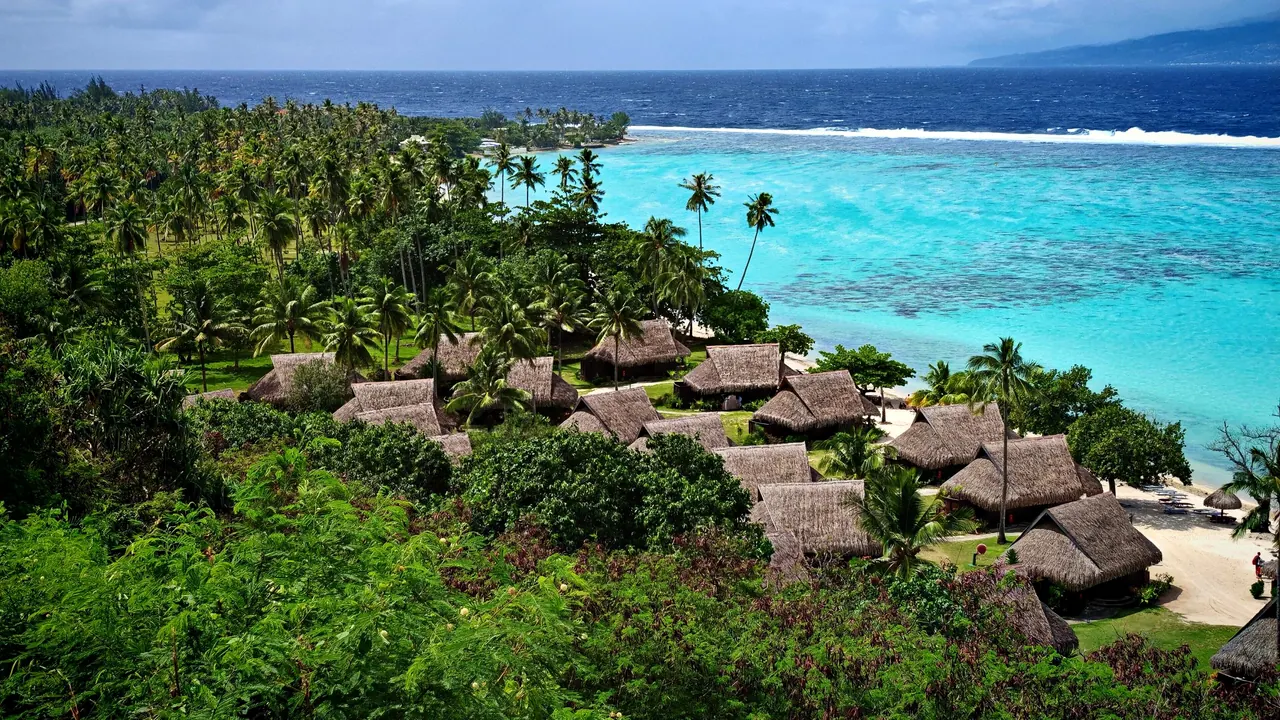
The lagoon and reef at Temae
- Nature & outdoors88
- Beaches85
- Wellness & relaxation55
Photo: Hakilon, CC BY-SA 4.0, cropped
Match
38
Every category weighted equally
- Beach & sun45
- Culture & arts29
- Food & nightlife29
- Family trip45
- Outdoors46
- Relax & unwind47
- Shopping & style32
- On a budget35
Moorea in twelve categories
Our verdict on each, scored 0 to 100 against the same fixed benchmark cities, so a score means the same thing on every page.
Beaches & swimming. Scores 85 out of 100.
Food & drink. Scores 33 out of 100.
Culture & sights. Scores 20 out of 100.
Nightlife. Scores 7 out of 100.
Nature & outdoors. Scores 88 out of 100.
Day trips. Scores 24 out of 100.
Good for families. Scores 48 out of 100.
Getting around. Scores 45 out of 100.
Shopping & style. Scores 20 out of 100.
Affordability. Scores 12 out of 100.
Live music & performing arts. Scores 15 out of 100.
Wellness & relaxation. Scores 55 out of 100.
Moorea category by category
Beaches & swimming
85Moorea is ringed by a reef-sheltered lagoon of clear, calm water that stays around 26°C to 29°C all year, so swimming is easy every month. What you swim in is the lagoon itself, usually straight off a guesthouse jetty or a resort's overwater deck, more than a long run of sand. The best public beach is Temae on the north-east corner, a stretch of pale sand with turquoise shallows. The north-west around Hauru Point and Tiahura has the other sandy strips, with the small motu offshore within wading or kayaking distance.
Beyond those, much of the shoreline is coral, rock or narrow strips of sand in front of private land, so where you stay matters. Days revolve around the water: snorkelling over coral gardens, paddling out to the motu, boat trips to the sandbars. Visitors expecting miles of open beach to walk will find a quieter, more enclosed kind of beach life.
Food & drink
33Eating on Moorea is simple and pleasant rather than a reason to come. The dish to look for is poisson cru, raw tuna in lime and coconut milk, served almost everywhere, along with grilled mahi-mahi and lagoon fish. Evening food trucks known as roulottes, small family snack counters and roadside fruit stands, with the island's sweet pineapples and fresh coconuts, give the most local meals. A Sunday ma'a Tahiti, food cooked in an earth oven, is worth seeking out.
The rest is a small set of French-leaning restaurants around Cook's Bay and Hauru Point and the dining rooms of the big resorts, competent but narrow. Choice thins quickly, many places close early, and couples staying a week often cook from the supermarket in their guesthouse.
Culture & sights
20Moorea's heritage is small and set mostly in the landscape. The Opunohu valley holds a group of restored marae, the stone platforms of ancient Polynesian worship, along with archery platforms and house foundations under the chestnut trees, and they give a quiet sense of the island before Europeans. At Papetoai, an octagonal church stands on the site of one of the earliest Protestant missions in the South Pacific. Beyond these, a cultural village with crafts and demonstrations and a few small galleries make up the list. Visitors come for the island's setting, and a day or two covers its sights.
Nightlife
7There is almost no nightlife on Moorea. Evenings mean a sunset drink at a resort bar or a beach terrace near Hauru Point, dinner, and bed early, since most days start with the morning light on the lagoon. A few hotel bars stay open after dinner, but there are no clubs and nothing runs late. Anyone wanting a night out has to cross to Papeete, and the ferry schedule makes that impractical.
Nature & outdoors
88Moorea's landscape is the reason people come. Sharp, green volcanic peaks such as Mount Rotui and Mouaroa rise straight out of the lagoon, split by Cook's Bay and Opunohu Bay, and the Belvedere lookout above them shows the whole composition at once. Trails climb through pineapple plantations and rainforest to ridges like the Three Coconuts pass, and guided hikes go higher onto steep, rope-assisted routes.
The lagoon is just as much of a draw. Snorkellers and divers meet stingrays and blacktip reef sharks in waist-deep water, turtles and dense coral, while outer-reef dives bring lemon sharks. From about July to November humpback whales come close to shore to calve, and dolphins are seen all year. Kayaks, paddleboards and outrigger canoes are part of daily life.
Day trips
24Day trips mean one place: Tahiti, about half an hour to three quarters of an hour by ferry. Papeete has its covered market, waterfront and cathedral, and with a hire car you can follow the coast to Point Venus, the black-sand beaches and the quieter peninsula of Tahiti Iti. Beyond that the other islands of French Polynesia are flights away and are trips in their own right, not days out, so most visitors simply stay on Moorea.
Good for families
48Moorea is safe, relaxed and warm, and the lagoon is calm and shallow in many places, which suits children who can snorkel or paddle. Meeting rays on the sandbars and spotting fish from a kayak delight most older children. Polynesian culture is fond of children, and a self-catering guesthouse with a garden makes family life simple.
There is little made for children, though: no zoos, aquariums or parks beyond the water itself. Coral and sea urchins call for reef shoes, and the long flight is a lot for small ones. The island's image and many of its resorts lean towards couples and honeymooners, so families do best in houses or pensions near the northern sandy beaches.
Getting around
45One road of about 60km circles the island along the coast, with little traffic, so with a hire car, scooter or electric bike everything is close: Cook's Bay, the Belvedere and the northern beaches are all within half an hour of each other. Arrival is easy too, by a short ferry crossing from Papeete or a brief flight. The catch is public transport, which is little more than buses timed to the ferries, so visitors without a vehicle depend on taxis, hotel shuttles and tours. Cycling the flat coast road is pleasant, though there are few pavements.
Shopping & style
20Shopping is small and specific. The one serious purchase is Tahitian black pearls, sold in jewellers and pearl shops around Cook's Bay and Hauru Point. Beyond that there are pareos and hand-printed fabrics, monoi oil, vanilla, carved wood and shell crafts in small galleries and roadside stalls. There is no shopping street, mall or market of any size, and anyone wanting more than gifts and pearls finds a larger choice in Papeete's market.
Affordability
12Moorea is a very expensive place to stay. Resort rooms and overwater bungalows cost as much as top hotels anywhere, restaurant meals are expensive, and almost everything in the shops is imported, from wine to groceries. Car hire, boat trips and dives add up fast. Family-run pensions, self-catering houses, the evening roulottes and the local supermarket lower the cost a good deal, but even a careful trip here costs well above most of Europe.
Live music & performing arts
15Live performance on Moorea means Tahitian dance and drumming, usually at resort dinner shows and the island's cultural village. The dancing is skilled and the tradition is genuine, with hip-swaying ori Tahiti, fire dancing and pounding to'ere drums, but it is staged for guests. There is no theatre or concert life on the island. In July the great Heiva festival of dance and song takes place across the water in Papeete, and some Moorea villages hold their own smaller celebrations.
Wellness & relaxation
55Moorea is built for slowing down. Days follow the light on the lagoon, nothing is far, there is little noise beyond roosters and the reef, and the overwater bungalows and garden pensions invite long hours of doing very little. The larger resorts have spas, some set over the water, and the island's own touch is taurumi, a traditional Polynesian massage, often given with monoi, the coconut oil scented with tiare flowers.
There are no thermal baths or bathing traditions, and outside the resorts spa choice is small, so the island suits visitors who want calm and a good massage rather than a full spa programme.
Where to stay in Moorea
Moorea is small enough that one base covers the whole island, since the 60km coast road puts every corner within a short drive and there is no need to move between bases. What matters more is the shoreline in front of your room, because sandy beaches are few and much of the coast is coral or rock.
The north-west around Hauru Point and Tiahura is the easiest choice for a first visit. It has the island's main sandy strips, the motu within wading or kayaking distance, sunset terraces and a cluster of restaurants, and its houses and pensions suit families and anyone who wants beach days without driving much. Cook's Bay and neighbouring Opunohu Bay, on the north coast, sit right beneath the peaks, close to the Belvedere trails and the marae of the Opunohu valley. They suit walkers and travellers who care more about the view than the sand, as the bays have little beach of their own.
The north-east near Temae has the best public beach and lies close to the airport and the ferry landing at Vaiare, which is handy for a day in Papeete. The south and east coasts are the quietest, with garden pensions and lagoon jetties rather than beaches. They suit a slow, peaceful stay, ideally with a hire car for reaching the north.
When should you go?
Pick a month to see what it is like. The climate figures are measured averages, not a forecast.
Moorea in July
Daytime high, °C
Rainfall in the month, mm
The whole year
Shaded against this city’s own year: the deepest cell is its best month for that figure and the palest its weakest.
Temperature and rainfall are climate normals, averaged over the years shown. Moorea: 1991-2020 normals, Tahiti-Faaa (22.2 km from centre).
Before you go
| Measure | Moorea |
|---|---|
| Official language | French |
| Currency | CFP Franc (XPF) |
| Driving side | Right |
| Time zone | UTC-10 |
| Emergency number | 112 |
| Main airport | Fa'a'ā International Airport (PPT)30 non-stop destinations |
| Public holidays this year | 16 days |
By the numbers
| Measure | Moorea |
|---|---|
| Population | 16,191 |
| People per km² | 121 |
| Swim season, months above 21 °C | 12 months |
Compare Moorea with
Every comparison with a written verdict behind it.