French Polynesia
Tahiti
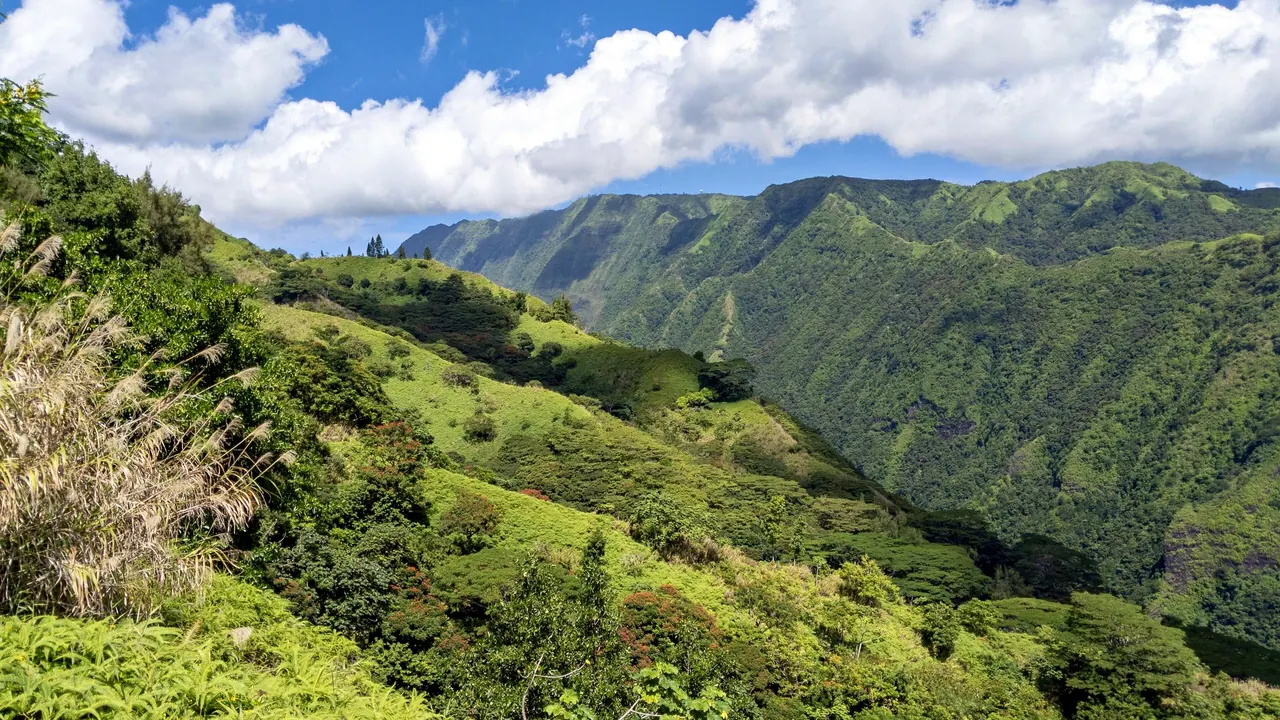
Green valleys and ridges from Le Belvédère
- Nature & outdoors84
- Beaches68
- Food & drink52
Photo: Matthew Dillon from Hollywood, CA, USA, CC BY 2.0, cropped
Match
43
Every category weighted equally
- Beach & sun47
- Culture & arts38
- Food & nightlife39
- Family trip46
- Outdoors49
- Relax & unwind48
- Shopping & style40
- On a budget40
Tahiti in twelve categories
Our verdict on each, scored 0 to 100 against the same fixed benchmark cities, so a score means the same thing on every page.
Beaches & swimming. Scores 68 out of 100.
Food & drink. Scores 52 out of 100.
Culture & sights. Scores 30 out of 100.
Nightlife. Scores 27 out of 100.
Nature & outdoors. Scores 84 out of 100.
Day trips. Scores 40 out of 100.
Good for families. Scores 45 out of 100.
Getting around. Scores 38 out of 100.
Shopping & style. Scores 38 out of 100.
Affordability. Scores 14 out of 100.
Live music & performing arts. Scores 35 out of 100.
Wellness & relaxation. Scores 44 out of 100.
Tahiti category by category
Beaches & swimming
68The water is the draw rather than the sand. The sea around Tahiti stays at about 26-29°C all year, and inside the reef the lagoon is calm, clear and easy for swimming and snorkelling. The beaches themselves are modest. The east and north coasts, around Pointe Venus and Matavai Bay, have black volcanic sand. The west coast near Punaauia has the best of the pale-sand lagoon beaches, and on Tahiti Iti the small cove of Plage de Maui is the prettiest stretch.
Many visitors treat Tahiti as the gateway and keep their beach days for Moorea, about half an hour by ferry, where the lagoon is wider, the sand whiter and resorts sit right on the water. The open coasts of Tahiti face surf and currents and are not for casual swimming.
Food & drink
52Eating on Tahiti mixes Polynesian, French and Chinese traditions. The dish to try is poisson cru, raw tuna marinated in lime and coconut milk, alongside grilled mahi-mahi, breadfruit, taro and fafaru for the brave. In the evening, food trucks called roulottes gather on the Papeete waterfront at Place Vaiete, serving steak frites, chow mein, crêpes and fish at shared tables, and this is the most local and sociable way to eat.
The Marché de Papeete is good for tropical fruit, vanilla and snacks, and French bakeries mean good baguettes and pastries in every village. Restaurants in Papeete and the west-coast hotels are competent and French-leaning, but the choice is small and nothing here makes the island a food destination.
Culture & sights
30Tahiti's heritage is Polynesian and mostly outdoors. The Musée de Tahiti et des Îles at Punaauia is the essential stop, with a strong collection on navigation, tapa cloth, tattoo and the culture of the islands. Restored marae, the stone ceremonial platforms, stand in the forest at Arahurahu and elsewhere around the coast, and Pointe Venus marks where Cook observed the transit of Venus in 1769.
Papeete itself is a small, functional port town with a cathedral and a few colonial buildings, but little historic fabric. A day or two covers the sights, and visitors interested in the deeper sacred sites of the islands have to fly further out.
Nightlife
27Going out on Tahiti means Papeete, where a handful of bars and clubs near the waterfront fill up on Friday and Saturday nights with locals and sailors from the harbour. Elsewhere, evenings end with dinner and a drink at the hotel bar. The island is not chosen for its nights, and the outer resorts are quieter still.
Nature & outdoors
84Tahiti is a high volcanic island, and its interior is wild and dramatic: jagged ridges above 2,000m, deep rainforest valleys and waterfalls everywhere after rain. The Papenoo valley crosses the island by 4x4 track, the Fautaua valley leads to a tall waterfall, and the climb to Mount Aorai is a serious ridge hike with views across to Moorea. Many routes are best done with a local guide.
On the water, Teahupo'o on Tahiti Iti breaks one of the most famous waves in surfing, and the lagoons and passes offer diving with sharks and rays. Humpback whales calve offshore from about July to October. Moorea, a ferry ride away, adds its own spiky peaks and lagoon. The drier months from May to October are best for hiking.
Day trips
40The great day out is Moorea, about half an hour by ferry from Papeete, with its villages, bays, pineapple plantations and lagoon easy to tour by hire car in a day. On Tahiti itself, the drive around the smaller peninsula of Tahiti Iti to the surf village of Teahupo'o and the road's end makes a second outing, and boat trips run to the atoll of Tetiaroa.
Beyond that, the islands everyone has heard of, such as Bora Bora and Huahine, are short flights away and better as stays of their own than as day trips.
Good for families
45Tahiti is safe, relaxed and warmly welcoming to children, and the calm, warm lagoons are ideal for paddling and first snorkels. Older children enjoy the waterfalls, outrigger canoe outings and whale-watching boats in season. There is, however, almost nothing built for children: no theme park, aquarium or zoo, and the beaches on the main island are fewer and less inviting than those on Moorea. The long flights and high costs also weigh on a family trip, which works best as a slow lagoon stay at a resort with a pool.
Getting around
38One road circles the island along the coast, with a branch onto Tahiti Iti, so finding your way is easy. Public buses run along it but are infrequent and of little use to visitors, so most people hire a car. Traffic into Papeete is heavy at rush hour, and the interior is only reachable on foot or by 4x4. Ferries to Moorea run often from the Papeete waterfront, and any island further out means a domestic flight from Faa'a.
Shopping & style
38The one thing worth shopping for is Tahitian black pearls, sold loose and set by jewellers across Papeete, which is the main place to compare them. The Marché de Papeete has an upper floor of handicrafts, pareos, carved wood, woven hats, vanilla and monoi oil scented with tiare flowers. Beyond those, shopping is small-town and imported, and expensive.
Affordability
14Tahiti is very expensive. Almost everything is imported, so groceries, restaurant meals, alcohol and car hire all cost well above European levels, and the resort hotels on the west coast cost far more again. The main ways to soften the bill are family-run guesthouses, called pensions, and eating at the roulottes and snack bars where local people eat.
Live music & performing arts
35The performing tradition here is Polynesian dance, ori Tahiti, with its fast hip movement and pounding toere drums. It is at its best during the Heiva i Tahiti in July, when dance troupes, singers and choirs compete over several weeks in Papeete in a festival of real cultural weight. For the rest of the year, dance shows are mostly staged at hotel dinners, with occasional concerts and performances at the Maison de la Culture. Formal theatre, opera and classical music are almost absent.
Wellness & relaxation
44Wellness on Tahiti means resort spas and the island's own massage tradition, taurumi, a firm, kneading massage given with warm monoi oil scented with tiare flowers. The larger hotels on the west coast around Punaauia have spas that face the lagoon, and a massage there at the end of the day is the main way visitors unwind. There is no bathing or thermal culture, no public baths and nothing beyond what the hotels provide.
The pace depends on where you stay. Papeete and the west-coast road are busy, with heavy traffic at rush hour, while the villages of Tahiti Iti and the east coast are slow and quiet. Many visitors keep the restful part of their trip for the calmer islands further out.
Where to stay in Tahiti
Most visitors stay on the west coast, between the airport at Faa'a and Punaauia. This stretch has the large hotels and spas facing the lagoon, the island's best pale-sand beaches and the Musée de Tahiti et des Îles. It is also close to the airport and the Moorea ferry. It suits a first visit and couples or families who want a pool and calm water, though the coast road is busy at rush hour. Papeete itself works for a night or two at the start or end of a trip. It also suits anyone who wants to walk to the roulottes at Place Vaiete, the market, the pearl jewellers and the only real nightlife on the island.
For a quiet stay, choose Tahiti Iti or the east coast, with slow villages, black-sand shores and family-run guesthouses that help with the cost. This side suits surfers heading for Teahupo'o, hikers and anyone happy to explore by car.
A single road circles the island, so with a hire car one base covers all of Tahiti. Many visitors then move once, to Moorea, for their beach days, because its sand is whiter and its lagoon wider than the main island's.
When should you go?
Pick a month to see what it is like. The climate figures are measured averages, not a forecast.
Tahiti in July
Daytime high, °C
Rainfall in the month, mm
The whole year
Shaded against this city’s own year: the deepest cell is its best month for that figure and the palest its weakest.
Temperature and rainfall are climate normals, averaged over the years shown. Tahiti: 1991-2020 normals, Tahiti-Faaa (5.3 km from centre).
Before you go
| Measure | Tahiti |
|---|---|
| Official language | French |
| Currency | CFP Franc (XPF) |
| Driving side | Right |
| Time zone | UTC-10 |
| Emergency number | 112 |
| Main airport | Fa'a'ā International Airport (PPT)30 non-stop destinations |
| Public holidays this year | 16 days |
By the numbers
| Measure | Tahiti |
|---|---|
| Population | 178,133 |
| People per km² | 171 |
| Swim season, months above 21 °C | 12 months |
Compare Tahiti with
Every comparison with a written verdict behind it.