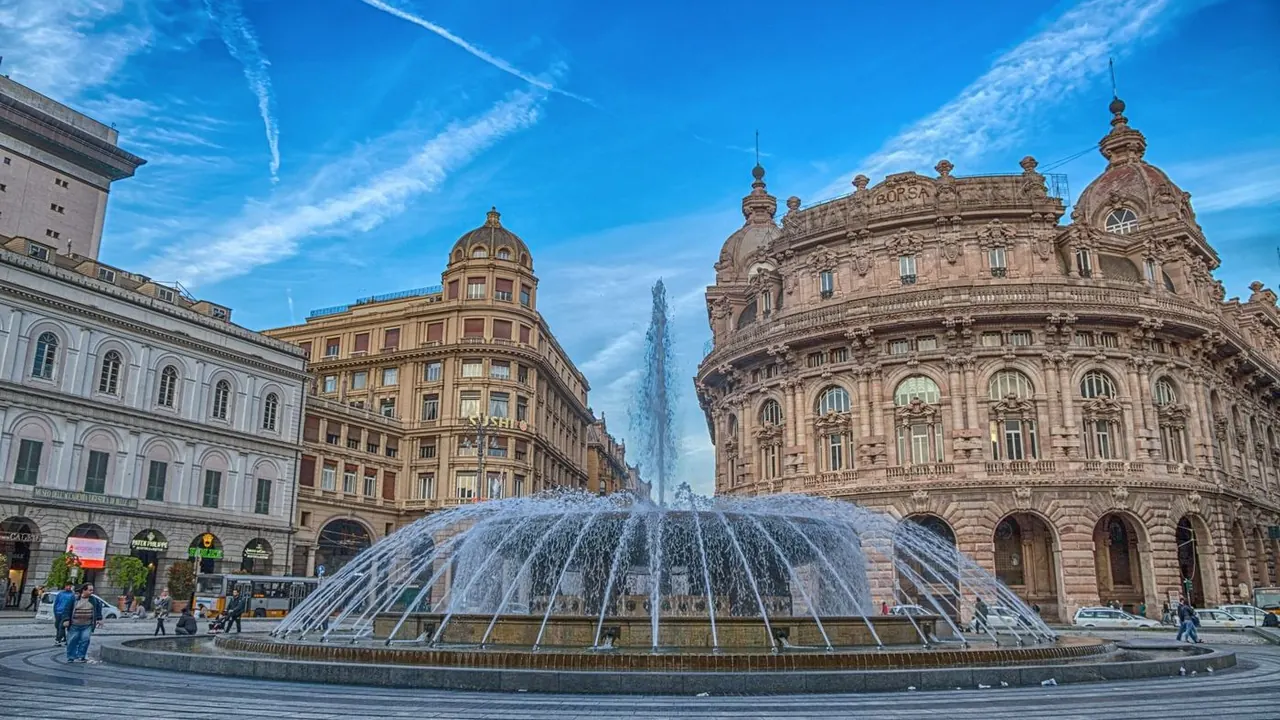
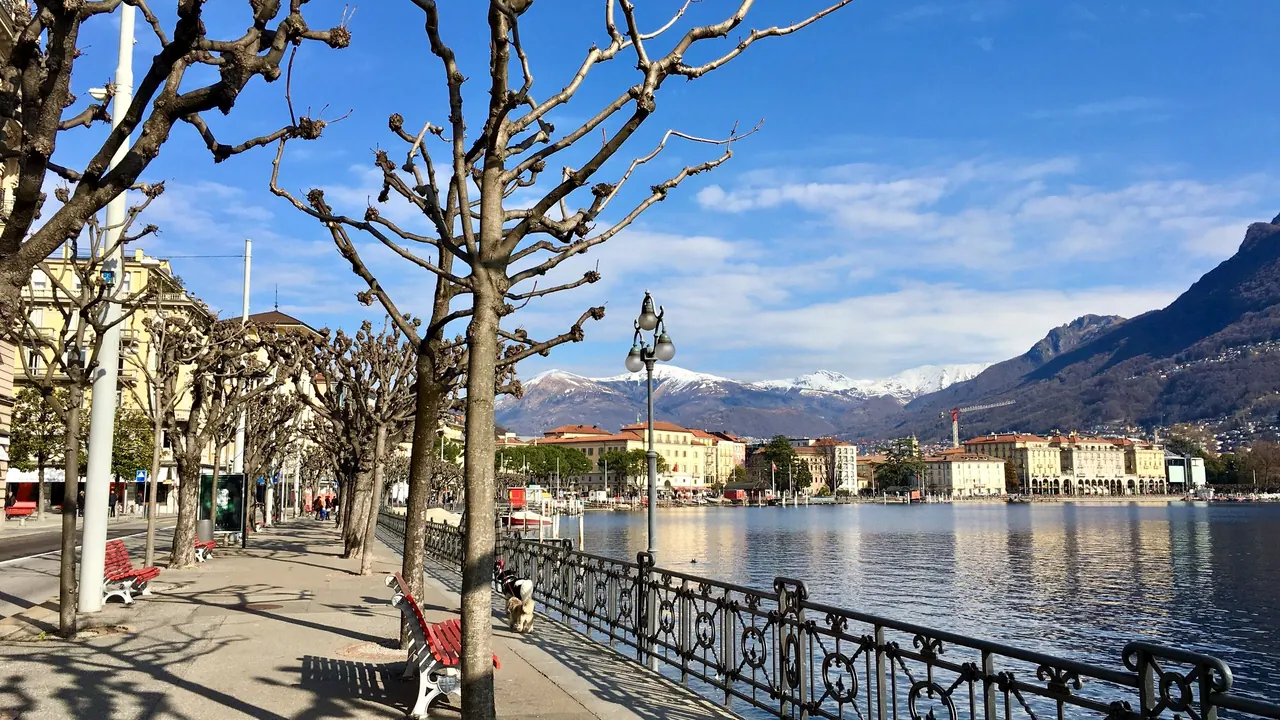
Photos: Genoa by Faber1893, CC BY-SA 4.0, cropped; Lugano by Thomas Woodtli from Zürich, Switzerland, CC BY-SA 2.0, cropped.
Genoa or Lugano?
Our verdict in twelve categories, each scored against the same fixed benchmark cities, and the climate month by month, so you can choose for your trip.
Choose Genoa for
- prices
- culture and sights
- food and drink
Genoa suits the traveller who wants a proper city with the sea at its feet. There is a huge medieval old town to get lost in, palace museums along the Strade Nuove, and pesto and focaccia where they come from, with a swim at Boccadasse or Nervi to end the day. It costs far less than Lugano and has more going on after dark. Expect it to be steep, noisy and busy, though, not restful.
Choose Lugano for
- getting around
- wellness
- nature and the outdoors
Lugano is the better pick for a calm, orderly lake stay where the scenery is the point. Funiculars climb Monte Brè and San Salvatore, boats run to Gandria and Morcote, and trains reach Como, Bellinzona and Milan easily. The old town takes about a day and everything costs Swiss prices. It works best for people who come for the views and the slow pace, not for sights, food or a low bill.
Scoreboard
Twelve categories on one fixed scale from 0 to 100. The shaded stretch is the gap between the two.
Your match
Pick a travel style or drag the sliders, and both match scores follow your weighting.
Wins on prices and culture and sights with your weighting.
Wins on getting around and wellness with your weighting.
What matters to you?
Category by category
What the scores mean for a trip.
Beaches & swimming
Genoa has the sea, and that settles it. Within the city you can swim in clear water from the pebble cove at Boccadasse, from the bathing establishments along Corso Italia or from the platforms below Nervi's promenade. A short train ride takes you to Camogli, the twin bays of Sestri Levante or the longer sandy shore at Varazze. The shores are mostly pebble and crowded at weekends.
Lugano offers lake bathing instead, at lidos with lawns, decks and ladders, such as the one at the mouth of the Cassarate. The water is a little cooler and the season shorter. It is pleasant on a hot afternoon but no match for a Riviera swim.
Food & drink
Genoa is much the better place to eat. You can eat well from breakfast to dinner on the things the city invented: focaccia dunked in cappuccino, trofie with pesto, pansoti in walnut sauce, and farinata and fried fish by the slice from the old-town friggitorie. The Mercato Orientale and the harbour trattorias with a glass of Vermentino add depth. Eating cheaply and very locally is easy.
Lugano's best meal is a grotto lunch of polenta, braised meat and Ticino Merlot under the chestnut trees. Beyond that the range is narrow, street food barely exists and prices are Swiss, which is why many visitors save their serious meals for Italy.
Culture & sights
Each city has a Cathedral of San Lorenzo, but the comparison ends there. Genoa has one of Europe's largest medieval quarters, a maze of shaded caruggi. Above it, the Rolli palaces of Via Garibaldi and Via Balbi hold Rubens, Van Dyck and Paganini's violin, and the Palazzo Ducale, the Lanterna and the sculpture of Staglieno could fill several days.
Lugano's arcaded old town around Piazza della Riforma is attractive and compact. Luini's Passion fresco, the art museum at LAC and the Hesse museum in Montagnola are worth seeing, but a single day covers them well.
Nightlife
Neither city is built for a big night out, but Genoa has far more going on. Students and locals fill the small bars around Piazza delle Erbe and the university lanes until late at weekends, and in summer the crowd moves out to the Corso Italia and the beach clubs.
Lugano's evening is usually an aperitivo by the lake followed by a long dinner among a well-dressed local crowd. Most nights the town is quiet well before midnight, and young people head to Milan.
Nature & outdoors
Genoa faces the sea and Lugano faces the mountains, and that shapes every day outdoors. From Genoa you can walk the fortress ridges above Righi, take the cliff path on the Portofino promontory down to San Fruttuoso, or follow the terraced trails of the Cinque Terre. You can also go out by boat to look for whales and dolphins, or dive along the coast.
Lugano is all lake and peaks. Funiculars run up Monte Brè and San Salvatore, a rack railway climbs Monte Generoso, and the ridge from Lema to Tamaro makes a fine day hike. The green water of the Verzasca and Maggia valleys is about an hour away, and paddleboards and kayaks are easy to hire on the lake.
Day trips
Genoa's day trips follow one coastal railway past a run of famous places. Camogli, Santa Margherita, Portofino and the Cinque Terre lie to the east, with Noli and the walled town of Finale Ligure Borgo to the west. Milan and Turin are each about an hour and a half away.
From Lugano, a day out often means crossing a border. Como is about half an hour away and Milan just over an hour. Bellinzona's castles, Locarno and Ascona are on the Swiss side, and from Lake Maggiore you can carry on into Italy to the Borromean Islands, or take a boat to Morcote. If Milan is the main target, Lugano is the closer base.
Good for families
Genoa has the edge for families because of its harbour. The aquarium, with its dolphins, sharks and penguins, can fill half a day, and the Galata museum's walk-through submarine, the children's science centre and the public lifts add more. Away from the Porto Antico, though, the dark, steep lanes are hard work with a pushchair.
Lugano is calmer and very safe, but it has no aquarium, zoo or big museum. Boat rides, lidos, funiculars, Parco Ciani's playgrounds and the miniature Swiss landmarks at Melide suit younger children better than teenagers.
Getting around
Lugano is the easier place to find your way. The centre is small, the lakefront promenade links most of the sights and a short funicular connects the station with the old town. Boats, buses and Swiss trains cover everything beyond.
Genoa takes more effort. The old town is a maze, the hills are steep and buses crawl through congested streets. The funiculars, public lifts, single metro line and coastal railway to Nervi and the Riviera make up for much of that.
Shopping & style
Neither city has much depth, so what you bring home matters more than how much there is to choose from. Genoa's best buys are in the old town, where long-established shops sell candied fruit, olive oil and pesto and small workshops make silver filigree and coral. The arcades of Via XX Settembre cover the familiar Italian labels.
Lugano's Via Nassa caters to money, with Swiss watchmakers, jewellers and Italian fashion houses under the porticoes, and there is a large designer outlet near Mendrisio. There is little for cheaper tastes, though, and serious shoppers from Lugano go to Milan.
Affordability
This is where the two cities differ most. Genoa is a mid-range city that feels like good value for Italy. Focaccia and farinata make very cheap meals, trattoria lunches are fair, and the funiculars and lifts cost little. Costs mount mainly in the Riviera resorts in summer and on loungers.
Lugano is expensive at every turn, from lakeside hotels to boat trips and mountain railways. Grotti, set lunches and the free regional transport included with hotel stays soften it a little, but there is no cheap way to stay there.
Live music & performing arts
Genoa offers more on stage. The Teatro Carlo Felice on Piazza De Ferrari runs a full season of opera, ballet and symphonic concerts, the Teatro Nazionale is an established drama company, and Paganini concerts and small clubs carry on the city's singer-songwriter tradition.
Lugano centres almost everything on LAC, whose fine concert hall is home to the Orchestra della Svizzera italiana. There is no opera house, but the free open-air Estival Jazz evenings in Piazza della Riforma are a real summer draw.
Wellness & relaxation
Lugano is the more restful place. Its wellness is in the pace of the town: palm-lined lakeside benches, lido afternoons and grotto lunches that run on into the evening, with hotel spas and a large pool and sauna complex near Rivera if you want more.
Genoa's centre is lively, not restful. Calm means going out to Nervi's villa gardens or a slow lunch in a Riviera village. Its trump card is real thermal water at Acqui Terme, a little over an hour away, which Lugano cannot match.
When should you go?
Pick your month. The climate figures are measured averages, not a forecast.
Genoa in July
Lugano in July
Daytime high, °C
Rainfall in the month, mm
Where the figures come from
Genoa has no rain gauge within 25 km of the centre, so its rainfall comes from a gridded climate dataset read at the city rather than from a gauge further away.
Genoa's sunshine is measured 80 km from the centre, at Capo Mele.
Temperature and rainfall are climate normals, averaged over the years shown. Genoa: 1991-2020 normals, Genova / Sestri (6.7 km from centre). Lugano: 1991-2020 normals, Lugano (1.2 km from centre).
Genoa has the milder winter, with highs of about 12°C even in January, and the sea is warm enough for swimming from June to September, reaching 25°C in August. July is both the driest and the sunniest month. Autumn is the weak spot. Rain builds from September, and October brings about 212mm, so late spring and early summer are the best months for walking the caruggi and the cliff paths.
Lugano is much colder in winter, at about 7°C in January. Its wet season is long, with heavy rain from April through November and a peak of 178mm in May. Summer highs are close to Genoa's and warm enough for the lidos in July and August, but Lugano gets fewer sunshine hours. Its driest months are the cold ones, so walkers do best to pick the sunnier spells of spring and early autumn.
Which traveller are you?
On a culture and arts trip, Genoa wins easily. It has a vast medieval quarter, the Rolli palaces with their Van Dycks and Rubens, Staglieno's marble sculpture and an opera house, while Lugano's old town, Luini fresco and LAC take about a day.
For a trip on a tight budget, Genoa is the realistic choice. Focaccia and farinata cost little, trattoria lunches are fair and central hotels are good value for Italy. Lugano has no cheap way to stay, and even boats and mountain railways add up.
On a relaxing and wellness trip, Lugano is the calmer base. Its days are slow: coffee under the arcades, an afternoon at the lido or in Parco Ciani, a long grotto lunch. Genoa's port, traffic and crowded lanes are lively, and its quiet corners are out at Nervi.
Before you go
| Measure | Genoa | Lugano |
|---|---|---|
| Official language | Italian | French, German, Italian, Romansh |
| Currency | Euro (EUR) | Swiss Franc (CHF) |
| Sockets | CFL230 V, 50 Hz | CJ230 V, 50 Hz |
| Driving side | Right | Right |
| Time zone | UTC+1, UTC+2 in summer | UTC+1, UTC+2 in summer |
| Emergency number | 112 | 112 |
| Elevation | 20 m | 283 m |
| Main airport | Genoa Cristoforo Colombo Airport (GOA)7 km from centre25 non-stop destinations | Milan Malpensa International Airport (MXP)46 km from centre208 non-stop destinations |
| Public holidays this year | 13 days | 15 days |
By the numbers
| Measure | Genoa | Lugano |
|---|---|---|
| City population | 558,745 | 63,495 |
| People per km² | 2,325 | 837 |
| Museums within 10 km | 51 | 17 |
| UNESCO World Heritage sites within 50 km | 1 | 5 |
| Swim season, months above 21 °C | 4 months | - |
Where else could you go?
Every comparison below shares a destination with this one, so you can follow Genoa or Lugano somewhere new.