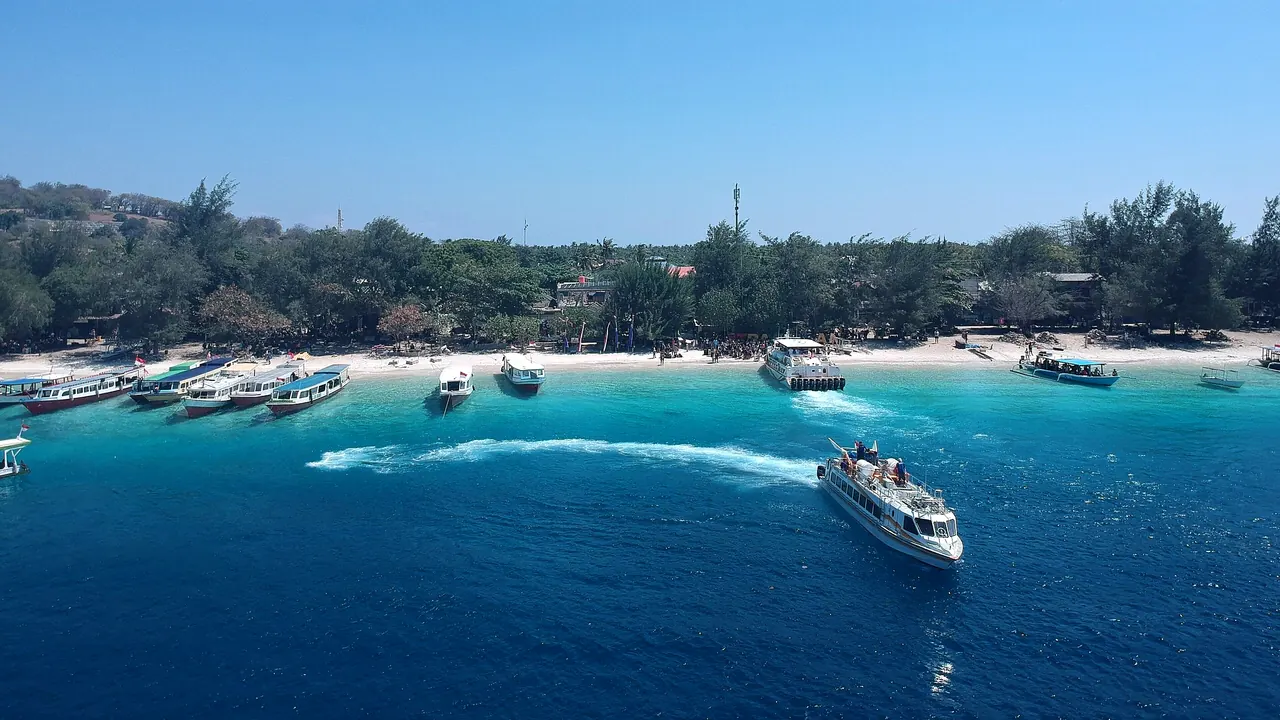
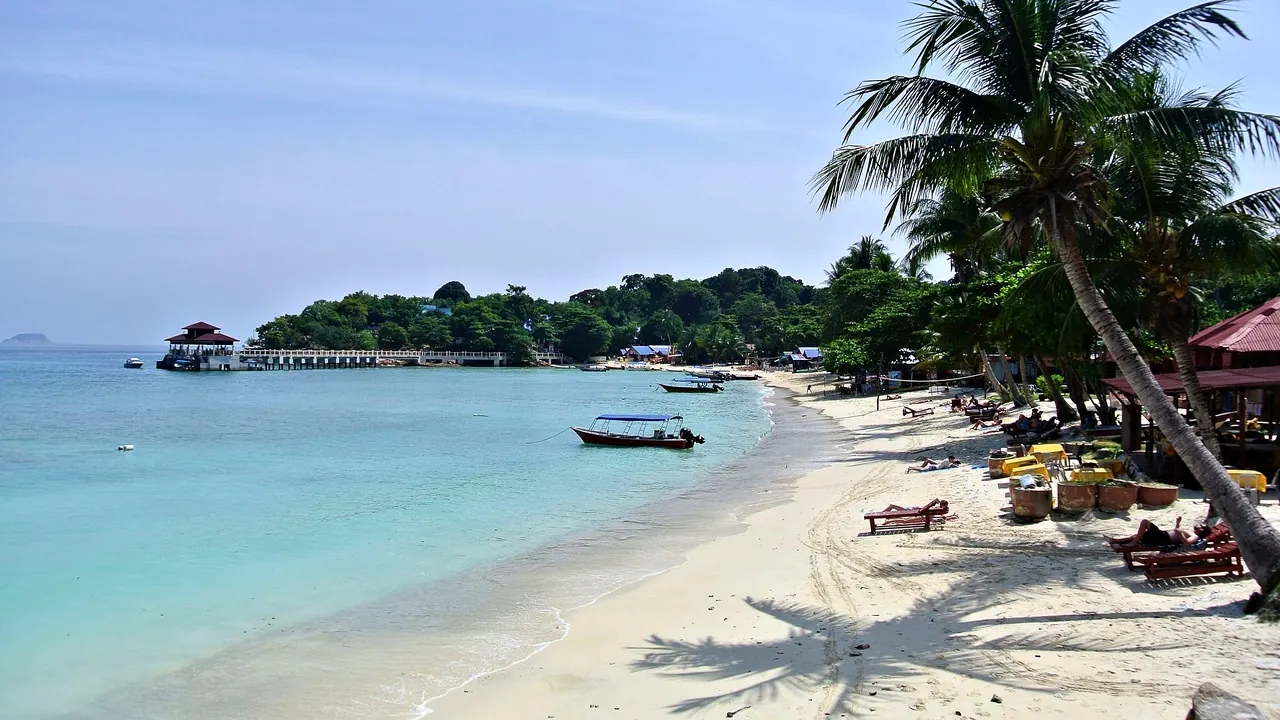
Photos: Gili Islands by Magul, CC BY-SA 4.0, cropped; Perhentian Islands by DTravel AU, CC BY-SA 3.0, cropped.
Gili Islands or Perhentian Islands?
Our verdict in twelve categories, each scored against the same fixed benchmark cities, and the climate month by month, so you can choose for your trip.
Choose Gili Islands for
- nightlife
- wellness
- getting around
The Gili Islands suit travellers who want a beach stay with more going on around it. Gili Trawangan has a real party scene and Gili Meno and Gili Air are made for slow days of yoga, massage and swimming. Eating is more varied, the flat islands are easy to cover by bicycle, and Lombok is close enough for a day out. If you want a sociable trip, a restful one, or a mix of the two on neighbouring islands, the Gilis are the better choice.
Choose Perhentian Islands for
- nature and the outdoors
- beaches
Pick the Perhentians if the water itself is the point. The beaches are finer, the reefs sit inside a protected marine park, and rainforest trails link the coves, with monkeys and monitor lizards along the way. The cost is quiet evenings, plain food and little alcohol in a conservative state. That suits divers, snorkellers and anyone happy to spend a week moving between bays by water taxi.
Scoreboard
Twelve categories on one fixed scale from 0 to 100. The shaded stretch is the gap between the two.
Your match
Pick a travel style or drag the sliders, and both match scores follow your weighting.
Wins on nightlife and wellness with your weighting.
Wins on nature and the outdoors and beaches with your weighting.
What matters to you?
Category by category
What the scores mean for a trip.
Beaches & swimming
Both have pale sand and water around 29°C, but the Perhentians have the better beaches. On the Gilis much of the shore shelves over coral and seagrass that is awkward to wade at low tide, and strong currents run in the channels between the islands. So it pays to pick a spot, such as the wide, quiet stretches of Gili Meno or the shaded east side of Gili Air.
On the Perhentians the sand is finer and the swimming is easier straight off the beach. Kecil has Long Beach and sunset-facing Coral Bay. Besar has resort beaches along its west coast and coves such as Teluk Pauh, which you reach by water taxi. The catch is the season: these beaches are only open from March to October.
Food & drink
Neither is a food trip, but the Gilis give you more choice. Small warung set back from the sand serve Lombok dishes such as fiery ayam taliwang and plecing kangkung. Gili Trawangan's evening market grills fish to order beside satay and noodle stalls, and Gili Air has a good spread of relaxed cafés.
On the Perhentians you mostly eat where you sleep. Resort restaurants and beachfront grills serve plain east-coast Malay food, with no markets and few independent cafés, and the choice narrows the longer you stay.
Culture & sights
Neither has sights worth planning a day around. The difference lies in the villages. On the Gilis, Sasak and Bugis fishing families live in the lanes behind the beaches, and a walk up Gili Trawangan's southern hill leads to a Japanese wartime lookout with a view to Mount Agung. The Perhentians have only Kampung Pasir Hantu, a small village of stilt houses on Kecil. For real heritage, the Gilis rely on Lombok and Bali, the Perhentians on the Kelantan mainland.
Nightlife
This is where the two differ most. Gili Trawangan is a true party island. Its east-coast strip fills from sunset, a party night moves between venues through the week, and DJs play to a young crowd until late. Alcohol is easy to find on Trawangan and Gili Air, and Air also has gentler bonfire evenings for anyone who wants less noise.
The Perhentians have nothing like it. Long Beach offers fire shows and drinks on the sand in high season, and that fades early on quiet nights. Terengganu is a conservative state, so beer is sold only at some resorts and bars, there are no clubs, and on Besar the evening ends with dinner.
Nature & outdoors
Both are mainly about the underwater world, and both are popular places to learn to dive. The Perhentians have more to offer. Their reefs are protected inside a marine park, with blacktip reef sharks at Shark Point, gentle wreck dives and turtles in Besar's shallow bays. On land, steep rainforest crosses the islands, with jungle trails between beaches, monkeys and fruit bats, plus kayaking along the coast.
The Gilis have dozens of dive sites with turtles and rays, good snorkelling off Gili Meno and northern Gili Air, and a freediving scene. Above water, though, they are flat and small. The best moments on land are the sunset over Agung and the dawn over Rinjani.
Day trips
The Gilis have more within reach. Hopping between the three islands already gives a change of pace, from Trawangan's crowds to Meno's quiet. Lombok is a short crossing away, and from the harbour at Bangsal a driver can take the clifftop road to Senggigi, go into Mataram's markets and mosques, or visit the Sasak weaving villages inland. Sade in the south is about two hours' drive, which makes a long day.
From the Perhentians, boats go to Redang and Lang Tengah, but those islands offer more reefs and beaches rather than anything different. The only real contrast is Kota Bharu, with its central market and wooden palaces. Getting there means a speedboat to Kuala Besut and then about an hour by road, so most people visit on the way in or out. Lombok gives the Gilis an easier and more varied break from beach life than the mainland gives the Perhentians.
Good for families
Both work for families who love the water, and both have no traffic and nothing built for children. On the Gilis, the draw is freedom on Gili Meno and Gili Air: children can walk and cycle anywhere, and Meno has a small turtle hatchery. Against that, the shallows can be sharp coral rubble and the fast boat from Bali can be rough.
Perhentian Besar is better for the youngest swimmers, with sheltered, shallow bays where a small child can snorkel safely, and family rooms are easy to find. The drawback is that every change of beach means a speedboat or a hot jungle path. On both, medical care is basic, and Gili Trawangan's party strip and Perhentian Kecil's Long Beach are the places to avoid.
Getting around
Once you are there, the Gilis are much easier. Each island is flat and car-free, and you get around on foot, by bicycle or by cidomo horse cart, though deep sand on the inland lanes slows the bikes. Getting there takes longer: about two hours by fast boat from Bali, or a two-hour drive from Lombok airport to Bangsal followed by a short boat crossing.
On the Perhentians the crossing from Kuala Besut is shorter, but daily movement is harder. You ride a water taxi to each beach or climb steep, slippery trails over the headlands. At many beaches your luggage is passed by hand onto the sand.
Shopping & style
Neither place is for shopping. Gili Trawangan's main strip at least sells sarongs, swimwear, resort clothes and Lombok pearls, though the quality of the pearls varies. On the Perhentians you will find sun cream, snacks and dive-shop T-shirts and little else, so pack everything before the boat.
Affordability
Both cost more than their mainland because supplies arrive by boat, and the Gilis come out a little cheaper day to day. Simple bungalows, warung meals, massages and bicycle hire cost little there, and the main extra expense is the fast boat from Bali.
On the Perhentians, dive courses and snorkel trips are among the cheapest in the region, which helps a diving budget. Beer, bottled water and a week of water taxis add up, though, and the resorts on Besar charge mid-range international prices.
Live music & performing arts
The Gilis have the slight edge here. Beach bars on both Gili Trawangan and Gili Air put on live bands and acoustic sets, mostly reggae and covers, so an evening with live music is easy to find.
On the Perhentians, the closest thing is the fire shows and guitar sessions on Long Beach, which are part of a night on the sand rather than a show. For traditional Sasak music and dance, you have to cross from the Gilis to Lombok.
Wellness & relaxation
The Gilis are clearly the better place to unwind with some help. Massage is offered everywhere, from beach shelters to small day spas, and resort spas offer traditional Indonesian treatments. Gili Air and Gili Trawangan have open-air yoga studios and retreats lasting a week or more, some combined with freediving.
The Perhentians give you rest but little else. There are a few resort spas on Besar and simple massage huts on the beaches. Their strength is stillness, found in the quiet coves of Besar where days follow the tide.
When should you go?
Pick your month. The climate figures are measured averages, not a forecast.
Gili Islands in July
Perhentian Islands in July
Daytime high, °C
Rainfall in the month, mm
Where the figures come from
Perhentian Islands has no weather station within reach, so its figures come from a gridded climate model rather than a measured record, and read a broad area rather than one spot.
Temperature and rainfall are climate normals, averaged over the years shown. Gili Islands: 1991-2020 normals, Ampenan / Selaparang (20.5 km from centre). Perhentian Islands: 2001-2020 normals, NASA POWER reanalysis grid, no weather station within 90 km.
Both have their wettest weather at the turn of the year. On the Gilis and the Perhentians alike the rain is heaviest from November to January, and the months from about May to September are the better time on both. What differs is what the wet season does to a trip. On the Gilis the rains peak near 250mm in December and bring fewer sunny hours, but the sea stays warm and the islands stay open. From June to September they are properly dry, with August down to about 14mm and the most sunshine of the year. Days are hot in every month, so the sandy lanes are best walked early or late.
On the Perhentians the north-east monsoon is far stronger, with about 500mm of rain in each of November and December. It brings rough seas, and most places close from November to February. The season runs from March to October, with slightly milder days than on the Gilis and a sea near 30°C, but even in summer there are regular showers rather than a dry spell. In March and April the Perhentians are open and less wet than the Gilis, where the rains are still easing. From June to September the Gilis are much drier, and in the European winter they are the only one of the two that is realistically open.
Which traveller are you?
On a food and nightlife trip, choose the Gili Islands. Gili Trawangan has a loud night out every evening and an evening market by the harbour where fish is grilled to order. The Perhentians offer a few cushions on Long Beach, simple resort meals and limited alcohol.
For an outdoors trip, the Perhentians win. Their reefs are protected inside a marine park, with blacktip sharks at Shark Point and wrecks for beginner divers. Above water there are rainforest trails and kayaking. The Gilis dive well, but on land they are flat and small.
On a relaxing and wellness trip, go to the Gili Islands. Massage is cheap everywhere, and Gili Air and Gili Trawangan have daily open-air yoga and retreats lasting a week or more, while Gili Meno is the quietest place to rest. The Perhentians are restful too, but offer few treatments.
Before you go
| Measure | Gili Islands | Perhentian Islands |
|---|---|---|
| Official language | Indonesian | Malay |
| Currency | Rupiah (IDR) | Malaysian Ringgit (MYR) |
| Sockets | CF50 Hz | G240 V, 50 Hz |
| Driving side | Left | Left |
| Time zone | UTC+8 | UTC+8 |
| Emergency number | 112 | 999 |
| Main airport | Lombok International Airport (LOP)10 non-stop destinations | Sultan Ismail Petra Airport (KBR)8 non-stop destinations |
By the numbers
| Measure | Gili Islands | Perhentian Islands |
|---|---|---|
| Swim season, months above 21 °C | 12 months | 12 months |
Where else could you go?
Every comparison below shares a destination with this one, so you can follow Gili Islands or Perhentian Islands somewhere new.
- Lombokvs Gili Islands
- Nusa Penidavs Gili Islands
- Nusa Lembonganvs Gili Islands
- Balivs Gili Islands
- Penangvs Perhentian Islands
- Langkawivs Perhentian Islands