Malaysia
Perhentian Islands
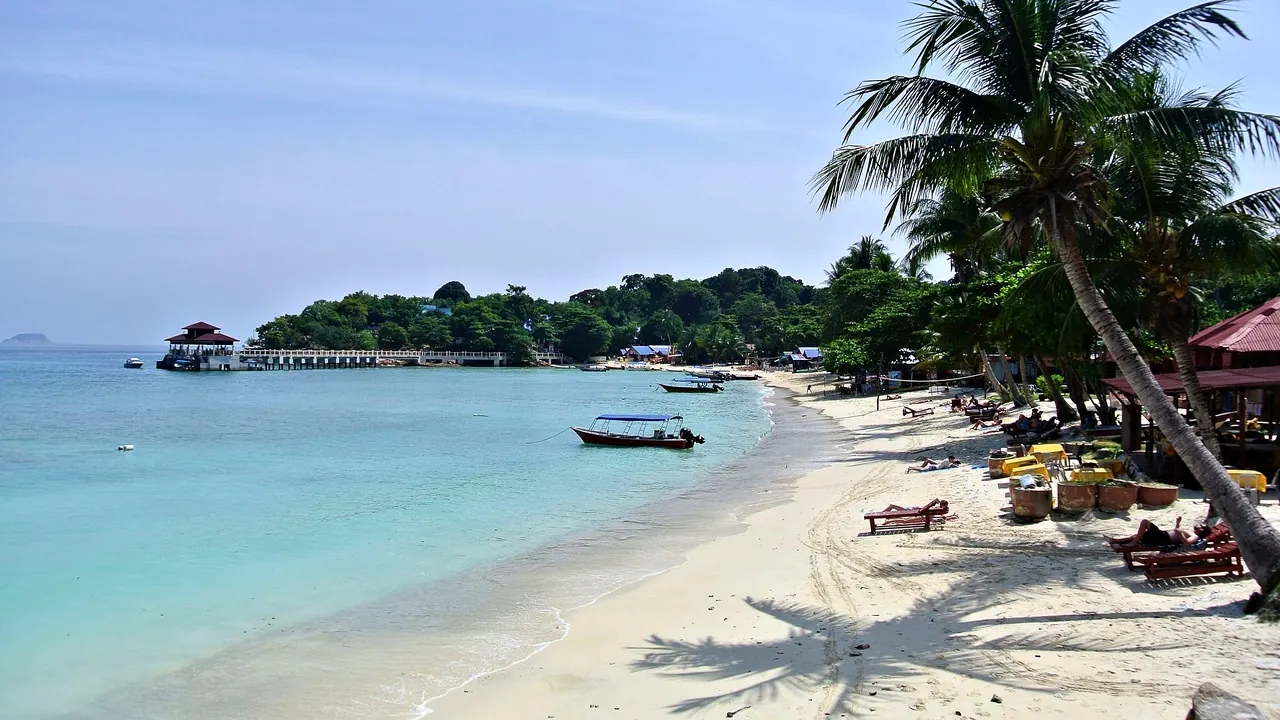
White sand, palms and clear water at Coral Bay
- Beaches92
- Nature & outdoors70
- Affordability66
Photo: DTravel AU, CC BY-SA 3.0, cropped
Match
34
Every category weighted equally
- Beach & sun45
- Culture & arts23
- Food & nightlife25
- Family trip44
- Outdoors43
- Relax & unwind42
- Shopping & style25
- On a budget38
Perhentian Islands in twelve categories
Our verdict on each, scored 0 to 100 against the same fixed benchmark cities, so a score means the same thing on every page.
Beaches & swimming. Scores 92 out of 100.
Food & drink. Scores 23 out of 100.
Culture & sights. Scores 4 out of 100.
Nightlife. Scores 14 out of 100.
Nature & outdoors. Scores 70 out of 100.
Day trips. Scores 20 out of 100.
Good for families. Scores 45 out of 100.
Getting around. Scores 33 out of 100.
Shopping & style. Scores 3 out of 100.
Affordability. Scores 66 out of 100.
Live music & performing arts. Scores 3 out of 100.
Wellness & relaxation. Scores 38 out of 100.
Perhentian Islands category by category
Beaches & swimming
92This is what people come for. The water is clear, calm and warm, around 29°C through the season, and the sand on the best beaches is fine and pale. Perhentian Kecil, the smaller island, has Long Beach, a wide sweep of sand on the east side with the liveliest strip of chalets, and Coral Bay on the west, smaller, calmer and good for sunsets. Perhentian Besar, the larger island, is quieter, with a chain of resort beaches along its west coast and secluded coves such as Teluk Pauh and Three Coves Bay further round.
You can snorkel straight off most beaches, and on many days the best plan is simply to move from one cove to the next by water taxi. The swimming season runs from roughly March to October; from November to February the north-east monsoon brings rough seas and most places close. Long Beach can have surf and currents early and late in the season, so families tend to prefer the sheltered bays of Besar.
Food & drink
23Eating here is simple and tied to where you stay. Most resorts run their own restaurants, and in the evening the beachfront places on Long Beach and along Besar's west coast lay out fresh fish, squid and prawns for grilling. The local cooking that does appear, nasi goreng, mee goreng, roti and curries, is mostly a plain version of east-coast Malay food, with the occasional plate of nasi kerabu or keropok lekor. There are no markets, few independent cafés, and everything has to come over by boat, so choice narrows the longer you stay. Alcohol is limited: Terengganu is a conservative state, and beer is sold only at some resorts and beach bars.
Culture & sights
4There is almost nothing to see in the sense of sights. The only settlement with any history is the fishing village of Kampung Pasir Hantu on Perhentian Kecil, home to a few hundred people with a mosque, a school and wooden houses on stilts, worth a short wander but not a destination in itself. Visitors who want Malay heritage find it on the mainland.
Nightlife
14Going out means Long Beach on Perhentian Kecil, where a few beach bars put out cushions on the sand, play music and stage fire shows, and backpackers gather with drinks until late in high season. It is relaxed and small, and on quieter nights it fades early. Elsewhere, and on Perhentian Besar in particular, evenings end with dinner and a walk along the sand. Because this is a conservative Muslim state, drinking is low key and anyone looking for clubs will find none.
Nature & outdoors
70The landscape is mostly underwater. The islands sit inside a protected marine park, and the reefs around them are where the outdoor life happens: snorkelling with green turtles in the shallow bays of Besar, blacktip reef sharks at Shark Point, and boat trips that string together several snorkel spots in a morning. Diving is a major draw, with gentle reef sites and a few wrecks suited to beginners, and many people take their first certification here.
Above water the islands are steep and covered in rainforest, crossed by short jungle trails linking beaches, where monitor lizards, fruit bats and monkeys are common. Kayaking and paddleboarding along the coast round out a quiet outdoor offer. Visibility is best in the middle of the season, roughly May to August.
Day trips
20Day trips are few. The neighbouring islands of Redang and Lang Tengah can be reached by boat, but they offer more of the same beaches and reefs rather than towns. The real change of scene is on the mainland: after the boat back to the jetty town of Kuala Besut, Kota Bharu is roughly an hour by road, with its central market, wooden palaces and Kelantanese crafts, but that makes for a long day and most visitors save it for the journey in or out.
Good for families
45Perhentian Besar works well with children who like the water. Its west coast beaches are sheltered and shallow, turtles feed close to shore, and a young child can snorkel safely in calm bays. The pace is slow, there is no traffic, and family-sized rooms are easy to find among the resorts.
The limits are real, though. There are no attractions made for children, medical care on the islands is basic, and every arrival, departure and change of beach involves a speedboat or a hot jungle path. Long Beach on Kecil, with its backpacker crowd and rougher surf, suits families less well.
Getting around
33There are no roads and no cars. Within a beach you walk, and between beaches you take a water taxi, which runs from almost every beach on request, or follow jungle trails over the headlands, some steep and slippery after rain. Reaching the islands means a speedboat crossing from Kuala Besut on the mainland, roughly half an hour to forty-five minutes, which can be a rough ride, and luggage is passed hand to hand onto the sand at many beaches. It is easy once you are settled, but each move takes more effort than it would on land.
Shopping & style
3There is essentially nothing to buy beyond sun cream, snacks and a few T-shirts from dive shops and small kiosks. Bring what you need from the mainland.
Affordability
66The islands can be inexpensive, but they cost more than mainland Malaysia. Simple fan chalets on Long Beach and Coral Bay keep backpacker budgets low, and diving courses and snorkel trips are among the cheapest in the region. Against that, everything is shipped in, so meals, bottled water and especially beer carry an island markup, water taxis add up over a week, and the better resorts on Perhentian Besar charge mid-range international prices. The choice of island and beach makes the biggest difference to what a stay costs.
Live music & performing arts
3There are no venues or performances. The nearest thing is the fire shows and guitar sessions on Long Beach, and those belong to an evening on the sand rather than to any performing scene.
Wellness & relaxation
38There is no bathing or spa tradition here, and pampering is limited to a few resort spas on Besar and simple massage huts on the beaches. What the islands do have is a pace that slows you down without any effort: no cars, few roads, days set by the tide and the sunset, and evenings that end early. A visitor looking for treatments will find little, but one looking for rest finds it easily, best on the quieter coves of Perhentian Besar.
Where to stay in Perhentian Islands
The first choice is between the two islands, and it shapes the whole stay. Perhentian Kecil, the smaller one, is where backpackers and divers gather. Long Beach on its east side has the most chalets, the beach bars and the only evenings that run late, so it suits sociable travellers on a budget and anyone taking a dive course. Coral Bay, a short jungle walk across the island on the west side, is smaller and calmer, with simple chalets and sunsets over the water. It works well for couples who want Long Beach within reach without sleeping beside it.
Perhentian Besar, the larger island, is the quieter and more comfortable base. The resorts along its west coast face sheltered, shallow water where turtles feed near the shore, which makes it the natural choice for families and for anyone after rest rather than a night out. For more seclusion, coves further round such as Teluk Pauh offer evenings that amount to little more than dinner and the sound of the sea.
One base is enough for most trips, since water taxis reach the other beaches for snorkelling and meals. Some visitors split a week, starting on Long Beach and finishing on Besar, but each move means packing up and another boat ride.
When should you go?
Pick a month to see what it is like. The climate figures are measured averages, not a forecast.
Perhentian Islands in July
Daytime high, °C
Rainfall in the month, mm
The whole year
Shaded against this destination’s own year: the deepest cell is its best month for that figure and the palest its weakest.
Where the figures come from
Perhentian Islands has no weather station within reach, so its figures come from a gridded climate model rather than a measured record, and read a broad area rather than one spot.
Temperature and rainfall are climate normals, averaged over the years shown. Perhentian Islands: 2001-2020 normals, NASA POWER reanalysis grid, no weather station within 90 km.
Before you go
| Measure | Perhentian Islands |
|---|---|
| Official language | Malay |
| Currency | Malaysian Ringgit (MYR) |
| Sockets | G240 V, 50 Hz |
| Driving side | Left |
| Time zone | UTC+8 |
| Emergency number | 999 |
| Main airport | Sultan Ismail Petra Airport (KBR)8 non-stop destinations |
By the numbers
| Measure | Perhentian Islands |
|---|---|
| Swim season, months above 21 °C | 12 months |
Compare Perhentian Islands with
Every comparison with a written verdict behind it.