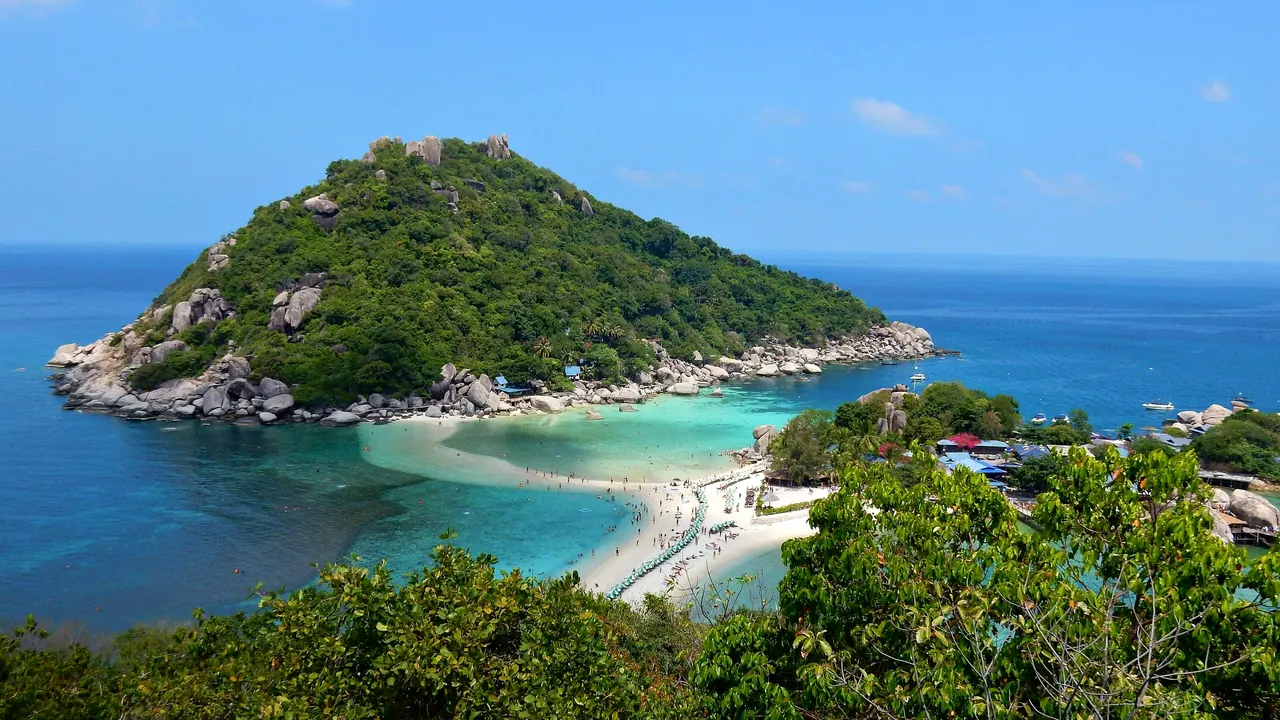
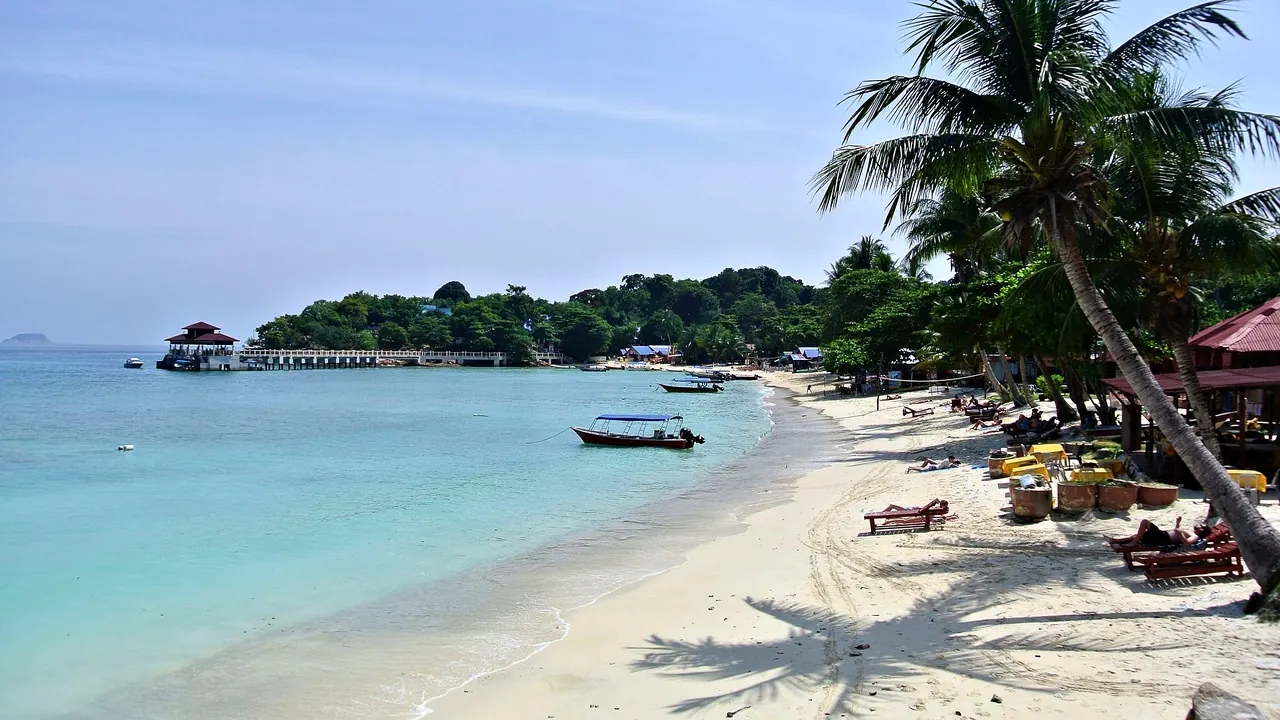
Photos: Koh Tao by Roma Neus, CC BY 3.0, cropped; Perhentian Islands by DTravel AU, CC BY-SA 3.0, cropped.
Koh Tao or Perhentian Islands?
Our verdict in twelve categories, each scored against the same fixed benchmark cities, and the climate month by month, so you can choose for your trip.
Choose Koh Tao for
- nightlife
- food and drink
- wellness
Koh Tao suits travellers who want an island with some life to it: beach bars and fire shows at the south end of Sairee, a wider spread of Thai kitchens and cafés, and ferries to Koh Phangan and Koh Samui when you want a change of scene. It also stays open through more of the year, so it works for a dive course in January or February, when the Perhentians are shut.
Choose Perhentian Islands for
- families
- beaches
- getting around
The Perhentians are the better pick if the beaches themselves are the point and you want quiet. The sand is finer, turtles feed in the shallows, and with no cars at all, Besar's sheltered west coast is the easier base for young children. In return you get simple resort meals, very little nightlife and a season that ends when the monsoon arrives.
Scoreboard
Twelve categories on one fixed scale from 0 to 100. The shaded stretch is the gap between the two.
Your match
Pick a travel style or drag the sliders, and both match scores follow your weighting.
Wins on nightlife and food and drink with your weighting.
Wins on families and beaches with your weighting.
What matters to you?
Category by category
What the scores mean for a trip.
Beaches & swimming
Both islands have warm water and snorkelling straight off the sand, but the Perhentians have the better beaches. The sand is finer and paler, the water is clearer, and there are coves on two islands, all linked by water taxi. Koh Tao's main asset is Sairee, a 2km strand with calm shallows. Most of its other bays are small, and some are reached only down steep tracks.
The calmest swimming is in different places. On the Perhentians, Long Beach can have surf and currents early and late in the season, so Besar's sheltered bays are gentler. On Koh Tao, the east-coast coves around Aow Leuk and Tanote Bay are the ones that turn rough late in the year.
Food & drink
Neither island is worth travelling to for the food, but Koh Tao eats better. Sairee and the pier at Mae Haad have a long run of Thai kitchens, breakfast cafés and tables on the sand, plus a few night stalls, so you can eat differently over a week.
On the Perhentians you mostly eat where you sleep: resort restaurants and evening fish grills on Long Beach and along Besar, serving plain east-coast Malay dishes. The choice narrows the longer you stay, and because Terengganu is conservative, beer is sold only at some resorts and bars.
Culture & sights
Neither island has sights worth planning around, and what little there is differs in kind. Koh Tao has a couple of small Buddhist temples and a past as a place of political exile that left almost nothing to see. On the Perhentians, the mosque and stilt houses of the fishing village on Kecil make a short wander. For real heritage, Perhentian visitors head to Kota Bharu on the mainland, and Koh Tao visitors to Koh Samui.
Nightlife
Koh Tao is the one with a real night out. At the south end of Sairee, bars set out cushions on the sand, fire-dancers perform and music goes on into the early hours, with bar crawls and themed parties for the young crowd of divers. It is informal and there are no clubs, but it is a genuine scene.
On the Perhentians, a night out means a handful of beach bars on Long Beach, and on quiet nights they wind down early. Drinking stays low key in a conservative Muslim state, and on Besar the evening ends with dinner and a walk along the sand.
Nature & outdoors
Both are diving islands where the real landscape is underwater, and both suit people learning to dive. Koh Tao's highlights are the granite pinnacles offshore, Chumphon Pinnacle and Sail Rock, with schools of barracuda and the occasional whale shark. On land, its granite boulders add bouldering and rock climbing.
The Perhentians sit inside a protected marine park, and the experience is gentler and closer to shore: green turtles in Besar's shallow bays and blacktip reef sharks within reach of snorkellers. The islands themselves are rainforest, with jungle trails between the beaches and monkeys and monitor lizards along the way.
Day trips
Koh Tao gives you more choice for a day away. Koh Phangan is about an hour by ferry and Koh Samui about two, and both have towns, temples and markets.
From the Perhentians, Redang and Lang Tengah offer more of the same beaches and reefs. The real change of scene is Kota Bharu's market and wooden palaces on the mainland, but that means a boat and then a road journey, so most people fit it into the trip in or out. On both, most visitors simply stay on the island.
Good for families
With children the Perhentians are the easier choice, as long as you stay on Besar. Its west-coast beaches are sheltered and shallow enough for a young child to snorkel among feeding turtles, and with no cars there is no traffic to watch for.
Koh Tao works mainly with older children who swim well. The north end of Sairee has calm water, and dive schools run children's courses. With toddlers, the steep tracks to the bays and roads full of inexperienced scooter riders are hard going. On both islands, serious medical care means a boat to somewhere larger.
Getting around
Moving about takes effort on both, but the Perhentians are simpler once you have arrived. There are no roads at all: you walk the beach, wave down a water taxi or take a jungle trail over the headland, and the speedboat from Kuala Besut takes under an hour.
On Koh Tao, the stretch from Sairee to Mae Haad is an easy walk, but beyond it the roads are steep and rutted, and there are no buses. The hills make scooters risky. Arriving means a ferry from Chumphon or Koh Samui and a long travel day.
Shopping & style
Koh Tao has slightly more to browse, though only for the beach: sarongs, swimwear, souvenir T-shirts and the dive shops along Sairee and around the pier at Mae Haad. On the Perhentians the choice comes down to sun cream, snacks and a few T-shirts from kiosks and dive shops. Whichever island you go to, buy anything important on the mainland before you take the boat over.
Affordability
Both are cheap places to learn to dive, with courses among the least expensive in their regions, and both charge more for anything shipped in by boat. Basic accommodation keeps either island affordable: simple bungalows on Koh Tao, and fan chalets on Long Beach and Coral Bay in the Perhentians.
The extra costs fall in different places. On Koh Tao, booking a room through a dive school often lowers the bill, and imported food and drink are the main extras. On the Perhentians, beer and water taxis add up over a week. On both, the better resorts, on Besar and on Koh Tao's hillsides, cost international prices.
Live music & performing arts
There is no performing scene on either island, and the little on offer is much the same: fire shows on the sand at the south end of Sairee or on Long Beach, and the occasional acoustic or guitar set in a beach bar. Neither is worth choosing for it.
Wellness & relaxation
Koh Tao has more on offer if you want treatments or a routine: massages in beach shelters, yoga classes above the bays, a few hillside resort spas and small retreats inland. For quiet, stay in the eastern bays or around Chalok Baan Kao, because Sairee is loud at night.
The Perhentians have less to book, just a few resort spas on Besar and simple massage huts, but the islands slow you down on their own, with no cars and evenings that end early. For pure rest, Besar's quiet coves are hard to beat. For yoga or spa treatments, Koh Tao has more.
When should you go?
Pick your month. The climate figures are measured averages, not a forecast.
Koh Tao in July
Perhentian Islands in July
Daytime high, °C
Rainfall in the month, mm
Where the figures come from
Koh Tao's temperatures are measured 83 km from the centre, at Chumphon.
Koh Tao has no rain gauge within 25 km of the centre, so its rainfall comes from a gridded climate dataset read at the destination rather than from a gauge further away.
Perhentian Islands has no weather station within reach, so its figures come from a gridded climate model rather than a measured record, and read a broad area rather than one spot.
Temperature and rainfall are climate normals, averaged over the years shown. Koh Tao: 1991-2020 (sunshine 1981-2010) normals, Chumphon (82.5 km from centre). Perhentian Islands: 2001-2020 normals, NASA POWER reanalysis grid, no weather station within 90 km.
Koh Tao can be visited for most of the year. From January to September it is warm and the rain is mostly manageable, with February the driest month at 48mm. The sunniest weeks run from January to March. April and May are the hottest months, with highs of 34°C, which makes the steep tracks tiring around midday. The wet season comes late in the year, and October and November are the rainiest months, with November close to 290mm.
The Perhentians have a shorter season, and their days are a little milder at around 30°C. Rain falls fairly often from May to September but rarely spoils a stay. In November and December each month brings around 500mm and rough seas, and most places stay closed through January and February, so the season only starts again in March and runs until October. The sea is warm around both islands all year, and from March to September either one works.
Which traveller are you?
For a beach and sun trip, the Perhentians have the edge. The sand is finer and the water clearer, and you can spend whole days moving between coves on Kecil and Besar by water taxi, snorkelling off each one. Away from Sairee, Koh Tao's beaches are smaller.
On a food and nightlife trip, Koh Tao is the clear choice. Sairee and Mae Haad have more kitchens, cafés and night stalls, and the beach bars keep fire shows and parties going late. On the Perhentians it is resort dining, little beer and quiet evenings.
On a family trip with young children, the Perhentians are easier. Besar's sheltered, shallow bays let small children snorkel near turtles, and there is no traffic. Koh Tao's steep tracks and roads full of scooters suit older children who already swim confidently.
Before you go
| Measure | Koh Tao | Perhentian Islands |
|---|---|---|
| Official language | Thai | Malay |
| Currency | Baht (THB) | Malaysian Ringgit (MYR) |
| Sockets | ABCF220 V, 50 Hz | G240 V, 50 Hz |
| Driving side | Left | Left |
| Time zone | UTC+7 | UTC+8 |
| Emergency number | Police 191, ambulance 1669, fire 199 | 999 |
| Main airport | Samui International Airport (USM)10 non-stop destinations | Sultan Ismail Petra Airport (KBR)8 non-stop destinations |
By the numbers
| Measure | Koh Tao | Perhentian Islands |
|---|---|---|
| Population | 1,382 | - |
| People per km² | 66 | - |
| Swim season, months above 21 °C | 12 months | 12 months |
Where else could you go?
Every comparison below shares a destination with this one, so you can follow Koh Tao or Perhentian Islands somewhere new.
- Koh Phanganvs Koh Tao
- Koh Samuivs Koh Tao
- Penangvs Perhentian Islands
- Koh Phi Phivs Koh Tao
- Koh Lantavs Koh Tao
- Phuketvs Koh Tao