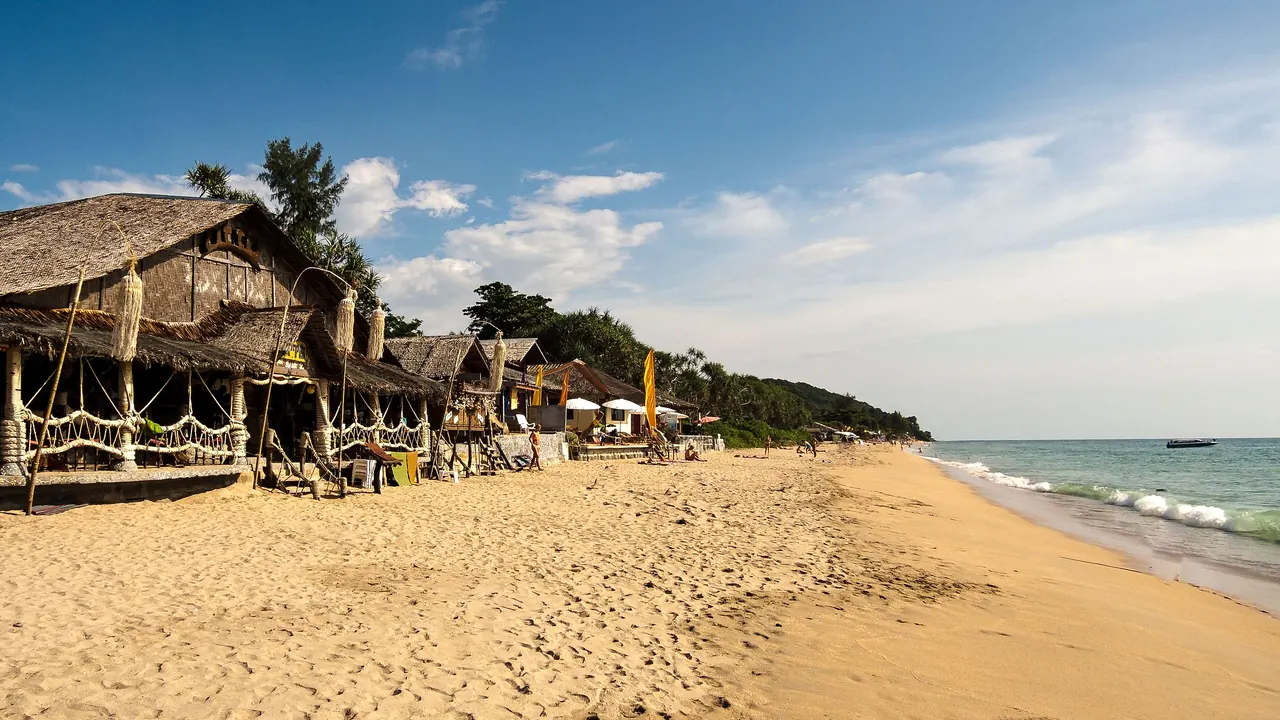
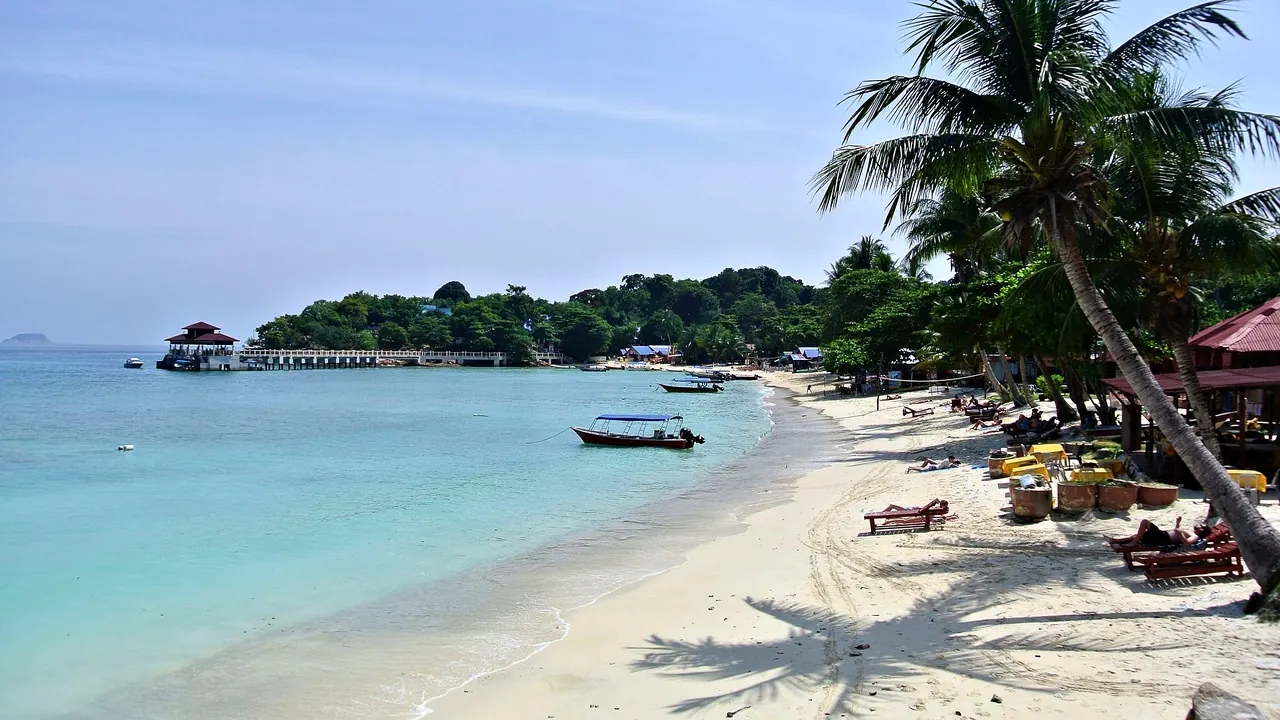
Photos: Koh Lanta by Dronepicr, CC BY 3.0, cropped; Perhentian Islands by DTravel AU, CC BY-SA 3.0, cropped.
Koh Lanta or Perhentian Islands?
Our verdict in twelve categories, each scored against the same fixed benchmark cities, and the climate month by month, so you can choose for your trip.
Choose Koh Lanta for
- wellness
- food and drink
- day trips
Koh Lanta is the better pick for a slow, comfortable island stay with a little more around you. Massage pavilions, yoga retreats and calm southern bays make it the stronger place to unwind, and you eat better there: night markets, southern Thai curries and seafood over the water in the Old Town. Families get pools, shallow northern beaches and a hospital within reach. Its season runs from November to April, and it gives you more to do when you want a change from the sand.
Choose Perhentian Islands for
- getting around
- beaches
- nature and the outdoors
The Perhentians are for travellers who mostly want to be in the water. There you can snorkel with turtles straight off the beach, take a first dive course on gentle reefs, and hop between coves by water taxi on two car-free islands. In return, the food is plainer, alcohol is scarce and there is almost nothing else to do. The season runs the other way, roughly March to October, so these islands also suit a northern summer when Lanta's west coast is in its monsoon.
Scoreboard
Twelve categories on one fixed scale from 0 to 100. The shaded stretch is the gap between the two.
Your match
Pick a travel style or drag the sliders, and both match scores follow your weighting.
Wins on wellness and food and drink with your weighting.
Wins on getting around and beaches with your weighting.
What matters to you?
Category by category
What the scores mean for a trip.
Beaches & swimming
Both are first-rate beach islands, and the Perhentians have a slight edge in clear water you can snorkel straight from the shore. On Kecil, Long Beach and Coral Bay give you a livelier side and a sunset side. Besar has sheltered resort beaches and quiet coves such as Teluk Pauh, all linked by water taxi.
Koh Lanta's appeal is different: a long run of west-facing bays on one coast road. Klong Dao has shallow water and Long Beach (Phra Ae) is backed by casuarinas, while quieter coves lie near the national park. Its season runs from November to April, the opposite of the Perhentians', which often decides between them.
Food & drink
Koh Lanta eats noticeably better. Its mostly Muslim population makes southern Thai curries, roti and halal cooking everyday food. There are night markets around Saladan and stilt restaurants in the Old Town serving crab and fish over the water. The range is still narrow, but you can leave your resort and find local kitchens.
On the Perhentians, you mostly eat where you sleep. The menus offer simple east-coast Malay dishes and fish grilled on the beach at night, with no markets. Everything arrives by boat, and beer is sold only in some places, because Terengganu is a conservative state.
Culture & sights
Neither island is a place to come for sights, but Koh Lanta has a little more. It has a half day's worth: the wooden Chinese shophouses of Lanta Old Town, built over the water when it was a stop between Penang and Phuket, and the Urak Lawoi sea-people village at Sang Ka U.
On the Perhentians, the fishing village of Kampung Pasir Hantu on Kecil is worth a short walk, and that is about all. For Malay heritage, stop in Kota Bharu on your way in or out.
Nightlife
Both are quiet at night, and Lanta has a few more places to go. Beach bars with cushions, reggae and fire shows line its Long Beach and Klong Dao in high season, and Koh Phi Phi's party scene is a boat ride away.
On the Perhentians, the evening scene is a handful of bars on Long Beach on Kecil, and they go quiet early on slow nights. Drinking is kept low key in this conservative state, and on Besar the night usually ends after dinner.
Nature & outdoors
These two are about level outdoors, but the experience differs. The Perhentians sit inside a marine park, so the reef is right there: turtles in Besar's shallow bays, blacktip sharks at Shark Point and gentle sites where many people learn to dive. Rainforest trails cross the headlands between beaches.
From Lanta, the best of nature is a boat ride away. Day boats go to the limestone islands off Trang and the Emerald Cave on Koh Mook, and experienced divers head for Hin Daeng and Hin Muang, where mantas and whale sharks pass. On the island itself you have the national park headland, caves inland and mangroves on the east coast for kayaking.
Day trips
Koh Lanta gives you more choice for a day away, at least in high season. Koh Phi Phi and the quieter fishing island of Koh Mook are reachable by boat. On the mainland, Krabi Town and Ao Nang are about two hours away.
From the Perhentians, Redang and Lang Tengah mostly offer more of the same reefs and beaches. Kota Bharu's market and wooden palaces are the only real change of scene, but after the boat and the road that makes for a long day.
Good for families
Koh Lanta is easier with children. Klong Dao has soft sand and shallow water, family bungalows with pools are common, and there is a small hospital near the Old Town, with Krabi two hours away for anything serious.
Perhentian Besar has its own appeal for children who love the water, with sheltered bays where turtles feed close to shore. But medical care is basic, and every move involves a speedboat or a hot trail. Neither island has anything built for children.
Getting around
The Perhentians are simpler once you are there, even without roads. You walk along your beach and take a water taxi or a jungle path to the next. The speedboat from Kuala Besut takes well under an hour, though it can be choppy.
Koh Lanta takes more effort. From Krabi airport it is two to three hours by road and car ferry. There are no buses, so you rely on sidecar taxis, a hired scooter or a car along the one west-coast road, and little is walkable beyond your own beach.
Shopping & style
On Lanta there is a little to browse. You can buy a sarong at a roadside stall, batik in the Old Town's wooden houses or small gifts around Saladan after dark. On the Perhentians there is little beyond dive-shop T-shirts and sun cream, so buy what you need on the mainland before you get on the boat.
Affordability
Koh Lanta is a little cheaper overall. Local Thai kitchens, massages and simple bungalows cost little, and the south and east coast are cheaper still, although transfers and taxi fares add up because there is no public transport.
On the Perhentians, everything shipped in carries an island markup, especially beer and bottled water, and the water taxis add up over a week. Divers get good value, though, as courses and snorkel trips are among the cheapest in the region.
Live music & performing arts
Neither island has any performing arts to speak of. Both offer fire shows on the sand and the odd guitar or reggae set in high season. Lanta also has Muay Thai bouts at small local rings, which you will not find on the Perhentians.
Wellness & relaxation
Koh Lanta is much the better place to be looked after. Open-air massage pavilions stand on almost every beach, resorts run spas, and yoga studios and retreats cluster around its Long Beach and the southern bays, where Kantiang Bay is the calmest base.
The Perhentians slow you down just as well, with no cars and early nights, but treatments are limited to a few resort spas on Besar and simple beach huts. Go there for rest rather than for treatments.
When should you go?
Pick your month. The climate figures are measured averages, not a forecast.
Koh Lanta in July
Perhentian Islands in July
Daytime high, °C
Rainfall in the month, mm
Where the figures come from
Koh Lanta's temperatures are measured 65 km from the centre, at Trang.
Koh Lanta's station stands 188 m below the place it is measured for, so that place is likely a little cooler than the figures say.
Koh Lanta has no rain gauge within 25 km of the centre, so its rainfall comes from a gridded climate dataset read at the destination rather than from a gauge further away.
Perhentian Islands has no weather station within reach, so its figures come from a gridded climate model rather than a measured record, and read a broad area rather than one spot.
Temperature and rainfall are climate normals, averaged over the years shown. Koh Lanta: 1971-2000 (rainfall 1991-2020) normals, Trang (64.9 km from centre). Perhentian Islands: 2001-2020 normals, NASA POWER reanalysis grid, no weather station within 90 km.
These two islands have opposite seasons. Koh Lanta's west coast is at its best from December to March, when the sea is calm and clear and rain is at its lowest, only 36mm in February. March and April are the hottest months, at 35°C by day, so plan beach mornings and shady afternoons. From May the southwest monsoon brings heavy rain, rough water and closed beachfront places, and the rain is heaviest in October.
The Perhentians stay a few degrees milder all year, and their open season falls in Lanta's wet months. From March to October the sea is calm and about 30°C, good for swimming and snorkelling, and the water is clearest in the middle of the season. It is not a dry season, though. Most summer months bring around 150 to 180mm of rain, more than Lanta gets in its best months, and October is wetter still. The real break comes in November and December, when the north-east monsoon brings around 500mm a month and most places close until the seas settle in March. For a trip between April and September, choose the Perhentians. From December to March, Lanta is the better bet.
Which traveller are you?
On a beach and sun trip between March and October, choose the Perhentians. The water is clearer, the snorkelling starts right off the sand, and a water taxi takes you to a new cove each day. Lanta's bays are at their best in the northern winter.
For a relaxing and wellness trip with treatments, pick Koh Lanta. A daily massage, a morning yoga class or an afternoon at a spa is easy to arrange wherever you stay. The Perhentians are just as quiet, but there is almost nothing to book.
On a food and nightlife trip, Koh Lanta is the only real option of the two. You can eat somewhere different each evening and finish with a drink on the sand. On the Perhentians, dinner is usually at your resort and alcohol is hard to find.
Before you go
| Measure | Koh Lanta | Perhentian Islands |
|---|---|---|
| Official language | Thai | Malay |
| Currency | Baht (THB) | Malaysian Ringgit (MYR) |
| Sockets | ABCF220 V, 50 Hz | G240 V, 50 Hz |
| Driving side | Left | Left |
| Time zone | UTC+7 | UTC+8 |
| Emergency number | Police 191, ambulance 1669, fire 199 | 999 |
| Main airport | Krabi International Airport (KBV)14 non-stop destinations | Sultan Ismail Petra Airport (KBR)8 non-stop destinations |
By the numbers
| Measure | Koh Lanta | Perhentian Islands |
|---|---|---|
| Swim season, months above 21 °C | 12 months | 12 months |
Where else could you go?
Every comparison below shares a destination with this one, so you can follow Koh Lanta or Perhentian Islands somewhere new.
- Koh Phi Phivs Koh Lanta
- Phuketvs Koh Lanta
- Koh Lipevs Koh Lanta
- Langkawivs Koh Lanta
- Koh Samuivs Koh Lanta
- Koh Phanganvs Koh Lanta