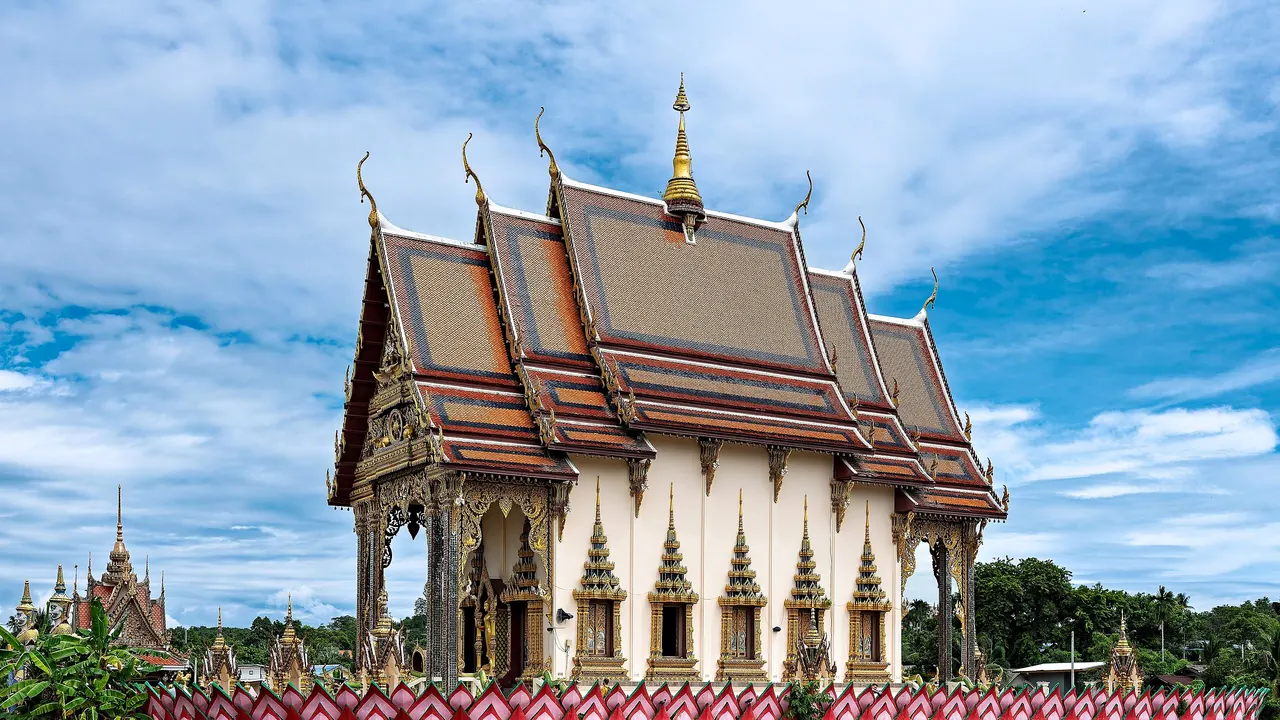
Photos: Koh Samui by Mustang Joe, CC0.
Koh Lanta or Koh Samui?
Our verdict in twelve categories, each scored against the same fixed benchmark cities, and the climate month by month, so you can choose for your trip.
Choose Koh Lanta for
- prices
- nature and the outdoors
Koh Lanta suits travellers who want a quiet, unhurried beach stay that costs less: a row of west-coast bays facing the sunset, evenings that end at a beach bar, and boat days out to the Trang islands and the dive sites around Hin Daeng. You give up choice in eating, going out and shopping, and the island takes longer to reach. It rewards a longer stay in the dry months, when the sea is calm and the boats run.
Choose Koh Samui for
- nightlife
- shopping
- food and drink
Pick Koh Samui if you want the beach with more around it. Chaweng's late nights, the night markets at Bophut and Lamai, a wider range of restaurants and one of Asia's established retreat scenes are all a short ride apart on the ring road. It costs more and Chaweng is noisy, but the island has enough different bases for couples, families and party-goers to each find their own corner. Its good season also runs through the middle of the year, when Lanta's boats have stopped.
Scoreboard
Twelve categories on one fixed scale from 0 to 100. The shaded stretch is the gap between the two.
Your match
Pick a travel style or drag the sliders, and both match scores follow your weighting.
Wins on prices and nature and the outdoors with your weighting.
Wins on nightlife and shopping with your weighting.
What matters to you?
Category by category
What the scores mean for a trip.
Beaches & swimming
Both islands are built around their beaches, but they face different ways and are at their best at different times. Lanta's sand is all on the west coast, a chain of sunset bays running from Klong Dao and the casuarina-lined Long Beach in the north down to Kantiang and the jungle-backed coves near the national park. It is calm from November to April.
Samui's main beaches face east, where Chaweng's broad white curve and the rougher Lamai draw the crowds, and Choeng Mon gives a sheltered swim. The season runs for most of the year until the autumn monsoon churns up the east coast. Lanta has the quieter bays and the sunsets, while Samui has the busier beaches and boulder coves such as Silver Beach.
Food & drink
Samui gives you more to eat. Its night markets at Lamai, Maenam and the Bophut walking street, roadside family kitchens and a layer of sea-view restaurants on the Bophut waterfront and in the hillside resorts offer a wider choice of evenings out, even if the Chaweng strip is uneven.
Lanta's eating is simpler and narrower: seafood grilled on the beach, southern Thai Muslim curries and roti, and fish and crab at the stilt restaurants of the Old Town. The food is honest, but menus repeat and there is little to dress up for.
Culture & sights
Neither island is a heritage trip, though Samui has a little more to fill a morning: the gilded Big Buddha on its causeway islet, the many-armed Guanyin standing in the lake at Wat Plai Laem, and the mummified monk at Wat Khunaram. Lanta's interest is quieter and more about people, with the stilted shophouses of the Old Town and the Urak Lawoi sea-people village at Sang Ka U making up half a day.
Nightlife
This is where the two islands differ most. In high season Samui's Chaweng runs well past midnight, with clubs in the lanes behind the beach and DJs and fire shows at the beach clubs, and Lamai adds a rougher bar scene. The Haad Rin full moon parties on Koh Phangan are a short boat ride away.
Lanta has no clubs to speak of. A night out there means cushions on the sand, reggae and a fire show along Long Beach or Klong Dao, and many bars close when the season ends. Anyone after a party takes the boat to Phi Phi.
Nature & outdoors
Both islands are at their best outdoors on the water. In the dry months boats leave Lanta for the Trang limestone islands and the Emerald Cave on Koh Mook, and divers go out to Hin Daeng and Hin Muang, where mantas and whale sharks pass. On land there is the national park at the southern tip and mangroves to kayak along the east coast.
Samui's main outing is to Ang Thong Marine Park, more than forty limestone islands with a saltwater lake inside one of them, and its divers head for Sail Rock and Koh Tao. Inland there are the Na Muang waterfalls, rough hiking tracks and jeep routes through coconut plantations.
Day trips
From either island, a day trip means a boat to another island rather than a town. From Lanta the choices are the famous bays of Koh Phi Phi and the quieter fishing village on Koh Mook, with Krabi and Ao Nang a longer trip by road and ferry, and few boats run in the monsoon.
Samui's neighbours are Koh Phangan, under an hour away with its own port town, and Koh Tao with the sandbar islets of Koh Nang Yuan. The mainland across the water is only a transport hub.
Good for families
Both work for a family beach stay, with warm Thai staff and little else built for children. Lanta's strength is that the whole island is calm: Klong Dao has soft sand and shallow water, family bungalows with pools are common, and there is no party crowd to avoid. Older children may tire of the routine, though, and serious medical care is two hours away in Krabi.
Samui has more to do, with resort children's clubs, a water park, small animal parks and elephant sanctuaries. You need to choose the base with care, though: Choeng Mon, Bophut or Maenam rather than Chaweng. The busy ring road is also a poor place to ride a scooter with children.
Getting around
Samui is the easier island to get around. A ring road of about 51km links every beach in short hops, shared songthaews run along it and ride-hailing cars are available, though taxi fares have to be haggled.
Lanta has no buses at all. There is one road down the west coast, and you get around by sidecar motorbike taxi or hired scooter, with little within walking distance of your own beach. It is also slower to reach, two to three hours from Krabi airport by road and car ferry, whereas Samui has its own airport.
Shopping & style
Samui has more to browse. There is the Friday walking street in Fisherman's Village with its crafts and coconut-wood homeware, weekly markets in Lamai and Maenam, tailors making suits, and a modern mall in Chaweng. On Lanta, shopping goes no further than sarongs and souvenir stalls on the main road, the Saladan night markets and a few batik shops in the Old Town.
Affordability
Lanta is the cheaper island to stay on. Simple bungalows and guesthouses are easy to find, local food, massages and boat trips cost little, and the south and east coasts are cheaper still, although with no buses the transport fares add up.
Samui is among the dearer places to stay in Thailand. Resort and villa rates, restaurant meals on the main strips, notoriously expensive taxis and limited flights into its small airport all push up the bill. Eating locally and staying back from the beach on the north or west coast keeps costs down.
Live music & performing arts
Lanta's evening entertainment happens on the sand: fire twirling, the odd acoustic or reggae band in a beach bar in high season, and Muay Thai bouts at small local rings. Samui puts on staged shows for visitors, with fight nights at small stadiums around Chaweng and Lamai, ladyboy cabaret and cover bands in the bars, so it gives you a little more to plan an evening around. Anyone hoping for theatre or concerts will find neither on either island.
Wellness & relaxation
Both are places to slow down, but Samui has much more on offer. Lamai and the hills above it have long been known for detox and fasting programmes, and there are yoga, meditation and holistic retreats alongside lavish hillside spas. Maenam, Bang Po and Lipa Noi are quiet, though Chaweng is not.
Lanta works on a simpler scale, with open-air massage pavilions on the beaches, resort spas, and yoga around Long Beach and the southern bays. Its advantage is that the whole island is calm, and Kantiang Bay is the most restful corner of all.
When should you go?
Pick your month. The climate figures are measured averages, not a forecast.
Koh Lanta in July
Koh Samui in July
Daytime high, °C
Rainfall in the month, mm
Where the figures come from
Koh Lanta's temperatures are measured 65 km from the centre, at Trang.
Koh Lanta's station stands 188 m below the place it is measured for, so that place is likely a little cooler than the figures say.
Koh Lanta has no rain gauge within 25 km of the centre, so its rainfall comes from a gridded climate dataset read at the destination rather than from a gauge further away.
Koh Samui has no rain gauge within 25 km of the centre, so its rainfall comes from a gridded climate dataset read at the destination rather than from a gauge further away.
Temperature and rainfall are climate normals, averaged over the years shown. Koh Lanta: 1971-2000 (rainfall 1991-2020) normals, Trang (64.9 km from centre). Koh Samui: 1991-2020 normals, Ko Samui (7.4 km from centre).
The two islands have their monsoons at opposite times of year, which may decide the trip on its own. Koh Lanta is at its best from December to April, when the west-coast sea is calm and February sees only about 36mm of rain. March and April are the hottest months, reaching 35°C, which makes any walk off the beach sticky. From May the southwest monsoon arrives and stays through November, peaking at 315mm in October, with rough water and many beachfront places shut.
Koh Samui's heat is steadier, with highs around 29°C to 33°C all year, and it stays fairly dry from February to September, so it makes a good choice for a mid-year trip. Its wet season comes at the end of the year, with November the worst at 372mm, and that is exactly when Lanta is starting to clear. On both islands the sea stays warm enough to swim in every month.
Which traveller are you?
For a food and nightlife trip, Koh Samui wins easily. Chaweng's clubs and beach bars run past midnight, the full moon parties are a boat ride away, and the night markets of Bophut, Lamai and Maenam offer far more variety than Lanta's repeating menus.
On a trip on a tight budget, Koh Lanta makes your money go further. Beach bungalows and guesthouses are cheap, local kitchens and markets cost little, and the quiet south and east coasts are cheaper still. You also avoid Samui's dear taxis and pricier flights.
For a relaxing and wellness trip, Koh Samui has more to offer, with established detox, yoga and meditation retreats around Lamai and hillside spas looking over the Gulf. Lanta is calmer across the island, but its retreats and spas are simpler and fewer.
Before you go
| Measure | Koh Lanta | Koh Samui |
|---|---|---|
| Official language | Thai | Thai |
| Currency | Baht (THB) | Baht (THB) |
| Sockets | ABCF220 V, 50 Hz | ABCF220 V, 50 Hz |
| Driving side | Left | Left |
| Time zone | UTC+7 | UTC+7 |
| Emergency number | Police 191, ambulance 1669, fire 199 | Police 191, ambulance 1669, fire 199 |
| Main airport | Krabi International Airport (KBV)14 non-stop destinations | Samui International Airport (USM)10 non-stop destinations |
By the numbers
| Measure | Koh Lanta | Koh Samui |
|---|---|---|
| Population | - | 62,500 |
| People per km² | - | 273 |
| Swim season, months above 21 °C | 12 months | 12 months |
Where else could you go?
Every comparison below shares a destination with this one, so you can follow Koh Lanta or Koh Samui somewhere new.
- Koh Phanganvs Koh Samui
- Koh Phi Phivs Koh Lanta
- Koh Taovs Koh Samui
- Phuketvs Koh Lanta
- Langkawivs Koh Lanta
- Koh Phi Phivs Koh Samui