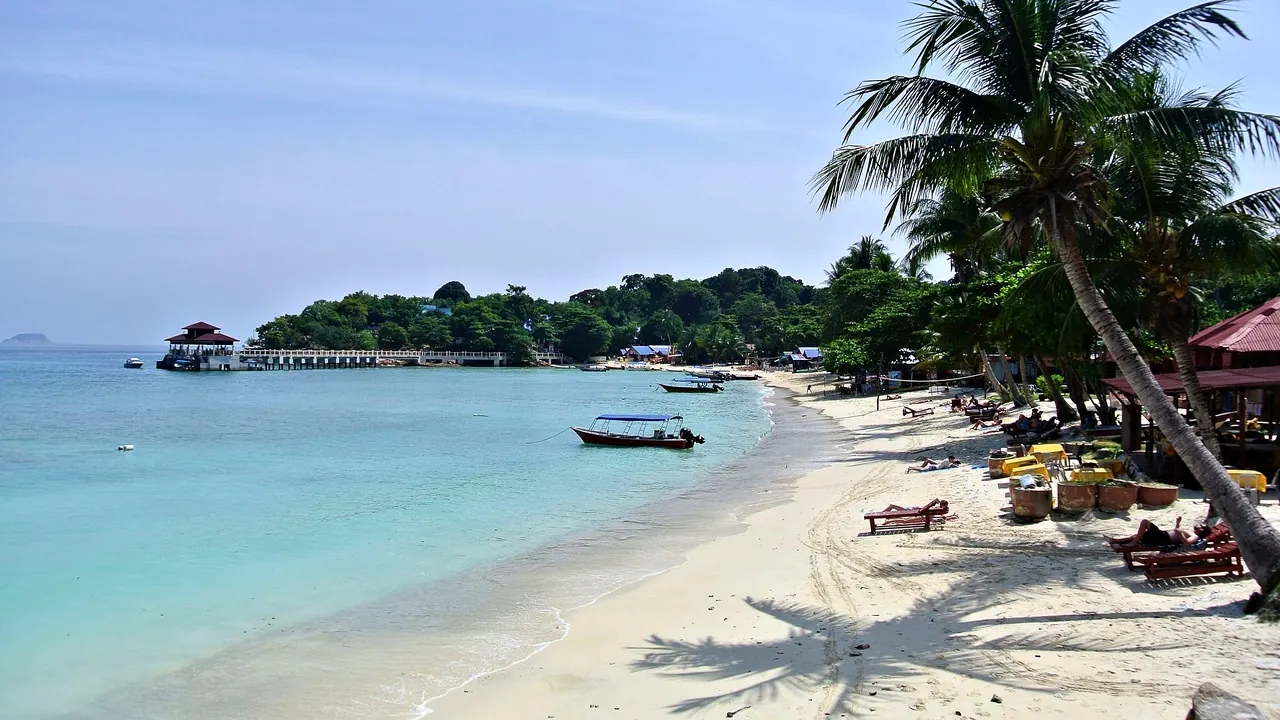
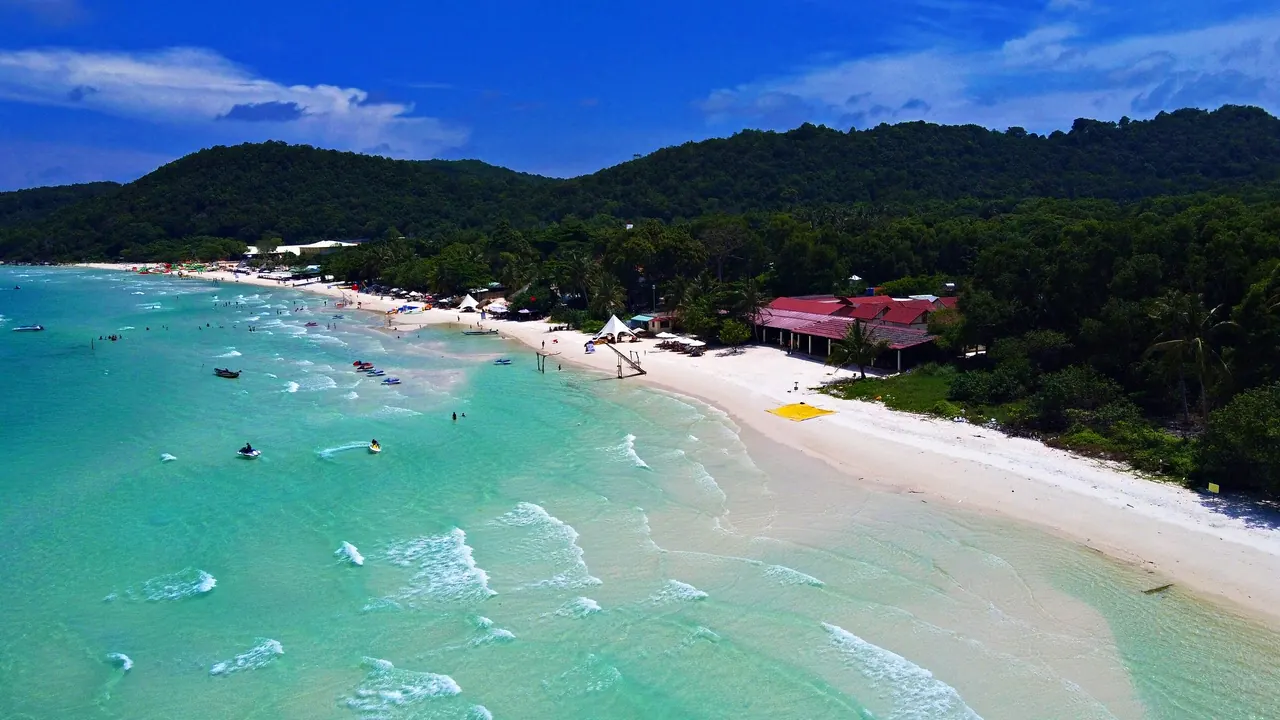
Photos: Perhentian Islands by DTravel AU, CC BY-SA 3.0, cropped; Phu Quoc by Trantuonglam, CC BY-SA 4.0, cropped.
Perhentian Islands or Phu Quoc?
Our verdict in twelve categories, each scored against the same fixed benchmark cities, and the climate month by month, so you can choose for your trip.
Choose Perhentian Islands for
- nature and the outdoors
- beaches
- day trips
The Perhentian Islands are for travellers who want to spend the day in the water. The reefs of the marine park start a few strokes off the sand, turtles feed in the bays of Perhentian Besar, and many people take their first diving course here. You give up good food, nightlife and comfort to get it: there are no roads, beer is hard to find and every move means a boat. Come between March and October, when the sea is calm.
Choose Phu Quoc for
- food and drink
- families
- wellness
Phu Quoc is the easier and more varied choice, especially with children or for a winter escape. There is an airport, buses and taxis, family resorts, a safari park and a theme park, cheap massages and a proper seafood culture built on the island's fish sauce and pepper. The reefs are only pleasant, and the beaches are less pristine than the postcards. Its best months are November to April.
Scoreboard
Twelve categories on one fixed scale from 0 to 100. The shaded stretch is the gap between the two.
Your match
Pick a travel style or drag the sliders, and both match scores follow your weighting.
Wins on nature and the outdoors and beaches with your weighting.
Wins on food and drink and families with your weighting.
What matters to you?
Category by category
What the scores mean for a trip.
Beaches & swimming
Both are true beach islands with sea warm enough all year, but the Perhentians have the edge. Their water is clearer and calmer, the pale sand is fine, and the reef starts right off the shore. On the best days you go from cove to cove by water taxi, from Long Beach and Coral Bay on Kecil to the sheltered bays and secluded coves of Besar.
Phu Quoc has more beach than the Perhentians, including some 20km of Long Beach on the west coast with sunsets over the Gulf of Thailand. Its most beautiful sand is at Sao and Khem in the southeast. Away from the resort fronts some stretches are scruffy, and in the wet months debris washes up on the west side.
Food & drink
On the Perhentians you eat where you sleep. That means resort restaurants, fish laid out for grilling on the beachfront in the evening, and plain east-coast Malay dishes like nasi goreng and roti. There are no markets, everything comes by boat and the choice narrows over a week.
Phu Quoc has a proper seafood culture. You can pick crab or fish live from the tanks, eat at the evening market in Duong Dong or at the stilted restaurants of Ham Ninh, and try the local raw herring salad rolled in rice paper. You can also visit the fish sauce houses and pepper farms the island is known for across Vietnam.
Culture & sights
Neither island is a place for sightseeing, but Phu Quoc has a few places worth the trip. The old prison near An Thoi, now a sober museum about the French and American wars, is the most affecting. Dinh Cau shrine on the rocks at Duong Dong and Ho Quoc Pagoda above the east coast round out a morning.
On the Perhentians the only place with any history is Kampung Pasir Hantu, the stilt-house fishing village on Kecil. It is worth a short stroll, but for Malay heritage you need the mainland.
Nightlife
Phu Quoc offers more after dark. There are sundowners on Long Beach, bars in Duong Dong, and purpose-built districts in the north and south that fill up for evening shows, with a casino in the north. Even so, it is quiet outside the dry-season peak.
The Perhentians' nightlife amounts to a few beach bars on Long Beach on Kecil, with fire shows and backpackers on cushions in high season. Terengganu is a conservative state, so drinking is low key and there are no clubs. On Besar, evenings end with dinner.
Nature & outdoors
The Perhentians' outdoor life is mostly underwater, and it is the better of the two. The islands sit in a protected marine park, with turtles in Besar's shallow bays, reef sharks at Shark Point and beginner dive sites and wrecks. The hills above are rainforest, with monkeys and monitor lizards along the trails between beaches.
Phu Quoc's reefs among the An Thoi islands are pleasant but not remarkable. The national park in the north has low forested hills, and Suoi Tranh falls only run in the rainy months. The cable car to Hon Thom, with its views over the archipelago, is a better outing than any hike.
Day trips
Both islands keep you close, and their day trips are of different kinds. From the Perhentians, boats reach Redang and Lang Tengah, which have more of the same reefs. The real change of scene is Kota Bharu, with its market and wooden palaces, but after the boat and the road it is a long day and better kept for the journey in or out.
From Phu Quoc, island-hopping boats tour the An Thoi archipelago. A ferry of a little over an hour reaches Ha Tien, a quiet border town with a temple hill and river views.
Good for families
Phu Quoc is much easier with children. It has a drive-through safari park and a theme park with an aquarium in the north, a water park at the end of the Hon Thom cable car, and large resorts with pools and kids' clubs. The catches are the heat all year and a taxi ride to reach almost every attraction.
The Perhentians suit children who love the water. Besar's shallow, sheltered bays let a young child snorkel among feeding turtles, and there is no traffic. Beyond that there is nothing made for children, medical care is basic and every move means a speedboat or a hot jungle path.
Getting around
The Perhentians have no roads and no cars. You walk along the beach, take a water taxi to the next cove or climb a jungle trail over the headland, and you reach the islands by speedboat from Kuala Besut, which can be a rough ride. Once you are settled it is simple, but each change of base takes effort.
Phu Quoc has an airport on the west coast, electric buses along its main spine, and ride-hailing and taxis everywhere else, so it is somewhat easier to get around. The trade-off is distance. Sao Beach, the safari park and the cable car are each half an hour or more by road from Long Beach.
Shopping & style
There is little to buy on either island, but Phu Quoc at least has souvenirs worth bringing home. You can buy black pepper, dried seafood and local wine at the Duong Dong market, and cultured pearls from the island's farms. Its fish sauce is famous but may not be allowed in your luggage. On the Perhentians, shopping means sun cream, snacks and a dive-shop T-shirt, so bring what you need from the mainland.
Affordability
Phu Quoc is a little cheaper overall. Local eating, simple guesthouses near Duong Dong and taxis cost little, while the big resorts, theme parks, cable car and boat tours are expensive, especially at the turn of the year.
On the Perhentians, fan chalets on Long Beach and Coral Bay, and some of the region's cheapest dive courses, keep a backpacker budget low. Because everything comes by boat, though, food, water and beer cost more than on the mainland, and water taxis add up over a week.
Live music & performing arts
Phu Quoc has more to offer here, though neither island has a theatre, a concert hall or a local music scene. Its resort districts put on large staged shows by the sea in the south, with water, fireworks, lights and drones, and multimedia shows in the north. They are polished and made for tourists, but they make a proper evening out.
The Perhentians have almost nothing to compare. The nearest thing is a fire show or someone playing guitar on the sand at Long Beach. That is part of a night at the beach bar, not a show you would plan an evening around.
Wellness & relaxation
Phu Quoc is better for pampering. Vietnamese massage is cheap and easy to find, from simple shops in Duong Dong to resort spas with herbal baths, and some beach resorts offer yoga. For quiet, stay around Ong Lang, Ganh Dau or Khem Beach.
The Perhentians have few treatments, just a few resort spas on Besar and simple massage huts. What they do have is stillness: no cars, days set by the tide and early nights in the coves of Besar.
When should you go?
Pick your month. The climate figures are measured averages, not a forecast.
Perhentian Islands in July
Phu Quoc in July
Daytime high, °C
Rainfall in the month, mm
Where the figures come from
Perhentian Islands has no weather station within reach, so its figures come from a gridded climate model rather than a measured record, and read a broad area rather than one spot.
Temperature and rainfall are climate normals, averaged over the years shown. Perhentian Islands: 2001-2020 normals, NASA POWER reanalysis grid, no weather station within 90 km. Phu Quoc: 1991-2020 normals, Phu Quoc (0.7 km from centre).
The two islands have opposite seasons, so the month you travel may decide the choice for you. The Perhentians are open from March to October. They are driest and calmest in spring, showers build through the summer, and October is wetter still. In November and December the north-east monsoon brings around 500mm of rain a month, the seas turn rough and most places close. That is when Phu Quoc is at its best. November there is still fairly wet as the rains ease, but from December to March it is dry, with almost no rain in January and February, and the west coast is calm and clear. The rain comes back in April and May and is heaviest from July to September, when the south-west monsoon sends waves and debris onto the west-facing beaches.
The sea at both islands never drops below 28°C, so you can swim at either any time of year, and calm water matters more than temperature. On land, the difference is in the first half of the year. From January to April Phu Quoc is a few degrees hotter, reaching 33°C in April, and that makes midday trips to its spread-out sights tiring. The Perhentians are a little cooler in those months. From July to September both islands have the same daytime highs of 30°C.
Which traveller are you?
For an outdoors trip, choose the Perhentian Islands. You can snorkel with turtles straight off the beach, see blacktip reef sharks at Shark Point, learn to dive on gentle reefs and follow rainforest trails between coves. Phu Quoc's reefs and forest are pleasant but ordinary.
On a family trip with children, Phu Quoc is the better bet. It has a drive-through safari park, a theme park with an aquarium, a water park at the end of the cable car and resorts with kids' clubs, all reached by road rather than by speedboat.
For a food and nightlife trip, go to Phu Quoc. It has grilled seafood at the Duong Dong evening market, the island's own herring salad, and bars along Long Beach and in town, plus evening shows. The Perhentians offer resort meals, scarce beer and a few cushions on the sand.
Before you go
| Measure | Perhentian Islands | Phu Quoc |
|---|---|---|
| Official language | Malay | Vietnamese |
| Currency | Malaysian Ringgit (MYR) | Dong (VND) |
| Sockets | G240 V, 50 Hz | ACFG220 V, 50 Hz |
| Driving side | Left | Right |
| Time zone | UTC+8 | UTC+7 |
| Emergency number | 999 | Police 113, ambulance 115, fire 114 |
| Main airport | Sultan Ismail Petra Airport (KBR)8 non-stop destinations | Phú Quốc International Airport (PQC)36 non-stop destinations |
By the numbers
| Measure | Perhentian Islands | Phu Quoc |
|---|---|---|
| Population | - | 179,480 |
| People per km² | - | 305 |
| Swim season, months above 21 °C | 12 months | 12 months |
Where else could you go?
Every comparison below shares a destination with this one, so you can follow Perhentian Islands or Phu Quoc somewhere new.
- Koh Rongvs Phu Quoc
- Penangvs Perhentian Islands
- Koh Changvs Phu Quoc
- Langkawivs Perhentian Islands
- Koh Sametvs Phu Quoc
- Tiomanvs Perhentian Islands