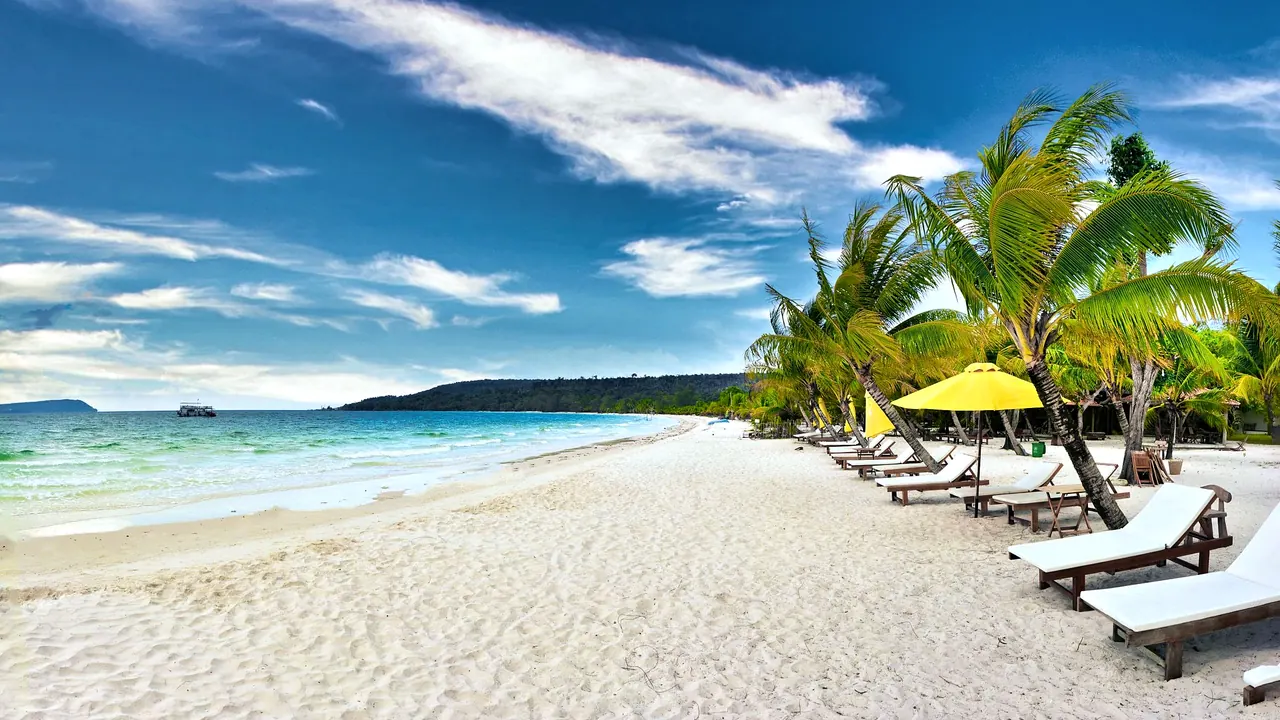
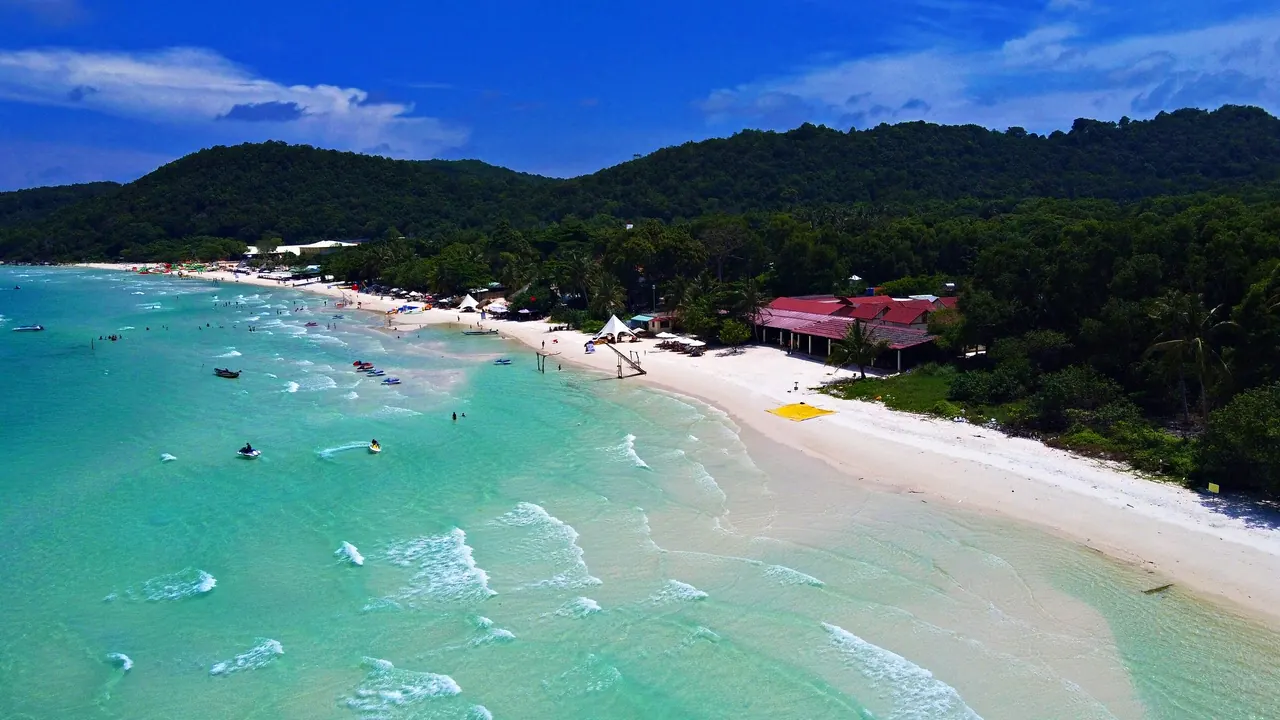
Photos: Koh Rong by allPhoto Bangkok, Pexels License; Phu Quoc by Trantuonglam, CC BY-SA 4.0, cropped.
Koh Rong or Phu Quoc?
Our verdict in twelve categories, each scored against the same fixed benchmark cities, and the climate month by month, so you can choose for your trip.
Choose Koh Rong for
- nightlife
- beaches
- nature and the outdoors
Koh Rong is for travellers who want the beach and very little else. Its long, almost empty sands at Long Set and Sok San, the glowing plankton after dark and the short hop to Koh Rong Sanloem make a simple, barefoot stay, with a lively backpacker party at Koh Touch for those who want one. You give up easy transport, decent food and anything made for children, so it suits young independent travellers and couples happy with hammocks and jungle paths.
Choose Phu Quoc for
- families
- food and drink
- getting around
Phu Quoc gives you a beach trip with more support behind it. An airport, buses and taxis link resorts, a safari park, a theme park and the cable car to Hon Thom, so families and anyone who wants comfort will find it much easier. It also eats far better, with live seafood, fish sauce houses and pepper farms. The price is busier coastlines and a ride for almost every outing.
Scoreboard
Twelve categories on one fixed scale from 0 to 100. The shaded stretch is the gap between the two.
Your match
Pick a travel style or drag the sliders, and both match scores follow your weighting.
Wins on nightlife and beaches with your weighting.
Wins on families and food and drink with your weighting.
What matters to you?
Category by category
What the scores mean for a trip.
Beaches & swimming
These two islands are level for beaches and share the same warm water, so the real difference is what lies behind the sand. On Koh Rong it is mostly forest. You can walk for a long way on Long Set or Sok San and pass only a few people, and the only real crowds are in the small, shallow bays by Koh Touch village, where boats lie at anchor. A short crossing adds Saracen Bay and Lazy Beach on Koh Rong Sanloem.
Phu Quoc gives up that emptiness for comfort. Long Beach is a resort strip with sunbeds, beach bars and the sunset, and the whitest sand and palest water are on the other side of the island at Sao and Khem. Its advantage shows in the monsoon. When swell and debris reach the west-facing beaches of both islands, Phu Quoc has a calmer east coast to move to, while Koh Rong's best stretches face straight into the weather.
Food & drink
Phu Quoc is clearly the better place to eat. Its seafood is the point, with crab and fish picked from tanks, raw herring salad rolled in rice paper, and stilted restaurants over the water at Ham Ninh. You can also visit the fish sauce houses and pepper farms the island is known for across Vietnam.
Koh Rong's eating is limited to the backpacker strip at Koh Touch and resort kitchens, with pizza, Western breakfasts and a few Khmer staples like amok. The evening beach grills of fresh squid and fish are the highlight, but anyone who wants proper Cambodian cooking has to save it for the mainland.
Culture & sights
Neither island is a place for sightseeing, but Phu Quoc at least has a few places worth an afternoon. The old prison near An Thoi is a sober reminder of the French and American wars, and the Dinh Cau shrine and Ho Quoc Pagoda add a little more. Koh Rong has no temples or museums at all; a stroll through the stilt houses of Prek Svay or Koh Touch is as close as it gets.
Nightlife
Koh Rong is the island for a proper night out, though only in one spot. The beachfront at Koh Touch turns into a young, cheap backpacker party with loud music, fire shows and buckets, which goes on into the small hours in the dry season.
Phu Quoc's evenings are gentler and more spread out: sundowners on Long Beach, a few bars in Duong Dong, and crowds strolling the lit-up resort districts, with a casino in the north. Most people are back at their hotel before midnight, which suits couples and families better than partygoers.
Nature & outdoors
The outdoors is much the same standard on both, but the setting is different. Koh Rong is jungle-covered hills with few roads, so a hike along forest trails between bays, such as from Koh Touch to Long Set, is part of daily life, and night swims among the plankton are the highlight.
Phu Quoc's forest is a national park in the north, but most of its outdoor life happens on the water, with snorkelling and diving among the An Thoi islands and night squid fishing. The cable car to Hon Thom gives views of the archipelago that Koh Rong cannot offer.
Day trips
Neither island is a good base for trips out, so plan to spend most days where you sleep. From Koh Rong, the obvious outing is to Koh Rong Sanloem's Saracen Bay and M'Pai Bay, while Kampot and Kep are too far once the boat ride is counted. Phu Quoc's island-hopping boats work the An Thoi archipelago, and the ferry to Ha Tien, with its temple hill, is the one realistic mainland day out.
Good for families
Phu Quoc is much better set up for children. A drive-through safari park, a theme park with an aquarium and a water park at the end of the Hon Thom cable car fill the days that the beach cannot, and big resorts on the west and north coasts have pools and kids' clubs.
Koh Rong can work for older children and adventurous parents who base themselves on Sok San or Saracen Bay. Toddlers are another matter: the jungle paths, sandflies, late-night noise at Koh Touch and medical care a boat ride away make it hard going.
Getting around
Koh Rong starts with about an hour on a speedboat from Sihanoukville, and once you are ashore only Koh Touch is small enough to walk. Elsewhere you rely on moto taxis and pickups on the one main road, water taxis between beaches and sandy or muddy tracks. Some bays can be reached only by boat or along a hot jungle trail, and in the rainy months rough seas can cancel crossings.
On Phu Quoc you fly in to the middle of the west coast, and electric buses run along the main spine through Duong Dong, Long Beach and the north. Ride-hailing apps and taxis cover the rest. The safari park, Sao Beach and the cable car are each half an hour or more away, but the island is far easier to cover, though rarely on foot.
Shopping & style
There is little to buy on either, but Phu Quoc at least has some souvenirs to take home: black pepper, dried seafood and cultured pearls from the west-coast showrooms, plus rows of shops in the resort districts. On Koh Rong it comes down to minimarts and a few stalls of sarongs and bracelets in Koh Touch, so pack everything before the boat.
Affordability
Costs are much the same, and both islands are cheap for a frugal traveller and expensive once you want comfort. Koh Rong's dorms and fan bungalows near Koh Touch cost very little, but because everything comes in by boat, prices sit above the mainland and water taxis add up.
On Phu Quoc, local eating, guesthouses near Duong Dong and taxis are cheap, while the theme parks, cable car and big beach resorts push spending up, especially in the dry-season peak around the turn of the year.
Live music & performing arts
Neither has any real stage culture, but Phu Quoc at least has a show to see. Its resort districts put on large evenings of fireworks, water, lights and drones by the sea in the south, polished if purely for tourists. Koh Rong offers only an occasional acoustic set or open mic in a Koh Touch bar.
Wellness & relaxation
Koh Rong's rest comes from what it lacks. On Long Set, Sok San or the far bays of Koh Rong Sanloem there is no traffic and little to do but read and go to bed early. Treatments stop at a massage in a beach hut or the odd yoga session, and Koh Touch's late music makes it the wrong place to stay.
Phu Quoc adds the comfort Koh Rong cannot. Vietnamese massage is part of everyday life there, from small shopfronts in Duong Dong to the large resort spas, and there is a pool to go back to in the heat. Neither island has hot springs or a bathing tradition, so this is pampering rather than a cure.
When should you go?
Pick your month. The climate figures are measured averages, not a forecast.
Koh Rong in July
Phu Quoc in July
Daytime high, °C
Rainfall in the month, mm
Where the figures come from
Koh Rong has no weather station within reach, so its figures come from a gridded climate model rather than a measured record, and read a broad area rather than one spot.
Temperature and rainfall are climate normals, averaged over the years shown. Koh Rong: 2001-2020 normals, NASA POWER reanalysis grid, no weather station within 90 km. Phu Quoc: 1991-2020 normals, Phu Quoc (0.7 km from centre).
Both islands are best from December to March, when rain is light, the sea is calm and clear on the west coasts and the water stays warm enough for swimming every day of the year. Koh Rong is the slightly milder of the two, with daytime highs of around 28°C to 30°C all year, while Phu Quoc runs hotter, peaking at 33°C in April, which makes midday walks or outings in its sprawling resort districts hard going.
The wet season sets in on both from May and peaks in summer and early autumn, around 414mm in July on Koh Rong and as much as 521mm in September on Phu Quoc. Phu Quoc also stays wetter for longer into November, so Koh Rong dries out a little sooner as the dry season begins. In the rainy months Phu Quoc has the advantage of a sheltered east coast to retreat to, while on Koh Rong rough seas can cancel boats altogether.
Which traveller are you?
On a beach and sun trip, Koh Rong suits anyone who wants empty sand. Take a bungalow on Long Set or Sok San, spend the days barefoot and swim among glowing plankton after dark. Most of Phu Quoc's beaches have resorts behind them.
On a family trip with children, Koh Rong asks a lot of parents, while Phu Quoc makes the trip run smoothly. Book a large resort on the west or north coast, use the pool through the hottest hours and take a taxi to a different outing each day.
For a relaxing and wellness trip, Koh Rong gives you silence but little else, and Phu Quoc gives you both quiet and comfort. Stay on the quiet north coast around Ong Lang or Ganh Dau and spend the days between pool, hammock and an afternoon treatment.
Before you go
| Measure | Koh Rong | Phu Quoc |
|---|---|---|
| Official language | Khmer | Vietnamese |
| Currency | Riel (KHR) | Dong (VND) |
| Sockets | ACG230 V, 50 Hz | ACFG220 V, 50 Hz |
| Driving side | Right | Right |
| Time zone | UTC+7 | UTC+7 |
| Emergency number | Police 117, ambulance 119, fire 118 | Police 113, ambulance 115, fire 114 |
| Main airport | Sihanouk International Airport (KOS)11 non-stop destinations | Phú Quốc International Airport (PQC)36 non-stop destinations |
| Public holidays this year | 21 days | - |
By the numbers
| Measure | Koh Rong | Phu Quoc |
|---|---|---|
| Population | 1,100 | 179,480 |
| People per km² | 14 | 305 |
| Swim season, months above 21 °C | 12 months | 12 months |
Where else could you go?
Every comparison below shares a destination with this one, so you can follow Koh Rong or Phu Quoc somewhere new.
- Koh Changvs Koh Rong
- Koh Changvs Phu Quoc
- Koh Sametvs Koh Rong
- Koh Samuivs Koh Rong
- Koh Phanganvs Koh Rong
- Koh Sametvs Phu Quoc