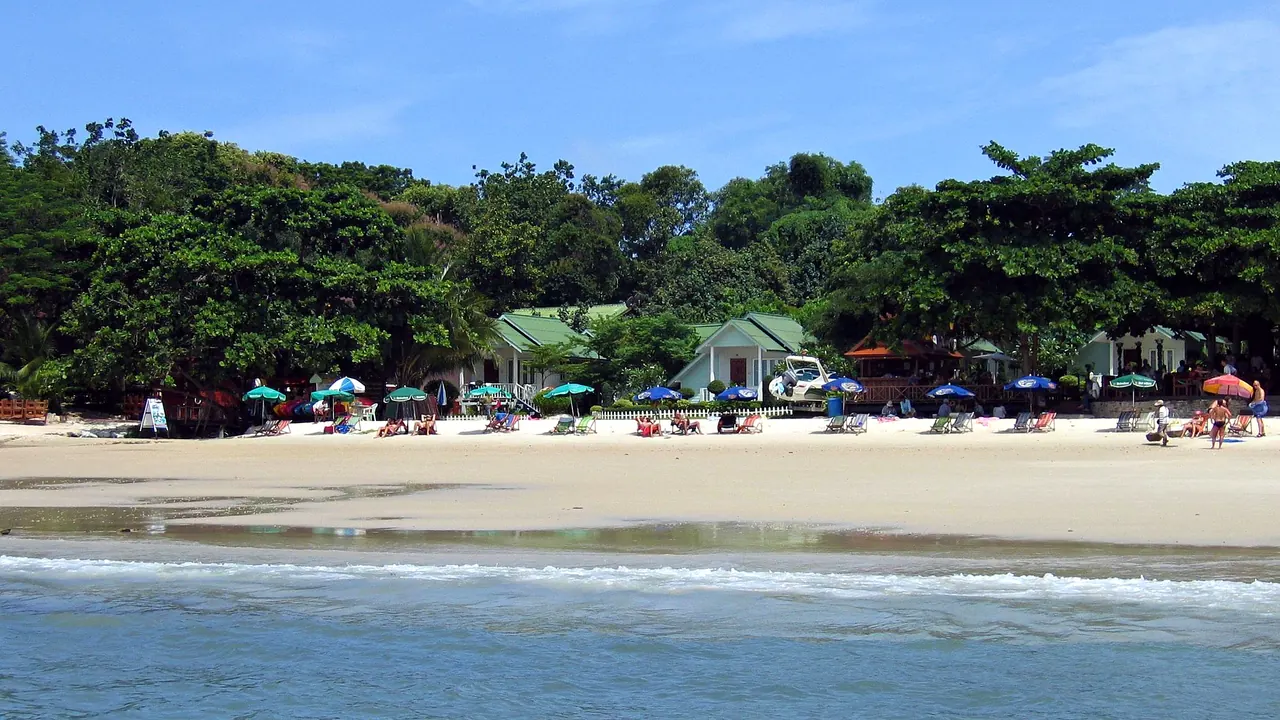
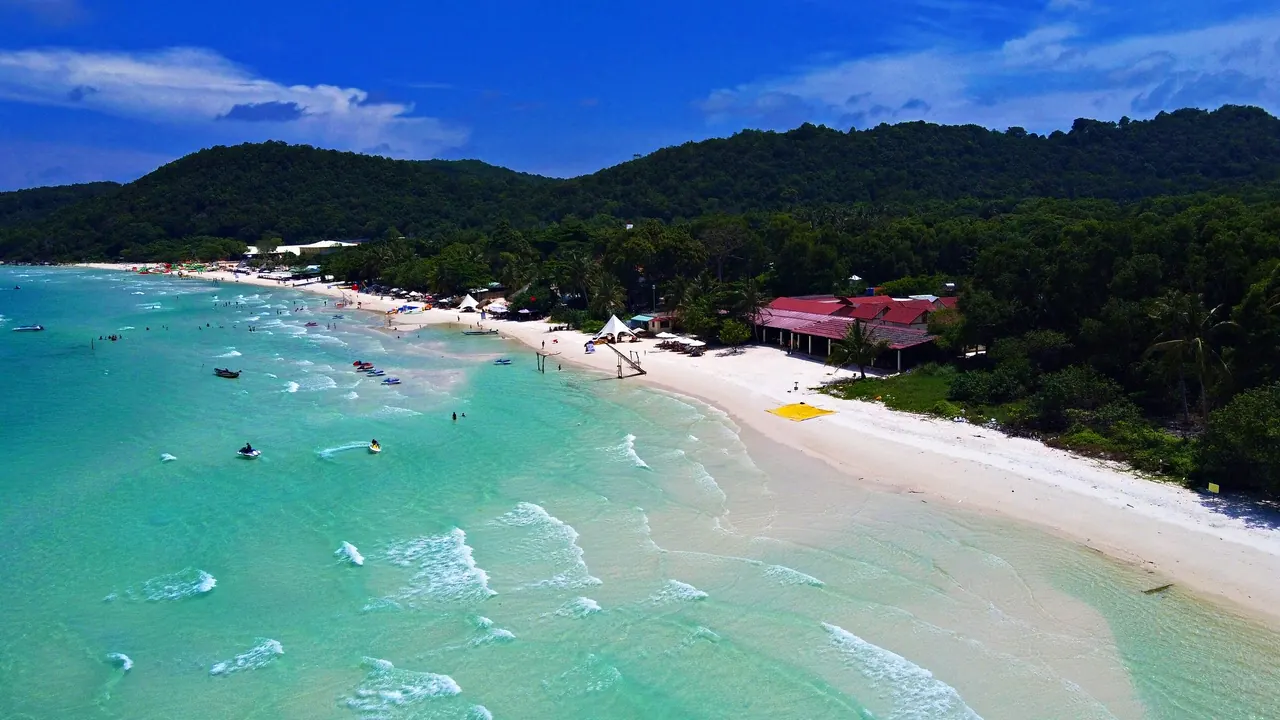
Photos: Koh Samet by Bjørn Erik Pedersen, CC BY-SA 3.0, cropped; Phu Quoc by Trantuonglam, CC BY-SA 4.0, cropped.
Koh Samet or Phu Quoc?
Our verdict in twelve categories, each scored against the same fixed benchmark cities, and the climate month by month, so you can choose for your trip.
Choose Koh Samet for
- nightlife
- getting around
Koh Samet suits a short, easy escape from Bangkok, especially for travellers who like to walk from one sandy bay to the next and want a livelier night on the sand. It is small enough to manage without any transport, the weekend beach bars have a real party feel, and the quiet southern coves are close by when you want to get away from them. Accept that the food is simple and there is almost nothing to see beyond the beach.
Choose Phu Quoc for
- families
- food and drink
- nature and the outdoors
Phu Quoc is the stronger choice for a longer stay with more to do. It has better seafood, with its own fish sauce and pepper traditions, a national park and reefs to explore, and theme parks, a safari park and a cable car that make it far easier for families. The price is distance: the island is long, and almost every outing means a taxi or bus ride.
Scoreboard
Twelve categories on one fixed scale from 0 to 100. The shaded stretch is the gap between the two.
Your match
Pick a travel style or drag the sliders, and both match scores follow your weighting.
Wins on nightlife and getting around with your weighting.
Wins on families and food and drink with your weighting.
What matters to you?
Category by category
What the scores mean for a trip.
Beaches & swimming
Both islands are built around their beaches, with the same warm Gulf water, so the difference is in the shape of the coast. Koh Samet's east coast is a tight chain of white-sand bays you can walk between, from the squeaky sand of Hat Sai Kaew to the quiet coves of Ao Thian and Ao Kiu, with Ao Prao the one beach facing the sunset.
Phu Quoc offers scale instead. Long Beach runs some 20km down the west coast with sunsets every evening, and the whitest sand and most turquoise water are at Sao and Khem on the southeast. But the beaches are spread far apart, and from May the west side gets waves and debris, so you have to switch coasts.
Food & drink
Phu Quoc is the better place to eat. Its seafood is the centre of the trip, from scallops with spring onion oil and live crab to the raw herring salad that is the island's own. On top of that come the fish sauce houses and pepper farms you can visit, the night market in Duong Dong and the restaurants on stilts at Ham Ninh.
Koh Samet manages good grilled fish on the sand at dusk and honest cooking in Na Dan village, but little else. Serious Thai eating is best saved for the mainland.
Culture & sights
Neither island is a place for sights, but Phu Quoc at least gives you a few to visit. The old prison near An Thoi is a sober reminder of the French and American wars, and Dinh Cau shrine and the hillside Ho Quoc Pagoda make easy stops.
On Koh Samet, culture amounts to the statues from Sunthorn Phu's Phra Aphai Mani on the rocks at Hat Sai Kaew and a small temple in Na Dan.
Nightlife
Koh Samet has the livelier nights. On Friday and Saturday, young crowds from Bangkok fill the beach bars between Hat Sai Kaew and Ao Phai, with buckets, loud music and fire dancers going well past midnight, though midweek it calms right down.
Phu Quoc's evenings are gentler and more spread out. There are sundowners on Long Beach, a few bars in Duong Dong, and the resort districts in the north and south, where people come to stroll and watch shows rather than dance. Most people are back in their hotels early.
Nature & outdoors
Phu Quoc has more to get out into. Half the island is a national park of low forested hills with trails and streams, boats from An Thoi run to the reefs in the southern archipelago, and the Hon Thom cable car gives broad views over the islands.
Koh Samet is a marine park too, but its interior is scrubby dry forest with no hills to climb. The best things to do are the coastal path down the east side and a boat out to snorkel off Koh Kudee or Koh Talu, where the coral is modest.
Day trips
Both islands are places to stay put, and on each the main outing is a boat to nearby islets. The mainland trips differ. From Koh Samet, Chanthaburi's cathedral and wooden riverside shophouses are worth the long drive beyond Ban Phe, but most people fit them into the journey in or out. From Phu Quoc, the ferry to Ha Tien and its temple hill takes a little over an hour.
Good for families
Phu Quoc is far better set up for children. The safari park, where buses drive through the enclosures, the theme park and aquarium in the north and the water park on Hon Thom fill days that Koh Samet cannot, and the big resorts have kids' clubs. The catch is a taxi ride for every outing.
Koh Samet offers gentle water at Ao Wong Deuan, Ao Thian and Ao Prao and a short trip from Bangkok, but nothing else made for children. Its bumpy roads are hard with a buggy, and there is only a small clinic for medical care.
Getting around
Neither island is hard to get around once you are there, but they work in opposite ways. Koh Samet is only about 6km long, and sandy paths join its bays, so you can walk almost everywhere. The effort is in arriving: most of a day by road and boat from Bangkok.
Phu Quoc has an airport right by Long Beach, good roads, electric buses along the main west-coast spine and plenty of ride-hailing cars. But at about 50km long, its beaches and attractions are each half an hour or more apart by road, and little is walkable beyond Duong Dong.
Shopping & style
Koh Samet's shopping stops at the sarongs, swimwear, sunscreen and shell trinkets sold in Na Dan and behind the beaches, so bring what you need from the mainland.
Phu Quoc gives you more to take home. Its black pepper is known across Vietnam, the west-coast showrooms sell cultured pearls from the island's farms, and the Duong Dong evening market has dried seafood. The island's fish sauce may not be allowed in your luggage, and the rows of shops in the resort districts add little.
Affordability
Both are cheap by international standards and dearer than their mainlands, so the costs come from different places. On Koh Samet, the extras are the national park fee, speedboat transfers and weekend crowds from Bangkok, which make Saturdays the most expensive and hardest time to find a room. On Phu Quoc, simple guesthouses and market seafood stay cheap, but the theme parks, cable car and boat trips quickly add up, and prices peak around the turn of the year.
Live music & performing arts
On Koh Samet the only performers are the fire dancers on the beach and the odd guitarist in a bar, part of the night out rather than anything to plan an evening around.
Phu Quoc stages proper productions, even if they are made for tourists: large shows with water, fireworks, lights and drones by the sea in the south, and multimedia shows in the north. Theatre and concerts are missing on both islands, so anyone after them should look to the mainland.
Wellness & relaxation
Phu Quoc is the slightly better place to switch off. Massage there ranges from simple shops in Duong Dong to resort spas with herbal baths, some resorts offer yoga, and the north coast around Ong Lang and the southeast near Khem are properly quiet.
Koh Samet's rest comes from its car-free pace, the massage pavilions open to the sea and the silent evenings at Ao Kiu and Ao Wai. To keep it restful, you need to avoid the bar strip at weekends.
When should you go?
Pick your month. The climate figures are measured averages, not a forecast.
Koh Samet in July
Phu Quoc in July
Daytime high, °C
Rainfall in the month, mm
Where the figures come from
Koh Samet has no rain gauge within 25 km of the centre, so its rainfall comes from a gridded climate dataset read at the destination rather than from a gauge further away.
Koh Samet's sunshine is measured 72 km from the centre, at Chanthaburi.
Temperature and rainfall are climate normals, averaged over the years shown. Koh Samet: 2005-2020 (sunshine 1991-2020, rainfall 1991-2020) normals, Rayong (13.5 km from centre). Phu Quoc: 1991-2020 normals, Phu Quoc (0.7 km from centre).
Both islands are hot all year, with daytime highs in the low 30s and a sea of around 28°C or warmer in every month, so the real question is rain. On Koh Samet the dry season runs from November to April. December is the driest and sunniest month, with only about 8mm of rain. April and May are the hottest, at 34°C, which makes the middle of the day heavy going, and by May the rains have set in and the sunshine drops away. September is the wettest month, at about 304mm.
Phu Quoc has a shorter best season and a much wetter monsoon. December to March is reliably dry, but November and April already see noticeably more rain than on Samet. From June to October it pours, with September reaching around 521mm, and the west coast turns rough. For a trip at either end of the dry season, or in the wet months, Koh Samet is the safer bet. In the heart of winter both are at their best.
Which traveller are you?
On a family trip with young children, Phu Quoc is the easier choice. Its safari park, theme park with an aquarium and water park at the end of the Hon Thom cable car give children far more than Koh Samet's sand and shallow water.
For a food and nightlife trip, the two pull different ways. Phu Quoc eats better, with seafood from tanks and stilted restaurants at Ham Ninh. Koh Samet has the livelier nights, with fire dancers and beach bars going late at weekends.
On an outdoors trip, Phu Quoc offers more. It has forested national park hills with trails, boats out of An Thoi to the southern reefs and the cable car over the archipelago. Koh Samet has a pleasant coastal path but little beyond it.
Before you go
| Measure | Koh Samet | Phu Quoc |
|---|---|---|
| Official language | Thai | Vietnamese |
| Currency | Baht (THB) | Dong (VND) |
| Sockets | ABCF220 V, 50 Hz | ACFG220 V, 50 Hz |
| Driving side | Left | Right |
| Time zone | UTC+7 | UTC+7 |
| Emergency number | Police 191, ambulance 1669, fire 199 | Police 113, ambulance 115, fire 114 |
| Main airport | U-Tapao–Rayong–Pattaya International Airport (UTP)2 non-stop destinations | Phú Quốc International Airport (PQC)36 non-stop destinations |
By the numbers
| Measure | Koh Samet | Phu Quoc |
|---|---|---|
| Population | - | 179,480 |
| People per km² | - | 305 |
| Swim season, months above 21 °C | 12 months | 12 months |
Where else could you go?
Every comparison below shares a destination with this one, so you can follow Koh Samet or Phu Quoc somewhere new.
- Pattayavs Koh Samet
- Koh Changvs Koh Samet
- Koh Changvs Phu Quoc
- Koh Taovs Koh Samet
- Koh Phanganvs Koh Samet
- Koh Samuivs Koh Samet