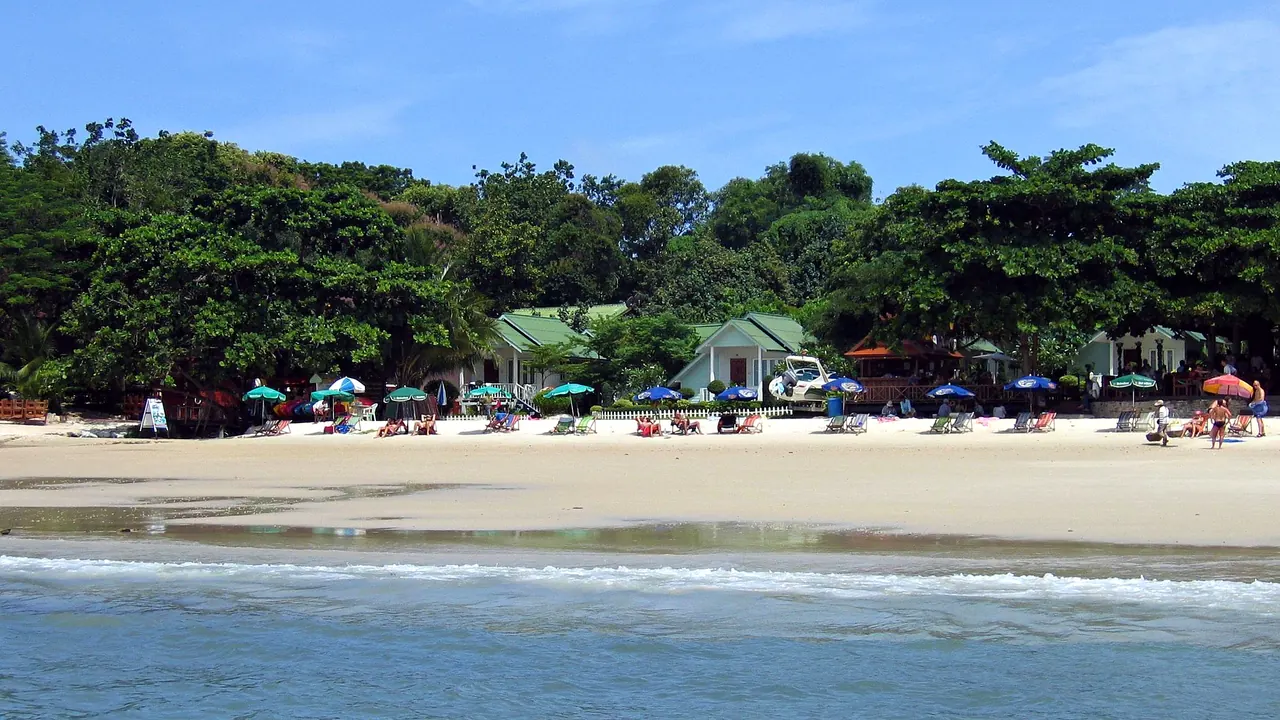
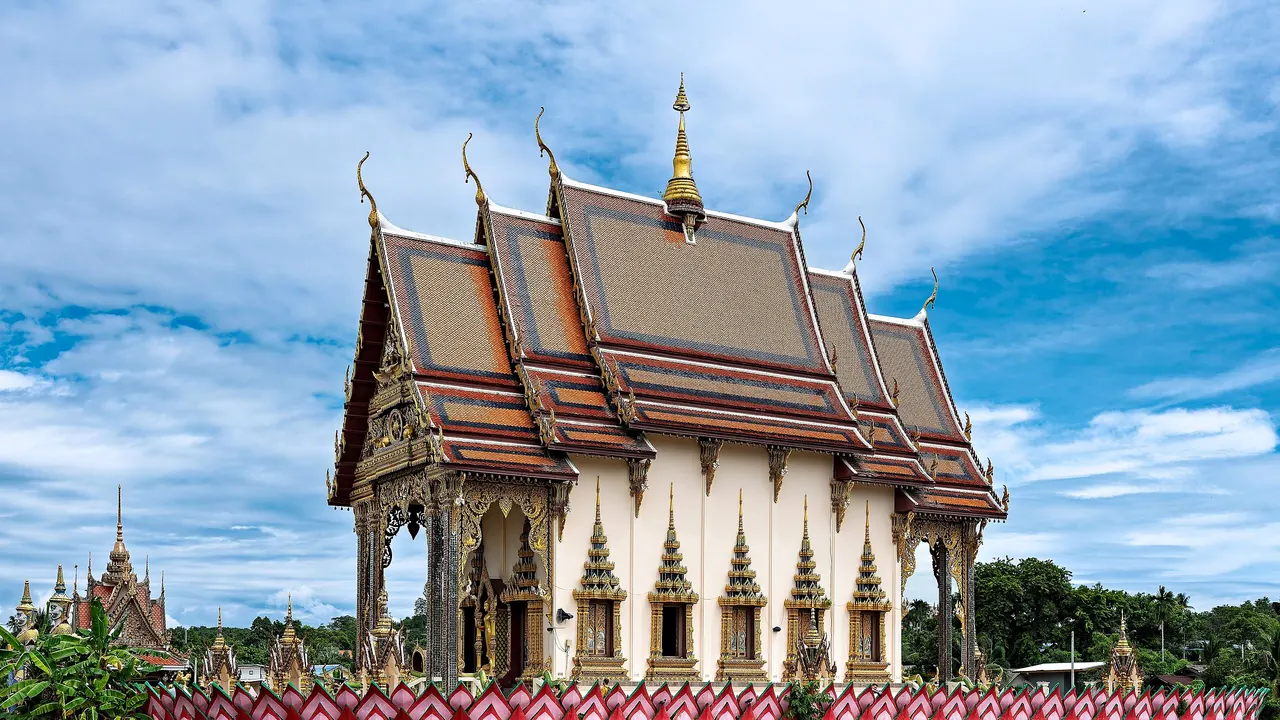
Photos: Koh Samet by Bjørn Erik Pedersen, CC BY-SA 3.0, cropped; Koh Samui by Mustang Joe, CC0.
Koh Samet or Koh Samui?
Our verdict in twelve categories, each scored against the same fixed benchmark cities, and the climate month by month, so you can choose for your trip.
Choose Koh Samet for
- getting around
- prices
Koh Samet suits a simple, inexpensive beach escape close to Bangkok. It is small enough to walk from one bay to the next, there is little to organise, and soft sand and calm, shallow water are the whole point. It works best for a few days of swimming and grilled fish on the sand, ideally midweek and towards the quieter southern coves, by travellers who don't mind that there is almost nothing else to do.
Choose Koh Samui for
- wellness
- nature and the outdoors
- nightlife
Koh Samui is the island for a longer and fuller stay. Its beaches are a little better, and it has proper retreat and spa culture, a real club scene in Chaweng, night markets worth eating at and boat days out to the limestone islands of Ang Thong. You pay for that with higher costs and a 51km ring road that you need wheels to get around.
Scoreboard
Twelve categories on one fixed scale from 0 to 100. The shaded stretch is the gap between the two.
Your match
Pick a travel style or drag the sliders, and both match scores follow your weighting.
Wins on getting around and prices with your weighting.
Wins on wellness and nature and the outdoors with your weighting.
What matters to you?
Category by category
What the scores mean for a trip.
Beaches & swimming
Both islands are built around white sand, and Samui has the slight edge. Samet's strength is a chain of short, sheltered east-coast bays you can walk between, from the squeaky sand of Hat Sai Kaew down to quiet Ao Thian and Ao Kiu, with calm, shallow water through the dry season. Ao Prao is its only beach facing the sunset.
Samui offers more variety and longer stretches: the broad curve of Chaweng with clear water, the rougher Lamai, sheltered Choeng Mon and coves among boulders such as Silver Beach. Its north-coast beaches get shallow and murky at low tide, while Samet's weekend crowds from Bangkok are the main thing to avoid there.
Food & drink
Samui is the better island for eating. Its night markets at Lamai, Maenam and the Bophut walking street are worth an evening in themselves, there are roadside kitchens cooking fiery southern curries, and polished resort restaurants look out over the sea, though the Chaweng strip is uneven.
Samet keeps it simple: the catch on ice and tables on the sand at Hat Sai Kaew and Ao Phai, and better local cooking in Na Dan by the pier. There are no markets or cafés to speak of, so keen eaters should plan their serious meals on the mainland.
Culture & sights
Neither island is a heritage trip, but Samui at least fills a half-day loop. You can see the gilded Big Buddha on its causeway islet, the many-armed Guanyin at Wat Plai Laem, the mummified monk at Wat Khunaram and the old Chinese shophouses of Fisherman's Village. Samet has only its literary link to Sunthorn Phu's Phra Aphai Mani, with a mermaid statue on the rocks, and a modest temple in Na Dan.
Nightlife
Samui has the bigger night out by some distance. Chaweng has proper clubs in the lanes behind the beach, along with DJs, beach-club fire shows and a young international crowd through the high season. Koh Phangan's full moon parties are a short boat ride away, and Bophut is there for quieter drinks.
Samet has no clubs, just a handful of beach bars between Hat Sai Kaew and Ao Phai with cushions, drink buckets and fire dancers. They feel like a real party on Friday and Saturday when Bangkok arrives, and are much calmer midweek.
Nature & outdoors
Samui gives far more reason to get out of the water. Ang Thong National Marine Park, with its sheer limestone islands, emerald inner lake and viewpoint climb, makes a superb boat day. Divers can reach Sail Rock and the sites towards Koh Tao, and the jungle interior has waterfalls and rough tracks.
Samet's outdoors is gentler and smaller in scale: the coastal path over headlands to the southern tip, dry scrub forest with monitor lizards, and snorkelling trips to Koh Kudee and Koh Talu, where the coral is only modest.
Day trips
Samui's outings are island-hops by boat, to the looser backpacker beaches of Koh Phangan or for a full day at Koh Tao and the Koh Nang Yuan sandbar. They are easy and varied.
From Samet, almost everything means first crossing to Ban Phe. Chanthaburi's cathedral and riverside shophouses are the one rewarding trip, but it is a long way beyond the pier, so most people fit the mainland into the journey in or out rather than going from the island.
Good for families
Samui is the easier choice with children, mainly because of its resorts. Many have large pools and children's clubs, and Choeng Mon, Bophut and Maenam have calm water. There are also animal parks, a water park and Ang Thong boat trips for older children, though the busy ring road needs care.
Samet's gentle water at Ao Wong Deuan, Ao Thian and Ao Prao is ideal for toddlers, and the short trip from Bangkok helps. But there is nothing else made for children, the rutted roads are hard going with a buggy, and medical care is a small clinic.
Getting around
Once you are there, Samet is the simpler island to get around. It is only about 6km long, and sandy paths and coastal trails link the main bays, so you can walk everywhere and a car is no use at all. Getting there is the hard part: a road trip from Bangkok to Ban Phe and then a boat takes most of a day.
Samui is reached by flight or ferry and is spread around a ring road. Walking between beach areas isn't practical, songthaews run without timetables and taxi fares have to be negotiated, so most visitors end up hiring a car or a scooter.
Shopping & style
Samui at least gives you somewhere to browse. There is the Friday walking street in Fisherman's Village with crafts and coconut-wood homeware, weekly markets in Lamai and Maenam, tailors, and a large mall in Chaweng. Samet has stalls of sarongs, sunscreen and shell trinkets, plus convenience stores, so bring what you need.
Affordability
Samet is the cheaper of the two, though neither is as cheap as the Thai mainland. On Samet the extras are the national park fee, boat transfers and resort prices on the best bays, and weekends cost the most. The bungalows set back from the sand are where you save.
Samui is among the dearest places to stay in Thailand. Its resorts and villas are priced for international visitors, taxis are expensive and flights add to the cost. Eating at night markets and staying on the north or west coast keeps a stay modest.
Live music & performing arts
Neither island has a stage for serious performance. Samui has a little more evening entertainment, with Muay Thai fight nights around Chaweng and Lamai, ladyboy cabaret and cover bands. On Samet the fire dancers and the odd guitarist in a bar are the whole show.
Wellness & relaxation
Samet is a place to rest rather than a place to be treated. The calm comes from the island itself: hardly any cars, days that run from breakfast to sunset, and evenings that go silent in the coves of Ao Kiu, Ao Wai and Ao Thian. The bigger resorts on Ao Prao and Ao Wong Deuan have proper spas, but there is little in the way of structured programmes, and the bar strip is best avoided at weekends.
Samui goes much further, because you can build a whole stay around getting well, with meditation courses, holistic health centres and residential programmes, and Thai massage everywhere from mats on the sand to quiet garden salons. Neither island has hot springs or a bathing tradition. Samui's drawback is noise, since Chaweng is anything but restful, so where you stay on the island matters as much as what you book.
When should you go?
Pick your month. The climate figures are measured averages, not a forecast.
Koh Samet in July
Koh Samui in July
Daytime high, °C
Rainfall in the month, mm
Where the figures come from
Koh Samet has no rain gauge within 25 km of the centre, so its rainfall comes from a gridded climate dataset read at the destination rather than from a gauge further away.
Koh Samet's sunshine is measured 72 km from the centre, at Chanthaburi.
Koh Samui has no rain gauge within 25 km of the centre, so its rainfall comes from a gridded climate dataset read at the destination rather than from a gauge further away.
Temperature and rainfall are climate normals, averaged over the years shown. Koh Samet: 2005-2020 (sunshine 1991-2020, rainfall 1991-2020) normals, Rayong (13.5 km from centre). Koh Samui: 1991-2020 normals, Ko Samui (7.4 km from centre).
The two islands sit on different sides of the monsoon, so their best seasons barely overlap. Koh Samet is at its best from November to April, when the bays are calm and rain is rare. December is almost dry, at 8mm. From May the southwest monsoon sets in, and the island stays wet and cloudier through October, wettest in September. Daytime highs barely move from around 32°C to 34°C, so midday walking along the coastal path is hot work at any time of year.
Koh Samui is drier from February to September and has a sea warm enough to swim in all year. Its wet season comes late, from October to December, when November brings about 372mm and the east coast turns choppy. It runs a little cooler than Samet in the early months, around 29°C. In short, Samet is the choice for a winter trip and Samui for a summer one.
Which traveller are you?
On a trip on a tight budget, Koh Samet comes out ahead. Simple bungalows, Thai plates and massages cost little, the trip from Bangkok is cheap by road and ferry, and you can walk between the bays, which saves the taxi and scooter costs that add up on Samui.
For a relaxing and wellness trip, Koh Samui is the clear choice. Lamai and the hills above it have long offered detox and fasting programmes, with yoga retreats and hillside spas across the island. The slow north and west coasts give real quiet, where Samet offers beach massage pavilions and little more.
For a food and nightlife trip, Koh Samui gives far more to work with. There are night markets in Lamai, Maenam and Fisherman's Village, and Chaweng has clubs that run well past midnight. Samet's evenings are a few bucket-and-fire-show bars, and its food is mostly beach grills.
Before you go
| Measure | Koh Samet | Koh Samui |
|---|---|---|
| Official language | Thai | Thai |
| Currency | Baht (THB) | Baht (THB) |
| Sockets | ABCF220 V, 50 Hz | ABCF220 V, 50 Hz |
| Driving side | Left | Left |
| Time zone | UTC+7 | UTC+7 |
| Emergency number | Police 191, ambulance 1669, fire 199 | Police 191, ambulance 1669, fire 199 |
| Main airport | U-Tapao–Rayong–Pattaya International Airport (UTP)2 non-stop destinations | Samui International Airport (USM)10 non-stop destinations |
By the numbers
| Measure | Koh Samet | Koh Samui |
|---|---|---|
| Population | - | 62,500 |
| People per km² | - | 273 |
| Swim season, months above 21 °C | 12 months | 12 months |
Where else could you go?
Every comparison below shares a destination with this one, so you can follow Koh Samet or Koh Samui somewhere new.
- Koh Phanganvs Koh Samui
- Koh Taovs Koh Samui
- Pattayavs Koh Samet
- Koh Changvs Koh Samet
- Koh Lantavs Koh Samui
- Koh Phi Phivs Koh Samui