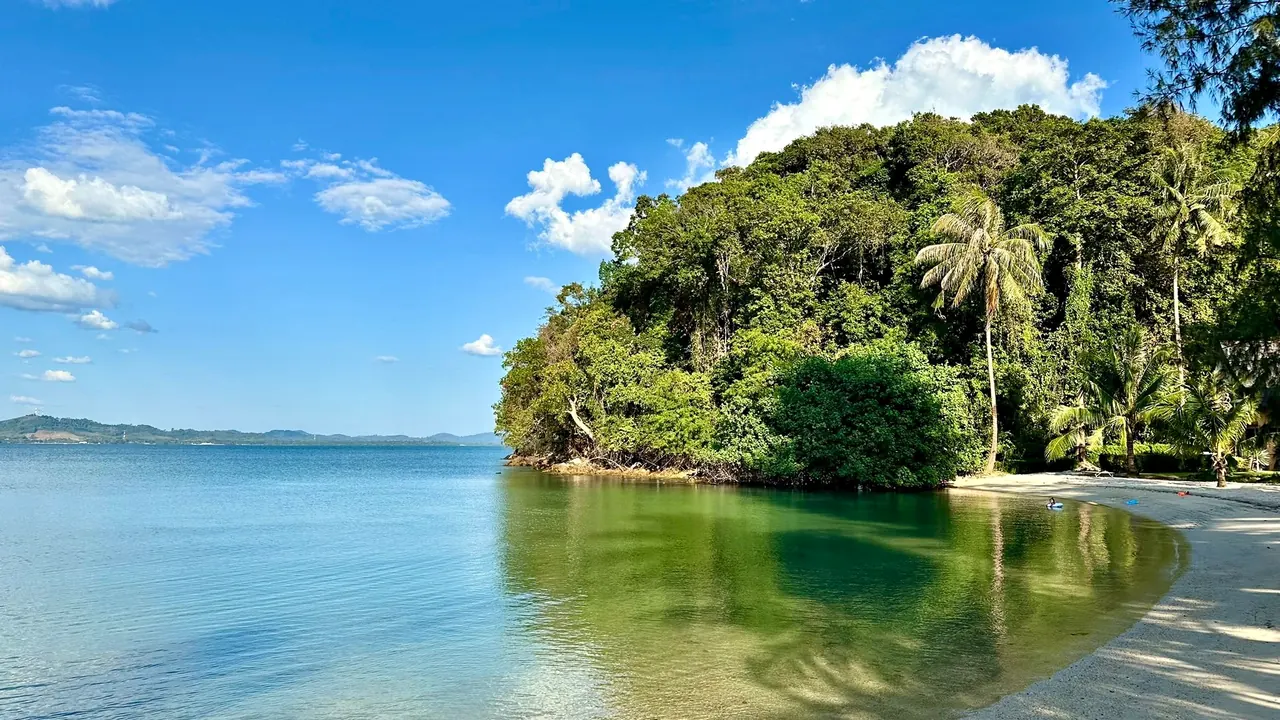
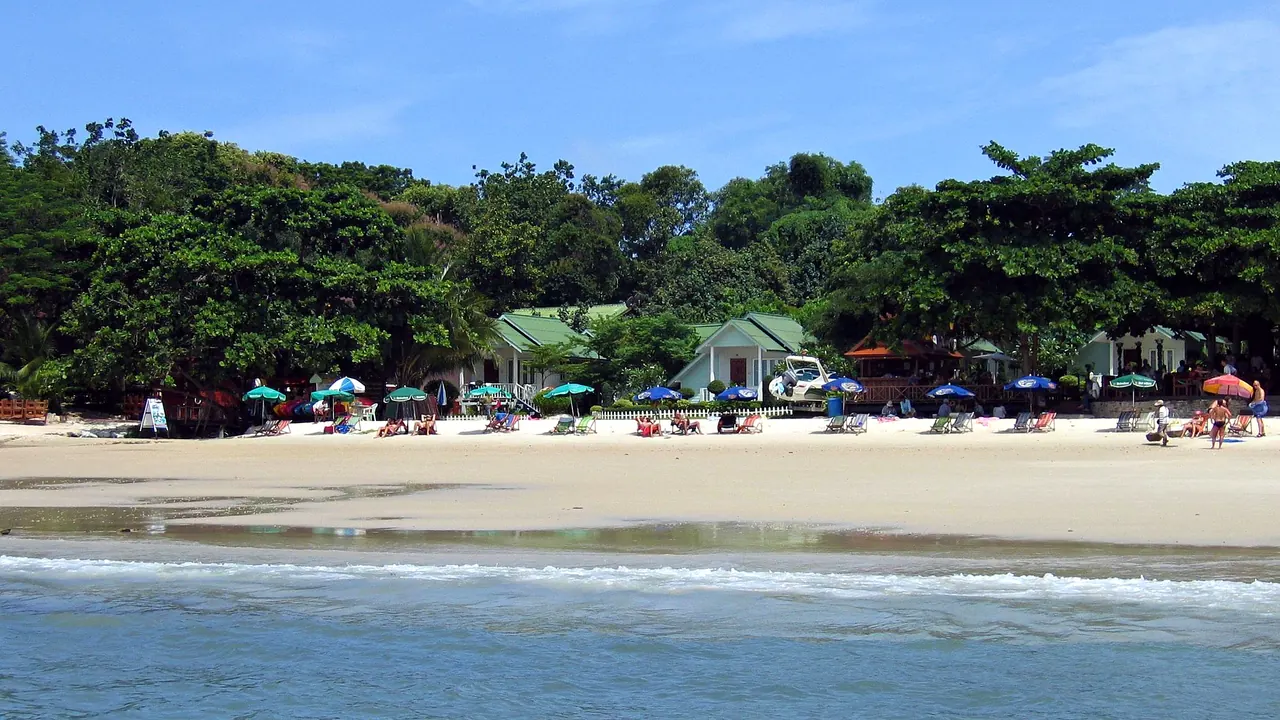
Photos: Koh Chang by Slyronit, CC BY-SA 4.0, cropped; Koh Samet by Bjørn Erik Pedersen, CC BY-SA 3.0, cropped.
Koh Chang or Koh Samet?
Our verdict in twelve categories, each scored against the same fixed benchmark cities, and the climate month by month, so you can choose for your trip.
Choose Koh Chang for
- nature and the outdoors
- day trips
- wellness
Koh Chang suits the traveller who wants more than a beach. Behind its west-coast sands rise forested national park hills with waterfalls and guided jungle treks, and mangrove channels on the east coast are good for kayaking. Boats run south to Koh Wai, Koh Mak and Koh Kood. It takes longer to reach and is harder to get around, but it rewards a stay of a week or more, and its far ends feel properly cut off.
Choose Koh Samet for
- getting around
- nightlife
- families
Koh Samet is the easier island. It is a few hours from Bangkok, small enough to walk from bay to bay, and has livelier weekend nights on the sand between Hat Sai Kaew and Ao Phai. The beaches are just as good, but there is little to do beyond them, so it works best for a few lazy days of swimming and beach dinners, ideally midweek or in the quieter southern coves.
Scoreboard
Twelve categories on one fixed scale from 0 to 100. The shaded stretch is the gap between the two.
Your match
Pick a travel style or drag the sliders, and both match scores follow your weighting.
Wins on nature and the outdoors and day trips with your weighting.
Wins on getting around and nightlife with your weighting.
What matters to you?
Category by category
What the scores mean for a trip.
Beaches & swimming
The beaches are equally good, but they work differently. Koh Chang's lie one after another down the west coast, from long White Sand Beach in the north to Klong Prao and Kai Bae, which suit long swims. Since they face west, you get sunsets from almost any of them, but a songthaew usually links one beach to the next.
Koh Samet's soft white bays sit close together on the east coast, and a short walk takes you from Hat Sai Kaew's squeaky sand south to the quiet coves of Ao Thian and Ao Kiu. Only Ao Prao faces the sunset. Its sheltered water also stays calmer for longer in the rainy season than Koh Chang's exposed west coast.
Food & drink
The two islands eat much the same, Thai beach cooking with some Western dishes, and neither has a cooking style of its own. On Koh Chang the highlight is choosing crab and prawns from tanks on the piers at Bang Bao and Salak Phet, and small evening markets near the main beaches sell skewers and roti.
Koh Samet sets its seafood out on ice at dusk and grills it at tables on the sand at Hat Sai Kaew and Ao Phai. The simple places in Na Dan village often cook better than the beachfront does, but there are no markets worth seeking out.
Culture & sights
There are almost no sights on either island, and an hour covers what there is. Koh Chang has the stilted fishing villages of Bang Bao and Salak Phet, plus the rocks at Than Mayom carved with inscriptions by visiting Thai kings. Koh Samet's claim is literary: it is a setting in Sunthorn Phu's epic poem Phra Aphai Mani, and statues of its characters, including a mermaid, stand on the rocks at Hat Sai Kaew.
Nightlife
Koh Samet has the livelier nights, mainly because it is close to Bangkok. Young weekend crowds fill the beach bars between Hat Sai Kaew and Ao Phai, with buckets, loud music and fire dancers until well past midnight. Midweek it is much quieter, and there are no real clubs.
Koh Chang's nightlife is split between two places. Lonely Beach is the backpacker end, with late nights at the height of the dry season, while White Sand Beach has a more mixed string of sunset bars. Away from those two, evenings end after dinner, and much of it shuts outside November to April.
Nature & outdoors
Koh Chang is a far better island for the outdoors. Most of it is steep national park rainforest rising to about 740m, with guided jungle treks and waterfalls at their fullest in November and December. There are mangrove channels around Salak Khok for kayaking and reefs around Koh Rang for snorkelling and diving.
Koh Samet is low and scrubby, with dry forest, monitor lizards and birds but no hills worth climbing. The best of it is the walk over the headlands from bay to bay, plus snorkelling trips to Koh Kudee and Koh Talu. The coral there is modest.
Day trips
Koh Chang has much more to offer for days out. Speedboats go south to the quiet islands of Koh Wai, Koh Mak and the larger Koh Kood, and across the strait Trat has wooden canal-side shophouses and a morning market. Chanthaburi's old riverside quarter and cathedral are about two hours away.
Koh Samet is an island to stay put on. Its outings are mostly boat trips to nearby uninhabited islets. Rayong is an errand rather than a sight, and Chanthaburi lies well beyond the ferry pier, so most visitors take it in on the way in or out.
Good for families
The two are broadly level for families. Both have warm, gentle water in the dry season, resorts with pools and family rooms, and staff who are easy with young children, but neither has anything built for children. Koh Chang gives you more to fill the days, with waterfall walks and boat trips to the small islands, and Klong Prao and Kai Bae make calm bases. The cost is a long journey ending in a ferry and a coast road full of hairpin bends, and Lonely Beach suits only families with teenagers.
Koh Samet is the shorter trip from Bangkok. The gentlest water is at Ao Wong Deuan and Ao Thian, further down the east coast, and at Ao Prao, the sunset bay on the west side. All three are away from the weekend bars and jet skis of the northern beaches. The rutted roads are hard going with a buggy, though, and the only medical care is a small clinic.
Getting around
Koh Samet is the easier island to reach and to get around. It is about three hours by road from Bangkok plus a short boat ride, and at roughly 6km long its main bays are joined by sandy paths you can walk.
Koh Chang means a flight to Trat or a longer drive, then a car ferry. Once there, one broken coastal road links places too far apart to walk, with dead ends at Bang Bao and Salak Phet. The climbs between Kai Bae and Lonely Beach are steep enough that a songthaew or a driver is safer than a scooter.
Shopping & style
Neither island is a place to shop. Koh Chang has beachwear and souvenir stalls along the road at White Sand Beach and shell shops on the pier at Bang Bao. Koh Samet has much the same, with sarongs and sunscreen in Na Dan and behind the main beaches. On either island, bring what you need or leave shopping for Bangkok.
Affordability
Both are cheap by international standards, with simple bungalows, Thai meals and massages costing little, and on both the extras add up. On Koh Chang the long transfer, snorkelling trips and songthaew fares push costs up, and prices peak from December to February.
On Koh Samet the trip out from the capital is cheap, but foreign visitors pay a national park entry fee. Weekends and Thai long weekends are the dearest times, so a midweek stay set back from the sand is the cheapest way to go.
Live music & performing arts
Neither island has theatre, concerts or traditional Thai performance. Koh Chang has a little more: acoustic and reggae bands play in the beach bars at Lonely Beach and White Sand Beach, and a few venues put on cabaret shows. On Koh Samet, fire dancers and the odd guitarist are part of a night out rather than anything to plan around.
Wellness & relaxation
Koh Chang is the more restful island. Long Beach, at its far south-east, and the quieter stretches of Klong Prao and Kai Bae feel cut off from everywhere. Massage there ranges from wooden salas on the sand to resort spas using local herbs, and a few small yoga retreats sit on the west coast.
Koh Samet rests well too, with massage pavilions along the beaches, spas at the larger resorts on Ao Prao and Ao Wong Deuan, and silent evenings in the southern coves. It has fewer retreats, though, and at weekends the bar strip makes the northern bays loud.
When should you go?
Pick your month. The climate figures are measured averages, not a forecast.
Koh Chang in July
Koh Samet in July
Daytime high, °C
Rainfall in the month, mm
Where the figures come from
Koh Chang's temperatures are measured 58 km from the centre, at Chanthaburi.
Koh Chang has no rain gauge within 25 km of the centre, so its rainfall comes from a gridded climate dataset read at the destination rather than from a gauge further away.
Koh Samet has no rain gauge within 25 km of the centre, so its rainfall comes from a gridded climate dataset read at the destination rather than from a gauge further away.
Koh Samet's sunshine is measured 72 km from the centre, at Chanthaburi.
Temperature and rainfall are climate normals, averaged over the years shown. Koh Chang: 1991-2020 normals, Chanthaburi (57.7 km from centre). Koh Samet: 2005-2020 (sunshine 1991-2020, rainfall 1991-2020) normals, Rayong (13.5 km from centre).
Both islands are hot all year, with daytime highs of 32°C to 34°C, so the season is set by rain, not temperature. Both are at their best from November to February, when it is dry, sunny and the sea is calm and around 28°C. March and April are the hottest months, and showers start to come back, a little more on Koh Chang than on Koh Samet.
The big difference is the monsoon. From May to October Koh Chang gets heavy rain, peaking at about 595mm in August, with rough surf on its west coast. Koh Samet gets a wetter season too, but a much milder one, nearer 210mm a month through the summer before September and October turn wetter. For a trip in the rainy months, Koh Samet is the safer choice.
Which traveller are you?
On an outdoors trip, Koh Chang is far better. It has jungle treks into steep national park hills, waterfalls such as Klong Plu and Than Mayom, kayaking in the mangroves and boat trips to the reefs around Koh Rang. Koh Samet's best outdoor offer is a coastal path.
For a relaxing and wellness trip, Koh Chang has the edge. Long Beach and the far ends of the west coast feel truly remote, massages use local herbs and oils, and there are a few small yoga retreats. On Koh Samet, weekend bar noise reaches the northern bays.
On a food and nightlife trip, Koh Samet is more fun. Its bars are packed together between Hat Sai Kaew and Ao Phai, Bangkok crowds keep Friday and Saturday nights going past midnight, and seafood is grilled at tables on the sand. Koh Chang's nights are split between two beaches.
Before you go
| Measure | Koh Chang | Koh Samet |
|---|---|---|
| Official language | Thai | Thai |
| Currency | Baht (THB) | Baht (THB) |
| Sockets | ABCF220 V, 50 Hz | ABCF220 V, 50 Hz |
| Driving side | Left | Left |
| Time zone | UTC+7 | UTC+7 |
| Emergency number | Police 191, ambulance 1669, fire 199 | Police 191, ambulance 1669, fire 199 |
| Main airport | Trat Airport (TDX)1 non-stop destination | U-Tapao–Rayong–Pattaya International Airport (UTP)2 non-stop destinations |
By the numbers
| Measure | Koh Chang | Koh Samet |
|---|---|---|
| Population | 5,356 | - |
| People per km² | 25 | - |
| Swim season, months above 21 °C | 12 months | 12 months |
Where else could you go?
Every comparison below shares a destination with this one, so you can follow Koh Chang or Koh Samet somewhere new.
- Pattayavs Koh Samet
- Phu Quocvs Koh Chang
- Koh Taovs Koh Samet
- Koh Taovs Koh Chang
- Koh Phanganvs Koh Samet
- Koh Phanganvs Koh Chang