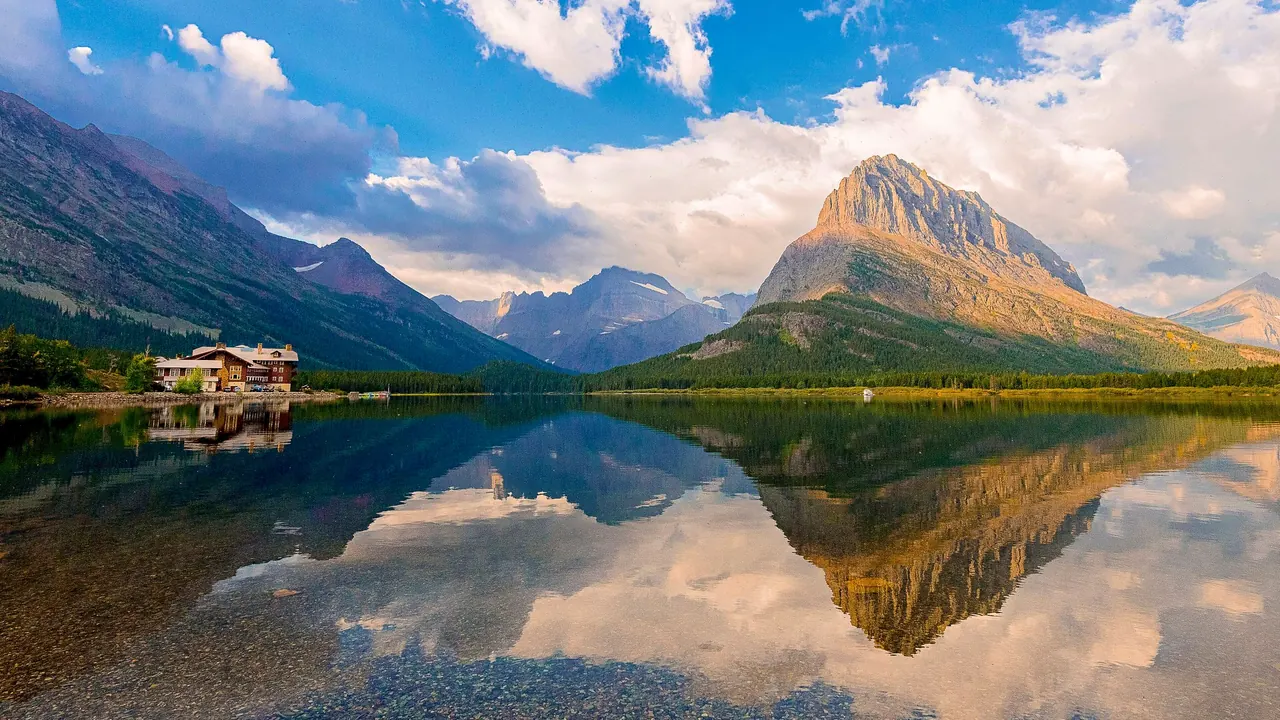
Photos: Glacier National Park by Viveksk1, CC BY-SA 4.0, cropped.
Glacier National Park or Olympic National Park?
Our verdict in twelve categories, each scored against the same fixed benchmark cities, and the climate month by month, so you can choose for your trip.
Choose Glacier National Park for
- beaches
- nature and the outdoors
Glacier National Park suits the traveller who wants one great mountain landscape and means to spend every day in it. The Going-to-the-Sun Road over Logan Pass, the trails out of Many Glacier and a real chance of seeing grizzlies and mountain goats make it a trip for committed hikers in high summer, when its afternoons are noticeably warmer than on the Pacific side. Little else competes for your time, and that is the point.
Choose Olympic National Park for
- wellness
- day trips
- families
If you want more variety and softer edges, Olympic National Park is the better pick. Rainforest, glaciated peaks and a wild coast all lie on one loop of road. The Sol Duc hot springs, the tide pools, Port Townsend and the ferry to Victoria give you rest days and give children plenty to do. In exchange you lose some of Glacier's concentrated alpine drama, and Olympic's summers are cooler, with fog often lying on the shore.
Scoreboard
Twelve categories on one fixed scale from 0 to 100. The shaded stretch is the gap between the two.
Your match
Pick a travel style or drag the sliders, and both match scores follow your weighting.
Wins on beaches and nature and the outdoors with your weighting.
Wins on wellness and day trips with your weighting.
What matters to you?
Category by category
What the scores mean for a trip.
Beaches & swimming
Neither park is a swimming destination, but Glacier gives a swimmer slightly more. The lakes inside the park are cold with snowmelt. Just outside it, though, Whitefish Lake has a town beach, and the state park shores of Flathead Lake warm up enough in August for a proper swim.
Olympic has by far the more dramatic shoreline, with sea stacks, driftwood and tide pools at Rialto, Ruby and Second Beach. But the Pacific is cold, rough and often under fog, so swimming there comes down to brief dips in Lake Crescent and Lake Quinault.
Food & drink
In both parks food is fuel between hikes, and the difference is mostly in what ends up on the plate. Glacier runs on huckleberry in every form, bison burgers and trout. The restaurants and breweries of Whitefish are the best of it, and in summer there are cherry stands along Flathead Lake.
Olympic has a little more to look forward to: Dungeness crab, Hood Canal oysters, smoked salmon and, in Port Townsend, a cluster of bakeries, seafood places and a local cider culture. Deep in either park you fall back on lodge dining rooms, and on Olympic's west side, around Forks, the choice is thinner still.
Culture & sights
Glacier's history is out on the road and up in the lodges, while Olympic keeps its history in a Victorian port town. At Glacier you are looking at engineering and architecture set into the landscape: the Going-to-the-Sun Road cut into the cliffs and the log-built lodges of the Great Northern Railway. The Museum of the Plains Indian in Browning covers Blackfeet history.
Port Townsend, on the Olympic Peninsula, is a seaport that survives almost intact, with Fort Worden on its edge. The Makah Museum at Neah Bay holds finds from the buried village of Ozette and tells the story of the whaling peoples of the coast. Neither gives you much to see indoors beyond these.
Nightlife
Both are early-night places with no clubs, so the only difference is where you find a drink. Around Glacier that means the old-fashioned saloons and brewery taprooms of Whitefish, which are busiest on summer weekends. On the Olympic Peninsula it means a few pubs, taprooms and wine bars in Port Townsend and Port Angeles. Inside either park, the evening ends in a lodge lounge or under the stars.
Nature & outdoors
Both are first-rate wild country, but Glacier is at heart an alpine park and Olympic runs down to the ocean. Glacier's sharp peaks along the Continental Divide, its turquoise lakes and hanging valleys, the Highline Trail and the climb to Grinnell Glacier make it the stronger choice for high mountain hiking.
It also has cedar forest on its west side and prairie on its east, and it gives you a real chance of seeing grizzlies, mountain goats and bighorn sheep.\n\nOlympic has glaciated summits around Mount Olympus and moss-hung rainforest in the Hoh and Quinault valleys. What Glacier cannot match is its roadless Pacific coast, with sea stacks, headlands and multi-day beach hikes timed to the tides. Its wildlife is gentler too: Roosevelt elk in the valleys and, in spring, grey whales passing offshore.
Day trips
Olympic has the better outings by some way. The car ferry from Port Angeles makes a full day in Victoria possible, with its harbour, parliament buildings and gardens. Port Townsend, Coupeville on Whidbey Island, the lavender farms of Sequim and Cape Flattery add more.
Glacier's options are fewer and gentler. You can visit the lakeside resort of Waterton across the Canadian border, spend an afternoon in Whitefish, drive down Flathead Lake to Bigfork or make a long day of it to St Ignatius Mission. Beyond that, Montana's distances take over.
Good for families
Both suit families who like the outdoors, but Olympic gives children more variety and fewer hazards. Tide pools at low tide, elk in the Hoh valley, the Hall of Mosses loop, the marine life centre in Port Angeles and the drive-through animal park near Sequim fill the days easily. The sea is too rough for play, though, and you will need rain gear.
Glacier has boat tours on the Many Glacier and Two Medicine lakes, the Junior Ranger programme and short walks such as the Trail of the Cedars. It also has narrow cliff roads, crowded car parks and bear spray every day, so it works best with school-age children rather than toddlers.
Getting around
You need a car in both, but the driving is quite different. In Glacier the Going-to-the-Sun Road crosses the park itself, slowly and only in summer. Without a car you can use the free shuttle, the red open-top buses or the train stops at West and East Glacier, and the airport near Kalispell is about half an hour from the west entrance.
No road crosses Olympic's mountains, so you circle the park on Highway 101 and drive in along spur roads, often a couple of hours between areas. Most visitors split their stay between the north and west sides, and the rural buses are of little use for reaching trailheads.
Shopping & style
Shopping is a footnote in both parks, but the things worth bringing home differ. Around Glacier, look for Blackfeet beadwork and crafts near Browning, and for the galleries and Western wear of Whitefish. On the Olympic Peninsula there are the antique and book shops of Port Townsend, lavender from Sequim and Native carvings on the coast. Beyond that, both come down to outdoor gear and gift shops.
Affordability
Both parks are costly in summer, with the lodges booked far ahead and restaurant meals priced for visitors, and in both the answer is camping or a motel outside the park. Glacier's cheaper bases, Kalispell and Columbia Falls, are a drive from the entrances, and a hire car is close to unavoidable. On the Olympic side, the motels of Port Angeles, Sequim and Forks are close to the areas you visit and campgrounds are plentiful, so doing it cheaply is a little easier.
Live music & performing arts
Olympic has more live performance, thanks to Port Townsend. The arts centre at Fort Worden has a long tradition of summer festivals in jazz, blues and old-time fiddle music. The town also has a small professional theatre and venues with local bands, and Port Angeles adds a community symphony.
Around Glacier, the highlight is the summer playhouse in Bigfork, which stages Broadway musicals, alongside a regional symphony and community theatre in Whitefish. Inside both parks, evenings mean ranger talks, and on the Glacier side Blackfeet speakers share their history and culture.
Wellness & relaxation
Olympic is the more restful choice because it has Sol Duc. There, mineral water from hot springs feeds a set of pools at the end of a forest road, a simple soak among the trees that Glacier has nothing to match. The lodges on Lake Crescent and Lake Quinault and the valleys with no phone signal make it easy to switch off as well.
Glacier offers a similar kind of quiet, with lakeside lodges that have no televisions and evenings on the porch watching the light fade on the peaks. But there is nowhere to bathe, and spa treatments are limited to a few resort hotels around Whitefish.
When should you go?
Pick your month. The climate figures are measured averages, not a forecast.
Glacier National Park in July
Olympic National Park in July
Daytime high, °C
Rainfall in the month, mm
Where the figures come from
Glacier National Park's temperatures are measured 33 km from the centre, at Glacier Park International Airport.
Glacier National Park has no rain gauge within 25 km of the centre, so its rainfall comes from a gridded climate dataset read at the destination rather than from a gauge further away.
Olympic National Park has no rain gauge within 25 km of the centre, so its rainfall comes from a gridded climate dataset read at the destination rather than from a gauge further away.
Olympic National Park's sunshine is measured 87 km from the centre, at Quillayute State Airport.
Temperature and rainfall are climate normals, averaged over the years shown. Glacier National Park: 1991-2020 normals, Glacier Park International Airport (32.7 km from centre). Olympic National Park: 2006-2020 (sunshine 1981-2010, rainfall 1991-2020) normals, Port Angeles / Firwest Mobile Home Park (5.1 km from centre).
Glacier has a short, sharp season. Where most visitors stay, July and August reach about 28°C and are the driest months of the year. Those two months and early September are also the only time the high trails and Logan Pass are reliably free of snow, while June is the wettest month. From December to February daytime highs sit near 0°C, and November and March are not much kinder, so for almost half the year the park is a winter landscape rather than a place for walking.\n\nOlympic is milder at both ends of the year.
On the north side, where its figures are measured, summer highs peak at around 21°C, July is almost dry and July and August bring the most sunshine, so they are the best months for hiking and for the coast. The sea stays cold all year, so the beaches are for walking in any month. On the north side the rain returns in October and reaches about 150mm a month from November to January, and the west side, with the Hoh and Quinault rainforest valleys, is far wetter still. Winter there is grey and wet rather than frozen.
Which traveller are you?
For a beach and sun trip, neither park is the obvious answer, but Glacier comes closer. Its high-summer afternoons are hot enough to make a lake swim inviting, while Olympic's cooler, often foggy coast is for walking, not lying in the sun.
On a family trip with children, Olympic is the easier pick, especially with younger ones. Its easiest sights sit close to the road and the main hazard is wet weather. Glacier rewards older children who can handle longer walks and bear-country rules.
For a relaxing and wellness trip, choose Olympic. It is the only one of the two where a day can end in warm mineral water, and the rain and patchy phone signal slow everyone down. Glacier offers quiet, but nothing to soak in.
Before you go
| Measure | Glacier National Park | Olympic National Park |
|---|---|---|
| Currency | US Dollar (USD) | US Dollar (USD) |
| Sockets | AB120 V, 60 Hz | AB120 V, 60 Hz |
| Driving side | Right | Right |
| Time zone | UTC-7, UTC-6 in summer | UTC-8, UTC-7 in summer |
| Emergency number | 911 | 911 |
| Main airport | Glacier Park International Airport (FCA)17 non-stop destinations | Seattle–Tacoma International Airport (SEA)136 non-stop destinations |
| Public holidays this year | 12 days | 11 days |
By the numbers
| Measure | Glacier National Park | Olympic National Park |
|---|---|---|
| Swim season, months above 21 °C | - | None |
Where else could you go?
Every comparison below shares a destination with this one, so you can follow Glacier National Park or Olympic National Park somewhere new.
- Mount Rainiervs Olympic National Park
- Banffvs Glacier National Park
- Yellowstonevs Glacier National Park
- Mount Rainiervs Glacier National Park
- Redwood National Parkvs Olympic National Park
- Yellowstonevs Olympic National Park